Three Kings, Three Different Scotlands
Ever wondered why some leaders inspire loyalty whilst others create chaos? Shakespeare answers this by showing us three very different kings ruling the same country with completely opposite results.
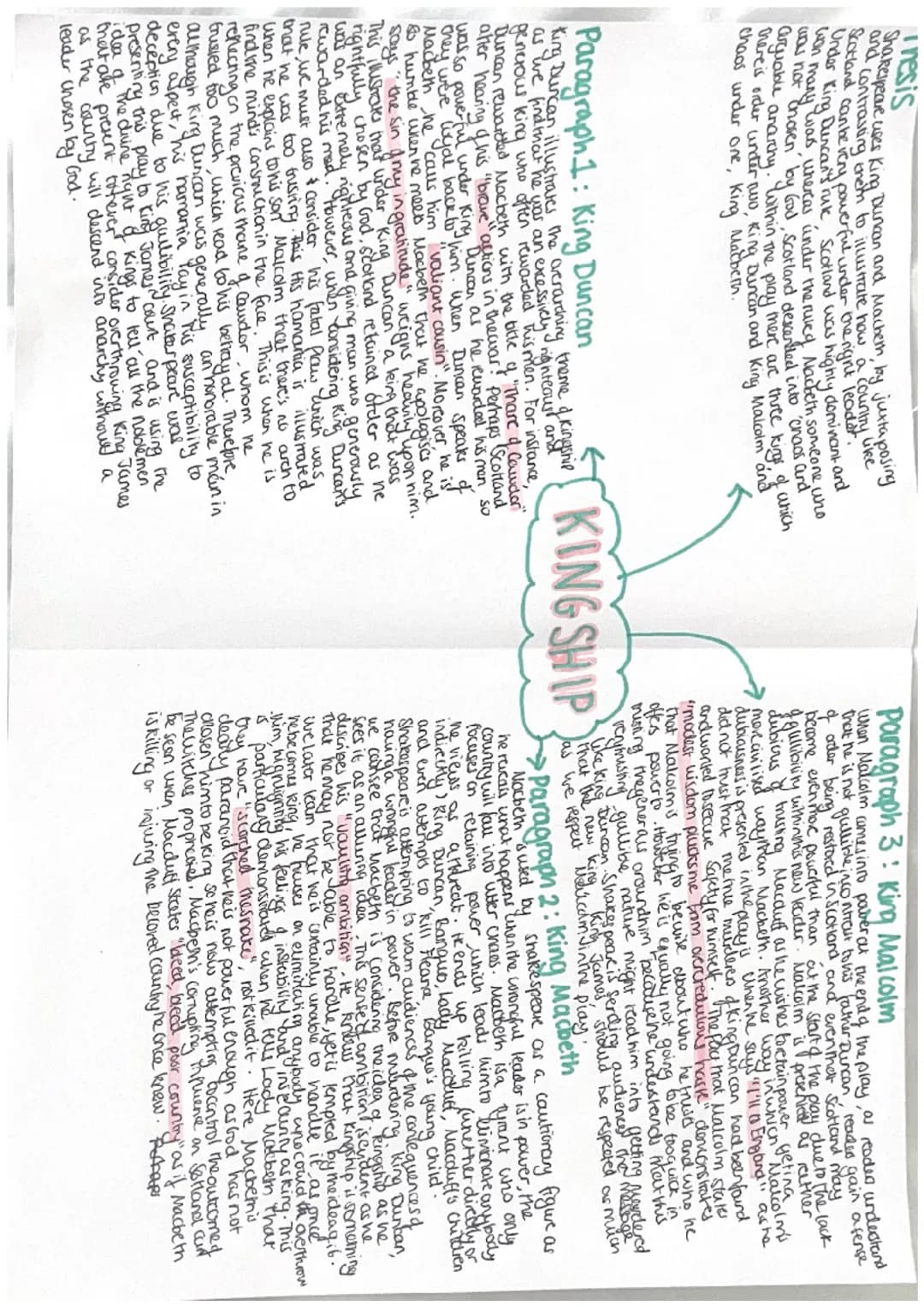
Under King Duncan's rule, Scotland was dominant and victorious in wars. However, when Macbeth seized power illegitimately, the country descended into chaos and anarchy. Finally, King Malcolm restored order by the play's end. This pattern wasn't accidental - Shakespeare was making a clear point about legitimate versus illegitimate leadership.
King Duncan represents the ideal Christian king who was chosen by God. He's incredibly generous, rewarding Macbeth with the title "Thane of Cawdor" after hearing about his brave actions in battle. Duncan even calls Macbeth "valiant cousin" and humbly apologises for not being able to reward him enough, saying "the sin of my ingratitude weighs heavily upon me."
However, Duncan has a fatal flaw (hamartia) - he's too trusting. He admits "there's no art to find the mind's construction in the face" when reflecting on how the previous Thane of Cawdor betrayed him. This gullibility ultimately leads to his downfall when he trusts Macbeth.
Key Point: Shakespeare uses Duncan's excessive trust to show that even good kings can have weaknesses, but legitimate rulers still bring order and prosperity.
King Macbeth serves as a cautionary figure, showing what happens when the wrong person seizes power. As a tyrant obsessed with retaining control, he eliminates anyone he perceives as a threat. His kill list includes Duncan, Banquo, Lady Macduff, Macduff's children, and he even attempts to kill Fleance.
Before murdering Duncan, Macbeth recognises that his "vaulting ambition" might be something he can't handle - and he's absolutely right. Once he becomes king, he's consumed by paranoia and insecurity. He tells Lady Macbeth they have "scorched the snake, not killed it," revealing his fear that he's not powerful enough and that God hasn't chosen him.
The devastating impact on Scotland is clear when Macduff cries "bleed, bleed, poor country" - as if Macbeth is literally killing the nation he once served. Shakespeare demonstrates how illegitimate leadership destroys everything it touches.
King Malcolm represents hope and restoration. Unlike Macbeth, Malcolm is cautious about who he trusts, stating "modest wisdom plucks me from over-credulous haste." He's deliberately suspicious of Macduff because he wants to gain power legitimately, not through manipulation like Macbeth did.
Malcolm's decision to flee to England after Duncan's murder shows his wisdom - he doesn't trust that the real murderers have been found and prioritises his safety. By the play's end, audiences understand that Scotland will likely become even more powerful than before due to Malcolm's balanced approach to leadership.
Shakespeare's Message: This exploration of kingship was actually political propaganda aimed at King James I's court, warning anyone considering rebellion that overthrowing a God-chosen king would lead to national disaster.

 English Literature
 Sociology
 Biology