Christina Rossetti: Life and Context
Ever wondered how a Victorian woman could be both deeply religious and surprisingly progressive? Christina Rossetti managed exactly that, becoming one of the era's most influential poets whilst navigating the complex expectations of 19th-century womanhood.
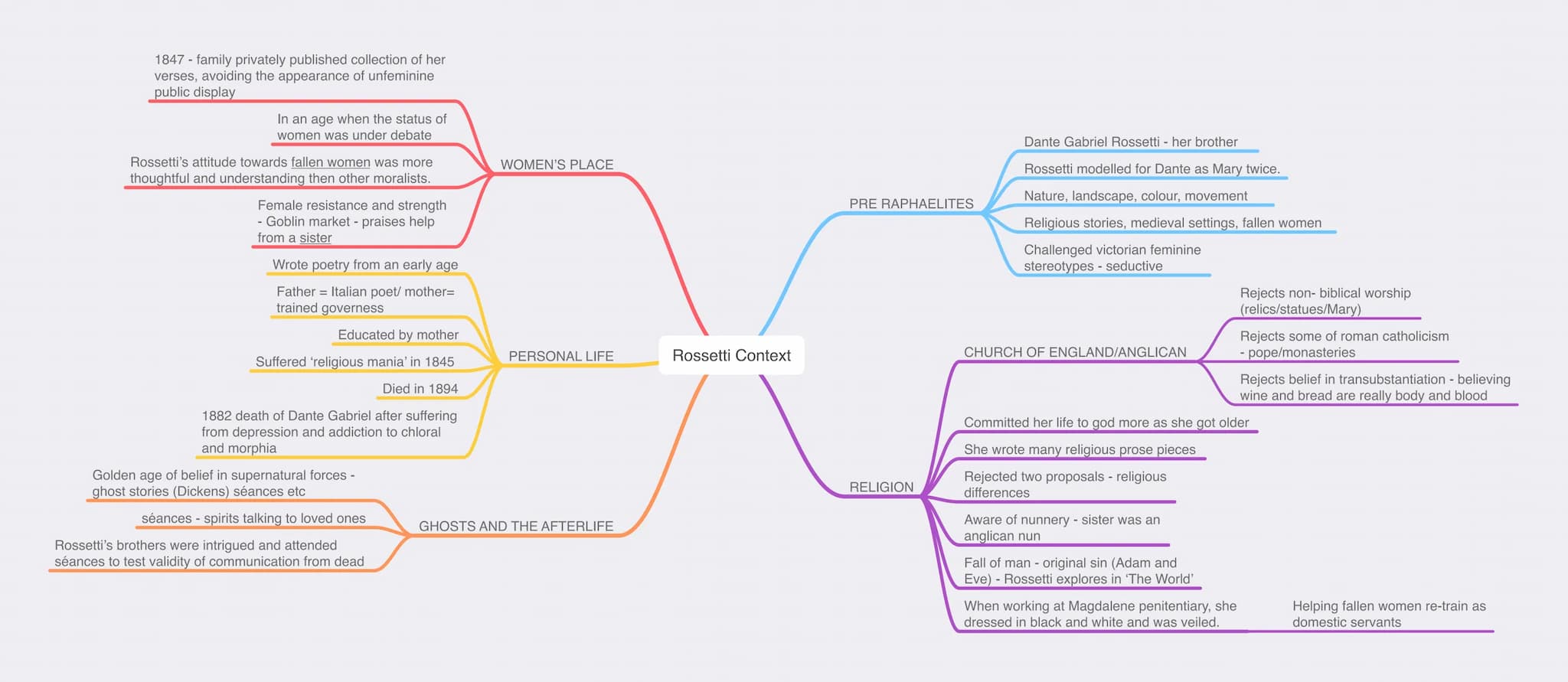
Born into an artistic family with an Italian poet father and a governess mother, Rossetti was educated at home and began writing poetry from an early age. Her personal life was marked by significant struggles, including a period of 'religious mania' in 1845 and the devastating loss of her brother Dante Gabriel Rossetti in 1882, who died after battling depression and drug addiction.
Her connection to the Pre-Raphaelite movement came through her brother Dante Gabriel, and she even modelled as Mary in some of his religious paintings. This artistic circle explored themes of nature, medieval settings, and fallen women - subjects that would deeply influence Christina's own work. The Pre-Raphaelites challenged Victorian feminine stereotypes, often depicting women as complex, seductive figures rather than pure, passive ideals.
Rossetti's Anglican faith became increasingly central to her life as she aged. She rejected key Catholic practices like transubstantiation and papal authority, whilst embracing Protestant principles. Her religious convictions were so strong that she turned down two marriage proposals due to religious differences, and she dedicated herself to helping fallen women retrain as domestic servants at the Magdalene penitentiary.
Key Insight: Rossetti's work emerged during the "golden age of belief in supernatural forces," when séances and ghost stories were popular - themes that would influence her exploration of death and the afterlife in her poetry.



 Sociology