Key Themes in Macbeth
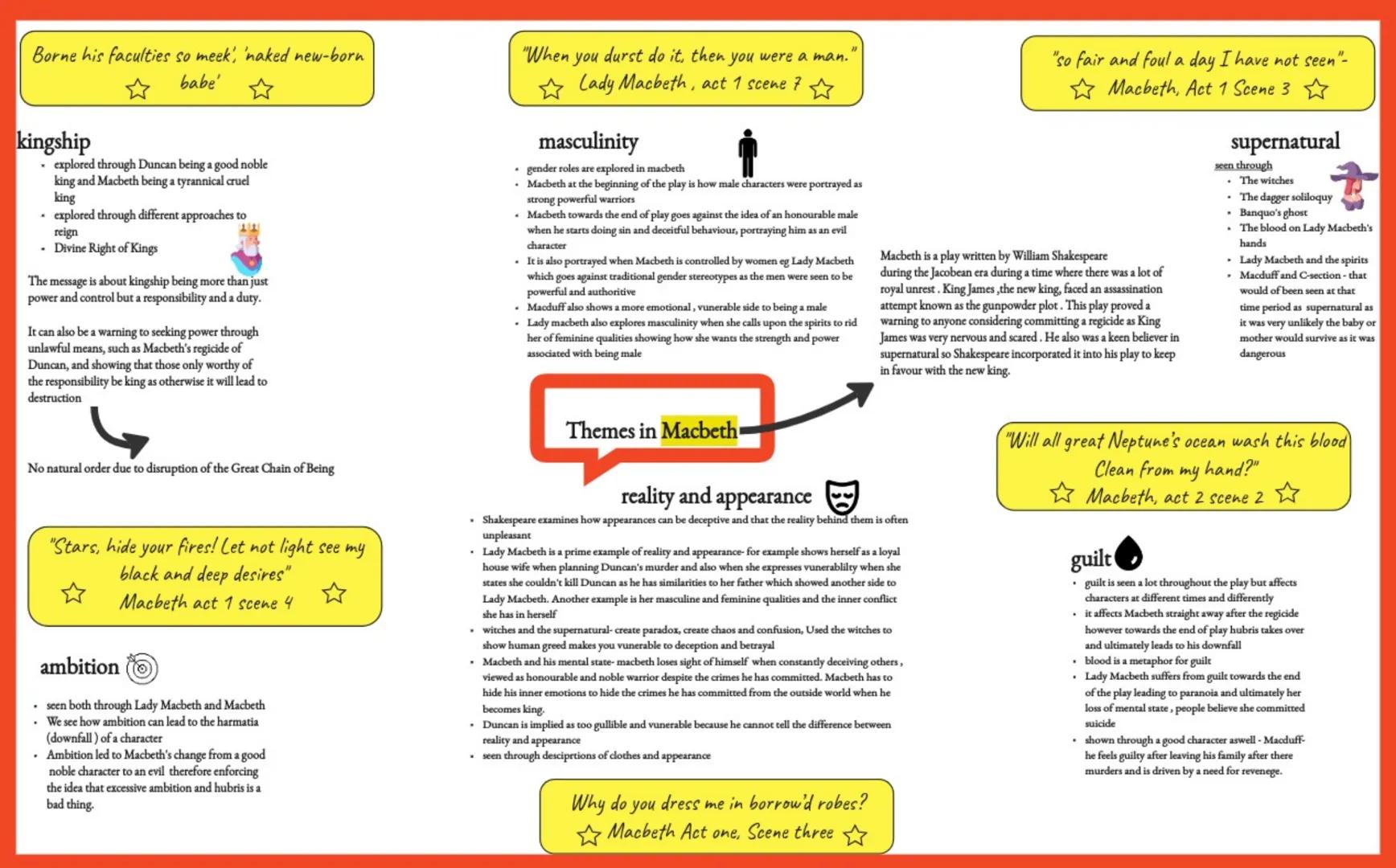
Kingship lies at the heart of this play, contrasting Duncan's noble leadership with Macbeth's tyrannical rule. Shakespeare explores the Divine Right of Kings - the idea that true kings are chosen by God and that disrupting this natural order leads to chaos. When Macbeth murders Duncan, he breaks the Great Chain of Being, causing the entire world to fall into disorder.
Ambition drives both Macbeth and Lady Macbeth to their destruction. You'll see how excessive ambition becomes Macbeth's fatal flaw (hamartia), transforming him from a respected warrior into a paranoid tyrant. Lady Macbeth's manipulation - "When you durst do it, then you were a man" - shows how ambition can corrupt relationships and moral judgement.
Masculinity and gender roles get turned upside down throughout the play. Macbeth starts as the perfect masculine warrior but becomes weak and dishonourable through his crimes. Meanwhile, Lady Macbeth calls upon spirits to "unsex" her, rejecting feminine qualities to gain male-associated power and strength.
Key Point: Notice how Macbeth's quote "Stars, hide your fires! Let not light see my black and deep desires" reveals his internal conflict between ambition and conscience.
Reality vs appearance creates constant deception in the play. Characters rarely show their true selves - Lady Macbeth appears as a loyal hostess while plotting murder, and Macbeth must hide his guilt behind a royal facade. Even Duncan's trusting nature becomes a weakness because he can't distinguish between loyal and treacherous subjects.
The supernatural elements aren't just spooky effects - they represent how guilt and ambition distort reality. From the witches' prophecies to Banquo's ghost, these supernatural moments reveal the characters' psychological states and moral corruption.
Guilt manifests differently in each character. Macbeth feels immediate remorse after killing Duncan, asking "Will all great Neptune's ocean wash this blood clean from my hand?" Lady Macbeth initially seems unaffected but later suffers psychological breakdown. Blood becomes a powerful metaphor for guilt that cannot be washed away.


 English Literature
 Sociology
 Biology