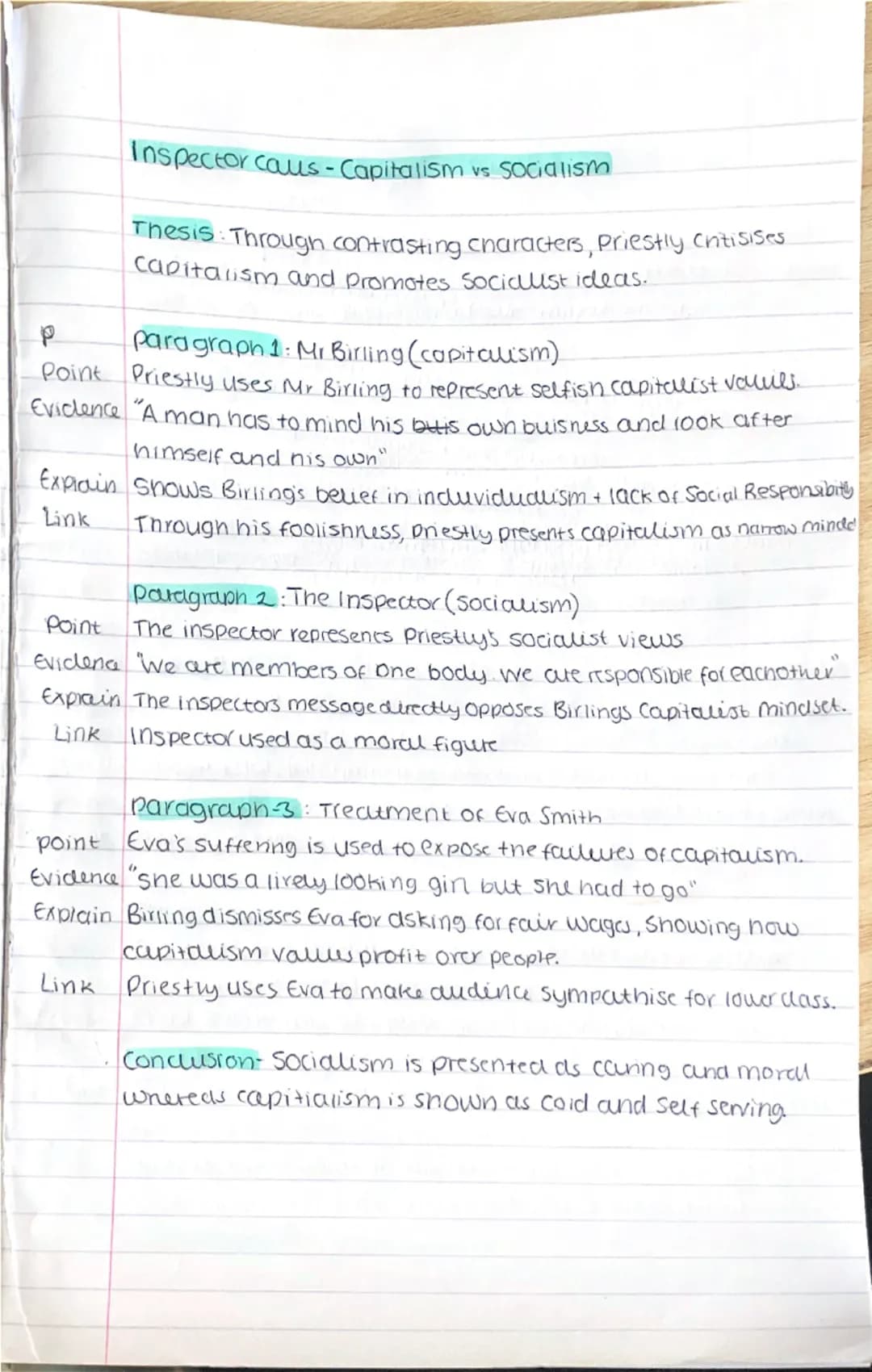
Capitalism vs Socialism Through Characters
Priestley basically turns his play into a political boxing match between two completely different ways of thinking about society. Mr Birling represents everything Priestley hated about capitalism - the "look after number one" mentality that dominated early 20th century Britain.
When Birling says "a man has to mind his own business and look after himself and his own," he's not just being selfish - he's representing an entire economic system that Priestley thought was rubbish. The playwright deliberately makes Birling come across as narrow-minded and foolish to show how capitalism fails ordinary people.
The Inspector swoops in as Priestley's hero, representing socialist values with his famous line: "we are members of one body, we are responsible for each other." This directly smashes Birling's individualistic worldview and presents socialism as the caring, moral alternative.
Key Point: Eva Smith's treatment exposes capitalism's biggest flaw - it values profit over people's lives, which Priestley uses to make audiences sympathise with the working class.



 Sociology