
Tennessee Williams' "A Streetcar Named Desire" is a powerful exploration... Show more
 English Literature
 Sociology
 Biology
Sign up to see the contentIt's free!
Access to all documents
Improve your grades
Join milions of students
Knowunity AI
Subjects
Triangle Congruence and Similarity Theorems
Triangle Properties and Classification
Linear Equations and Graphs
Geometric Angle Relationships
Trigonometric Functions and Identities
Equation Solving Techniques
Circle Geometry Fundamentals
Division Operations and Methods
Basic Differentiation Rules
Exponent and Logarithm Properties
Show all topics
Human Organ Systems
Reproductive Cell Cycles
Biological Sciences Subdisciplines
Cellular Energy Metabolism
Autotrophic Energy Processes
Inheritance Patterns and Principles
Biomolecular Structure and Organization
Cell Cycle and Division Mechanics
Cellular Organization and Development
Biological Structural Organization
Show all topics
Chemical Sciences and Applications
Atomic Structure and Composition
Molecular Electron Structure Representation
Atomic Electron Behavior
Matter Properties and Water
Mole Concept and Calculations
Gas Laws and Behavior
Periodic Table Organization
Chemical Thermodynamics Fundamentals
Chemical Bond Types and Properties
Show all topics
European Renaissance and Enlightenment
European Cultural Movements 800-1920
American Revolution Era 1763-1797
American Civil War 1861-1865
Global Imperial Systems
Mongol and Chinese Dynasties
U.S. Presidents and World Leaders
Historical Sources and Documentation
World Wars Era and Impact
World Religious Systems
Show all topics
Classic and Contemporary Novels
Literary Character Analysis
Rhetorical Theory and Practice
Classic Literary Narratives
Reading Analysis and Interpretation
Narrative Structure and Techniques
English Language Components
Influential English-Language Authors
Basic Sentence Structure
Narrative Voice and Perspective
Show all topics
137
•
Updated Mar 18, 2026
•

millie
@millie_xmtr
Tennessee Williams' "A Streetcar Named Desire" is a powerful exploration... Show more
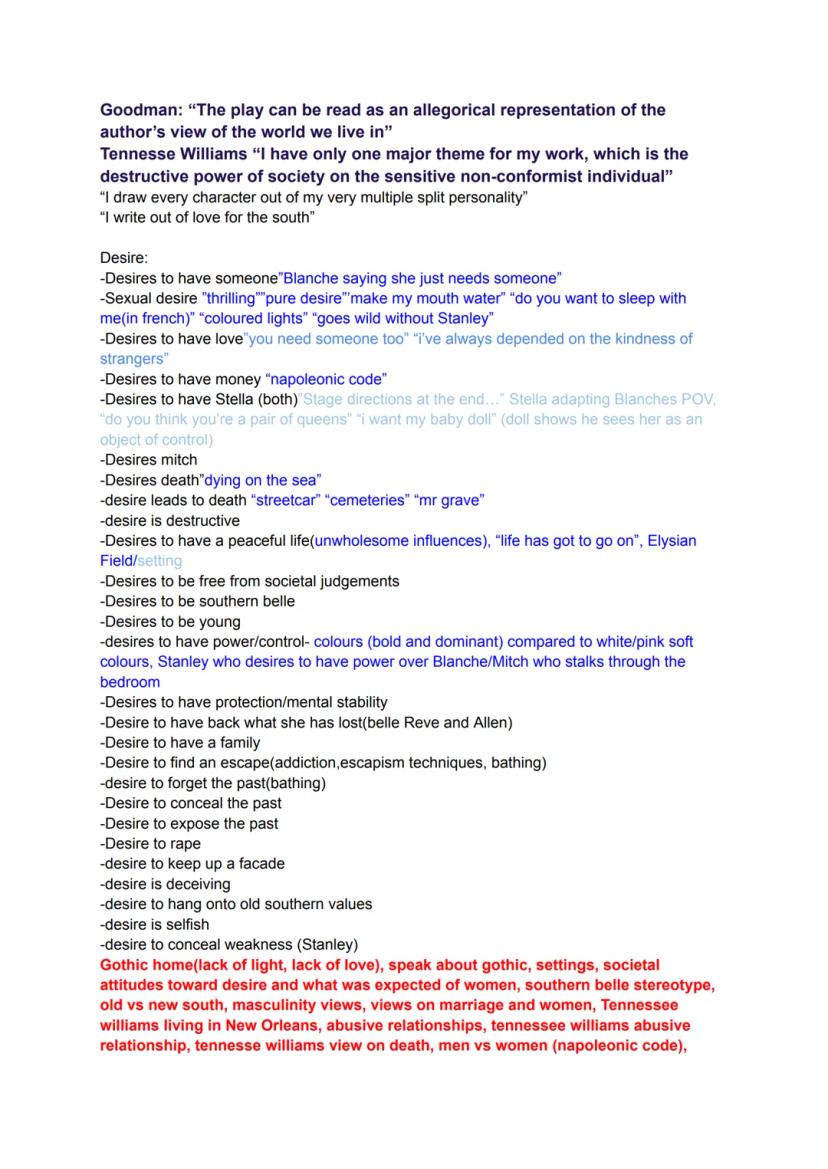
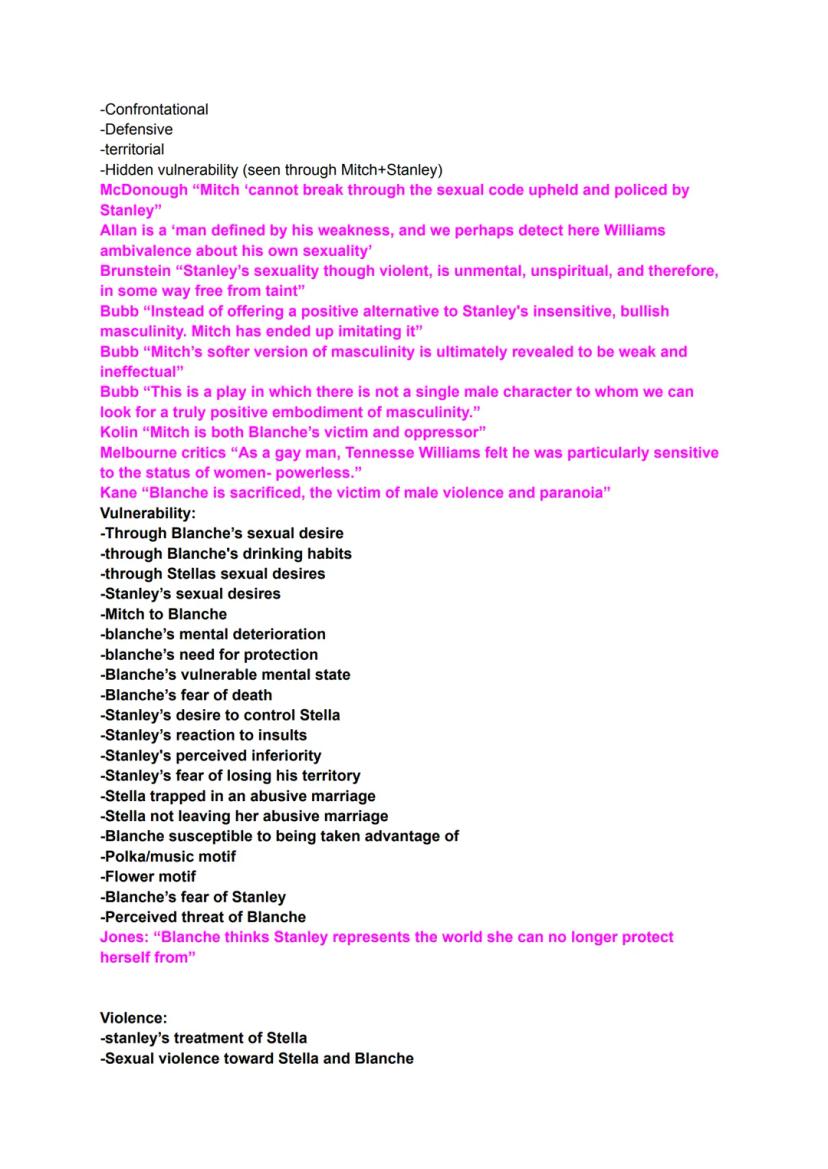
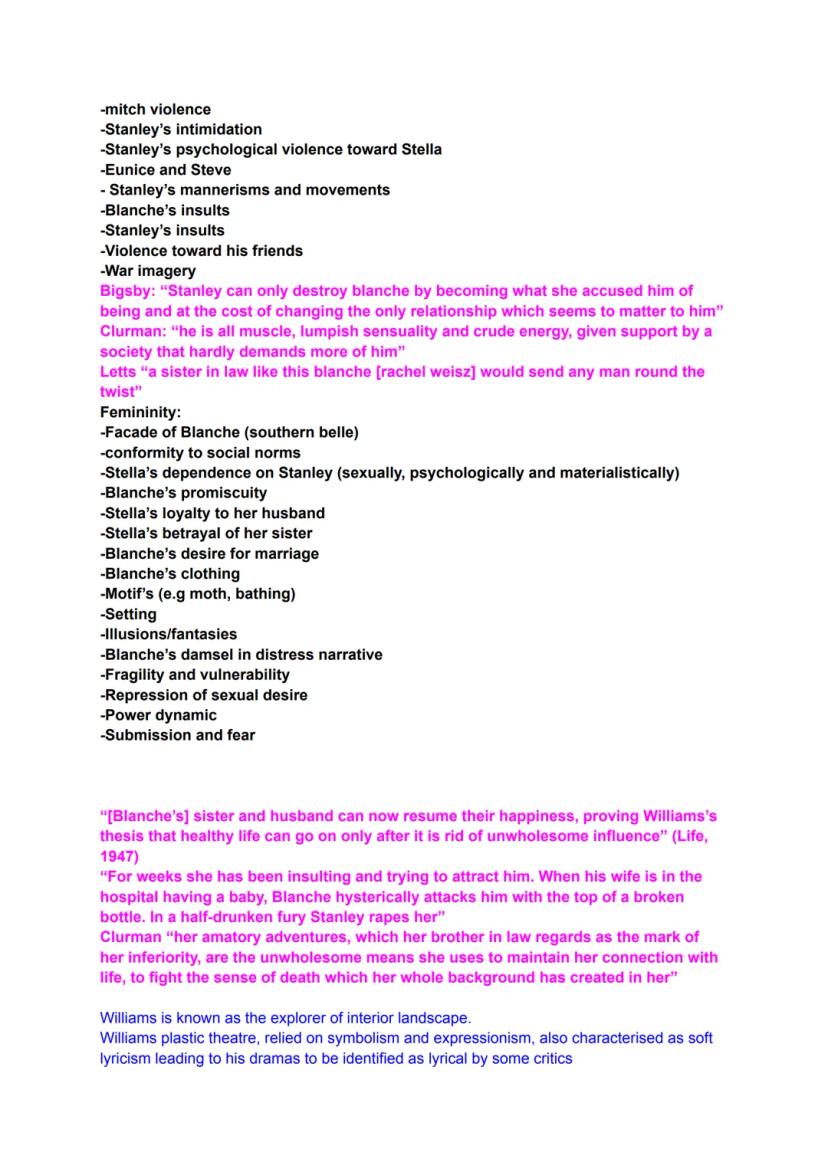
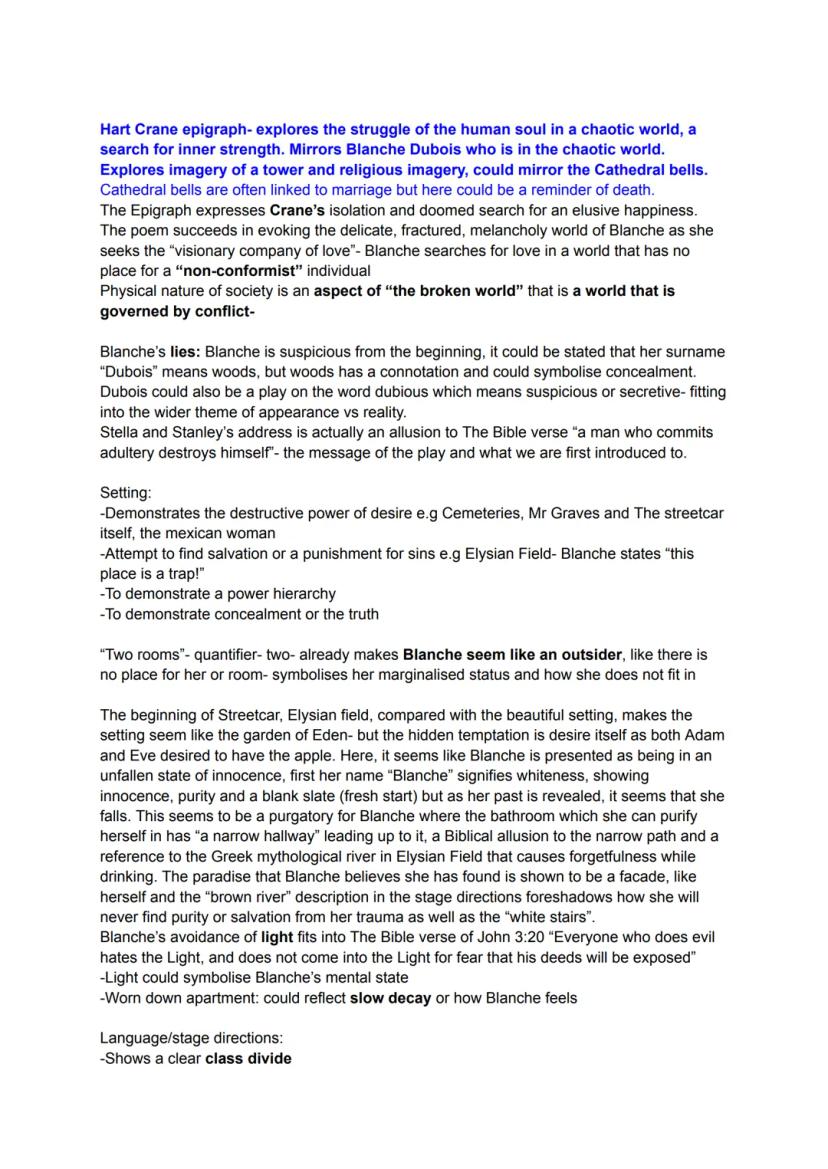
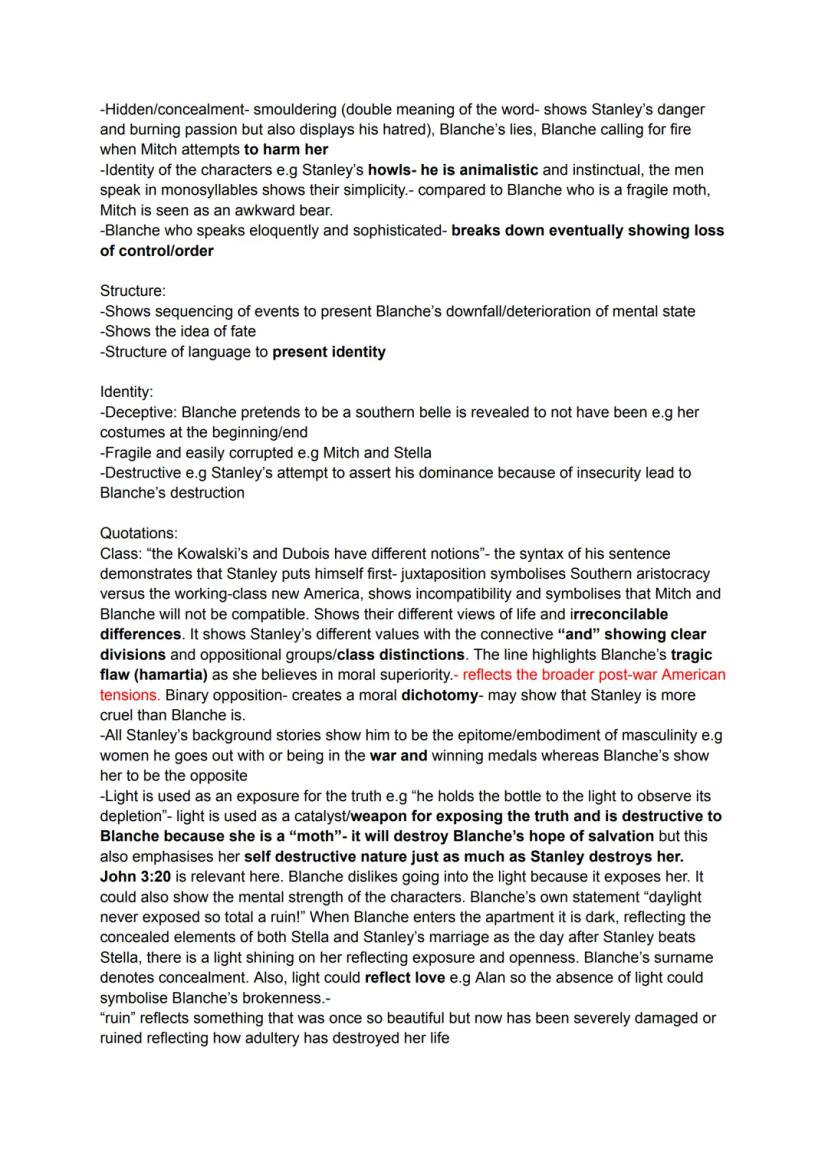
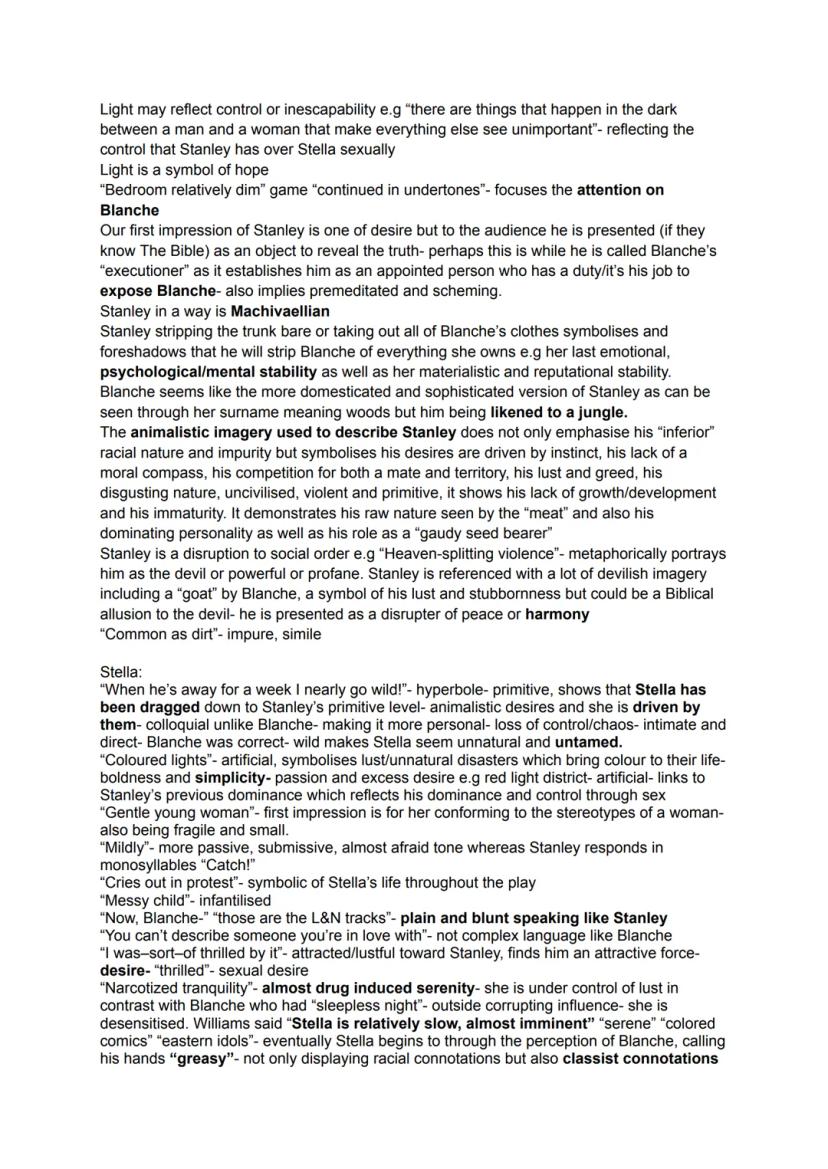
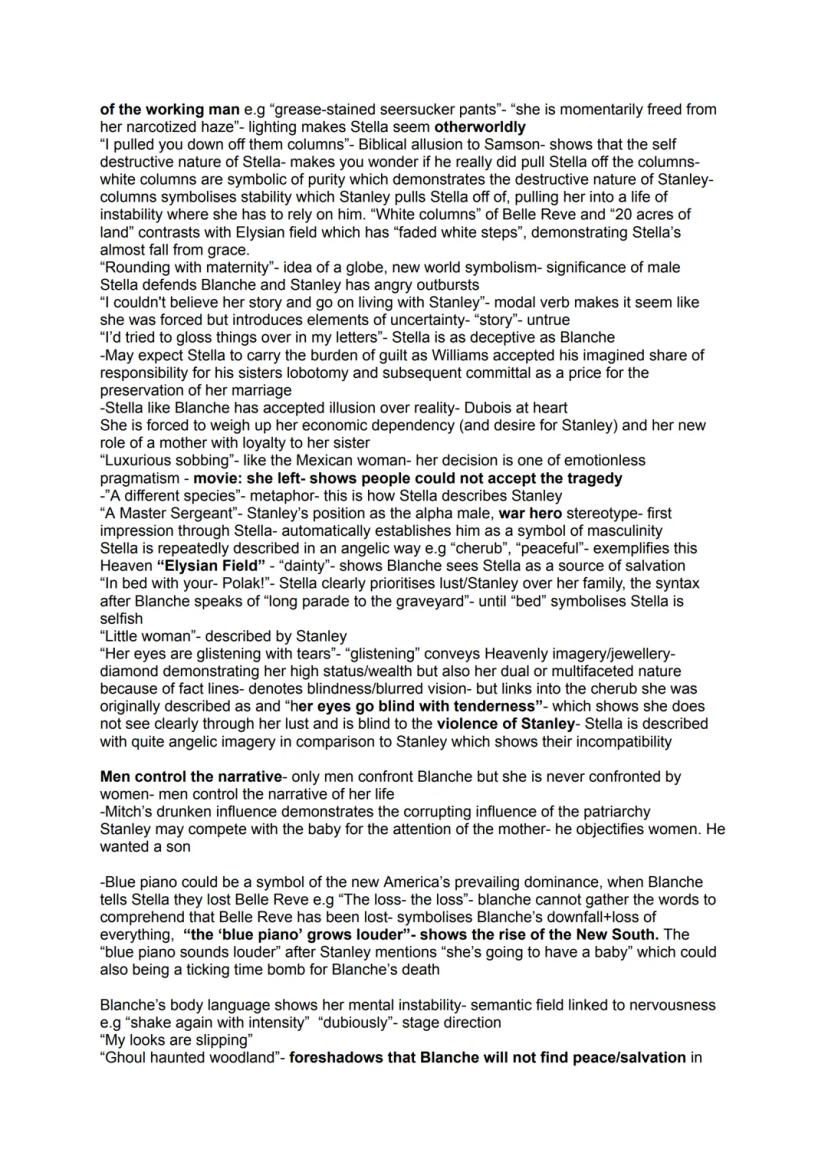
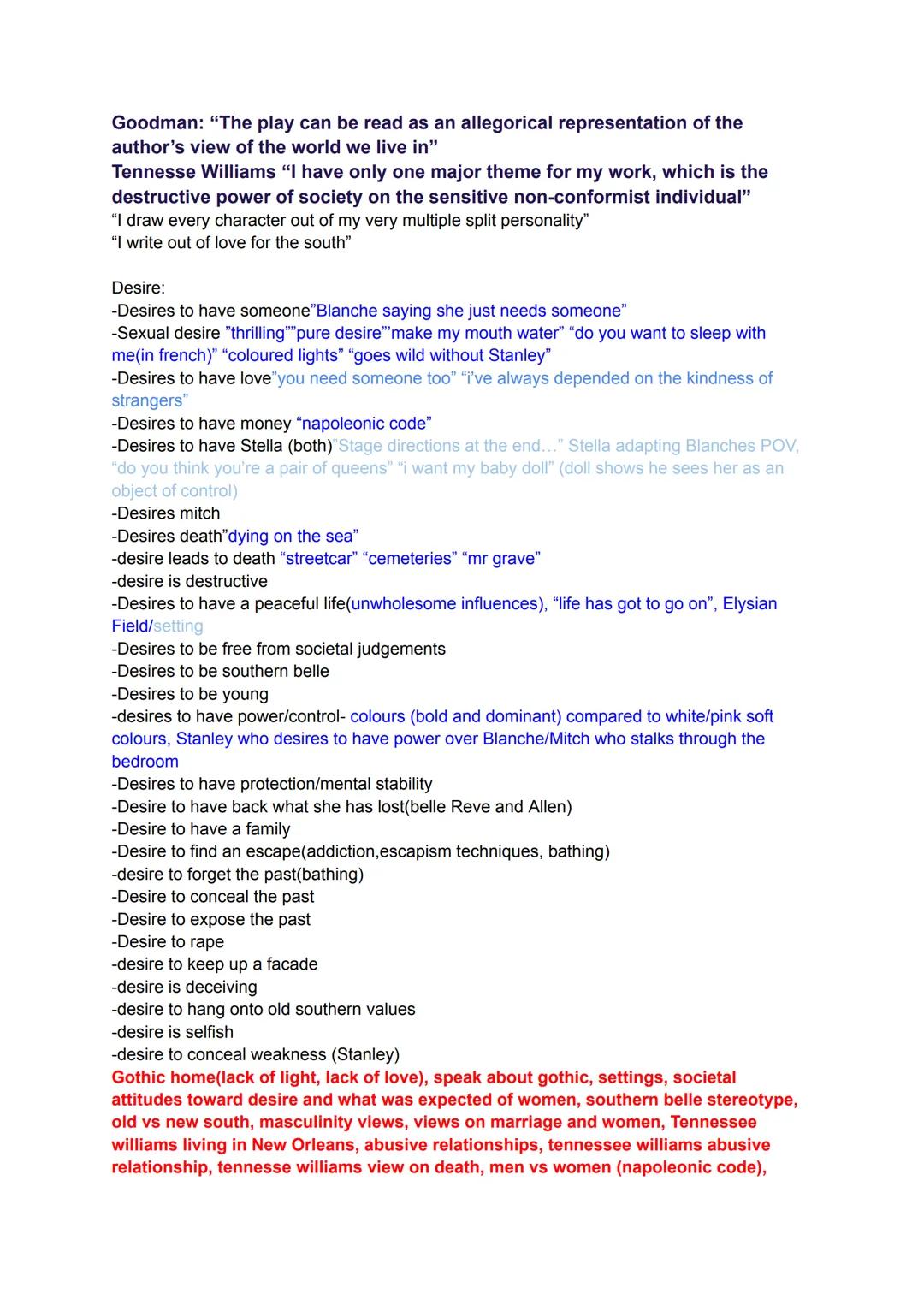
Ever wondered why people make destructive choices? Williams shows us that desire drives every character in this play, often leading to their downfall. Blanche desperately needs someone to love her, while Stanley craves power and control over his territory.
The play presents desire as fundamentally destructive - notice how the streetcar itself symbolises this journey toward destruction, with stops at "Cemeteries" and connections to death imagery. Blanche's sexual desires, her need for money (the Napoleonic Code), and her desperate wish to recapture her lost youth all contribute to her tragic end.
Williams cleverly uses desire to reveal character relationships. Stanley's possessive "I want my baby doll" shows he sees Stella as an object to control, whilst Blanche's famous line "I've always depended on the kindness of strangers" reveals her vulnerable dependence on others.
Key Point: Williams believed his central theme was "the destructive power of society on the sensitive non-conformist individual" - Blanche embodies this perfectly.
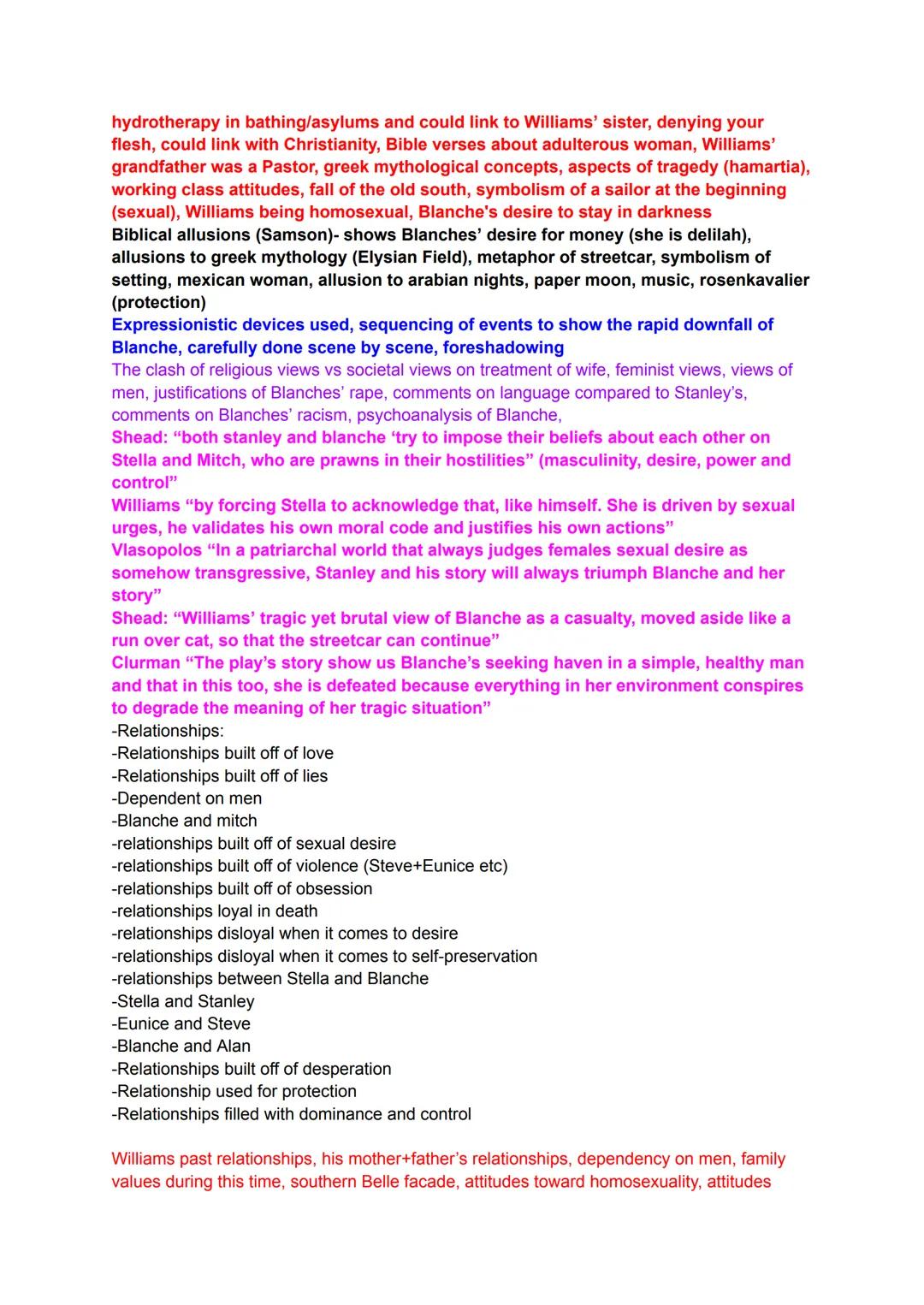
Williams wasn't just telling a story - he was creating a psychological landscape through expressionistic theatre. The Gothic setting, with its lack of light and love, mirrors the characters' internal struggles and societal attitudes toward desire.
Biblical and mythological allusions run throughout the play. Elysian Fields ironically represents a false paradise, whilst the Samson reference shows Blanche's manipulative desires for money. The streetcar metaphor itself represents fate carrying characters toward their inevitable destinations.
The contrast between old and new South appears everywhere - from Blanche's white, delicate clothing against Stanley's colourful, bold attire, to the polka music (representing Blanche's past) being drowned out by the blue piano (representing the new America).
Williams uses careful sequencing to show Blanche's rapid mental deterioration scene by scene. Each encounter strips away another layer of her facade, building toward the inevitable tragic conclusion.
Remember: Williams called this "plastic theatre" - everything on stage (costumes, lighting, music) carries symbolic meaning beyond just the dialogue.
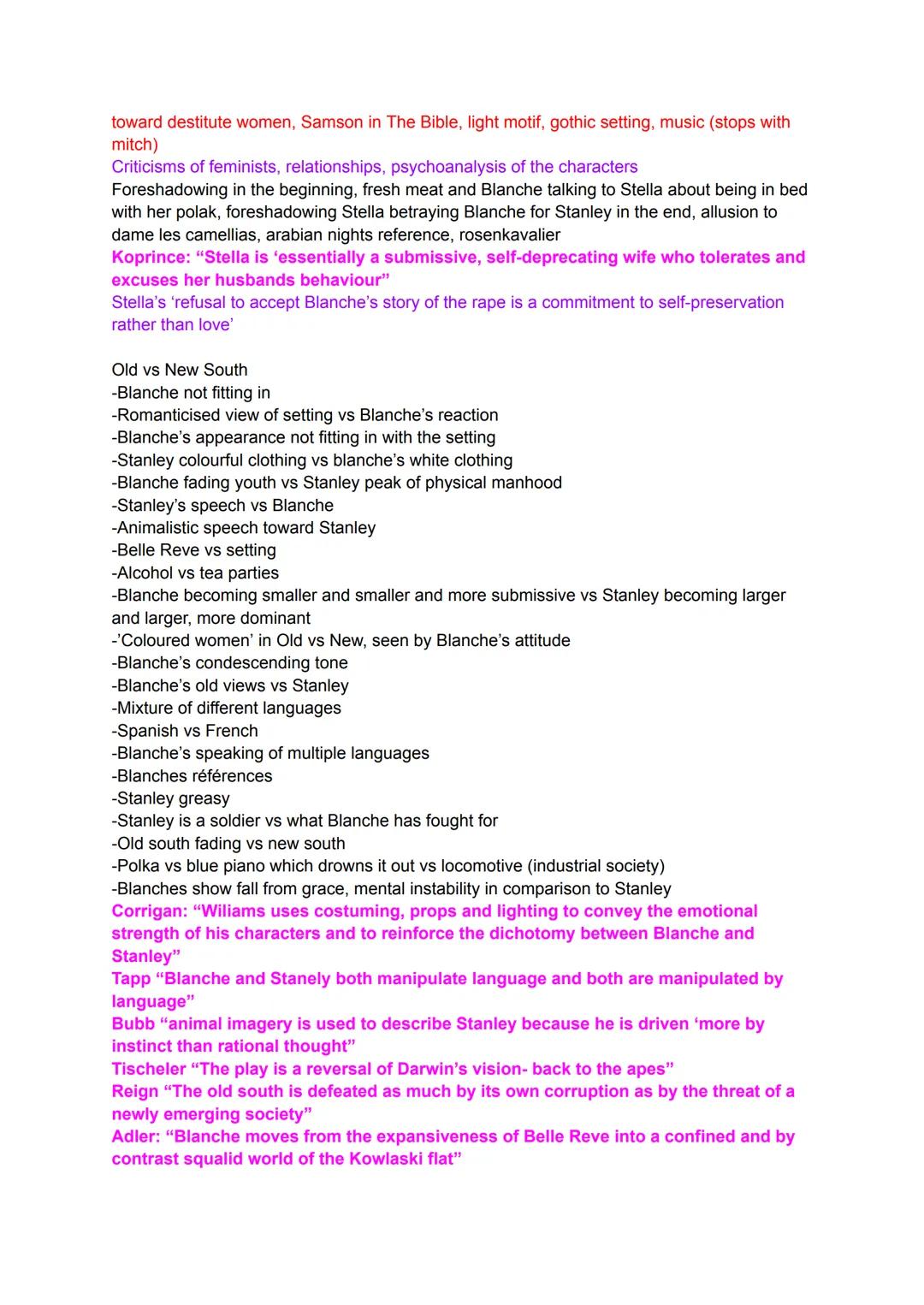
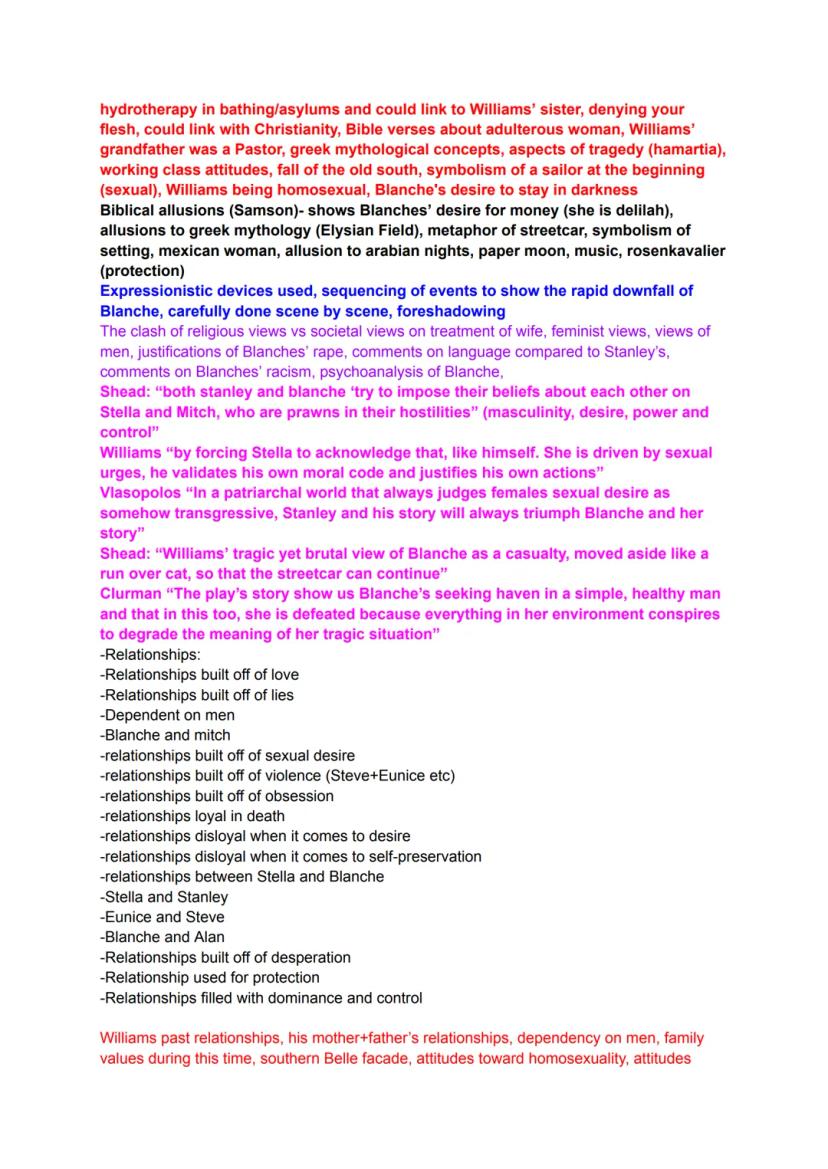
The relationships in this play aren't built on healthy foundations - they're constructed from lies, desperation, and sexual desire. Stella stays with Stanley despite his violence because she's addicted to their sexual connection, showing how desire can trap people in destructive cycles.
Blanche and Mitch's relationship reveals the play's central tragedy. She desperately needs protection and love, but her past makes genuine connection impossible. When the music stops playing during their scenes, Williams signals that hope for love is dying.
Stanley and Blanche represent two incompatible worldviews fighting for control. Critics like Shead note they're both trying to impose their beliefs on others, using Stella and Mitch as "prawns in their hostilities." This isn't just personal conflict - it's cultural warfare between old aristocratic values and new working-class dominance.
The patriarchal power structure ensures Stanley's story will always triumph over Blanche's. In a society that judges female sexual desire as transgressive, the violent masculine narrative wins whilst the sensitive feminine one gets destroyed.
Think About This: Notice how only men directly confront Blanche throughout the play - women never challenge her directly, showing how male voices control the narrative.
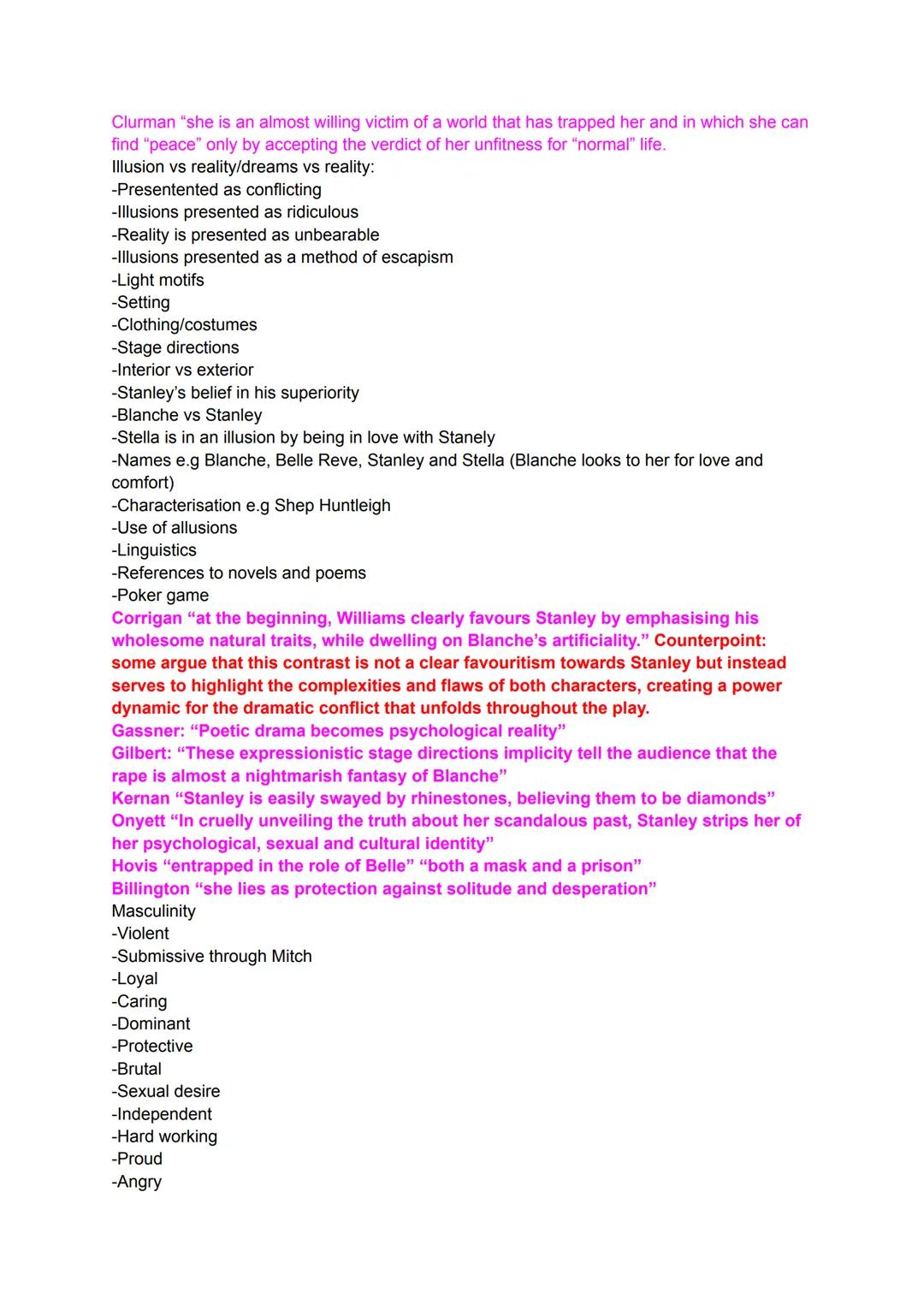
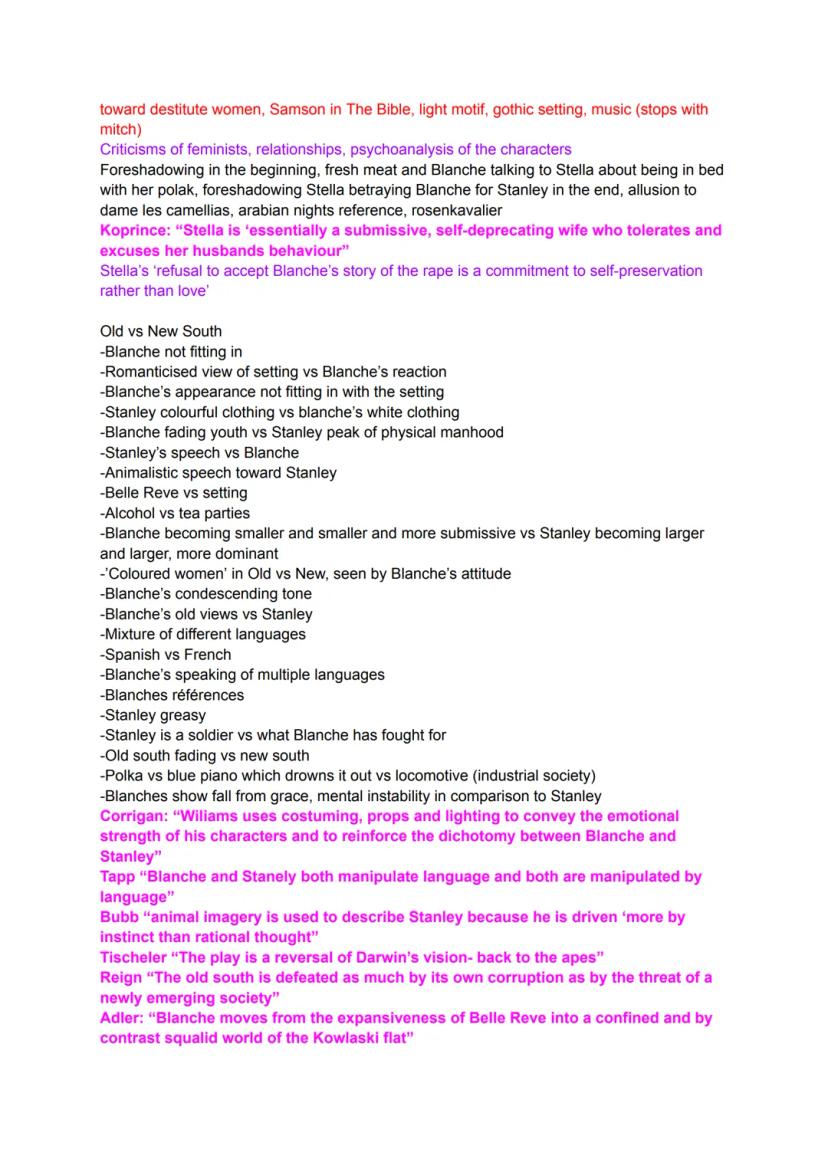
You're watching two Americas collide in this play. Blanche represents the dying Old South - aristocratic, refined, clinging to faded gentility. Stanley embodies the New South - working-class, immigrant, industrial, and unapologetically crude.
Physical appearances tell the story: Blanche arrives in delicate white clothes that don't fit the rough setting, whilst Stanley's colourful, practical clothing shows he belongs. Her fading beauty contrasts with his peak physical strength, symbolising which world is winning.
The language differences are crucial. Blanche speaks in sophisticated, multi-layered sentences peppered with French phrases and literary references. Stanley communicates in simple, direct terms that cut through her elaborate facades. This isn't just personality - it's about which communication style survives in modern America.
Belle Reve's loss represents more than Blanche's personal tragedy - it symbolises the entire collapse of the plantation aristocracy. The "white columns" Stanley claims he pulled Stella down from represent the purity and stability of the old order that can't survive contact with raw, modern reality.
Cultural Context: Remember that Williams was writing about post-war America, where traditional hierarchies were crumbling and new social orders were emerging.
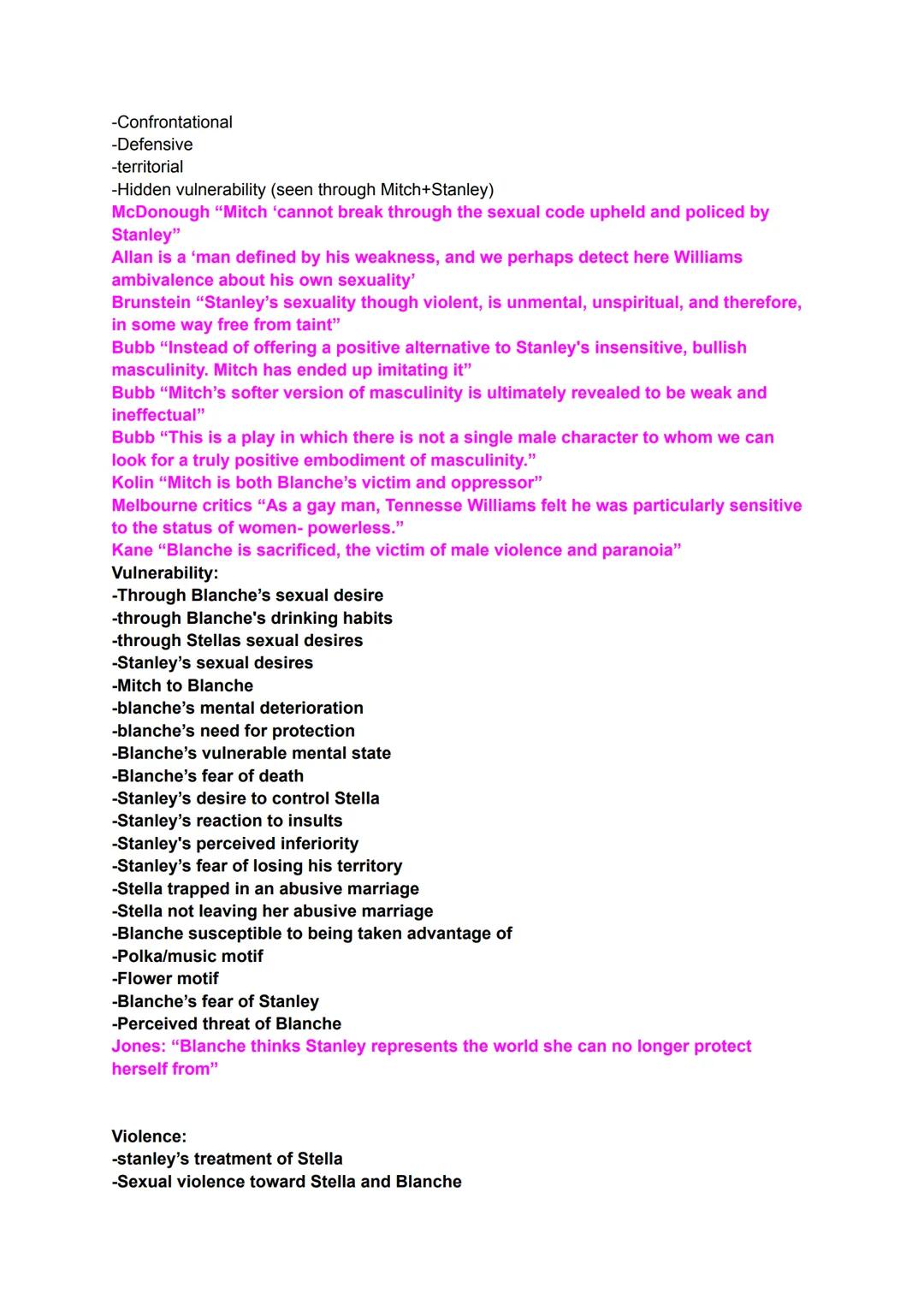
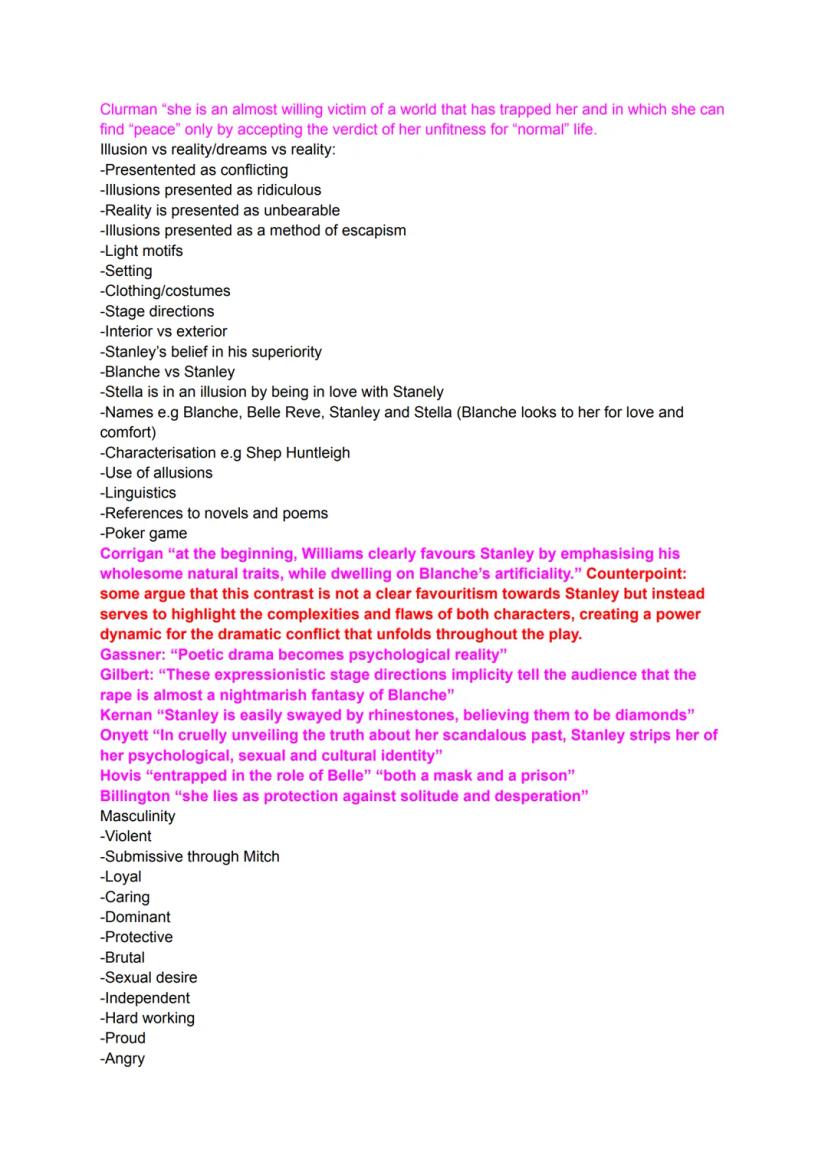
Blanche lives in carefully constructed illusions because reality has become unbearable. Her lies aren't just deception - they're survival mechanisms protecting her from trauma and societal judgment. The light motif brilliantly shows this: she avoids bright light because it exposes both her aging and her truth.
Stanley strips away these illusions one by one, but Williams questions whether this is heroic or cruel. Critics like Kernan point out that Stanley himself is "easily swayed by rhinestones, believing them to be diamonds" - he has his own delusions about superiority.
The expressionistic stage directions blur the line between Blanche's internal psychological state and external reality. When she sees and hears things others don't, we're witnessing her mind's collapse under the weight of trauma and rejection.
Stella chooses illusion too - she must convince herself that Blanche's rape story is false to continue living with Stanley. This shows that choosing comfortable lies over painful truths isn't just Blanche's weakness - it's a human survival strategy.
Literary Technique: Williams uses "poetic drama becoming psychological reality" - the theatrical elements represent internal mental states rather than just external action.
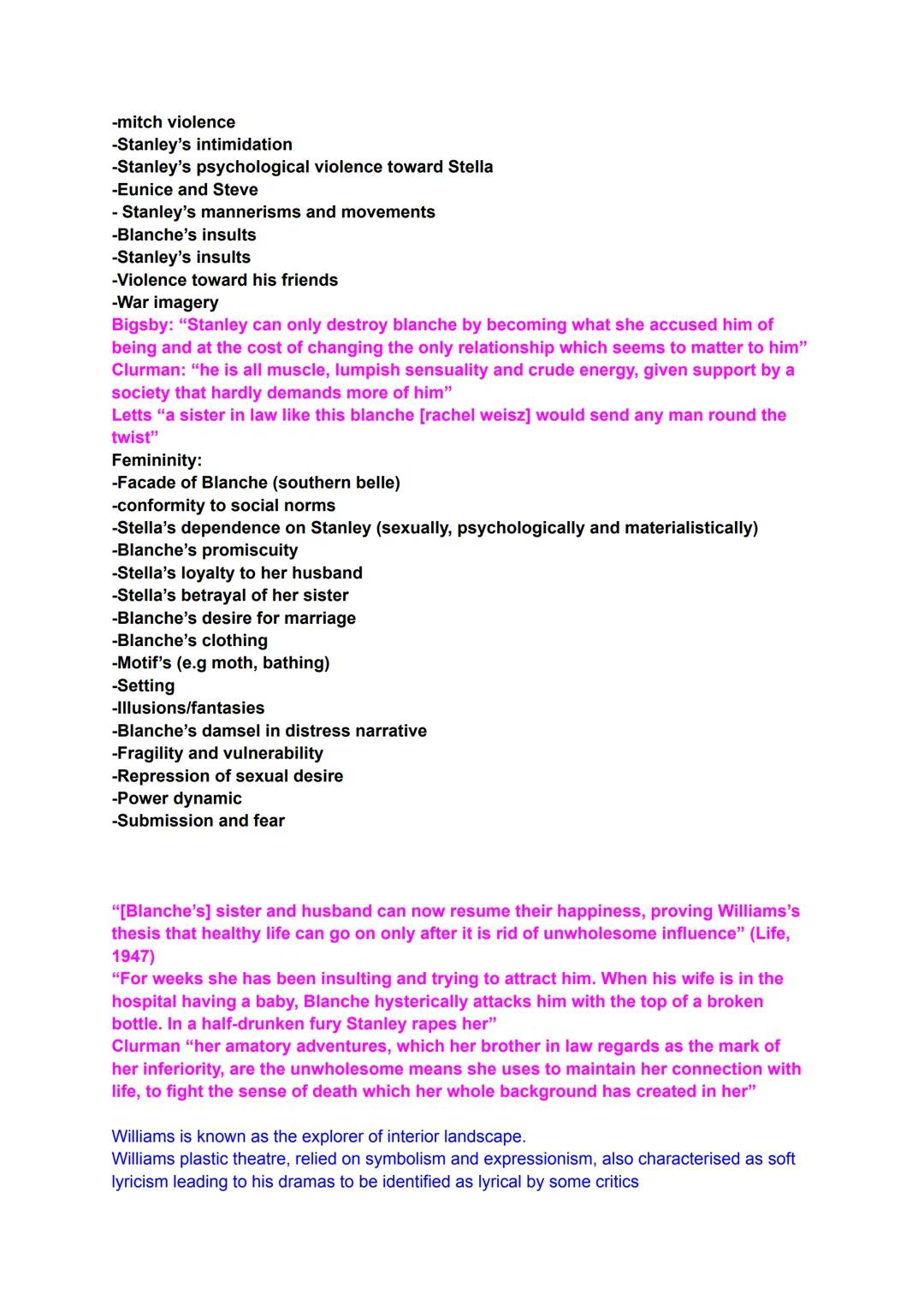
Traditional masculinity in this play is deeply problematic. Stanley's violence, dominance, and sexual aggression are presented as "natural" masculine traits, but Williams shows how destructive they become. Even Mitch, initially appearing gentler, ultimately imitates Stanley's brutality when rejected.
The play reveals hidden male vulnerability beneath aggressive surfaces. Stanley's violent reactions often stem from insecurity about his perceived inferiority. His need to control his "territory" and maintain dominance shows fear rather than strength.
There's no positive male role model in the entire play, as critic Bubb notes. Allan's weakness led to suicide, Mitch's sensitivity proves "ineffectual," and Stanley's strength is purely destructive. Williams, as a gay man, understood how traditional masculine expectations could crush sensitive individuals.
The rape scene represents the ultimate expression of masculine power destroying feminine vulnerability. Stanley can only defeat Blanche by becoming exactly what she accused him of being - a brutal animal - which ultimately changes his relationship with Stella forever.
Social Commentary: Williams shows how society's masculine ideals often reward violence and punish sensitivity, creating a world hostile to "non-conformist individuals."
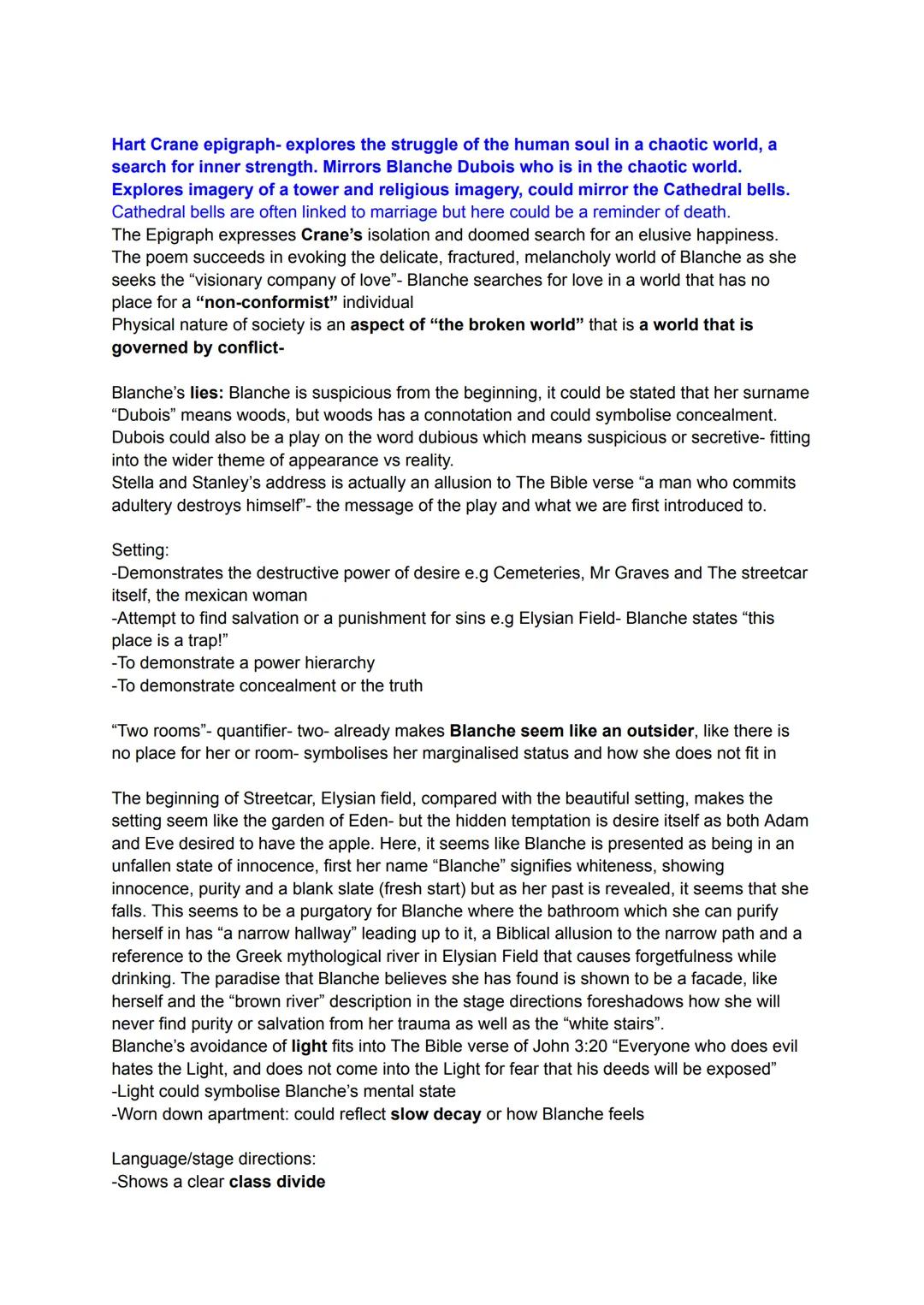
The two-room apartment immediately establishes Blanche as an outsider - there's literally no space for her. This physical constraint symbolises her marginalised status in the new social order. The narrow hallway leading to the bathroom creates a sense of entrapment rather than sanctuary.
Elysian Fields ironically represents a false paradise. What appears beautiful and peaceful to others becomes a trap for Blanche. The biblical parallels are crucial - this seems like Eden, but desire itself is the hidden serpent that causes the fall.
The light symbolism operates on multiple levels. It represents truth, mental stability, love, and control. Blanche's avoidance connects to John 3:20: "Everyone who does evil hates the Light" - but Williams complicates this by showing that harsh light can be destructive rather than revelatory.
Colour symbolism tells the story visually. Stanley's bold, dominant colours contrast with Blanche's soft whites and pinks. As the play progresses, Blanche literally becomes smaller whilst Stanley grows larger and more dominant in the space.
Biblical Connection: The apartment address alludes to a Bible verse about adultery destroying oneself - Williams establishes the theme from the very first scene.
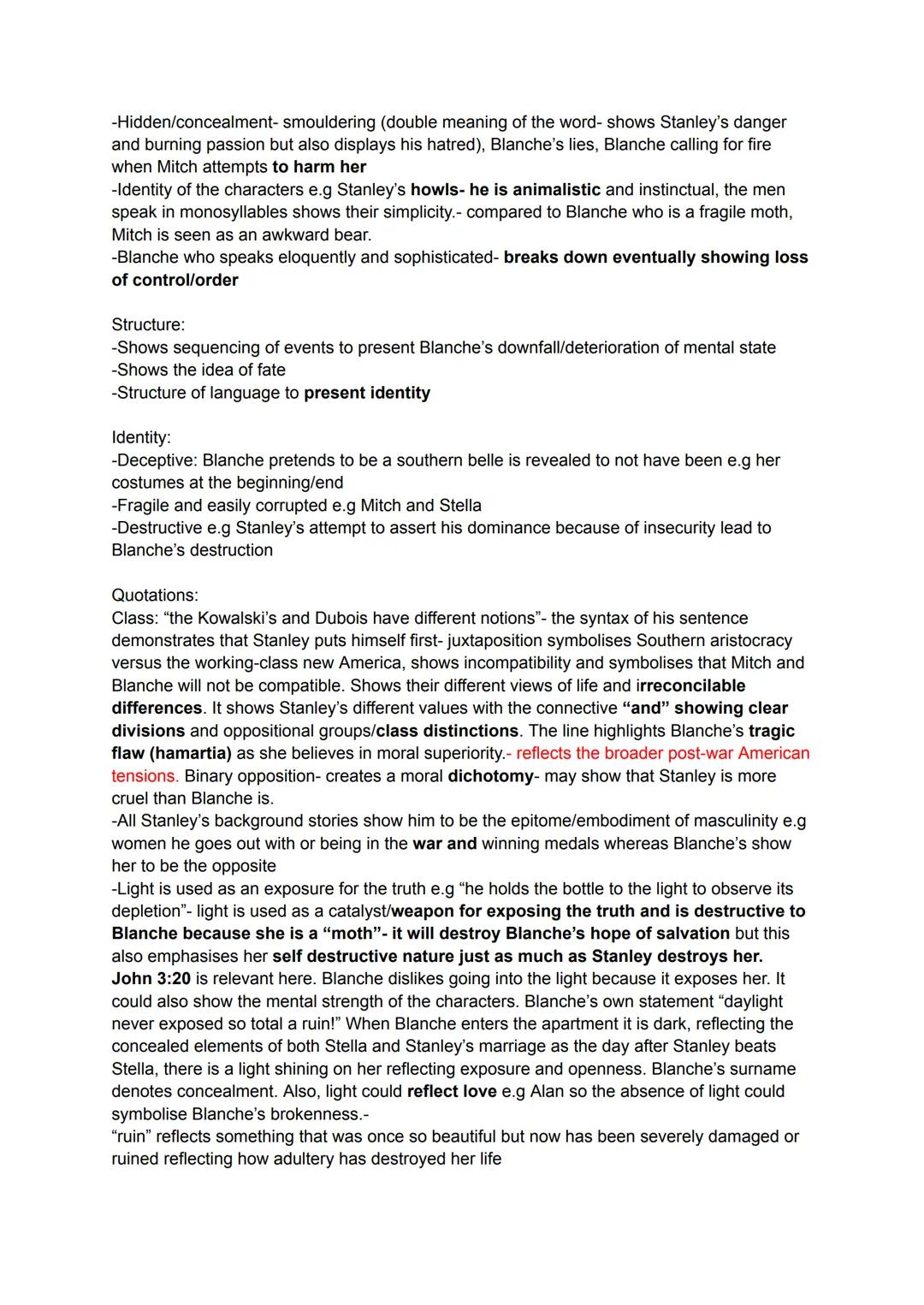
Class differences emerge through speech patterns. Stanley and his friends communicate in monosyllables, showing their straightforward, uncomplicated worldview. Blanche's elaborate, sophisticated language reveals both her education and her desperate attempts to maintain dignity through words.
The "Kowalski and DuBois have different notions" line brilliantly demonstrates power dynamics through syntax. Stanley puts himself first, showing how he prioritises his perspective over aristocratic traditions. The "and" creates a clear division between incompatible worldviews.
Language becomes a weapon throughout the play. Tapp notes that "both manipulate language and both are manipulated by language." Stanley uses crude directness to cut through Blanche's defences, whilst she uses sophisticated vocabulary to maintain superiority.
Identity performance through speech shows how characters construct themselves. Blanche's eloquent delivery gradually breaks down, showing her loss of control. Meanwhile, Stanley's animalistic imagery (howls, grunts) reinforces his instinctual rather than intellectual nature.
Social Analysis: The play explores post-war tensions between established cultural hierarchies and emerging working-class power - language becomes the battlefield for these competing values.
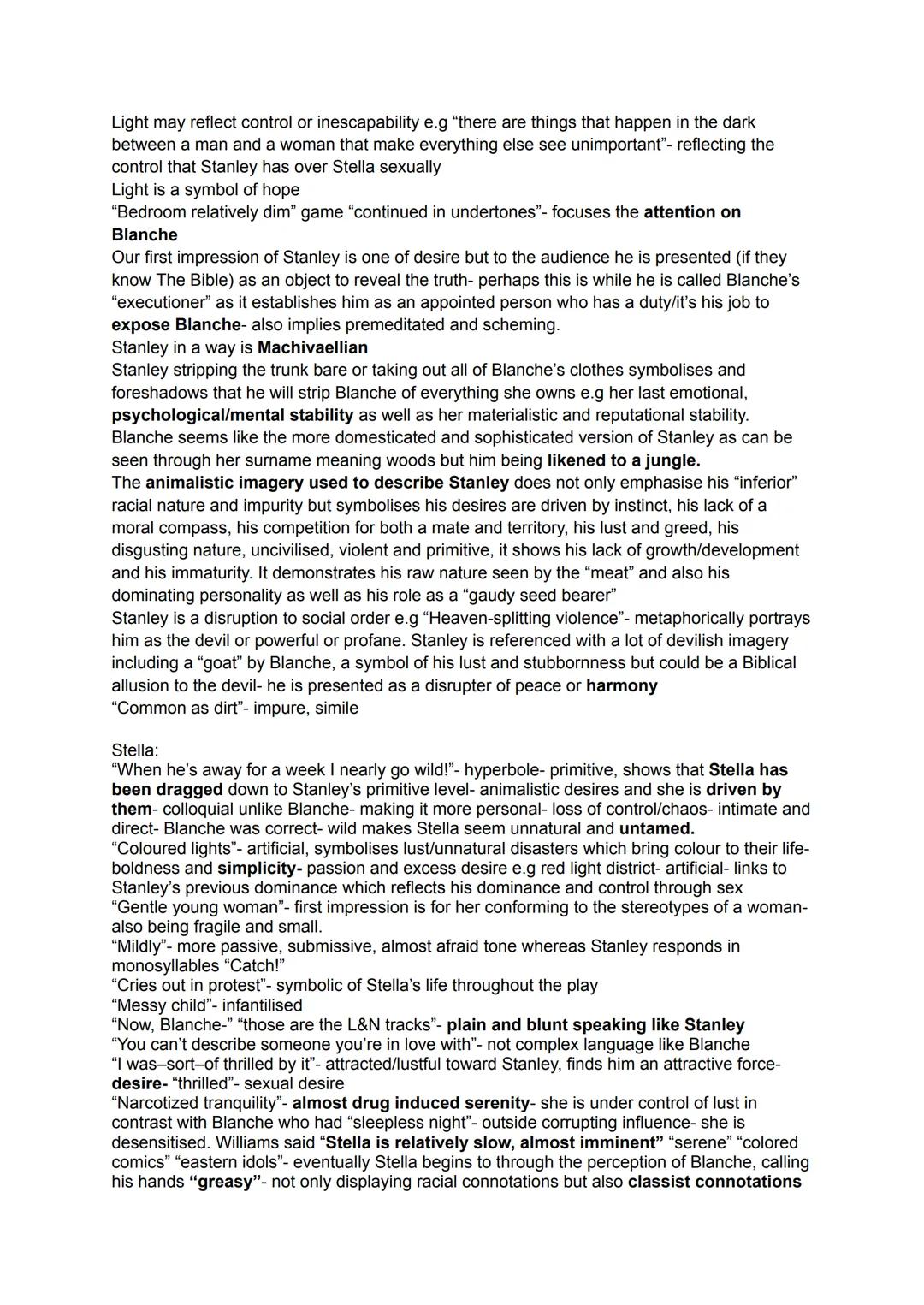
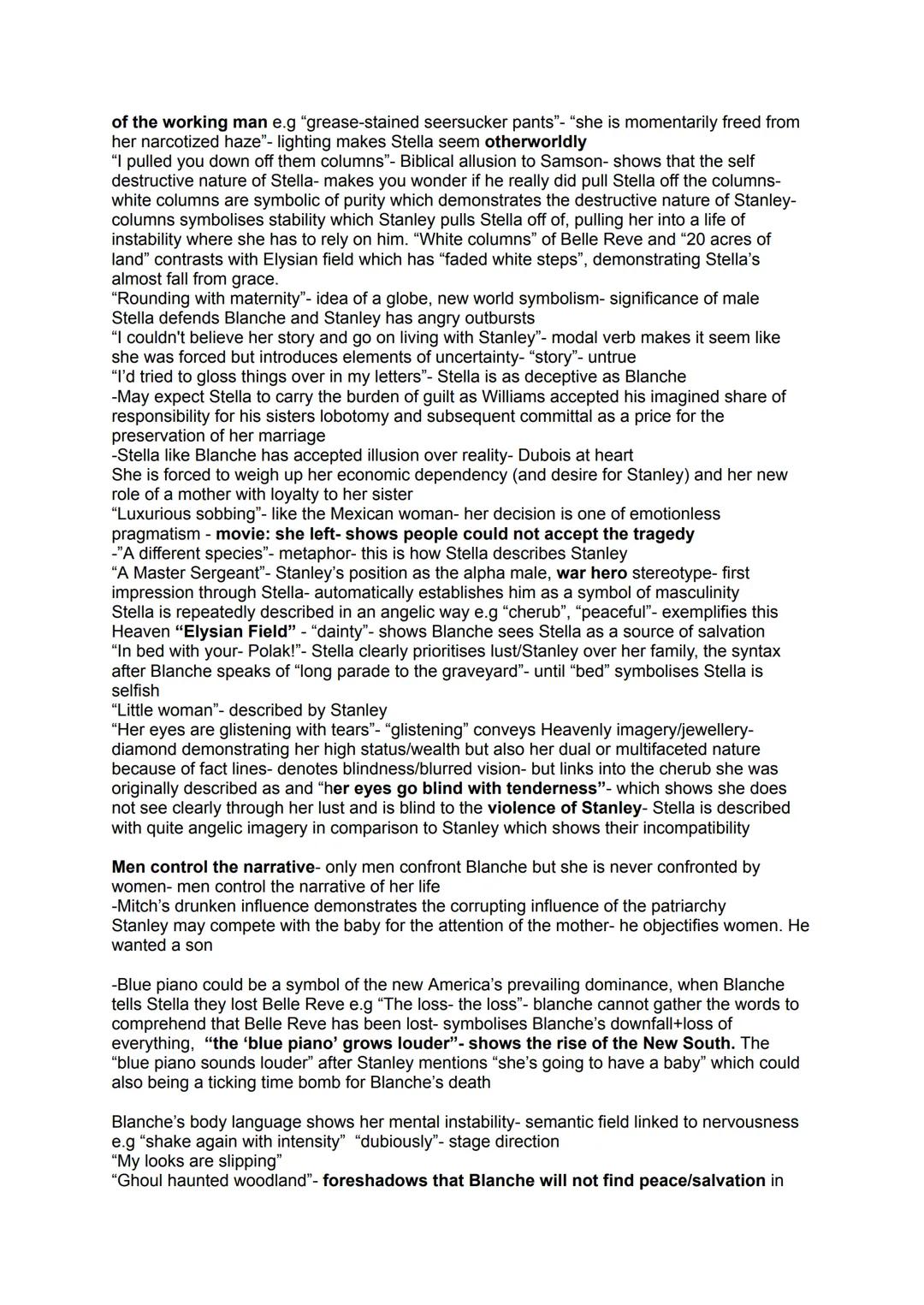
Williams constructs a classical tragedy using modern American characters. Blanche possesses the tragic flaw (hamartia) of believing in her moral superiority whilst being unable to face reality about her past actions.
The sequence of revelations follows tragic structure perfectly. Each scene strips away another layer of Blanche's protection, building inevitable momentum toward her destruction. The poker games provide regular intervals where male power reasserts itself.
Foreshadowing operates throughout: the opening "fresh meat" comment predicts the rape, whilst early references to Stella choosing Stanley over family predict the final betrayal. The Mexican woman appears as a death omen before Blanche's mental collapse.
The Hart Crane epigraph establishes the play's exploration of "the broken world" where sensitive souls search for "visionary company of love" but find only destruction. This mirrors Blanche's doomed quest for connection in a hostile universe.
Tragic Recognition: Like classical tragic heroes, Blanche gains self-knowledge too late - she understands her situation but cannot escape her fate.
Our AI Companion is a student-focused AI tool that offers more than just answers. Built on millions of Knowunity resources, it provides relevant information, personalised study plans, quizzes, and content directly in the chat, adapting to your individual learning journey.
You can download the app from Google Play Store and Apple App Store.
That's right! Enjoy free access to study content, connect with fellow students, and get instant help – all at your fingertips.
App Store
Google Play
The app is very easy to use and well designed. I have found everything I was looking for so far and have been able to learn a lot from the presentations! I will definitely use the app for a class assignment! And of course it also helps a lot as an inspiration.
Stefan S
iOS user
This app is really great. There are so many study notes and help [...]. My problem subject is French, for example, and the app has so many options for help. Thanks to this app, I have improved my French. I would recommend it to anyone.
Samantha Klich
Android user
Wow, I am really amazed. I just tried the app because I've seen it advertised many times and was absolutely stunned. This app is THE HELP you want for school and above all, it offers so many things, such as workouts and fact sheets, which have been VERY helpful to me personally.
Anna
iOS user
Best app on earth! no words because it’s too good
Thomas R
iOS user
Just amazing. Let's me revise 10x better, this app is a quick 10/10. I highly recommend it to anyone. I can watch and search for notes. I can save them in the subject folder. I can revise it any time when I come back. If you haven't tried this app, you're really missing out.
Basil
Android user
This app has made me feel so much more confident in my exam prep, not only through boosting my own self confidence through the features that allow you to connect with others and feel less alone, but also through the way the app itself is centred around making you feel better. It is easy to navigate, fun to use, and helpful to anyone struggling in absolutely any way.
David K
iOS user
The app's just great! All I have to do is enter the topic in the search bar and I get the response real fast. I don't have to watch 10 YouTube videos to understand something, so I'm saving my time. Highly recommended!
Sudenaz Ocak
Android user
In school I was really bad at maths but thanks to the app, I am doing better now. I am so grateful that you made the app.
Greenlight Bonnie
Android user
very reliable app to help and grow your ideas of Maths, English and other related topics in your works. please use this app if your struggling in areas, this app is key for that. wish I'd of done a review before. and it's also free so don't worry about that.
Rohan U
Android user
I know a lot of apps use fake accounts to boost their reviews but this app deserves it all. Originally I was getting 4 in my English exams and this time I got a grade 7. I didn’t even know about this app three days until the exam and it has helped A LOT. Please actually trust me and use it as I’m sure you too will see developments.
Xander S
iOS user
THE QUIZES AND FLASHCARDS ARE SO USEFUL AND I LOVE Knowunity AI. IT ALSO IS LITREALLY LIKE CHATGPT BUT SMARTER!! HELPED ME WITH MY MASCARA PROBLEMS TOO!! AS WELL AS MY REAL SUBJECTS ! DUHHH 😍😁😲🤑💗✨🎀😮
Elisha
iOS user
This apps acc the goat. I find revision so boring but this app makes it so easy to organize it all and then you can ask the freeeee ai to test yourself so good and you can easily upload your own stuff. highly recommend as someone taking mocks now
Paul T
iOS user
The app is very easy to use and well designed. I have found everything I was looking for so far and have been able to learn a lot from the presentations! I will definitely use the app for a class assignment! And of course it also helps a lot as an inspiration.
Stefan S
iOS user
This app is really great. There are so many study notes and help [...]. My problem subject is French, for example, and the app has so many options for help. Thanks to this app, I have improved my French. I would recommend it to anyone.
Samantha Klich
Android user
Wow, I am really amazed. I just tried the app because I've seen it advertised many times and was absolutely stunned. This app is THE HELP you want for school and above all, it offers so many things, such as workouts and fact sheets, which have been VERY helpful to me personally.
Anna
iOS user
Best app on earth! no words because it’s too good
Thomas R
iOS user
Just amazing. Let's me revise 10x better, this app is a quick 10/10. I highly recommend it to anyone. I can watch and search for notes. I can save them in the subject folder. I can revise it any time when I come back. If you haven't tried this app, you're really missing out.
Basil
Android user
This app has made me feel so much more confident in my exam prep, not only through boosting my own self confidence through the features that allow you to connect with others and feel less alone, but also through the way the app itself is centred around making you feel better. It is easy to navigate, fun to use, and helpful to anyone struggling in absolutely any way.
David K
iOS user
The app's just great! All I have to do is enter the topic in the search bar and I get the response real fast. I don't have to watch 10 YouTube videos to understand something, so I'm saving my time. Highly recommended!
Sudenaz Ocak
Android user
In school I was really bad at maths but thanks to the app, I am doing better now. I am so grateful that you made the app.
Greenlight Bonnie
Android user
very reliable app to help and grow your ideas of Maths, English and other related topics in your works. please use this app if your struggling in areas, this app is key for that. wish I'd of done a review before. and it's also free so don't worry about that.
Rohan U
Android user
I know a lot of apps use fake accounts to boost their reviews but this app deserves it all. Originally I was getting 4 in my English exams and this time I got a grade 7. I didn’t even know about this app three days until the exam and it has helped A LOT. Please actually trust me and use it as I’m sure you too will see developments.
Xander S
iOS user
THE QUIZES AND FLASHCARDS ARE SO USEFUL AND I LOVE Knowunity AI. IT ALSO IS LITREALLY LIKE CHATGPT BUT SMARTER!! HELPED ME WITH MY MASCARA PROBLEMS TOO!! AS WELL AS MY REAL SUBJECTS ! DUHHH 😍😁😲🤑💗✨🎀😮
Elisha
iOS user
This apps acc the goat. I find revision so boring but this app makes it so easy to organize it all and then you can ask the freeeee ai to test yourself so good and you can easily upload your own stuff. highly recommend as someone taking mocks now
Paul T
iOS user
millie
@millie_xmtr
Tennessee Williams' "A Streetcar Named Desire" is a powerful exploration of desire, conflict, and the clash between old and new America. The play examines how society destroys sensitive individuals who don't conform, using the tragic figure of Blanche DuBois to... Show more
Access to all documents
Improve your grades
Join milions of students
Ever wondered why people make destructive choices? Williams shows us that desire drives every character in this play, often leading to their downfall. Blanche desperately needs someone to love her, while Stanley craves power and control over his territory.
The play presents desire as fundamentally destructive - notice how the streetcar itself symbolises this journey toward destruction, with stops at "Cemeteries" and connections to death imagery. Blanche's sexual desires, her need for money (the Napoleonic Code), and her desperate wish to recapture her lost youth all contribute to her tragic end.
Williams cleverly uses desire to reveal character relationships. Stanley's possessive "I want my baby doll" shows he sees Stella as an object to control, whilst Blanche's famous line "I've always depended on the kindness of strangers" reveals her vulnerable dependence on others.
Key Point: Williams believed his central theme was "the destructive power of society on the sensitive non-conformist individual" - Blanche embodies this perfectly.
Access to all documents
Improve your grades
Join milions of students
Williams wasn't just telling a story - he was creating a psychological landscape through expressionistic theatre. The Gothic setting, with its lack of light and love, mirrors the characters' internal struggles and societal attitudes toward desire.
Biblical and mythological allusions run throughout the play. Elysian Fields ironically represents a false paradise, whilst the Samson reference shows Blanche's manipulative desires for money. The streetcar metaphor itself represents fate carrying characters toward their inevitable destinations.
The contrast between old and new South appears everywhere - from Blanche's white, delicate clothing against Stanley's colourful, bold attire, to the polka music (representing Blanche's past) being drowned out by the blue piano (representing the new America).
Williams uses careful sequencing to show Blanche's rapid mental deterioration scene by scene. Each encounter strips away another layer of her facade, building toward the inevitable tragic conclusion.
Remember: Williams called this "plastic theatre" - everything on stage (costumes, lighting, music) carries symbolic meaning beyond just the dialogue.
Access to all documents
Improve your grades
Join milions of students
The relationships in this play aren't built on healthy foundations - they're constructed from lies, desperation, and sexual desire. Stella stays with Stanley despite his violence because she's addicted to their sexual connection, showing how desire can trap people in destructive cycles.
Blanche and Mitch's relationship reveals the play's central tragedy. She desperately needs protection and love, but her past makes genuine connection impossible. When the music stops playing during their scenes, Williams signals that hope for love is dying.
Stanley and Blanche represent two incompatible worldviews fighting for control. Critics like Shead note they're both trying to impose their beliefs on others, using Stella and Mitch as "prawns in their hostilities." This isn't just personal conflict - it's cultural warfare between old aristocratic values and new working-class dominance.
The patriarchal power structure ensures Stanley's story will always triumph over Blanche's. In a society that judges female sexual desire as transgressive, the violent masculine narrative wins whilst the sensitive feminine one gets destroyed.
Think About This: Notice how only men directly confront Blanche throughout the play - women never challenge her directly, showing how male voices control the narrative.
Access to all documents
Improve your grades
Join milions of students
You're watching two Americas collide in this play. Blanche represents the dying Old South - aristocratic, refined, clinging to faded gentility. Stanley embodies the New South - working-class, immigrant, industrial, and unapologetically crude.
Physical appearances tell the story: Blanche arrives in delicate white clothes that don't fit the rough setting, whilst Stanley's colourful, practical clothing shows he belongs. Her fading beauty contrasts with his peak physical strength, symbolising which world is winning.
The language differences are crucial. Blanche speaks in sophisticated, multi-layered sentences peppered with French phrases and literary references. Stanley communicates in simple, direct terms that cut through her elaborate facades. This isn't just personality - it's about which communication style survives in modern America.
Belle Reve's loss represents more than Blanche's personal tragedy - it symbolises the entire collapse of the plantation aristocracy. The "white columns" Stanley claims he pulled Stella down from represent the purity and stability of the old order that can't survive contact with raw, modern reality.
Cultural Context: Remember that Williams was writing about post-war America, where traditional hierarchies were crumbling and new social orders were emerging.
Access to all documents
Improve your grades
Join milions of students
Blanche lives in carefully constructed illusions because reality has become unbearable. Her lies aren't just deception - they're survival mechanisms protecting her from trauma and societal judgment. The light motif brilliantly shows this: she avoids bright light because it exposes both her aging and her truth.
Stanley strips away these illusions one by one, but Williams questions whether this is heroic or cruel. Critics like Kernan point out that Stanley himself is "easily swayed by rhinestones, believing them to be diamonds" - he has his own delusions about superiority.
The expressionistic stage directions blur the line between Blanche's internal psychological state and external reality. When she sees and hears things others don't, we're witnessing her mind's collapse under the weight of trauma and rejection.
Stella chooses illusion too - she must convince herself that Blanche's rape story is false to continue living with Stanley. This shows that choosing comfortable lies over painful truths isn't just Blanche's weakness - it's a human survival strategy.
Literary Technique: Williams uses "poetic drama becoming psychological reality" - the theatrical elements represent internal mental states rather than just external action.
Access to all documents
Improve your grades
Join milions of students
Traditional masculinity in this play is deeply problematic. Stanley's violence, dominance, and sexual aggression are presented as "natural" masculine traits, but Williams shows how destructive they become. Even Mitch, initially appearing gentler, ultimately imitates Stanley's brutality when rejected.
The play reveals hidden male vulnerability beneath aggressive surfaces. Stanley's violent reactions often stem from insecurity about his perceived inferiority. His need to control his "territory" and maintain dominance shows fear rather than strength.
There's no positive male role model in the entire play, as critic Bubb notes. Allan's weakness led to suicide, Mitch's sensitivity proves "ineffectual," and Stanley's strength is purely destructive. Williams, as a gay man, understood how traditional masculine expectations could crush sensitive individuals.
The rape scene represents the ultimate expression of masculine power destroying feminine vulnerability. Stanley can only defeat Blanche by becoming exactly what she accused him of being - a brutal animal - which ultimately changes his relationship with Stella forever.
Social Commentary: Williams shows how society's masculine ideals often reward violence and punish sensitivity, creating a world hostile to "non-conformist individuals."
Access to all documents
Improve your grades
Join milions of students
The two-room apartment immediately establishes Blanche as an outsider - there's literally no space for her. This physical constraint symbolises her marginalised status in the new social order. The narrow hallway leading to the bathroom creates a sense of entrapment rather than sanctuary.
Elysian Fields ironically represents a false paradise. What appears beautiful and peaceful to others becomes a trap for Blanche. The biblical parallels are crucial - this seems like Eden, but desire itself is the hidden serpent that causes the fall.
The light symbolism operates on multiple levels. It represents truth, mental stability, love, and control. Blanche's avoidance connects to John 3:20: "Everyone who does evil hates the Light" - but Williams complicates this by showing that harsh light can be destructive rather than revelatory.
Colour symbolism tells the story visually. Stanley's bold, dominant colours contrast with Blanche's soft whites and pinks. As the play progresses, Blanche literally becomes smaller whilst Stanley grows larger and more dominant in the space.
Biblical Connection: The apartment address alludes to a Bible verse about adultery destroying oneself - Williams establishes the theme from the very first scene.
Access to all documents
Improve your grades
Join milions of students
Class differences emerge through speech patterns. Stanley and his friends communicate in monosyllables, showing their straightforward, uncomplicated worldview. Blanche's elaborate, sophisticated language reveals both her education and her desperate attempts to maintain dignity through words.
The "Kowalski and DuBois have different notions" line brilliantly demonstrates power dynamics through syntax. Stanley puts himself first, showing how he prioritises his perspective over aristocratic traditions. The "and" creates a clear division between incompatible worldviews.
Language becomes a weapon throughout the play. Tapp notes that "both manipulate language and both are manipulated by language." Stanley uses crude directness to cut through Blanche's defences, whilst she uses sophisticated vocabulary to maintain superiority.
Identity performance through speech shows how characters construct themselves. Blanche's eloquent delivery gradually breaks down, showing her loss of control. Meanwhile, Stanley's animalistic imagery (howls, grunts) reinforces his instinctual rather than intellectual nature.
Social Analysis: The play explores post-war tensions between established cultural hierarchies and emerging working-class power - language becomes the battlefield for these competing values.
Access to all documents
Improve your grades
Join milions of students
Williams constructs a classical tragedy using modern American characters. Blanche possesses the tragic flaw (hamartia) of believing in her moral superiority whilst being unable to face reality about her past actions.
The sequence of revelations follows tragic structure perfectly. Each scene strips away another layer of Blanche's protection, building inevitable momentum toward her destruction. The poker games provide regular intervals where male power reasserts itself.
Foreshadowing operates throughout: the opening "fresh meat" comment predicts the rape, whilst early references to Stella choosing Stanley over family predict the final betrayal. The Mexican woman appears as a death omen before Blanche's mental collapse.
The Hart Crane epigraph establishes the play's exploration of "the broken world" where sensitive souls search for "visionary company of love" but find only destruction. This mirrors Blanche's doomed quest for connection in a hostile universe.
Tragic Recognition: Like classical tragic heroes, Blanche gains self-knowledge too late - she understands her situation but cannot escape her fate.
Access to all documents
Improve your grades
Join milions of students
Our AI Companion is a student-focused AI tool that offers more than just answers. Built on millions of Knowunity resources, it provides relevant information, personalised study plans, quizzes, and content directly in the chat, adapting to your individual learning journey.
You can download the app from Google Play Store and Apple App Store.
That's right! Enjoy free access to study content, connect with fellow students, and get instant help – all at your fingertips.
0
Smart Tools NEW
Transform this note into: ✓ 50+ Practice Questions ✓ Interactive Flashcards ✓ Full Mock Exam ✓ Essay Outlines
App Store
Google Play
The app is very easy to use and well designed. I have found everything I was looking for so far and have been able to learn a lot from the presentations! I will definitely use the app for a class assignment! And of course it also helps a lot as an inspiration.
Stefan S
iOS user
This app is really great. There are so many study notes and help [...]. My problem subject is French, for example, and the app has so many options for help. Thanks to this app, I have improved my French. I would recommend it to anyone.
Samantha Klich
Android user
Wow, I am really amazed. I just tried the app because I've seen it advertised many times and was absolutely stunned. This app is THE HELP you want for school and above all, it offers so many things, such as workouts and fact sheets, which have been VERY helpful to me personally.
Anna
iOS user
Best app on earth! no words because it’s too good
Thomas R
iOS user
Just amazing. Let's me revise 10x better, this app is a quick 10/10. I highly recommend it to anyone. I can watch and search for notes. I can save them in the subject folder. I can revise it any time when I come back. If you haven't tried this app, you're really missing out.
Basil
Android user
This app has made me feel so much more confident in my exam prep, not only through boosting my own self confidence through the features that allow you to connect with others and feel less alone, but also through the way the app itself is centred around making you feel better. It is easy to navigate, fun to use, and helpful to anyone struggling in absolutely any way.
David K
iOS user
The app's just great! All I have to do is enter the topic in the search bar and I get the response real fast. I don't have to watch 10 YouTube videos to understand something, so I'm saving my time. Highly recommended!
Sudenaz Ocak
Android user
In school I was really bad at maths but thanks to the app, I am doing better now. I am so grateful that you made the app.
Greenlight Bonnie
Android user
very reliable app to help and grow your ideas of Maths, English and other related topics in your works. please use this app if your struggling in areas, this app is key for that. wish I'd of done a review before. and it's also free so don't worry about that.
Rohan U
Android user
I know a lot of apps use fake accounts to boost their reviews but this app deserves it all. Originally I was getting 4 in my English exams and this time I got a grade 7. I didn’t even know about this app three days until the exam and it has helped A LOT. Please actually trust me and use it as I’m sure you too will see developments.
Xander S
iOS user
THE QUIZES AND FLASHCARDS ARE SO USEFUL AND I LOVE Knowunity AI. IT ALSO IS LITREALLY LIKE CHATGPT BUT SMARTER!! HELPED ME WITH MY MASCARA PROBLEMS TOO!! AS WELL AS MY REAL SUBJECTS ! DUHHH 😍😁😲🤑💗✨🎀😮
Elisha
iOS user
This apps acc the goat. I find revision so boring but this app makes it so easy to organize it all and then you can ask the freeeee ai to test yourself so good and you can easily upload your own stuff. highly recommend as someone taking mocks now
Paul T
iOS user
The app is very easy to use and well designed. I have found everything I was looking for so far and have been able to learn a lot from the presentations! I will definitely use the app for a class assignment! And of course it also helps a lot as an inspiration.
Stefan S
iOS user
This app is really great. There are so many study notes and help [...]. My problem subject is French, for example, and the app has so many options for help. Thanks to this app, I have improved my French. I would recommend it to anyone.
Samantha Klich
Android user
Wow, I am really amazed. I just tried the app because I've seen it advertised many times and was absolutely stunned. This app is THE HELP you want for school and above all, it offers so many things, such as workouts and fact sheets, which have been VERY helpful to me personally.
Anna
iOS user
Best app on earth! no words because it’s too good
Thomas R
iOS user
Just amazing. Let's me revise 10x better, this app is a quick 10/10. I highly recommend it to anyone. I can watch and search for notes. I can save them in the subject folder. I can revise it any time when I come back. If you haven't tried this app, you're really missing out.
Basil
Android user
This app has made me feel so much more confident in my exam prep, not only through boosting my own self confidence through the features that allow you to connect with others and feel less alone, but also through the way the app itself is centred around making you feel better. It is easy to navigate, fun to use, and helpful to anyone struggling in absolutely any way.
David K
iOS user
The app's just great! All I have to do is enter the topic in the search bar and I get the response real fast. I don't have to watch 10 YouTube videos to understand something, so I'm saving my time. Highly recommended!
Sudenaz Ocak
Android user
In school I was really bad at maths but thanks to the app, I am doing better now. I am so grateful that you made the app.
Greenlight Bonnie
Android user
very reliable app to help and grow your ideas of Maths, English and other related topics in your works. please use this app if your struggling in areas, this app is key for that. wish I'd of done a review before. and it's also free so don't worry about that.
Rohan U
Android user
I know a lot of apps use fake accounts to boost their reviews but this app deserves it all. Originally I was getting 4 in my English exams and this time I got a grade 7. I didn’t even know about this app three days until the exam and it has helped A LOT. Please actually trust me and use it as I’m sure you too will see developments.
Xander S
iOS user
THE QUIZES AND FLASHCARDS ARE SO USEFUL AND I LOVE Knowunity AI. IT ALSO IS LITREALLY LIKE CHATGPT BUT SMARTER!! HELPED ME WITH MY MASCARA PROBLEMS TOO!! AS WELL AS MY REAL SUBJECTS ! DUHHH 😍😁😲🤑💗✨🎀😮
Elisha
iOS user
This apps acc the goat. I find revision so boring but this app makes it so easy to organize it all and then you can ask the freeeee ai to test yourself so good and you can easily upload your own stuff. highly recommend as someone taking mocks now
Paul T
iOS user