Metals - Ferrous vs Non-Ferrous
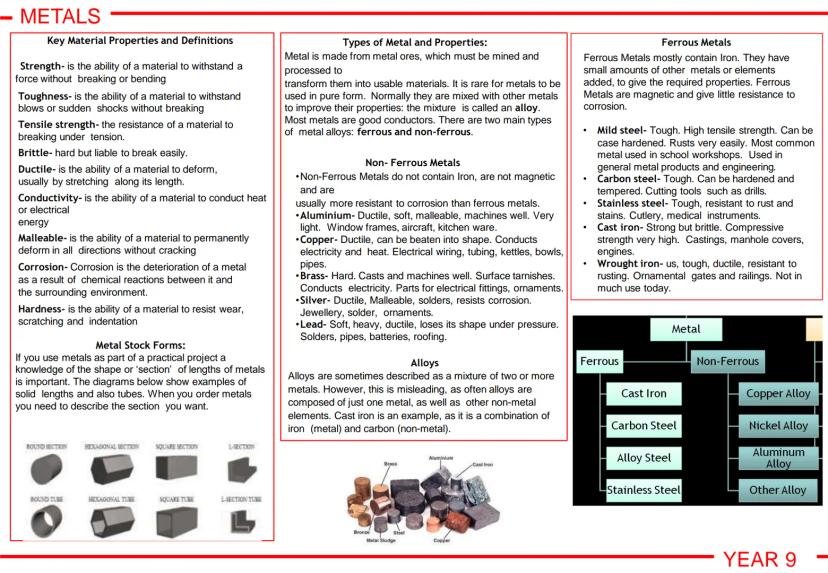
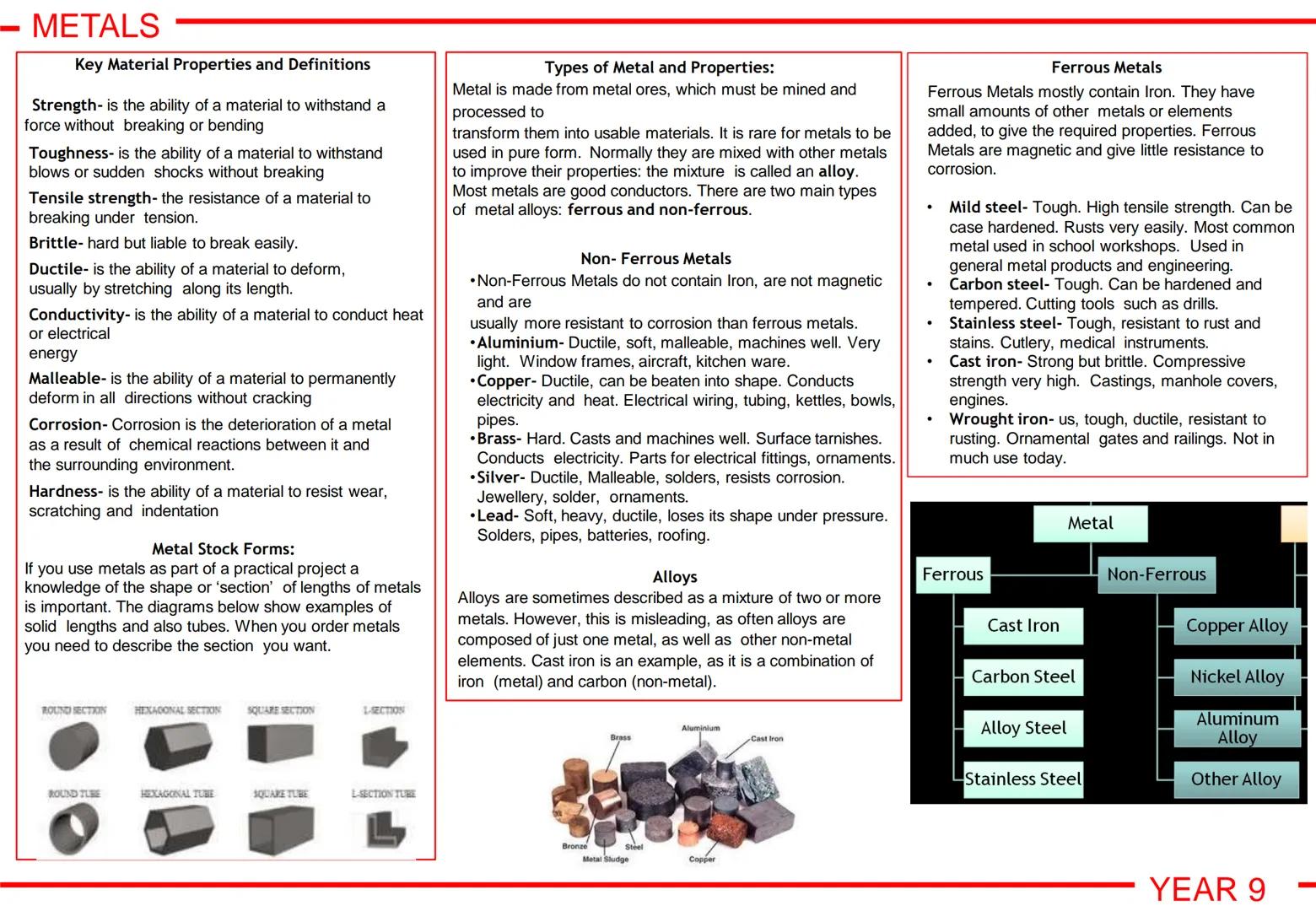
Metals are the backbone of engineering, but choosing the wrong type can spell disaster! The big divide is between ferrous metals (contain iron, magnetic, rust easily) and non-ferrous metals noiron,non−magnetic,resistcorrosionbetter.
Ferrous metals include mild steel - the workshop workhorse that's tough with high tensile strength but rusts easily. Stainless steel solves the rust problem, perfect for cutlery and medical instruments. Cast iron is incredibly strong in compression but brittle - ideal for manhole covers that need to support weight without bending.
Non-ferrous metals are your corrosion-resistant champions. Aluminium is super light and ductile - brilliant for aircraft and window frames. Copper conducts electricity and heat excellently, making it perfect for wiring and plumbing. Brass machines beautifully and conducts electricity for electrical fittings.
Most metals you use are actually alloys - mixtures that improve properties. Pure metals are rarely strong enough alone. Understanding material properties like ductility (stretches without breaking), malleability (shapes without cracking), and tensile strength (resists breaking under tension) helps you pick the right metal for each job.
Key Point: Remember the iron rule - ferrous = iron = magnetic = rusts. Non-ferrous = no iron = non-magnetic = better corrosion resistance!

 Engineering
 English Literature
 Sociology
 Biology