
Ever wondered why some businesses stay open despite barely breaking...
 Economics83 views·Updated 23 Jul 2026·3 pages
Understanding Profits in Economics

Tanvir Ahmed@txnvir_ahmed

1 / 3
1
of 3
What Is Profit Really?
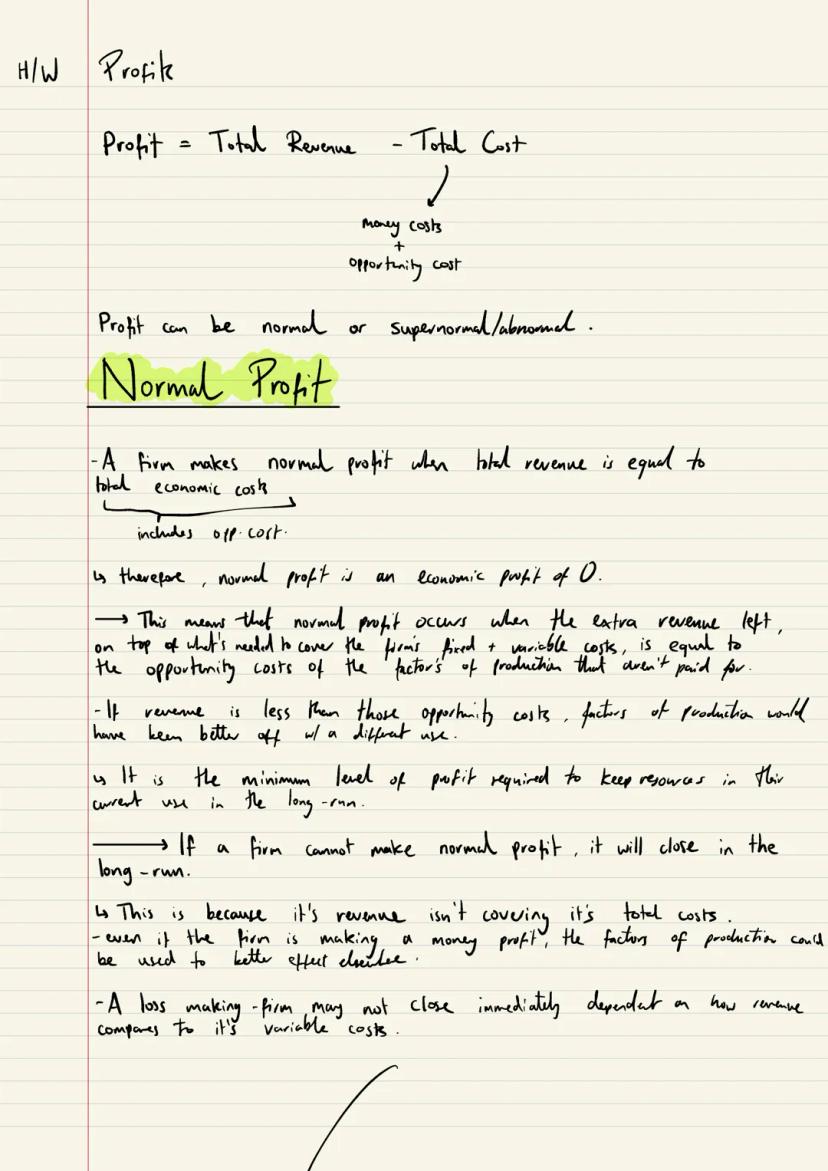
You might think profit is just money left over after paying bills, but economists see it differently. Economic profit equals total revenue minus total costs - and crucially, those total costs include opportunity costs (what you could have earned doing something else with your resources).
This distinction matters because it explains why some profitable-looking businesses actually close down. When we account for what owners could earn elsewhere, that "profit" might actually represent a loss.
Normal profit occurs when total revenue exactly equals total economic costs, giving an economic profit of zero. Think of it as the minimum return needed to keep a business owner from switching to their next best alternative - like working for someone else or investing their money differently.
Key Point: Normal profit isn't actually "zero profit" - it's the baseline return that keeps resources in their current use long-term.
2
of 3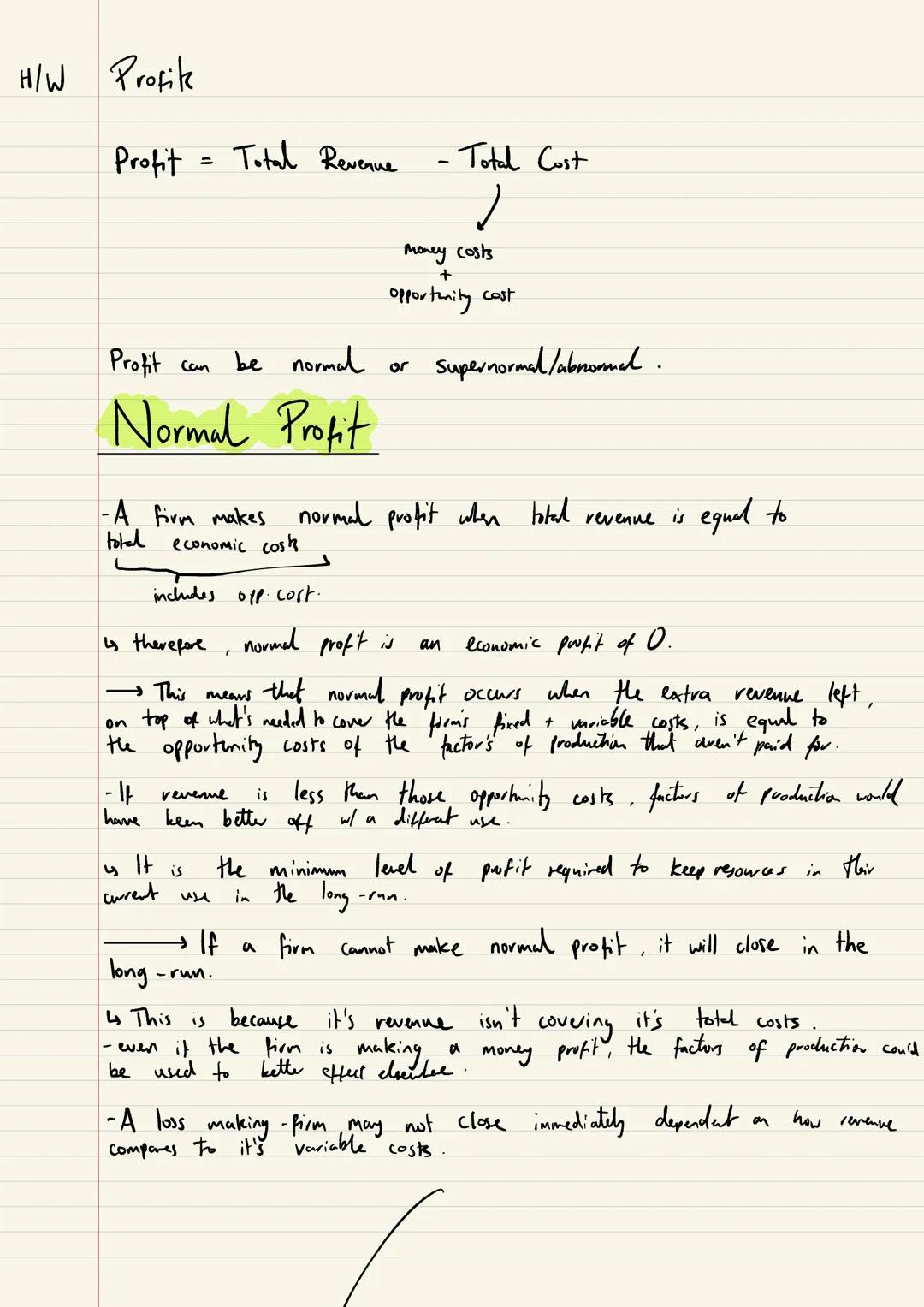
When Firms Stay Open or Shut Down
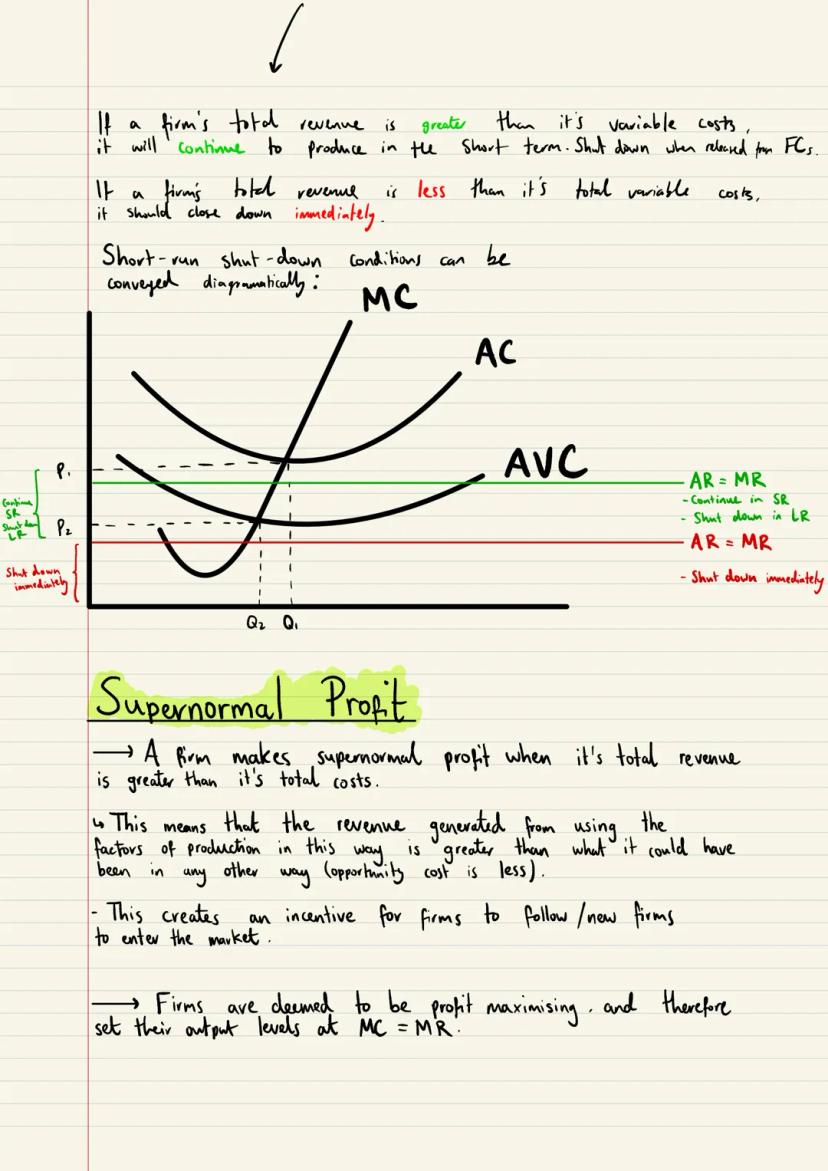
Here's where it gets practical: if a firm can't make normal profit, it'll eventually close because the owner could do better elsewhere. Even if they're making money on paper, those resources (time, capital, skills) could generate higher returns in alternative uses.
However, loss-making firms don't always shut immediately. The decision depends on whether total revenue covers variable costs. If it does, they'll keep operating short-term to help pay fixed costs like rent and loans.
But when total revenue falls below variable costs, it's game over - they should shut down immediately. At this point, they're losing money on every single unit produced, making closure the rational choice.
The short-run shutdown condition is clear: continue operating if revenue exceeds variable costs, but close immediately if it doesn't.
Key Point: Firms can survive temporary losses, but only if they're still covering their day-to-day running costs.
3
of 3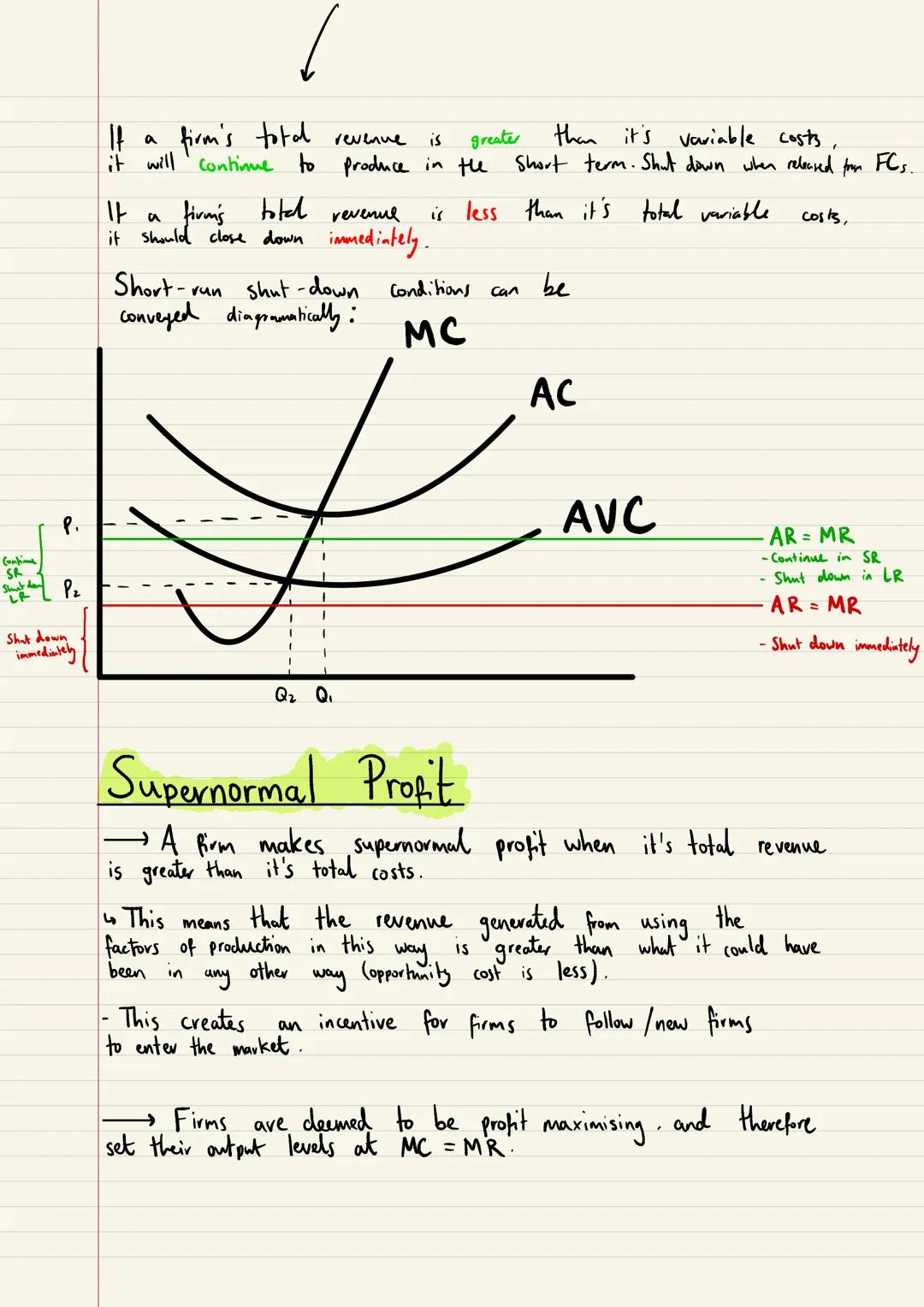
Supernormal Profits and Market Signals
Supernormal profit happens when total revenue exceeds total costs - meaning the business earns more than its best alternative use of resources. This is the sweet spot every entrepreneur dreams of reaching.
These excessive profits send powerful signals throughout the economy. They attract new competitors like magnets, as other firms spot the opportunity to earn above-normal returns in this market.
Profit-maximising firms achieve this by setting output where marginal cost equals marginal revenue (MC = MR). This golden rule helps businesses find the exact production level that maximises their profits.
Understanding these profit concepts helps explain market dynamics - why some industries see new entrants flooding in whilst others see mass exits. It's all about those profit signals guiding resources to their most valuable uses.
Key Point: Supernormal profits act as market signals, encouraging new firms to enter and existing firms to expand their operations.
We thought you’d never ask...
Our AI Companion is a student-focused AI tool that offers more than just answers. Built on millions of Knowunity resources, it provides relevant information, personalised study plans, quizzes, and content directly in the chat, adapting to your individual learning journey.
You can download the app from Google Play Store and Apple App Store.
That's right! Enjoy free access to study content, connect with fellow students, and get instant help – all at your fingertips.
Similar content
Most popular content in Economics
9EconomicsAQA GCSE Economics Overview
Comprehensive notes covering all essential topics for AQA GCSE Economics Paper 1. This resource includes detailed explanations of economic sectors, market structures, supply and demand dynamics, elasticity, externalities, and government intervention. Perfect for students preparing for their exams, this summary provides a clear understanding of key concepts such as profit maximization, market equilibrium, and the factors of production.
113,20261
EconomicsAQA GCSE Economics Paper 2 Overview
Comprehensive study notes for AQA GCSE Economics Paper 2 covering key concepts such as fiscal and monetary policy, aggregate demand, inflation, unemployment, and international trade. Ideal for students seeking to understand economic principles and prepare effectively for their exams.
111,82842
E
EconomicsEconomic Principles: Mastering the Medium
Unlock the secrets of economics with this comprehensive flashcard set covering key principles and concepts in a medium difficulty level.
122650
EconomicsEdexcel Economics Theme 2
Theme 2 Edexcel A
1261317
EconomicsMicroeconomics Key Concepts
Explore essential microeconomic principles including market structures, externalities, efficiency types, and government intervention. This summary covers monopolistic competition, oligopoly, market failure, and elasticity, providing a comprehensive overview for Year 12 exam preparation.
122,102144
Economics1.3 -Market Failure
Full notes for market failure for AS/A-Level Economics (Edexcel)
122837
EconomicsCurrent Account Dynamics
Explore the intricacies of the current account within the balance of payments, focusing on trade deficits, surpluses, and their impact on macroeconomic objectives. This comprehensive summary covers key concepts such as exchange rates, net exports, and historical case studies including the Greek Debt Crisis. Ideal for Edexcel A Level Economics students.
121,26051
EconomicsEconomic Growth Insights
Explore comprehensive insights into Economic Growth, covering key concepts such as GDP, real vs nominal income, GINI coefficient, and the impacts of government spending. This summary highlights the benefits and costs of economic growth, including inflation, income inequality, and environmental considerations. Ideal for Edexcel A Level Economics students seeking to deepen their understanding of Theme 2.
123,543199
EconomicsUnderstanding Globalisation
Explore the complexities of globalisation in this comprehensive study note. Delve into the role of multinational corporations, the benefits and challenges of business globalisation, and the impact on the global economy. This resource is essential for A2 Business Studies students looking to grasp the intricacies of international trade and economic integration.
1453311
Most popular content
9 Sociology
Sociology of Education Overview
Explore comprehensive A-Level Sociology notes on the education system, covering key theories, policies, and sociological perspectives. This resource includes insights on marketisation, gender roles, cultural deprivation, and educational inequalities, providing a thorough understanding of how education shapes social stratification and individual achievement. Ideal for exam preparation and in-depth study.
12102,9683,040
SociologySociology of Families: Comprehensive Revision
Dive into an extensive overview of family dynamics, perspectives, and patterns in sociology. This resource covers key concepts such as family diversity, gender roles, marriage, and the impact of social policies on family structures. Perfect for A-Level Sociology students preparing for Paper 2.
1273,7782,306
CriminologyCriminology: Crime & Punishment Overview
Comprehensive mindmaps covering key concepts in the Crime and Punishment topic for WJEC Criminology Unit 4. This resource includes detailed insights into the Criminal Justice System, crime prevention strategies, sentencing models, and the roles of various agencies. Ideal for A-Level revision, ensuring you grasp essential theories and legislative processes to excel in your exams.
1254,8971,060
SociologyComprehensive Crime & Deviance Overview
Explore an extensive revision of crime and deviance topics, including theories, types of crime, and the impact of media. This resource covers key concepts such as Marxism, functionalism, gender and crime, and the influence of globalization on criminal behavior. Ideal for students seeking a thorough understanding of criminology and its various theories. Type: Full Topic Revision.
1251,6701,400
C
 Biology
Cell Biology and Cell structure
cell structures
113,2880
T
BiologyThe functions of subcellular structures - B1 Biology
Flashcards on the different functions of subcellular structures: cell membrane, nucleus, mitochondria, ribosomes, cytoplasm, permant vacuole, chloroplasts and cell wall.
112,8215
SociologySociological Theories Overview
Comprehensive revision of key sociological theories including Functionalism, Marxism, Feminism, and Interpretivism. Explore concepts like value freedom, identity formation, and the critique of social control. Ideal for AQA A-Level Sociology students preparing for exams. This summary covers essential theories and their implications in sociology, providing a clear understanding of each perspective.
1231,483846
CriminologyWJEC Unit 4 Criminology
Criminology unit 4 detailed revision note
127,177125
1
Biology1.cells Gcse biology question cards
combined science higher biology
112,3694
Students love us — and so will you.
4.6/5App Store
4.7/5Google Play
The app is very easy to use and well designed. I have found everything I was looking for so far and have been able to learn a lot from the presentations! I will definitely use the app for a class assignment! And of course it also helps a lot as an inspiration.
Stefan SiOS user
This app is really great. There are so many study notes and help [...]. My problem subject is French, for example, and the app has so many options for help. Thanks to this app, I have improved my French. I would recommend it to anyone.
Samantha KlichAndroid user
Wow, I am really amazed. I just tried the app because I've seen it advertised many times and was absolutely stunned. This app is THE HELP you want for school and above all, it offers so many things, such as workouts and fact sheets, which have been VERY helpful to me personally.
AnnaiOS user
Economics83 views·Updated 23 Jul 2026·3 pagesUnderstanding Profits in Economics
Tanvir Ahmed@txnvir_ahmed
Ever wondered why some businesses stay open despite barely breaking even whilst others seem to rake in massive profits? Understanding the difference between normal and supernormal profit is crucial for grasping how firms make decisions about whether to keep operating,...
1
of 3
Sign up to see the content. It's free!
- Access to all documents
- Improve your grades
- Join milions of students
By signing up you accept Terms of Service and Privacy Policy
What Is Profit Really?
You might think profit is just money left over after paying bills, but economists see it differently. Economic profit equals total revenue minus total costs - and crucially, those total costs include opportunity costs (what you could have earned doing something else with your resources).
This distinction matters because it explains why some profitable-looking businesses actually close down. When we account for what owners could earn elsewhere, that "profit" might actually represent a loss.
Normal profit occurs when total revenue exactly equals total economic costs, giving an economic profit of zero. Think of it as the minimum return needed to keep a business owner from switching to their next best alternative - like working for someone else or investing their money differently.
Key Point: Normal profit isn't actually "zero profit" - it's the baseline return that keeps resources in their current use long-term.
2
of 3Sign up to see the content. It's free!
- Access to all documents
- Improve your grades
- Join milions of students
By signing up you accept Terms of Service and Privacy Policy
When Firms Stay Open or Shut Down
Here's where it gets practical: if a firm can't make normal profit, it'll eventually close because the owner could do better elsewhere. Even if they're making money on paper, those resources (time, capital, skills) could generate higher returns in alternative uses.
However, loss-making firms don't always shut immediately. The decision depends on whether total revenue covers variable costs. If it does, they'll keep operating short-term to help pay fixed costs like rent and loans.
But when total revenue falls below variable costs, it's game over - they should shut down immediately. At this point, they're losing money on every single unit produced, making closure the rational choice.
The short-run shutdown condition is clear: continue operating if revenue exceeds variable costs, but close immediately if it doesn't.
Key Point: Firms can survive temporary losses, but only if they're still covering their day-to-day running costs.
3
of 3Sign up to see the content. It's free!
- Access to all documents
- Improve your grades
- Join milions of students
By signing up you accept Terms of Service and Privacy Policy
Supernormal Profits and Market Signals
Supernormal profit happens when total revenue exceeds total costs - meaning the business earns more than its best alternative use of resources. This is the sweet spot every entrepreneur dreams of reaching.
These excessive profits send powerful signals throughout the economy. They attract new competitors like magnets, as other firms spot the opportunity to earn above-normal returns in this market.
Profit-maximising firms achieve this by setting output where marginal cost equals marginal revenue (MC = MR). This golden rule helps businesses find the exact production level that maximises their profits.
Understanding these profit concepts helps explain market dynamics - why some industries see new entrants flooding in whilst others see mass exits. It's all about those profit signals guiding resources to their most valuable uses.
Key Point: Supernormal profits act as market signals, encouraging new firms to enter and existing firms to expand their operations.
We thought you’d never ask...
Our AI Companion is a student-focused AI tool that offers more than just answers. Built on millions of Knowunity resources, it provides relevant information, personalised study plans, quizzes, and content directly in the chat, adapting to your individual learning journey.
You can download the app from Google Play Store and Apple App Store.
That's right! Enjoy free access to study content, connect with fellow students, and get instant help – all at your fingertips.
Similar content
Most popular content in Economics
9EconomicsAQA GCSE Economics Overview
Comprehensive notes covering all essential topics for AQA GCSE Economics Paper 1. This resource includes detailed explanations of economic sectors, market structures, supply and demand dynamics, elasticity, externalities, and government intervention. Perfect for students preparing for their exams, this summary provides a clear understanding of key concepts such as profit maximization, market equilibrium, and the factors of production.
113,20261
EconomicsAQA GCSE Economics Paper 2 Overview
Comprehensive study notes for AQA GCSE Economics Paper 2 covering key concepts such as fiscal and monetary policy, aggregate demand, inflation, unemployment, and international trade. Ideal for students seeking to understand economic principles and prepare effectively for their exams.
111,82842
E
EconomicsEconomic Principles: Mastering the Medium
Unlock the secrets of economics with this comprehensive flashcard set covering key principles and concepts in a medium difficulty level.
122650
EconomicsEdexcel Economics Theme 2
Theme 2 Edexcel A
1261317
EconomicsMicroeconomics Key Concepts
Explore essential microeconomic principles including market structures, externalities, efficiency types, and government intervention. This summary covers monopolistic competition, oligopoly, market failure, and elasticity, providing a comprehensive overview for Year 12 exam preparation.
122,102144
Economics1.3 -Market Failure
Full notes for market failure for AS/A-Level Economics (Edexcel)
122837
EconomicsCurrent Account Dynamics
Explore the intricacies of the current account within the balance of payments, focusing on trade deficits, surpluses, and their impact on macroeconomic objectives. This comprehensive summary covers key concepts such as exchange rates, net exports, and historical case studies including the Greek Debt Crisis. Ideal for Edexcel A Level Economics students.
121,26051
EconomicsEconomic Growth Insights
Explore comprehensive insights into Economic Growth, covering key concepts such as GDP, real vs nominal income, GINI coefficient, and the impacts of government spending. This summary highlights the benefits and costs of economic growth, including inflation, income inequality, and environmental considerations. Ideal for Edexcel A Level Economics students seeking to deepen their understanding of Theme 2.
123,543199
EconomicsUnderstanding Globalisation
Explore the complexities of globalisation in this comprehensive study note. Delve into the role of multinational corporations, the benefits and challenges of business globalisation, and the impact on the global economy. This resource is essential for A2 Business Studies students looking to grasp the intricacies of international trade and economic integration.
1453311
Most popular content
9SociologySociology of Education Overview
Explore comprehensive A-Level Sociology notes on the education system, covering key theories, policies, and sociological perspectives. This resource includes insights on marketisation, gender roles, cultural deprivation, and educational inequalities, providing a thorough understanding of how education shapes social stratification and individual achievement. Ideal for exam preparation and in-depth study.
12102,9683,040
SociologySociology of Families: Comprehensive Revision
Dive into an extensive overview of family dynamics, perspectives, and patterns in sociology. This resource covers key concepts such as family diversity, gender roles, marriage, and the impact of social policies on family structures. Perfect for A-Level Sociology students preparing for Paper 2.
1273,7782,306
CriminologyCriminology: Crime & Punishment Overview
Comprehensive mindmaps covering key concepts in the Crime and Punishment topic for WJEC Criminology Unit 4. This resource includes detailed insights into the Criminal Justice System, crime prevention strategies, sentencing models, and the roles of various agencies. Ideal for A-Level revision, ensuring you grasp essential theories and legislative processes to excel in your exams.
1254,8971,060
SociologyComprehensive Crime & Deviance Overview
Explore an extensive revision of crime and deviance topics, including theories, types of crime, and the impact of media. This resource covers key concepts such as Marxism, functionalism, gender and crime, and the influence of globalization on criminal behavior. Ideal for students seeking a thorough understanding of criminology and its various theories. Type: Full Topic Revision.
1251,6701,400
C
BiologyCell Biology and Cell structure
cell structures
113,2880
T
BiologyThe functions of subcellular structures - B1 Biology
Flashcards on the different functions of subcellular structures: cell membrane, nucleus, mitochondria, ribosomes, cytoplasm, permant vacuole, chloroplasts and cell wall.
112,8215
SociologySociological Theories Overview
Comprehensive revision of key sociological theories including Functionalism, Marxism, Feminism, and Interpretivism. Explore concepts like value freedom, identity formation, and the critique of social control. Ideal for AQA A-Level Sociology students preparing for exams. This summary covers essential theories and their implications in sociology, providing a clear understanding of each perspective.
1231,483846
CriminologyWJEC Unit 4 Criminology
Criminology unit 4 detailed revision note
127,177125
1
Biology1.cells Gcse biology question cards
combined science higher biology
112,3694
Students love us — and so will you.
4.6/5App Store
4.7/5Google Play
The app is very easy to use and well designed. I have found everything I was looking for so far and have been able to learn a lot from the presentations! I will definitely use the app for a class assignment! And of course it also helps a lot as an inspiration.
Stefan SiOS user
This app is really great. There are so many study notes and help [...]. My problem subject is French, for example, and the app has so many options for help. Thanks to this app, I have improved my French. I would recommend it to anyone.
Samantha KlichAndroid user
Wow, I am really amazed. I just tried the app because I've seen it advertised many times and was absolutely stunned. This app is THE HELP you want for school and above all, it offers so many things, such as workouts and fact sheets, which have been VERY helpful to me personally.
AnnaiOS user