Environmental Impact and Social Responsibility
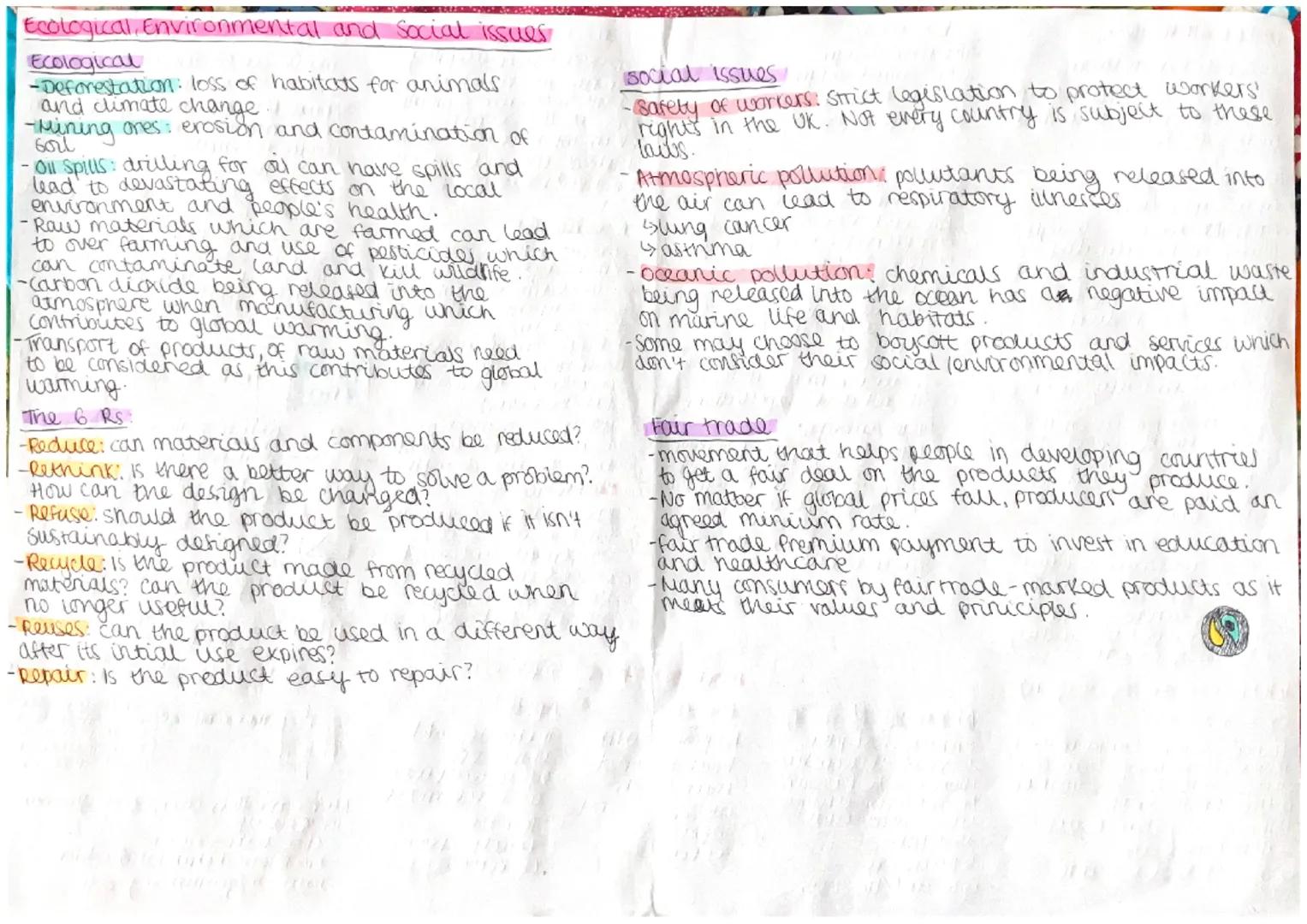
Your smartphone, trainers, and even your lunch have hidden environmental costs that designers must consider. Deforestation for raw materials, mining that damages soil, and carbon emissions from manufacturing all add up to serious ecological problems.
The 6 Rs framework gives designers a powerful toolkit: Reduce, Rethink, Refuse, Recycle, Reuse, and Repair. Before creating anything new, smart designers ask tough questions like "Can we solve this differently?" or "Will people actually be able to fix this when it breaks?"
Social issues matter just as much as environmental ones. Workers in some countries face dangerous conditions making products we use daily. That's where movements like fair trade step in, ensuring producers get paid fairly and communities receive investment in education and healthcare.
Atmospheric and oceanic pollution from manufacturing affects everyone's health, causing respiratory problems and damaging marine ecosystems. Many consumers now actively choose brands that align with their values, making sustainable design not just morally right, but commercially smart too.
Remember: Every design choice has consequences - successful designers in today's world balance functionality, profit, and responsibility to create products that truly improve lives.