
Programming is everywhere around you - from the apps on... Show more
 Design & Technology
 English Literature
 Sociology
 Biology
Sign up to see the contentIt's free!
Access to all documents
Improve your grades
Join milions of students
By signing up you accept Terms of Service and Privacy Policy
Subjects
Classic Dramatic Literature
Modern Lyric Poetry
Influential English-Language Authors
Classic and Contemporary Novels
Literary Character Analysis
Romantic and Love Poetry
Reading Analysis and Interpretation
Evidence Analysis and Integration
Author's Stylistic Elements
Figurative Language and Rhetoric
Show all topics
Human Organ Systems
Cellular Organization and Development
Biomolecular Structure and Organization
Enzyme Structure and Regulation
Cellular Organization Types
Biological Homeostatic Processes
Cellular Membrane Structure
Autotrophic Energy Processes
Environmental Sustainability and Impact
Neural Communication Systems
Show all topics
Social Sciences Research & Practice
Social Structure and Mobility
Classic Social Influence Experiments
Social Systems Theories
Family and Relationship Dynamics
Memory Systems and Processes
Neural Bases of Behavior
Social Influence and Attraction
Psychotherapeutic Approaches
Human Agency and Responsibility
Show all topics
Chemical Sciences and Applications
Chemical Bond Types and Properties
Organic Functional Groups
Atomic Structure and Composition
Chromatographic Separation Principles
Chemical Compound Classifications
Electrochemical Cell Systems
Periodic Table Organization
Chemical Reaction Kinetics
Chemical Equation Conservation
Show all topics
Nazi Germany and Holocaust 1933-1945
World Wars and Peace Treaties
European Monarchs and Statesmen
Cold War Global Tensions
Medieval Institutions and Systems
European Renaissance and Enlightenment
Modern Global Environmental-Health Challenges
Modern Military Conflicts
Medieval Migration and Invasions
World Wars Era and Impact
Show all topics
245
•
8 Feb 2026
•
Marjani Toroganan
@marjanitorogana
Programming is everywhere around you - from the apps on... Show more
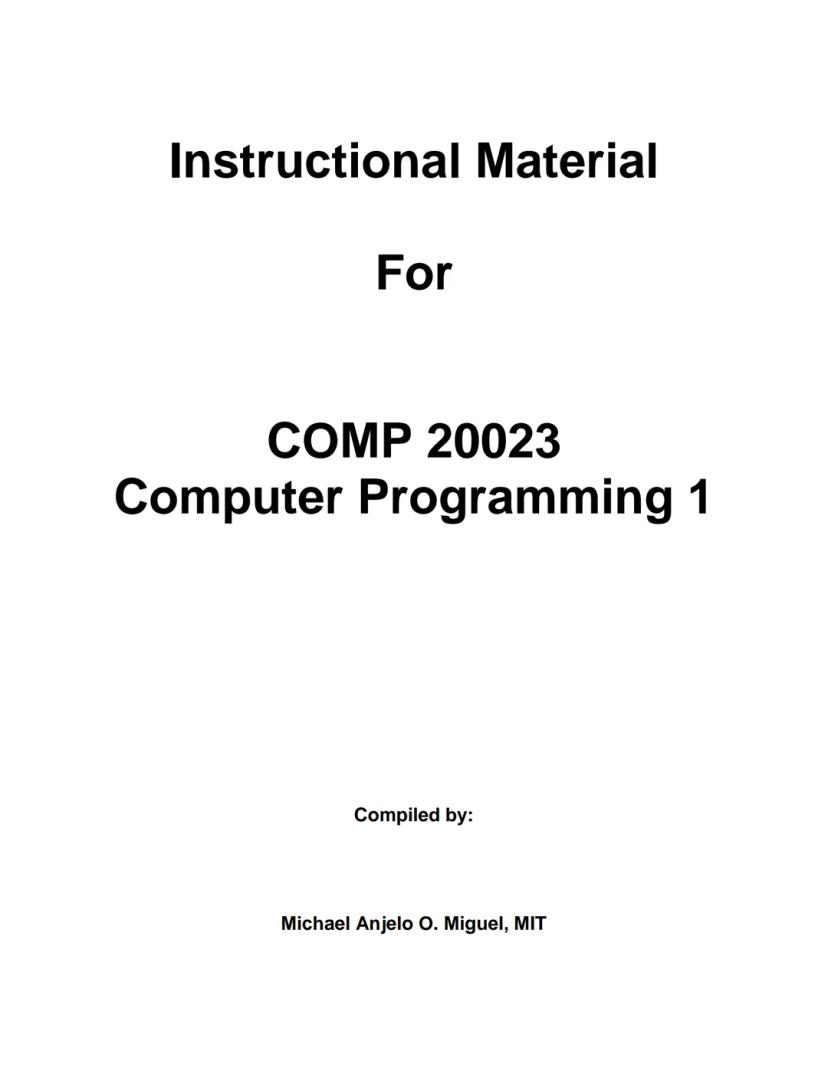
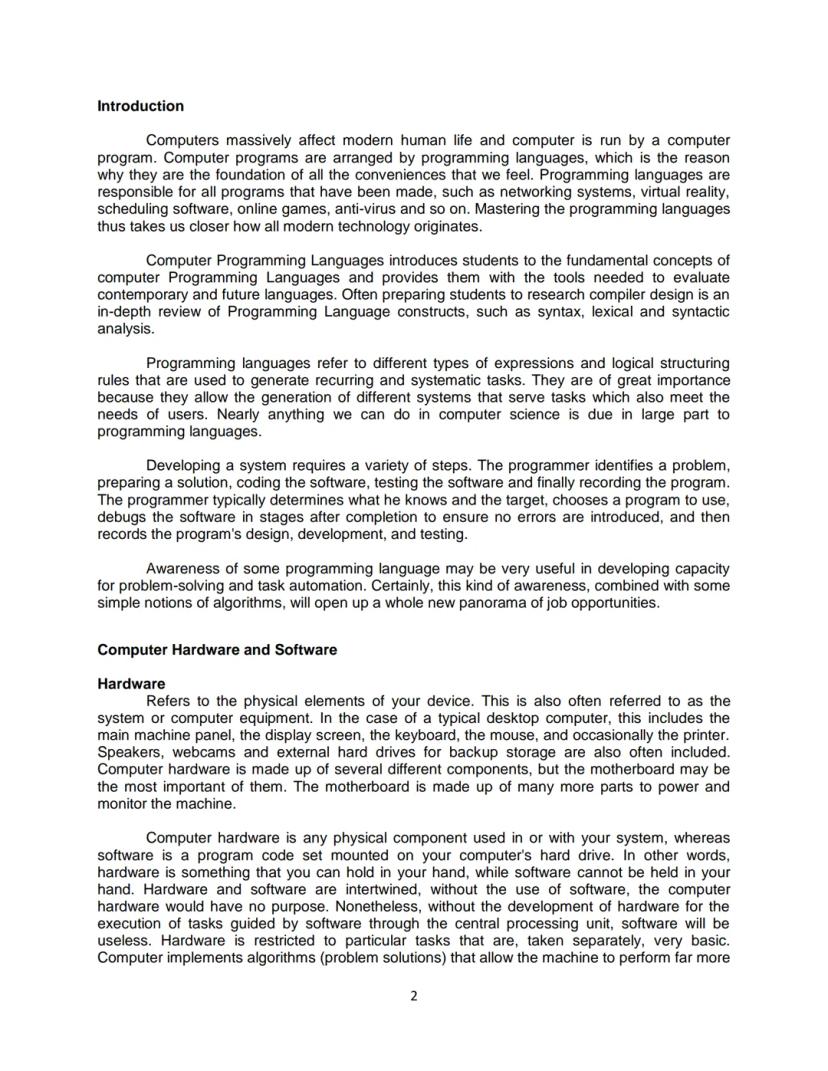
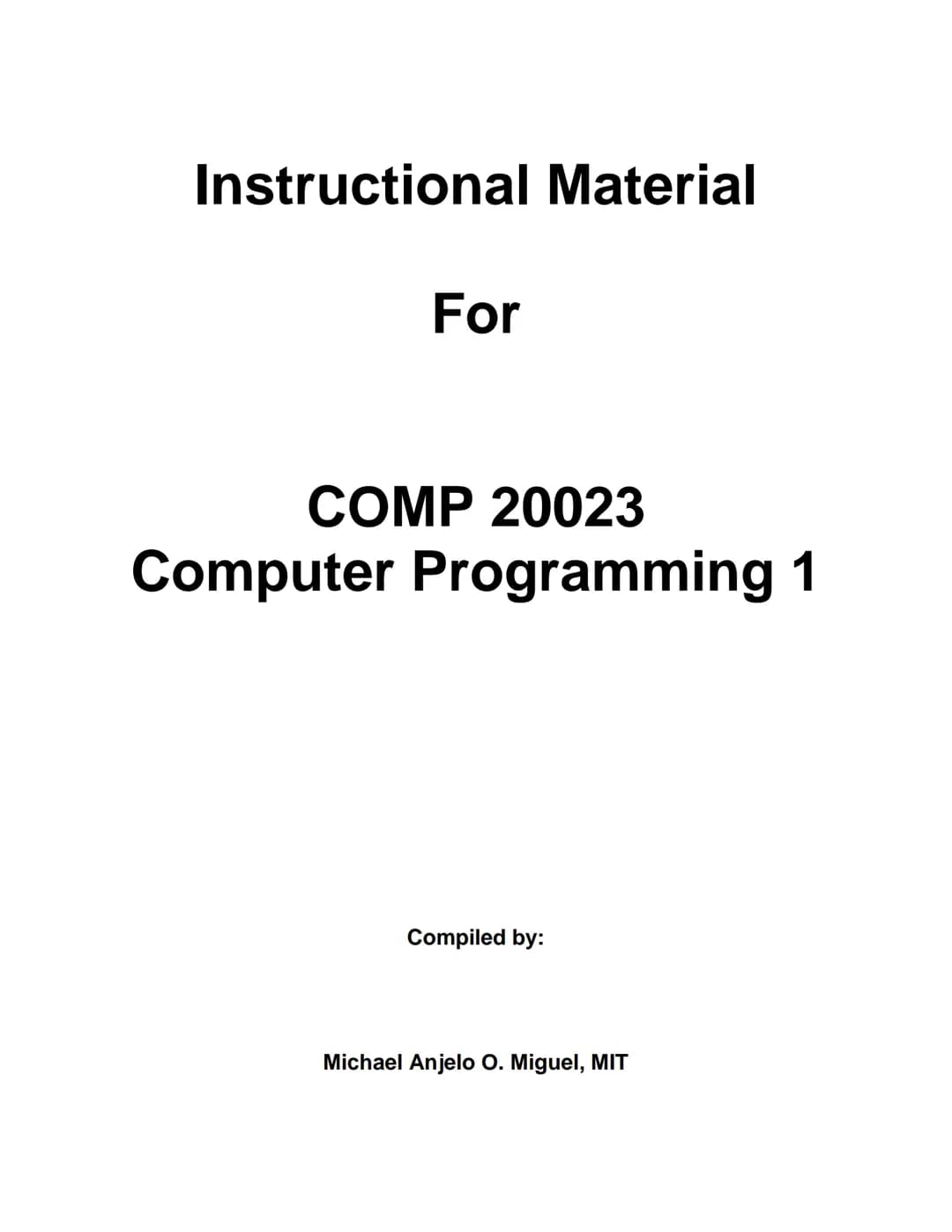
You're about to dive into COMP 20023 Computer Programming 1, a course designed to teach you the art of solving problems with code. Think of programming like learning a new language - except this time, you're talking to computers instead of people.
This course focuses on procedural programming, which means you'll learn to break down complex problems into simple, step-by-step instructions. You'll master essential skills like creating input/output statements, loops, and functions that form the backbone of most programs.
Quick Tip: Programming is like following a recipe - you need clear, ordered steps that anyone (or any computer) can follow to get the desired result.
By the end of this course, you'll be able to design, write, test, and debug your own programs. You'll also learn to read other people's code and suggest improvements - a crucial skill in the programming world.
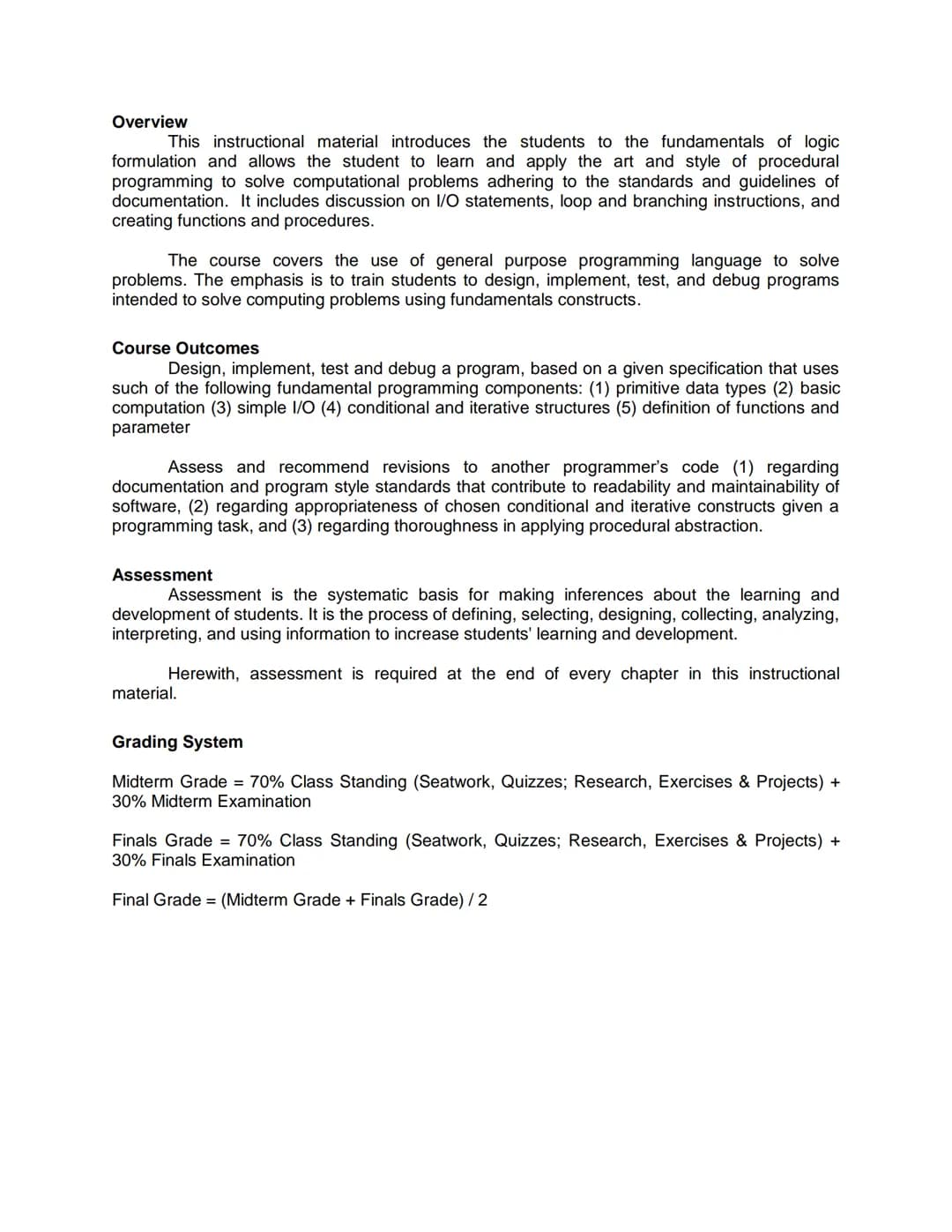
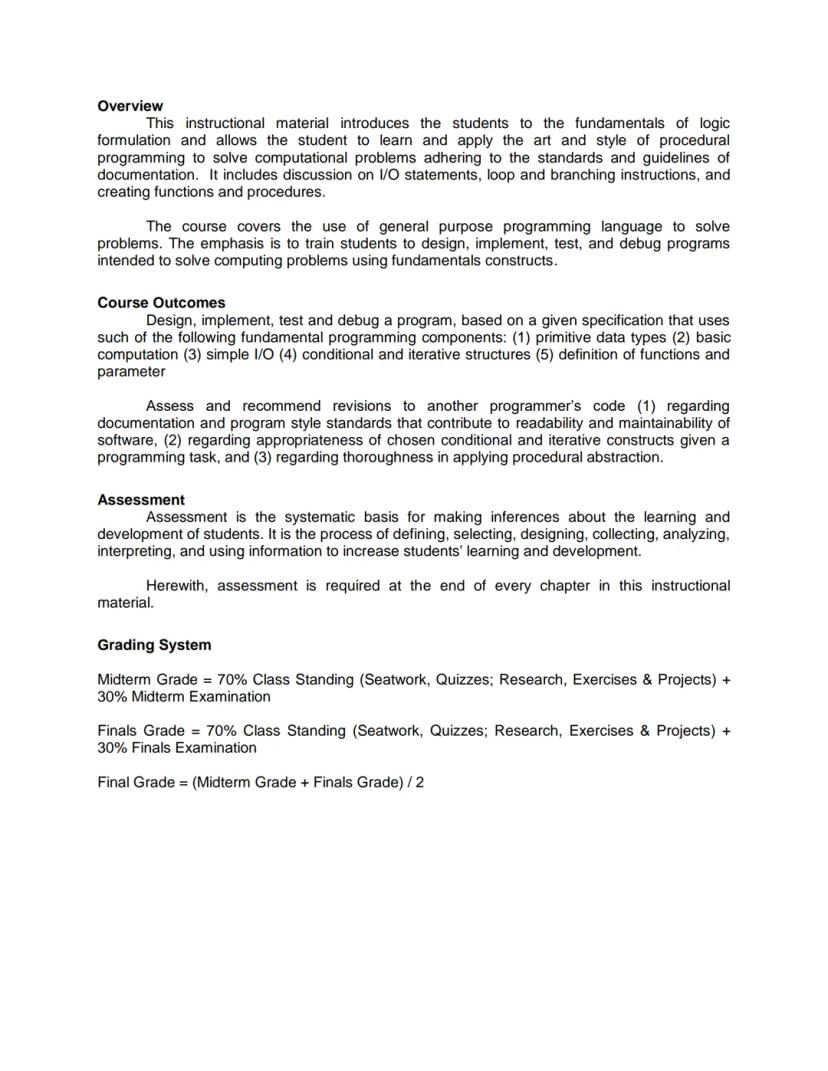
Your journey through programming will be assessed through a balanced mix of practical work and examinations. Class standing (which includes seatwork, quizzes, research, exercises, and projects) makes up 70% of your grade, whilst examinations account for 30%.
The course covers everything from basic programming concepts to more advanced topics like arrays and functions. You'll start with fundamental logic formulation and gradually work your way up to creating complete programs.
Assessment happens at the end of every chapter, giving you regular opportunities to demonstrate your understanding. This approach helps you build confidence progressively rather than cramming everything at once.
Remember: Your final grade is calculated as the average of your midterm and finals grades, so consistent effort throughout the semester pays off.
The systematic assessment approach ensures you're not just memorising code, but actually developing problem-solving skills that you can apply to real-world computing challenges.
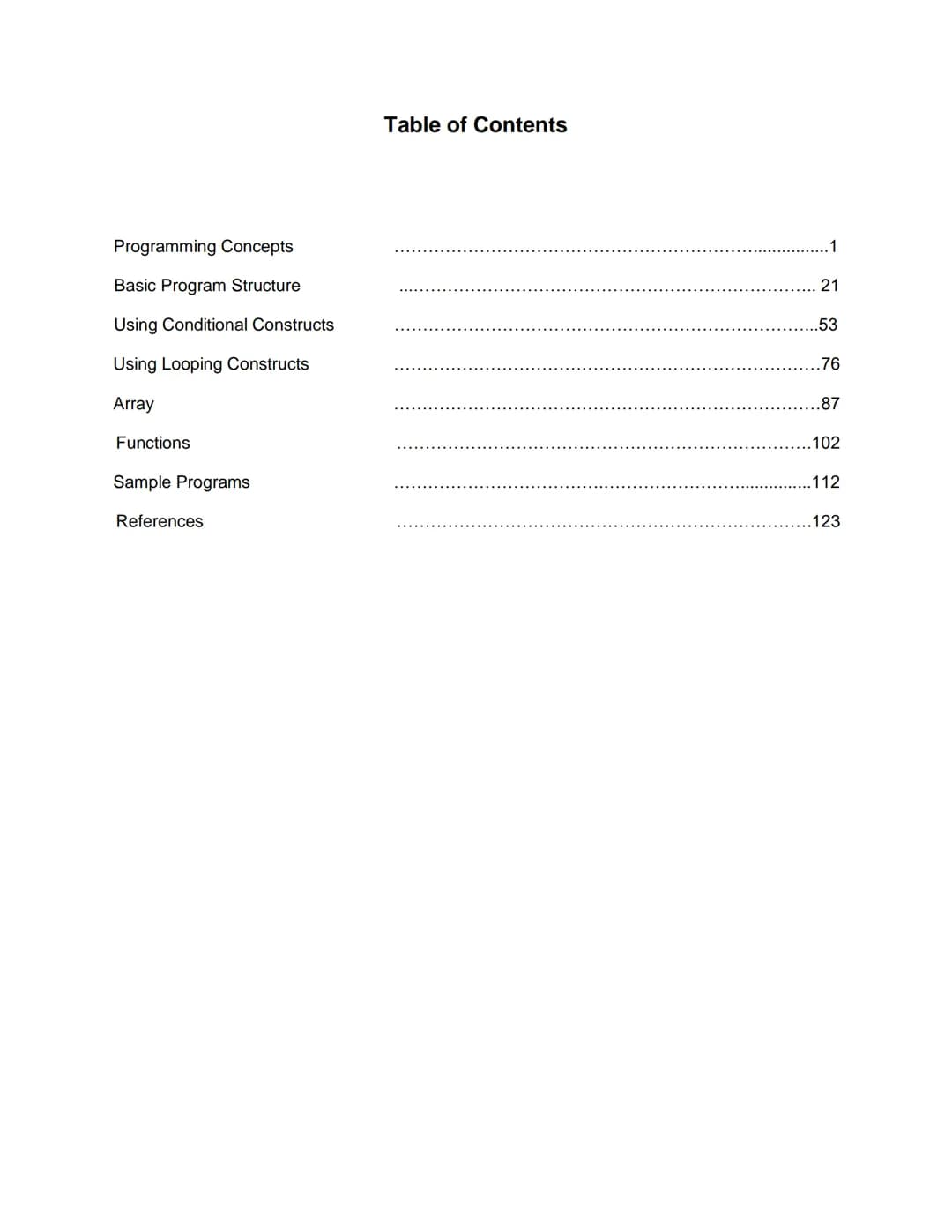
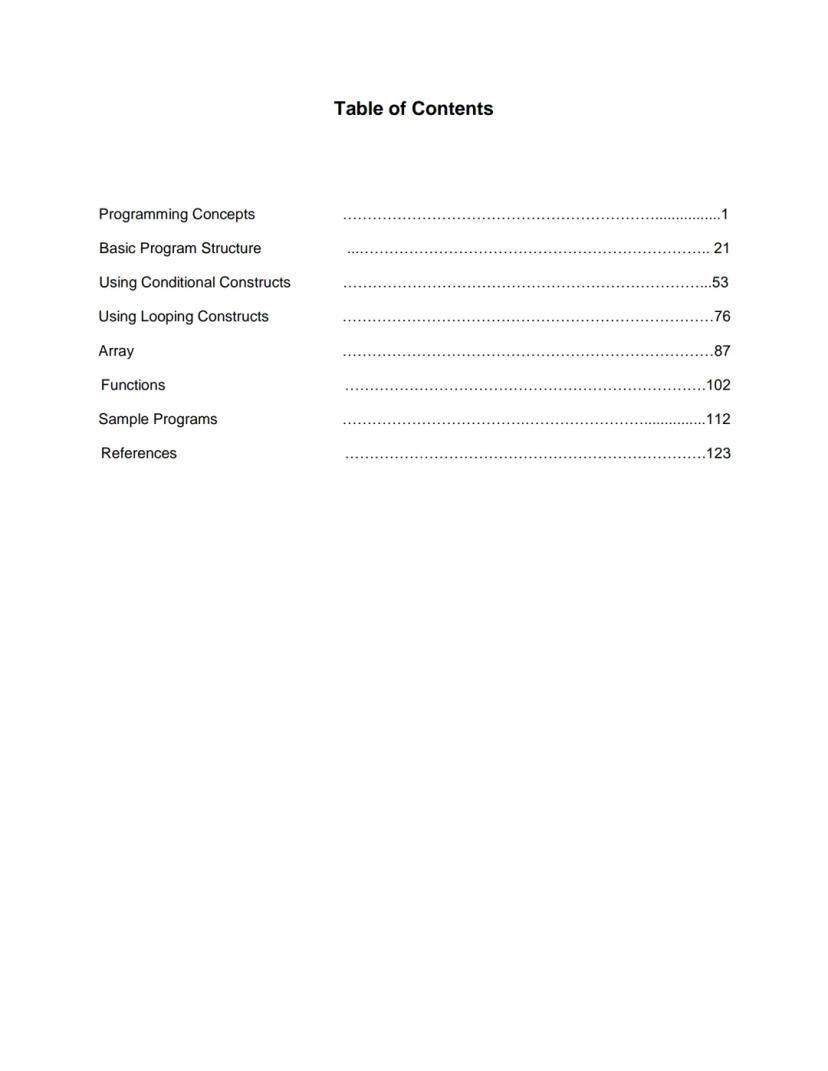
The course is structured into seven main sections, starting with programming concepts and building up to complete sample programs. You'll begin with understanding what programming actually is before diving into practical coding skills.
Basic program structure comes next, teaching you how to organise your code properly. This foundation is crucial - just like you wouldn't build a house without a solid foundation, you can't write good programs without understanding proper structure.
The middle sections cover conditional constructs (making decisions in code), looping constructs (repeating actions), and arrays (storing multiple pieces of data). These are the building blocks you'll use in almost every program you write.
Study Strategy: Each topic builds on the previous one, so make sure you understand each section before moving on to the next.
The course concludes with functions and sample programs that tie everything together. By this point, you'll have all the tools needed to create your own software solutions.
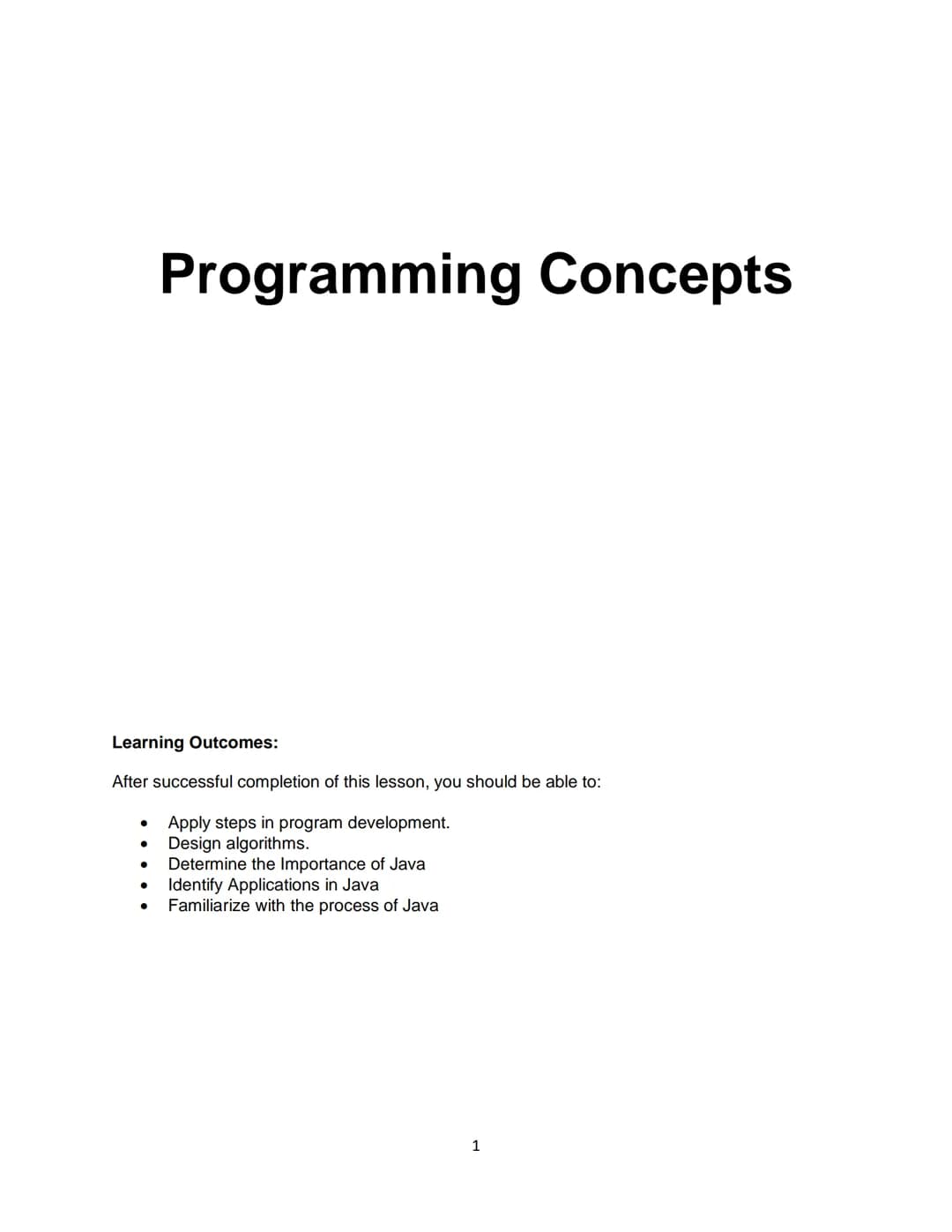
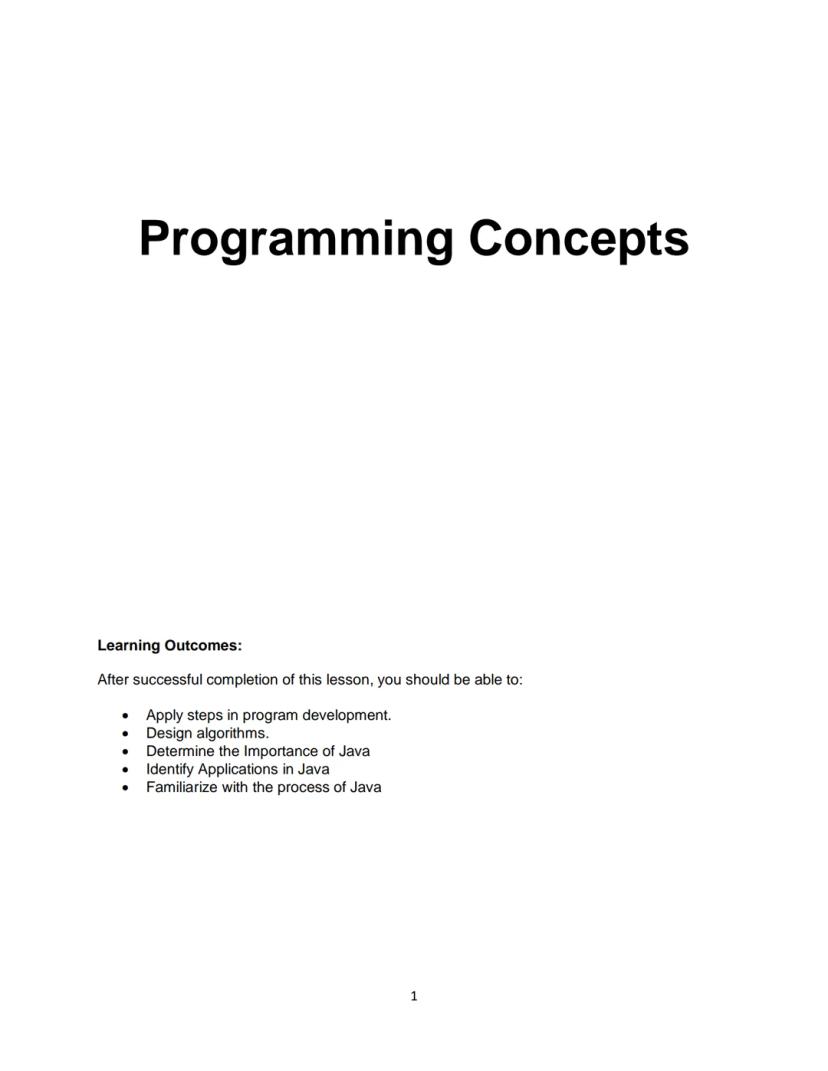
After mastering this section, you'll understand the steps in program development - essentially, how professional programmers approach solving problems. This isn't just about writing code; it's about thinking systematically.
You'll learn to design algorithms, which are step-by-step solutions to problems. Think of algorithms like GPS directions - they tell you exactly what to do and in what order to reach your destination.
The section also covers Java programming language specifically, including why it's important and what types of applications you can build with it. Java is everywhere - from Android apps to large business systems.
Career Insight: Understanding program development steps is what separates amateur coders from professional developers.
You'll also get familiar with how Java actually works behind the scenes - how your code gets transformed into something the computer can understand and execute.
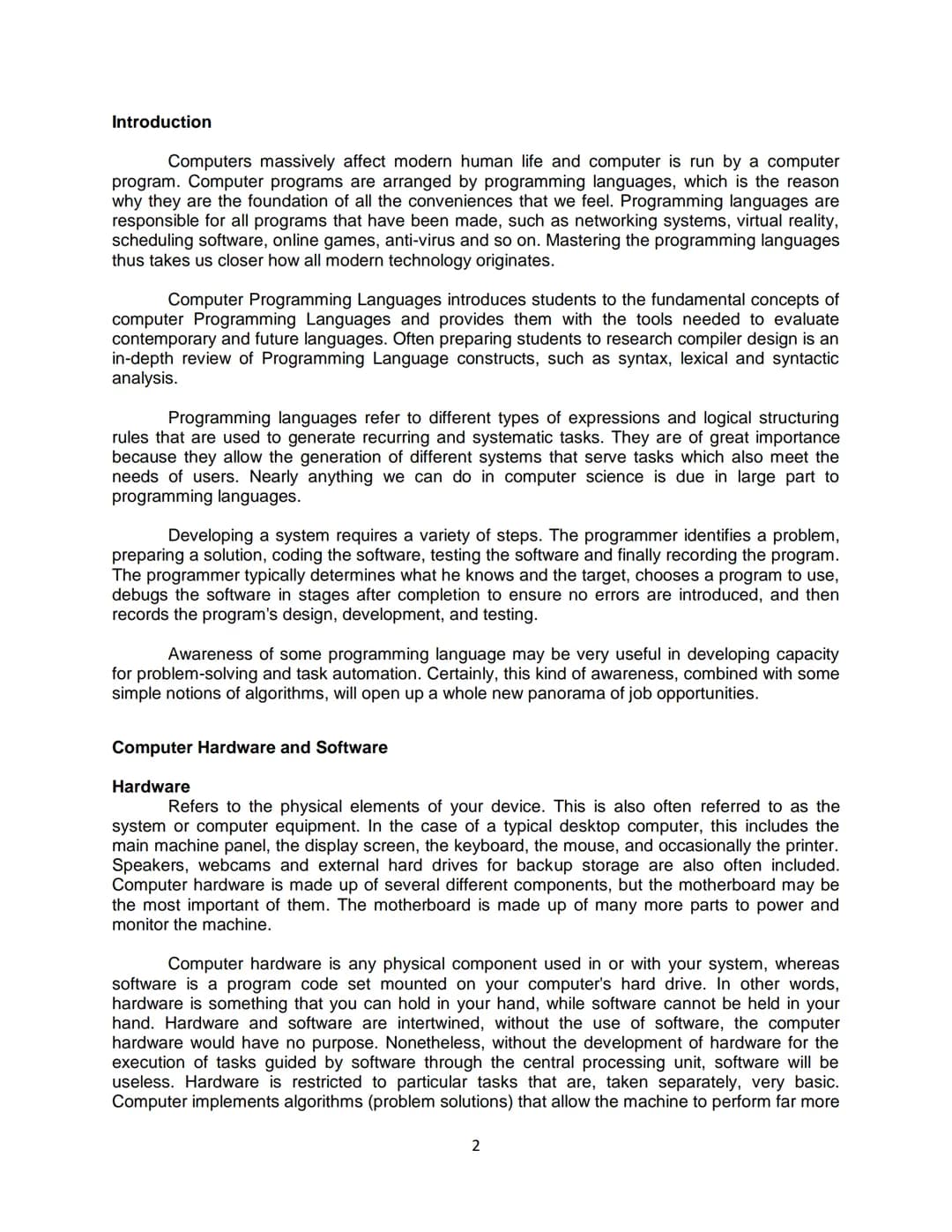
Programming languages are the foundation behind every piece of technology you use daily. From social media platforms to online games, programming languages make all these conveniences possible.
Understanding programming opens up incredible career opportunities and develops your problem-solving abilities. You'll learn to break down complex challenges into manageable steps - a skill that's valuable in any field, not just computing.
Computer hardware and software work together to create the technology we rely on. Hardware includes the physical components you can touch (like your keyboard and screen), whilst software consists of the programs and instructions that tell the hardware what to do.
Real-world Connection: Every app notification, every webpage load, and every game action happens because someone wrote code to make it work.
The relationship between hardware and software is like a musician and their instrument - neither can create music alone, but together they can produce amazing results. Programming gives you the power to be that musician.
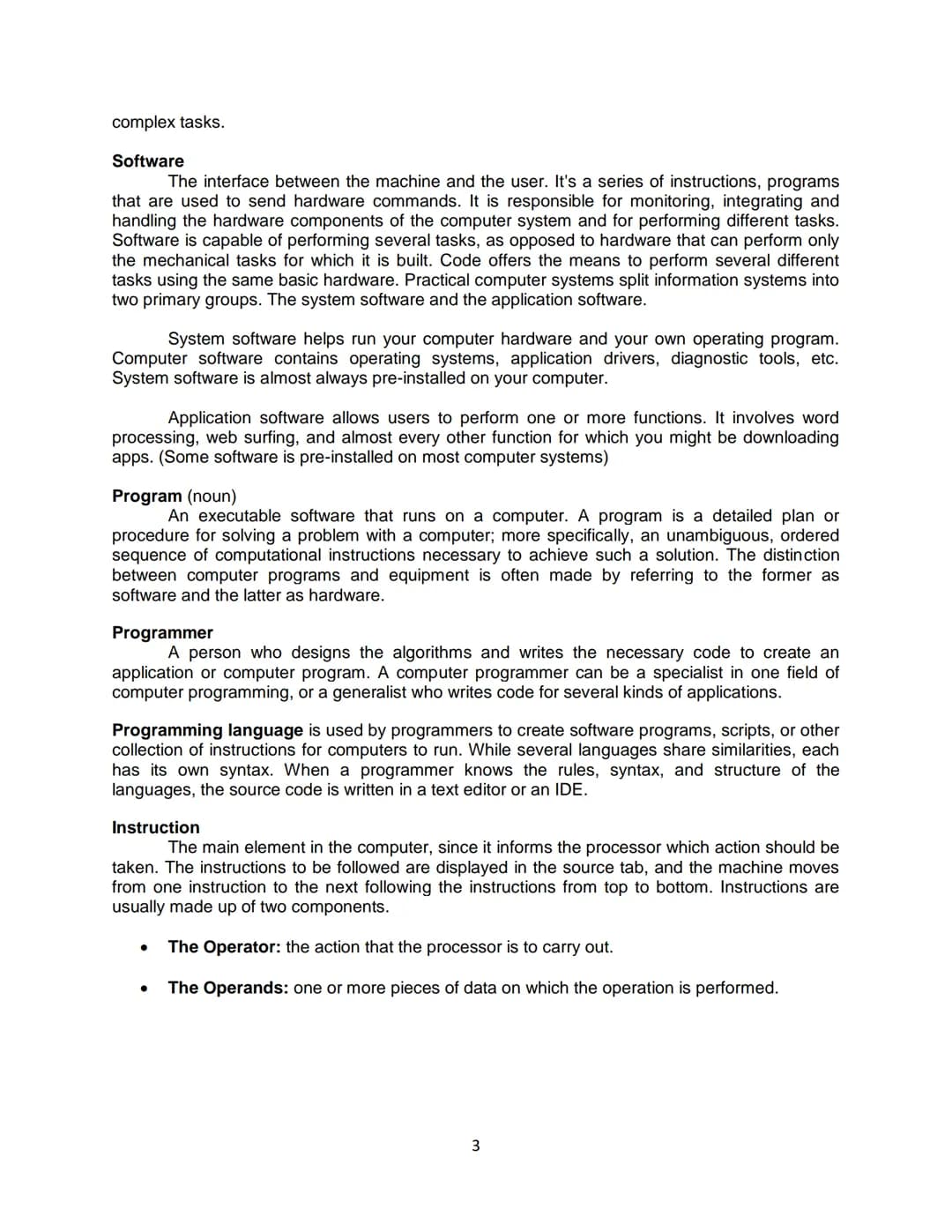
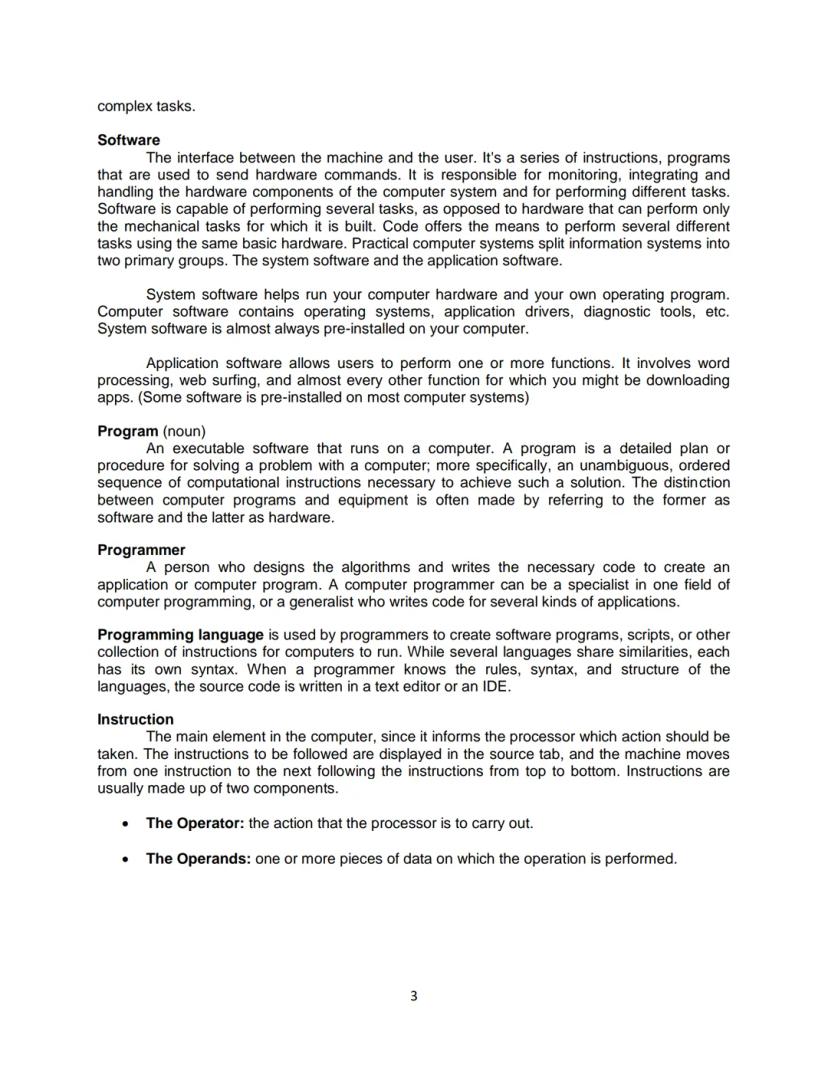
Software acts as the bridge between you and your computer's hardware. It's essentially a collection of instructions that tell your computer exactly what to do, when to do it, and how to do it.
There are two main types of software: system software (like your operating system) that keeps your computer running, and application software (like games and word processors) that helps you accomplish specific tasks.
Every computer program is made up of instructions - specific commands that tell the processor which actions to perform. These instructions typically have two parts: the operator (what to do) and the operands (what to do it with).
Think of it this way: Instructions are like giving directions to a friend - you need to be specific about the action and what it applies to.
Programmers write these instructions using programming languages, creating detailed solutions to problems. The code they write gets translated into instructions that computers can understand and execute.
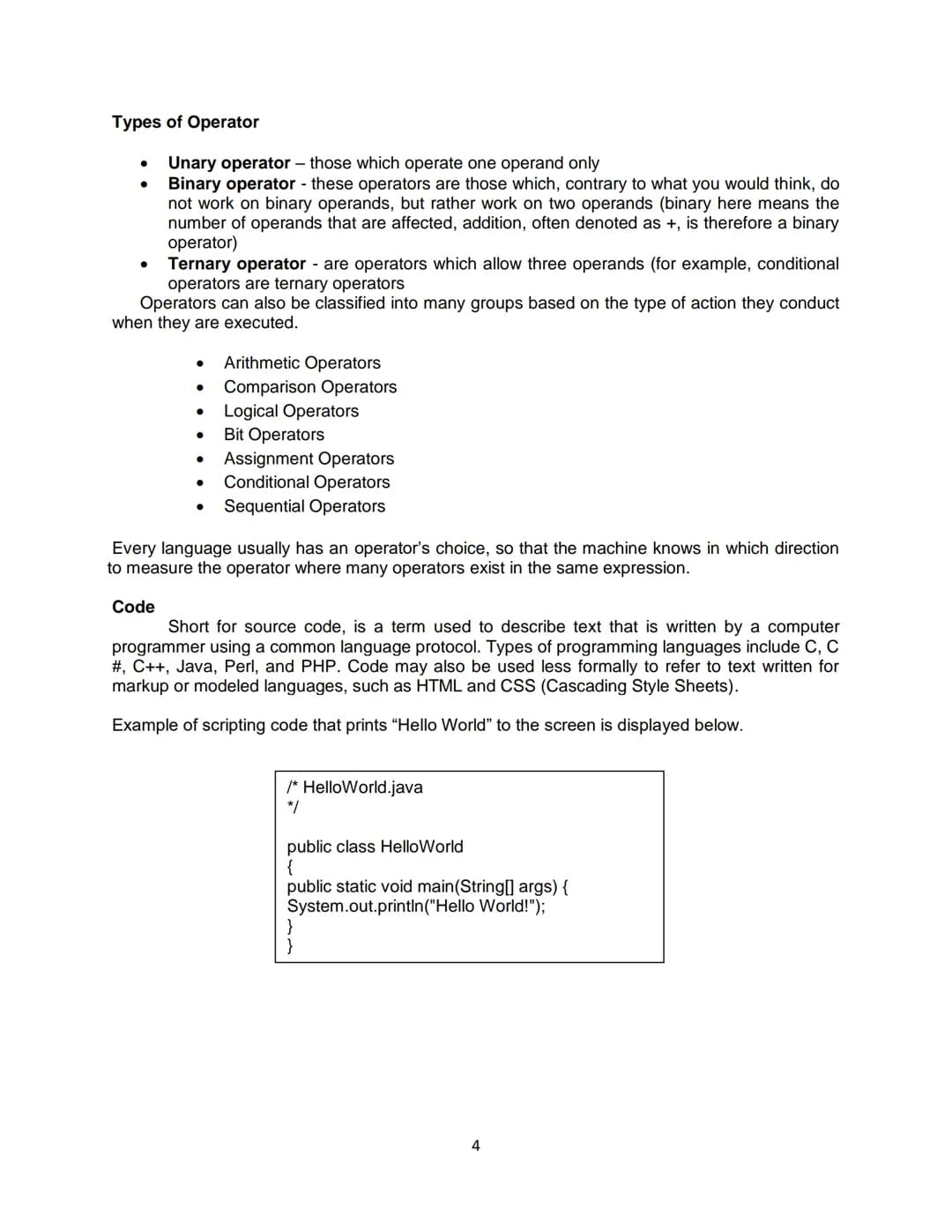
Operators are the action words of programming - they tell the computer what operations to perform on your data. You'll work with different types including arithmetic operators (+, -, ×, ÷), comparison operators (=, >, <), and logical operators.
Operators can be unary (working on one piece of data), binary (working on two pieces), or ternary (working on three pieces). Understanding these classifications helps you use operators correctly in your programs.
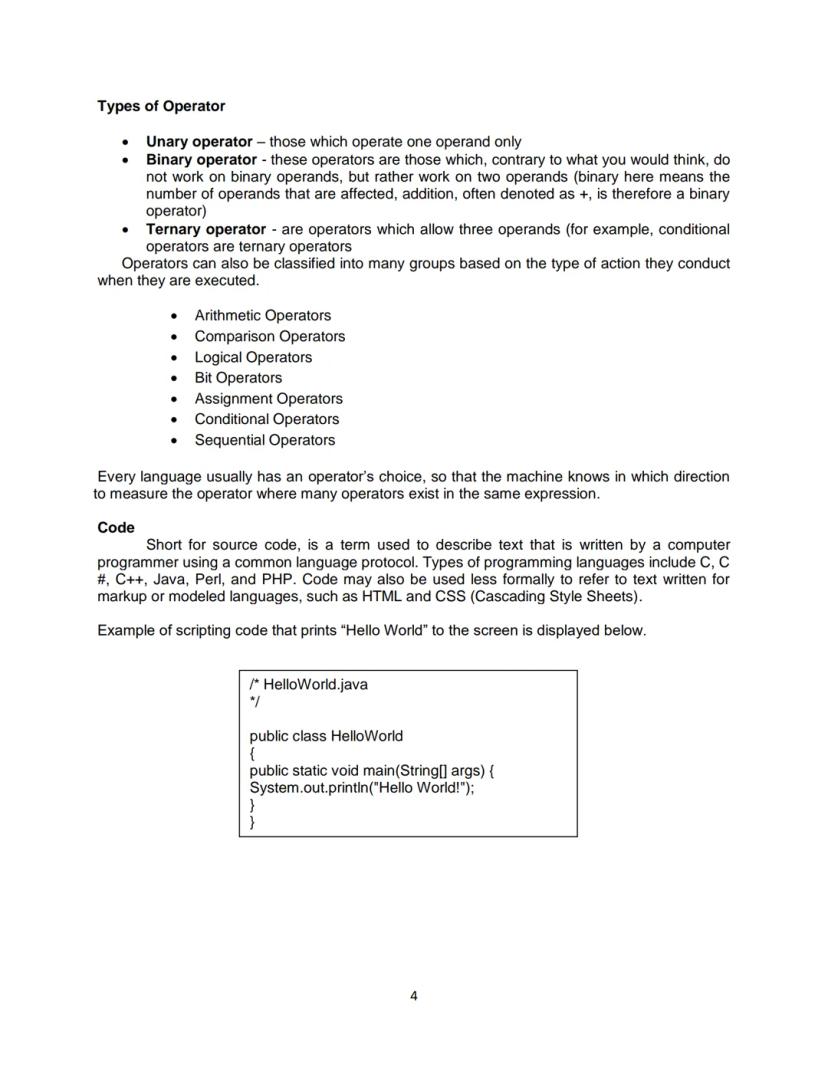
Your first encounter with actual code might look intimidating, but it's just text written in a specific format that computers can understand. The example "Hello World" program demonstrates the basic structure you'll use in Java programming.
Confidence Booster: Every expert programmer started with "Hello World" - it's your first step into a much larger world of possibilities.
System.out.println("Hello World!");
This simple line of code tells the computer to display "Hello World!" on the screen. You've just seen your first complete instruction that actually does something useful!
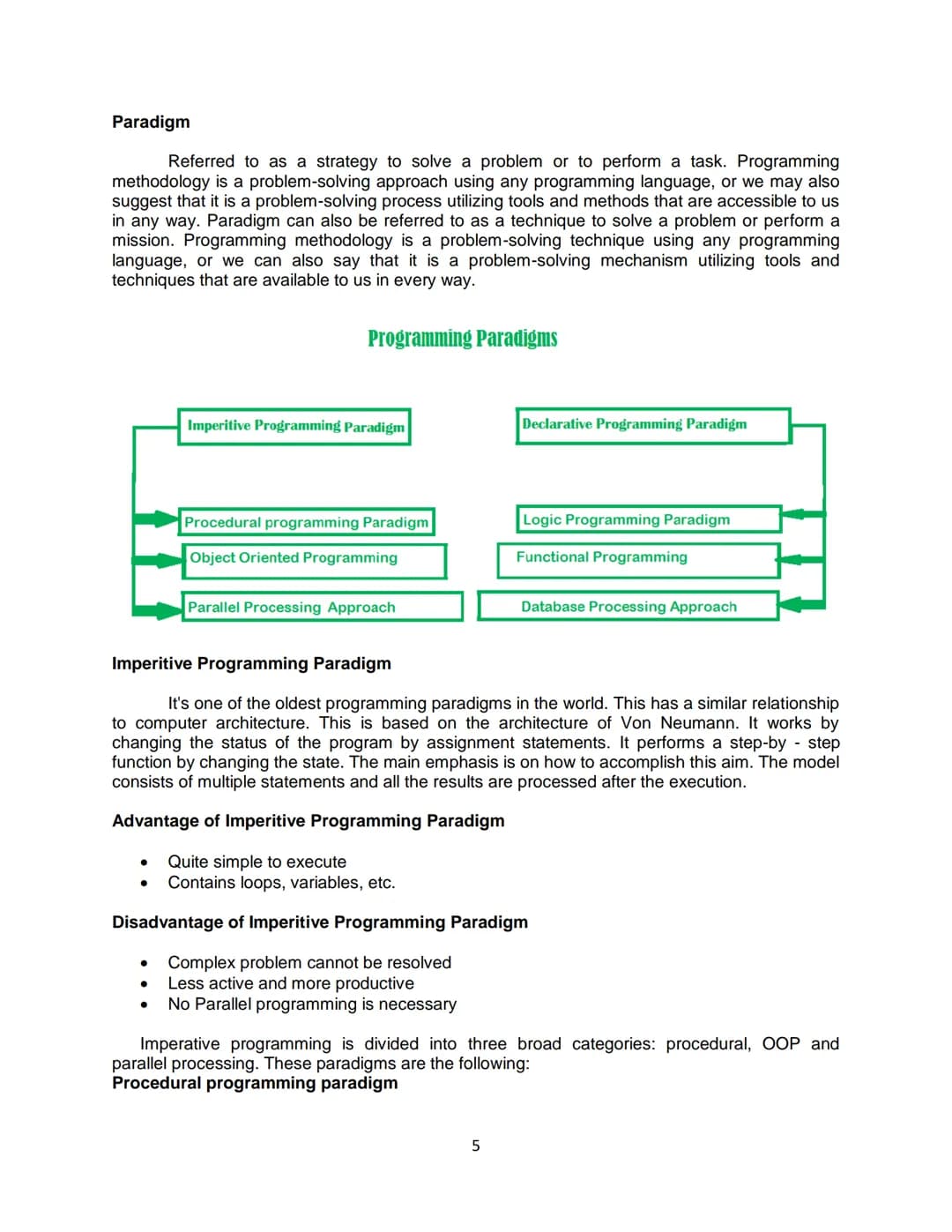
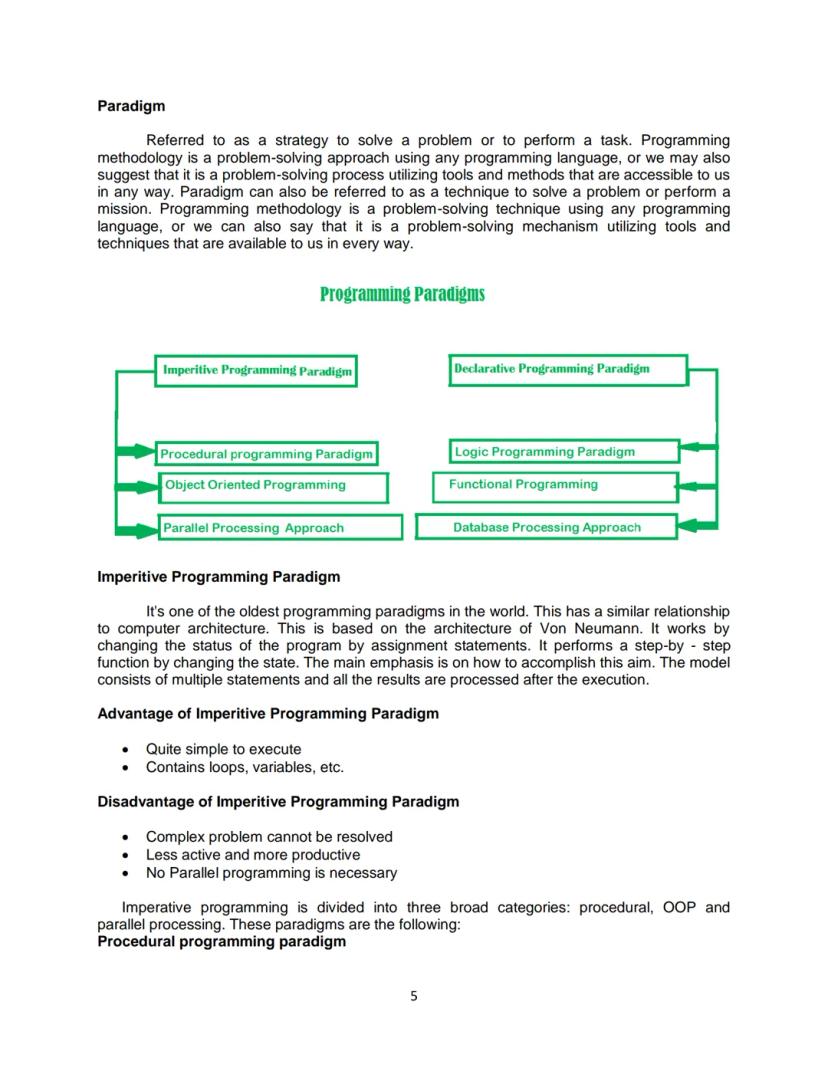
Programming paradigms are different approaches to solving problems with code. Think of them as different strategies for tackling challenges - some work better for certain types of problems than others.
The imperative programming paradigm is one of the oldest approaches, working step-by-step by changing the program's state through assignment statements. It's straightforward to understand and implement, making it perfect for beginners.
Procedural programming emphasises breaking problems down into smaller procedures or functions that can be reused. This approach promotes code reusability and makes programs easier to understand and maintain.
Learning Strategy: Start with procedural programming - it's like learning to walk before you run in the programming world.
Different paradigms include object-oriented programming, functional programming, and others. Each has its strengths, but procedural programming provides an excellent foundation for understanding how computers execute instructions systematically.
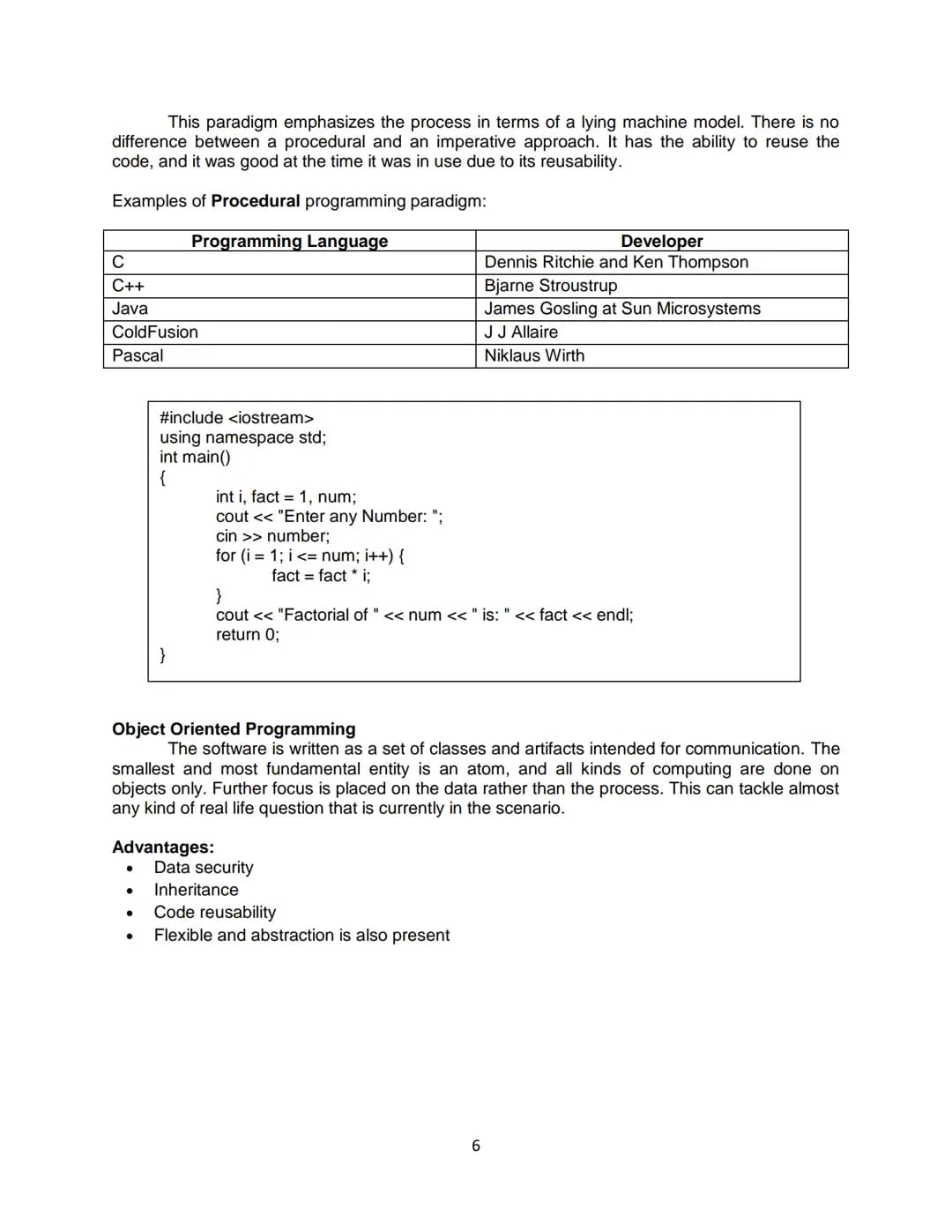
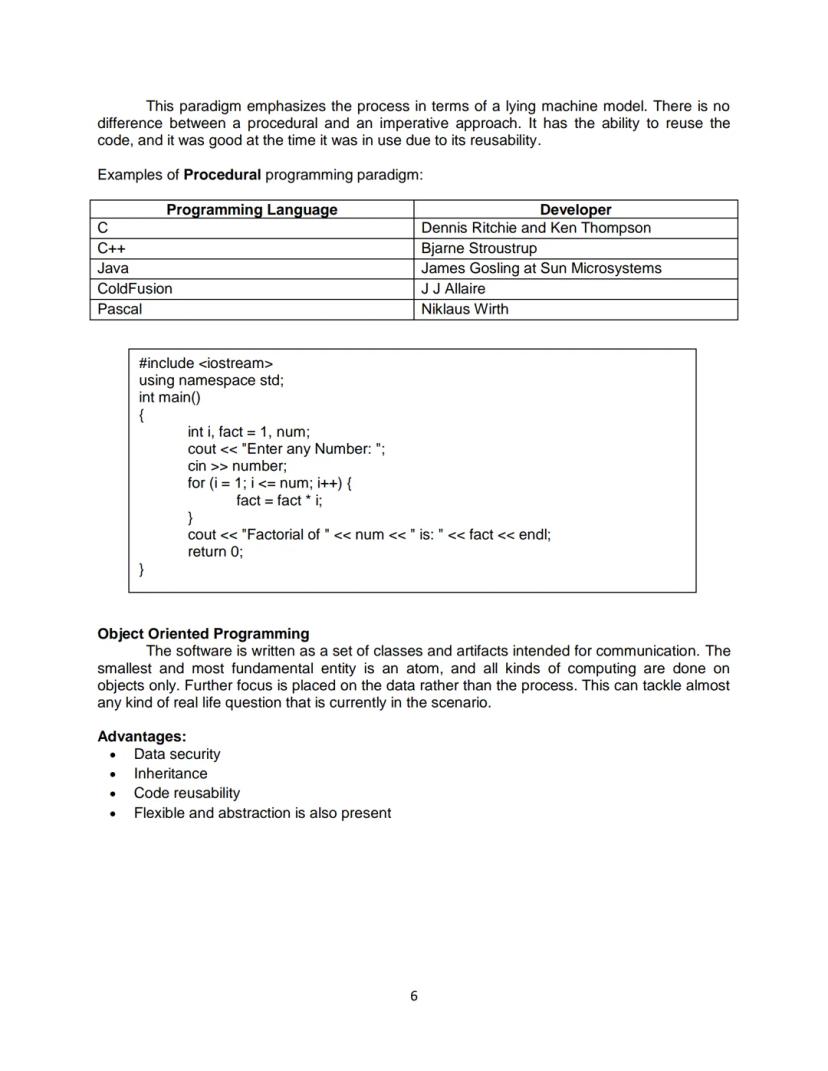
Procedural programming focuses on creating reusable code blocks called procedures or functions. Languages like C, C++, and Java support this approach, making it easier to organise and maintain your programs.
The example factorial program demonstrates procedural programming in action - it takes a number, calculates its factorial through a step-by-step process, and displays the result. This straightforward approach makes it easy to follow the program's logic.
Object-oriented programming (OOP) takes a different approach by organising code around objects that represent real-world things. Instead of focusing on procedures, OOP emphasises data and the actions that can be performed on that data.
Key Difference: Procedural programming asks "what needs to be done?", whilst OOP asks "what things are involved and what can they do?"
OOP offers advantages like data security, inheritance (sharing characteristics between objects), and code reusability. However, procedural programming remains an excellent starting point for understanding fundamental programming concepts.
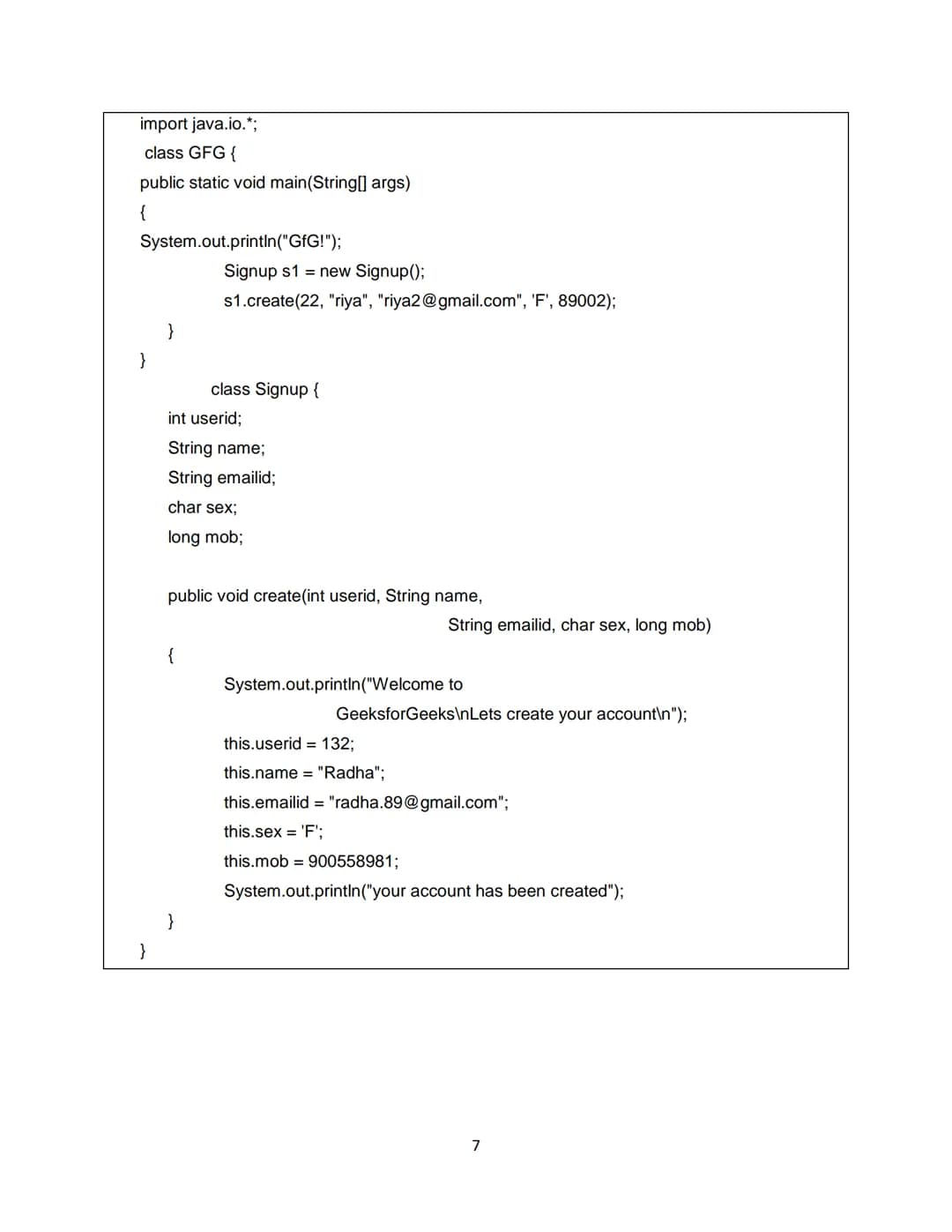
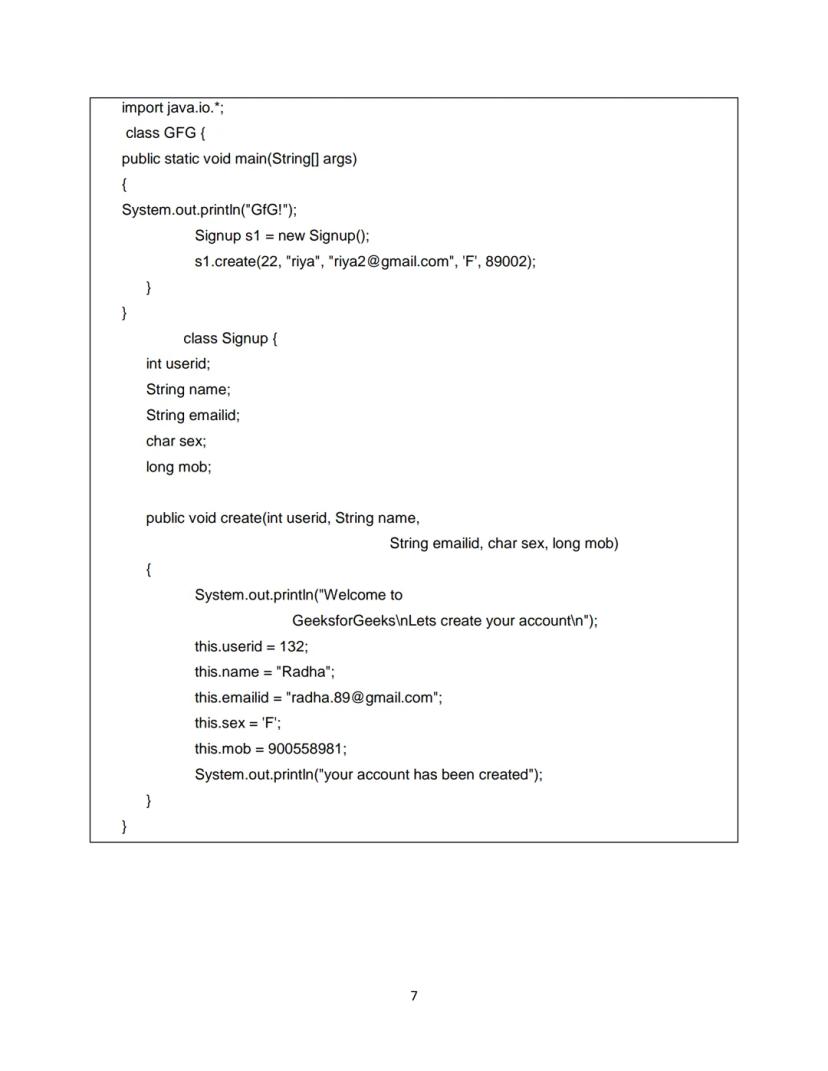
The Java example shows object-oriented programming in action, creating a Signup class that represents user account creation. This demonstrates how OOP organises code around objects that model real-world concepts.
In this example, the Signup class contains data (like userid, name, emailid) and methods (like the create function) that work with that data. This organisation makes the code more intuitive and easier to understand.
The program creates an object called s1 from the Signup class and then calls its create method to set up a new user account. This approach mimics how you might think about the problem in real life.
OOP Insight: Objects are like digital representations of real things - they have properties (data) and abilities (methods), just like real objects do.
While this might seem more complex than procedural programming initially, OOP becomes incredibly powerful for larger programs where you need to manage many different types of data and operations efficiently.
Our AI Companion is a student-focused AI tool that offers more than just answers. Built on millions of Knowunity resources, it provides relevant information, personalised study plans, quizzes, and content directly in the chat, adapting to your individual learning journey.
You can download the app from Google Play Store and Apple App Store.
That's right! Enjoy free access to study content, connect with fellow students, and get instant help – all at your fingertips.
App Store
Google Play
The app is very easy to use and well designed. I have found everything I was looking for so far and have been able to learn a lot from the presentations! I will definitely use the app for a class assignment! And of course it also helps a lot as an inspiration.
Stefan S
iOS user
This app is really great. There are so many study notes and help [...]. My problem subject is French, for example, and the app has so many options for help. Thanks to this app, I have improved my French. I would recommend it to anyone.
Samantha Klich
Android user
Wow, I am really amazed. I just tried the app because I've seen it advertised many times and was absolutely stunned. This app is THE HELP you want for school and above all, it offers so many things, such as workouts and fact sheets, which have been VERY helpful to me personally.
Anna
iOS user
Best app on earth! no words because it’s too good
Thomas R
iOS user
Just amazing. Let's me revise 10x better, this app is a quick 10/10. I highly recommend it to anyone. I can watch and search for notes. I can save them in the subject folder. I can revise it any time when I come back. If you haven't tried this app, you're really missing out.
Basil
Android user
This app has made me feel so much more confident in my exam prep, not only through boosting my own self confidence through the features that allow you to connect with others and feel less alone, but also through the way the app itself is centred around making you feel better. It is easy to navigate, fun to use, and helpful to anyone struggling in absolutely any way.
David K
iOS user
The app's just great! All I have to do is enter the topic in the search bar and I get the response real fast. I don't have to watch 10 YouTube videos to understand something, so I'm saving my time. Highly recommended!
Sudenaz Ocak
Android user
In school I was really bad at maths but thanks to the app, I am doing better now. I am so grateful that you made the app.
Greenlight Bonnie
Android user
very reliable app to help and grow your ideas of Maths, English and other related topics in your works. please use this app if your struggling in areas, this app is key for that. wish I'd of done a review before. and it's also free so don't worry about that.
Rohan U
Android user
I know a lot of apps use fake accounts to boost their reviews but this app deserves it all. Originally I was getting 4 in my English exams and this time I got a grade 7. I didn’t even know about this app three days until the exam and it has helped A LOT. Please actually trust me and use it as I’m sure you too will see developments.
Xander S
iOS user
THE QUIZES AND FLASHCARDS ARE SO USEFUL AND I LOVE Knowunity AI. IT ALSO IS LITREALLY LIKE CHATGPT BUT SMARTER!! HELPED ME WITH MY MASCARA PROBLEMS TOO!! AS WELL AS MY REAL SUBJECTS ! DUHHH 😍😁😲🤑💗✨🎀😮
Elisha
iOS user
This apps acc the goat. I find revision so boring but this app makes it so easy to organize it all and then you can ask the freeeee ai to test yourself so good and you can easily upload your own stuff. highly recommend as someone taking mocks now
Paul T
iOS user
The app is very easy to use and well designed. I have found everything I was looking for so far and have been able to learn a lot from the presentations! I will definitely use the app for a class assignment! And of course it also helps a lot as an inspiration.
Stefan S
iOS user
This app is really great. There are so many study notes and help [...]. My problem subject is French, for example, and the app has so many options for help. Thanks to this app, I have improved my French. I would recommend it to anyone.
Samantha Klich
Android user
Wow, I am really amazed. I just tried the app because I've seen it advertised many times and was absolutely stunned. This app is THE HELP you want for school and above all, it offers so many things, such as workouts and fact sheets, which have been VERY helpful to me personally.
Anna
iOS user
Best app on earth! no words because it’s too good
Thomas R
iOS user
Just amazing. Let's me revise 10x better, this app is a quick 10/10. I highly recommend it to anyone. I can watch and search for notes. I can save them in the subject folder. I can revise it any time when I come back. If you haven't tried this app, you're really missing out.
Basil
Android user
This app has made me feel so much more confident in my exam prep, not only through boosting my own self confidence through the features that allow you to connect with others and feel less alone, but also through the way the app itself is centred around making you feel better. It is easy to navigate, fun to use, and helpful to anyone struggling in absolutely any way.
David K
iOS user
The app's just great! All I have to do is enter the topic in the search bar and I get the response real fast. I don't have to watch 10 YouTube videos to understand something, so I'm saving my time. Highly recommended!
Sudenaz Ocak
Android user
In school I was really bad at maths but thanks to the app, I am doing better now. I am so grateful that you made the app.
Greenlight Bonnie
Android user
very reliable app to help and grow your ideas of Maths, English and other related topics in your works. please use this app if your struggling in areas, this app is key for that. wish I'd of done a review before. and it's also free so don't worry about that.
Rohan U
Android user
I know a lot of apps use fake accounts to boost their reviews but this app deserves it all. Originally I was getting 4 in my English exams and this time I got a grade 7. I didn’t even know about this app three days until the exam and it has helped A LOT. Please actually trust me and use it as I’m sure you too will see developments.
Xander S
iOS user
THE QUIZES AND FLASHCARDS ARE SO USEFUL AND I LOVE Knowunity AI. IT ALSO IS LITREALLY LIKE CHATGPT BUT SMARTER!! HELPED ME WITH MY MASCARA PROBLEMS TOO!! AS WELL AS MY REAL SUBJECTS ! DUHHH 😍😁😲🤑💗✨🎀😮
Elisha
iOS user
This apps acc the goat. I find revision so boring but this app makes it so easy to organize it all and then you can ask the freeeee ai to test yourself so good and you can easily upload your own stuff. highly recommend as someone taking mocks now
Paul T
iOS user
Marjani Toroganan
@marjanitorogana
Programming is everywhere around you - from the apps on your phone to the games you play online. This guide introduces you to the fundamental concepts of computer programming, focusing on problem-solving skills and logical thinking that'll help you understand... Show more
Access to all documents
Improve your grades
Join milions of students
By signing up you accept Terms of Service and Privacy Policy
You're about to dive into COMP 20023 Computer Programming 1, a course designed to teach you the art of solving problems with code. Think of programming like learning a new language - except this time, you're talking to computers instead of people.
This course focuses on procedural programming, which means you'll learn to break down complex problems into simple, step-by-step instructions. You'll master essential skills like creating input/output statements, loops, and functions that form the backbone of most programs.
Quick Tip: Programming is like following a recipe - you need clear, ordered steps that anyone (or any computer) can follow to get the desired result.
By the end of this course, you'll be able to design, write, test, and debug your own programs. You'll also learn to read other people's code and suggest improvements - a crucial skill in the programming world.
Access to all documents
Improve your grades
Join milions of students
By signing up you accept Terms of Service and Privacy Policy
Your journey through programming will be assessed through a balanced mix of practical work and examinations. Class standing (which includes seatwork, quizzes, research, exercises, and projects) makes up 70% of your grade, whilst examinations account for 30%.
The course covers everything from basic programming concepts to more advanced topics like arrays and functions. You'll start with fundamental logic formulation and gradually work your way up to creating complete programs.
Assessment happens at the end of every chapter, giving you regular opportunities to demonstrate your understanding. This approach helps you build confidence progressively rather than cramming everything at once.
Remember: Your final grade is calculated as the average of your midterm and finals grades, so consistent effort throughout the semester pays off.
The systematic assessment approach ensures you're not just memorising code, but actually developing problem-solving skills that you can apply to real-world computing challenges.
Access to all documents
Improve your grades
Join milions of students
By signing up you accept Terms of Service and Privacy Policy
The course is structured into seven main sections, starting with programming concepts and building up to complete sample programs. You'll begin with understanding what programming actually is before diving into practical coding skills.
Basic program structure comes next, teaching you how to organise your code properly. This foundation is crucial - just like you wouldn't build a house without a solid foundation, you can't write good programs without understanding proper structure.
The middle sections cover conditional constructs (making decisions in code), looping constructs (repeating actions), and arrays (storing multiple pieces of data). These are the building blocks you'll use in almost every program you write.
Study Strategy: Each topic builds on the previous one, so make sure you understand each section before moving on to the next.
The course concludes with functions and sample programs that tie everything together. By this point, you'll have all the tools needed to create your own software solutions.
Access to all documents
Improve your grades
Join milions of students
By signing up you accept Terms of Service and Privacy Policy
After mastering this section, you'll understand the steps in program development - essentially, how professional programmers approach solving problems. This isn't just about writing code; it's about thinking systematically.
You'll learn to design algorithms, which are step-by-step solutions to problems. Think of algorithms like GPS directions - they tell you exactly what to do and in what order to reach your destination.
The section also covers Java programming language specifically, including why it's important and what types of applications you can build with it. Java is everywhere - from Android apps to large business systems.
Career Insight: Understanding program development steps is what separates amateur coders from professional developers.
You'll also get familiar with how Java actually works behind the scenes - how your code gets transformed into something the computer can understand and execute.
Access to all documents
Improve your grades
Join milions of students
By signing up you accept Terms of Service and Privacy Policy
Programming languages are the foundation behind every piece of technology you use daily. From social media platforms to online games, programming languages make all these conveniences possible.
Understanding programming opens up incredible career opportunities and develops your problem-solving abilities. You'll learn to break down complex challenges into manageable steps - a skill that's valuable in any field, not just computing.
Computer hardware and software work together to create the technology we rely on. Hardware includes the physical components you can touch (like your keyboard and screen), whilst software consists of the programs and instructions that tell the hardware what to do.
Real-world Connection: Every app notification, every webpage load, and every game action happens because someone wrote code to make it work.
The relationship between hardware and software is like a musician and their instrument - neither can create music alone, but together they can produce amazing results. Programming gives you the power to be that musician.
Access to all documents
Improve your grades
Join milions of students
By signing up you accept Terms of Service and Privacy Policy
Software acts as the bridge between you and your computer's hardware. It's essentially a collection of instructions that tell your computer exactly what to do, when to do it, and how to do it.
There are two main types of software: system software (like your operating system) that keeps your computer running, and application software (like games and word processors) that helps you accomplish specific tasks.
Every computer program is made up of instructions - specific commands that tell the processor which actions to perform. These instructions typically have two parts: the operator (what to do) and the operands (what to do it with).
Think of it this way: Instructions are like giving directions to a friend - you need to be specific about the action and what it applies to.
Programmers write these instructions using programming languages, creating detailed solutions to problems. The code they write gets translated into instructions that computers can understand and execute.
Access to all documents
Improve your grades
Join milions of students
By signing up you accept Terms of Service and Privacy Policy
Operators are the action words of programming - they tell the computer what operations to perform on your data. You'll work with different types including arithmetic operators (+, -, ×, ÷), comparison operators (=, >, <), and logical operators.
Operators can be unary (working on one piece of data), binary (working on two pieces), or ternary (working on three pieces). Understanding these classifications helps you use operators correctly in your programs.
Your first encounter with actual code might look intimidating, but it's just text written in a specific format that computers can understand. The example "Hello World" program demonstrates the basic structure you'll use in Java programming.
Confidence Booster: Every expert programmer started with "Hello World" - it's your first step into a much larger world of possibilities.
System.out.println("Hello World!");
This simple line of code tells the computer to display "Hello World!" on the screen. You've just seen your first complete instruction that actually does something useful!
Access to all documents
Improve your grades
Join milions of students
By signing up you accept Terms of Service and Privacy Policy
Programming paradigms are different approaches to solving problems with code. Think of them as different strategies for tackling challenges - some work better for certain types of problems than others.
The imperative programming paradigm is one of the oldest approaches, working step-by-step by changing the program's state through assignment statements. It's straightforward to understand and implement, making it perfect for beginners.
Procedural programming emphasises breaking problems down into smaller procedures or functions that can be reused. This approach promotes code reusability and makes programs easier to understand and maintain.
Learning Strategy: Start with procedural programming - it's like learning to walk before you run in the programming world.
Different paradigms include object-oriented programming, functional programming, and others. Each has its strengths, but procedural programming provides an excellent foundation for understanding how computers execute instructions systematically.
Access to all documents
Improve your grades
Join milions of students
By signing up you accept Terms of Service and Privacy Policy
Procedural programming focuses on creating reusable code blocks called procedures or functions. Languages like C, C++, and Java support this approach, making it easier to organise and maintain your programs.
The example factorial program demonstrates procedural programming in action - it takes a number, calculates its factorial through a step-by-step process, and displays the result. This straightforward approach makes it easy to follow the program's logic.
Object-oriented programming (OOP) takes a different approach by organising code around objects that represent real-world things. Instead of focusing on procedures, OOP emphasises data and the actions that can be performed on that data.
Key Difference: Procedural programming asks "what needs to be done?", whilst OOP asks "what things are involved and what can they do?"
OOP offers advantages like data security, inheritance (sharing characteristics between objects), and code reusability. However, procedural programming remains an excellent starting point for understanding fundamental programming concepts.
Access to all documents
Improve your grades
Join milions of students
By signing up you accept Terms of Service and Privacy Policy
The Java example shows object-oriented programming in action, creating a Signup class that represents user account creation. This demonstrates how OOP organises code around objects that model real-world concepts.
In this example, the Signup class contains data (like userid, name, emailid) and methods (like the create function) that work with that data. This organisation makes the code more intuitive and easier to understand.
The program creates an object called s1 from the Signup class and then calls its create method to set up a new user account. This approach mimics how you might think about the problem in real life.
OOP Insight: Objects are like digital representations of real things - they have properties (data) and abilities (methods), just like real objects do.
While this might seem more complex than procedural programming initially, OOP becomes incredibly powerful for larger programs where you need to manage many different types of data and operations efficiently.
Our AI Companion is a student-focused AI tool that offers more than just answers. Built on millions of Knowunity resources, it provides relevant information, personalised study plans, quizzes, and content directly in the chat, adapting to your individual learning journey.
You can download the app from Google Play Store and Apple App Store.
That's right! Enjoy free access to study content, connect with fellow students, and get instant help – all at your fingertips.
8
Smart Tools NEW
Transform this note into: ✓ 50+ Practice Questions ✓ Interactive Flashcards ✓ Full Mock Exam ✓ Essay Outlines
App Store
Google Play
The app is very easy to use and well designed. I have found everything I was looking for so far and have been able to learn a lot from the presentations! I will definitely use the app for a class assignment! And of course it also helps a lot as an inspiration.
Stefan S
iOS user
This app is really great. There are so many study notes and help [...]. My problem subject is French, for example, and the app has so many options for help. Thanks to this app, I have improved my French. I would recommend it to anyone.
Samantha Klich
Android user
Wow, I am really amazed. I just tried the app because I've seen it advertised many times and was absolutely stunned. This app is THE HELP you want for school and above all, it offers so many things, such as workouts and fact sheets, which have been VERY helpful to me personally.
Anna
iOS user
Best app on earth! no words because it’s too good
Thomas R
iOS user
Just amazing. Let's me revise 10x better, this app is a quick 10/10. I highly recommend it to anyone. I can watch and search for notes. I can save them in the subject folder. I can revise it any time when I come back. If you haven't tried this app, you're really missing out.
Basil
Android user
This app has made me feel so much more confident in my exam prep, not only through boosting my own self confidence through the features that allow you to connect with others and feel less alone, but also through the way the app itself is centred around making you feel better. It is easy to navigate, fun to use, and helpful to anyone struggling in absolutely any way.
David K
iOS user
The app's just great! All I have to do is enter the topic in the search bar and I get the response real fast. I don't have to watch 10 YouTube videos to understand something, so I'm saving my time. Highly recommended!
Sudenaz Ocak
Android user
In school I was really bad at maths but thanks to the app, I am doing better now. I am so grateful that you made the app.
Greenlight Bonnie
Android user
very reliable app to help and grow your ideas of Maths, English and other related topics in your works. please use this app if your struggling in areas, this app is key for that. wish I'd of done a review before. and it's also free so don't worry about that.
Rohan U
Android user
I know a lot of apps use fake accounts to boost their reviews but this app deserves it all. Originally I was getting 4 in my English exams and this time I got a grade 7. I didn’t even know about this app three days until the exam and it has helped A LOT. Please actually trust me and use it as I’m sure you too will see developments.
Xander S
iOS user
THE QUIZES AND FLASHCARDS ARE SO USEFUL AND I LOVE Knowunity AI. IT ALSO IS LITREALLY LIKE CHATGPT BUT SMARTER!! HELPED ME WITH MY MASCARA PROBLEMS TOO!! AS WELL AS MY REAL SUBJECTS ! DUHHH 😍😁😲🤑💗✨🎀😮
Elisha
iOS user
This apps acc the goat. I find revision so boring but this app makes it so easy to organize it all and then you can ask the freeeee ai to test yourself so good and you can easily upload your own stuff. highly recommend as someone taking mocks now
Paul T
iOS user
The app is very easy to use and well designed. I have found everything I was looking for so far and have been able to learn a lot from the presentations! I will definitely use the app for a class assignment! And of course it also helps a lot as an inspiration.
Stefan S
iOS user
This app is really great. There are so many study notes and help [...]. My problem subject is French, for example, and the app has so many options for help. Thanks to this app, I have improved my French. I would recommend it to anyone.
Samantha Klich
Android user
Wow, I am really amazed. I just tried the app because I've seen it advertised many times and was absolutely stunned. This app is THE HELP you want for school and above all, it offers so many things, such as workouts and fact sheets, which have been VERY helpful to me personally.
Anna
iOS user
Best app on earth! no words because it’s too good
Thomas R
iOS user
Just amazing. Let's me revise 10x better, this app is a quick 10/10. I highly recommend it to anyone. I can watch and search for notes. I can save them in the subject folder. I can revise it any time when I come back. If you haven't tried this app, you're really missing out.
Basil
Android user
This app has made me feel so much more confident in my exam prep, not only through boosting my own self confidence through the features that allow you to connect with others and feel less alone, but also through the way the app itself is centred around making you feel better. It is easy to navigate, fun to use, and helpful to anyone struggling in absolutely any way.
David K
iOS user
The app's just great! All I have to do is enter the topic in the search bar and I get the response real fast. I don't have to watch 10 YouTube videos to understand something, so I'm saving my time. Highly recommended!
Sudenaz Ocak
Android user
In school I was really bad at maths but thanks to the app, I am doing better now. I am so grateful that you made the app.
Greenlight Bonnie
Android user
very reliable app to help and grow your ideas of Maths, English and other related topics in your works. please use this app if your struggling in areas, this app is key for that. wish I'd of done a review before. and it's also free so don't worry about that.
Rohan U
Android user
I know a lot of apps use fake accounts to boost their reviews but this app deserves it all. Originally I was getting 4 in my English exams and this time I got a grade 7. I didn’t even know about this app three days until the exam and it has helped A LOT. Please actually trust me and use it as I’m sure you too will see developments.
Xander S
iOS user
THE QUIZES AND FLASHCARDS ARE SO USEFUL AND I LOVE Knowunity AI. IT ALSO IS LITREALLY LIKE CHATGPT BUT SMARTER!! HELPED ME WITH MY MASCARA PROBLEMS TOO!! AS WELL AS MY REAL SUBJECTS ! DUHHH 😍😁😲🤑💗✨🎀😮
Elisha
iOS user
This apps acc the goat. I find revision so boring but this app makes it so easy to organize it all and then you can ask the freeeee ai to test yourself so good and you can easily upload your own stuff. highly recommend as someone taking mocks now
Paul T
iOS user