Search Algorithms Basics
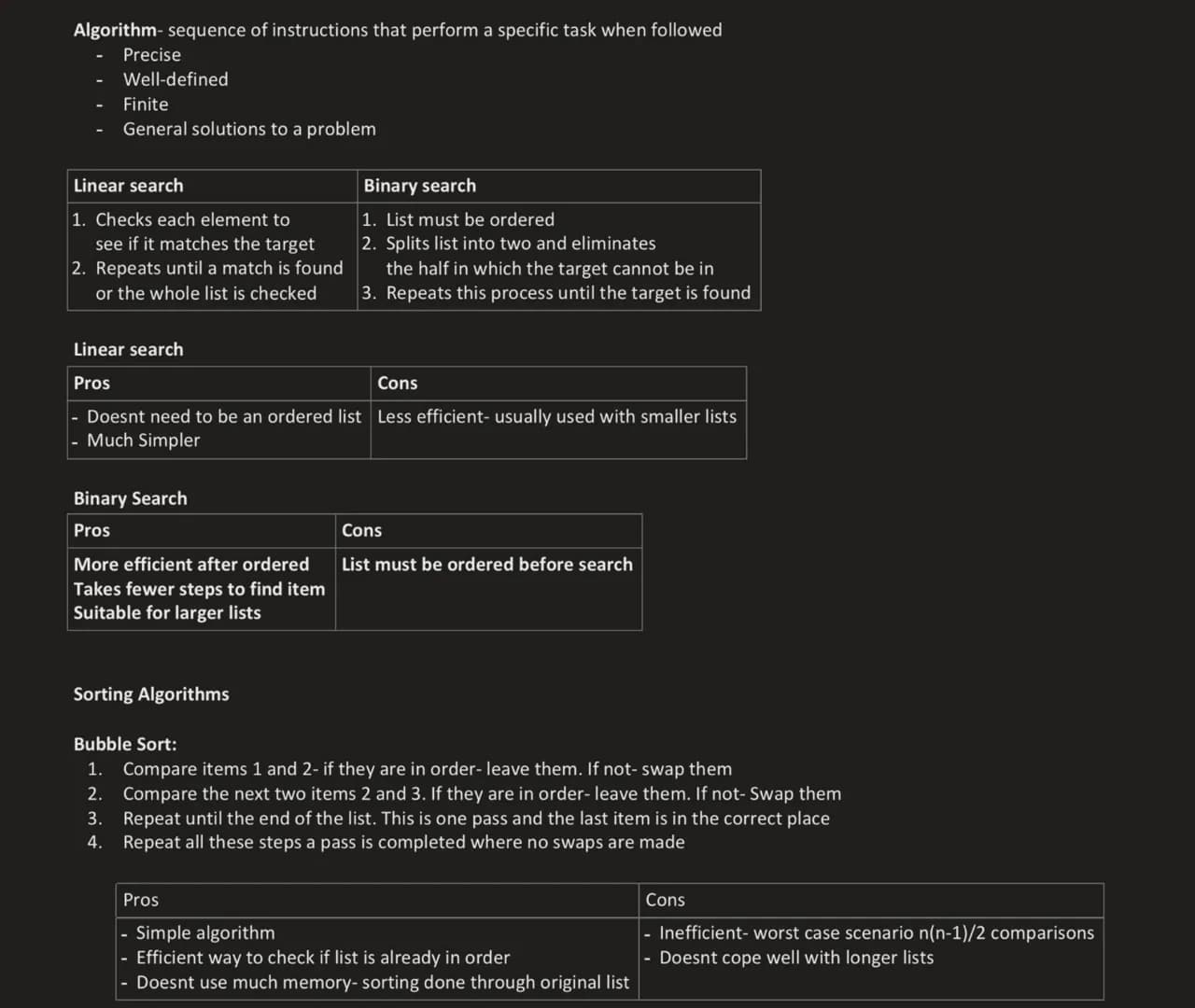
An algorithm is simply a sequence of precise, well-defined instructions that gets a specific job done. Think of it like following a recipe - each step must be clear and lead to the final result.
Linear search is the most straightforward way to find something in a list. You start at the beginning and check each item one by one until you find what you're looking for or reach the end. It's dead simple but can be quite slow with big lists.
Binary search is much cleverer but has one catch - your list must be sorted first. It works by cutting the list in half repeatedly, throwing away the half that can't contain your target item. This makes it lightning fast for large datasets.
Remember: Linear search works on any list, but binary search needs the list sorted first - choose wisely based on your situation!
Bubble Sort Algorithm
Bubble sort gets its name because smaller elements "bubble" to the top of the list. You compare pairs of adjacent items and swap them if they're in the wrong order, repeating this process until no more swaps are needed.
The algorithm is brilliant for beginners because it's incredibly simple to understand and code. It also works directly on your original list without needing extra memory, and it's efficient at checking if a list is already sorted.
However, bubble sort struggles badly with longer lists. In the worst-case scenario, you'll need nn−1/2 comparisons, which gets painfully slow as your data grows.

 Computer Science
 English Literature
 Biology
 Sociology