Key Revision Points
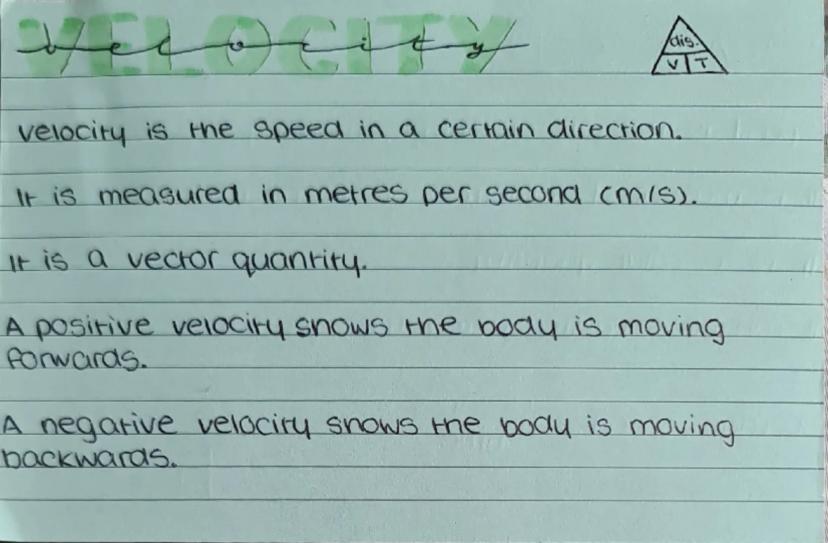
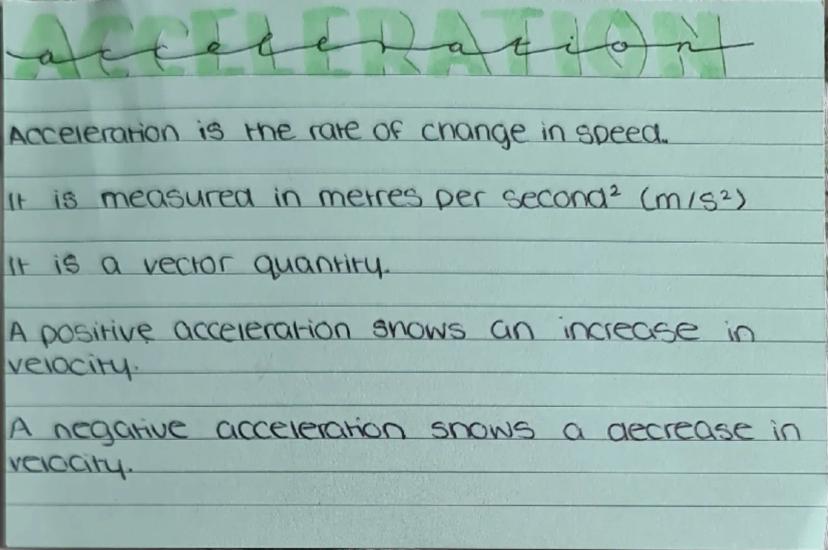
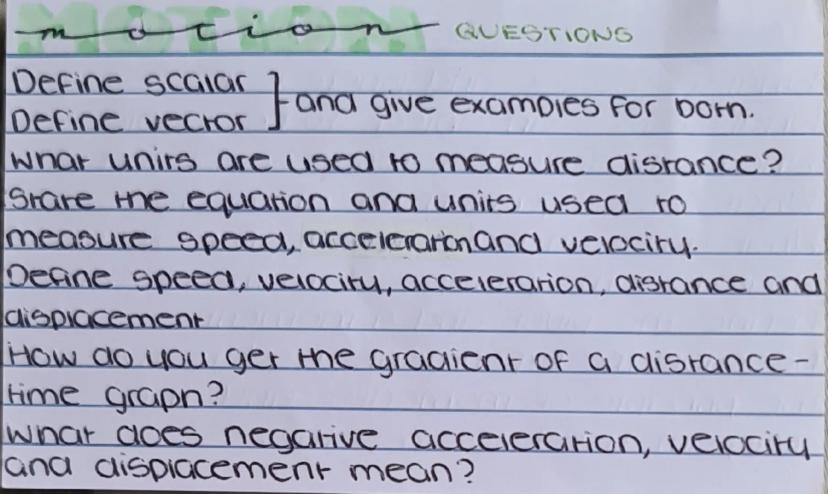
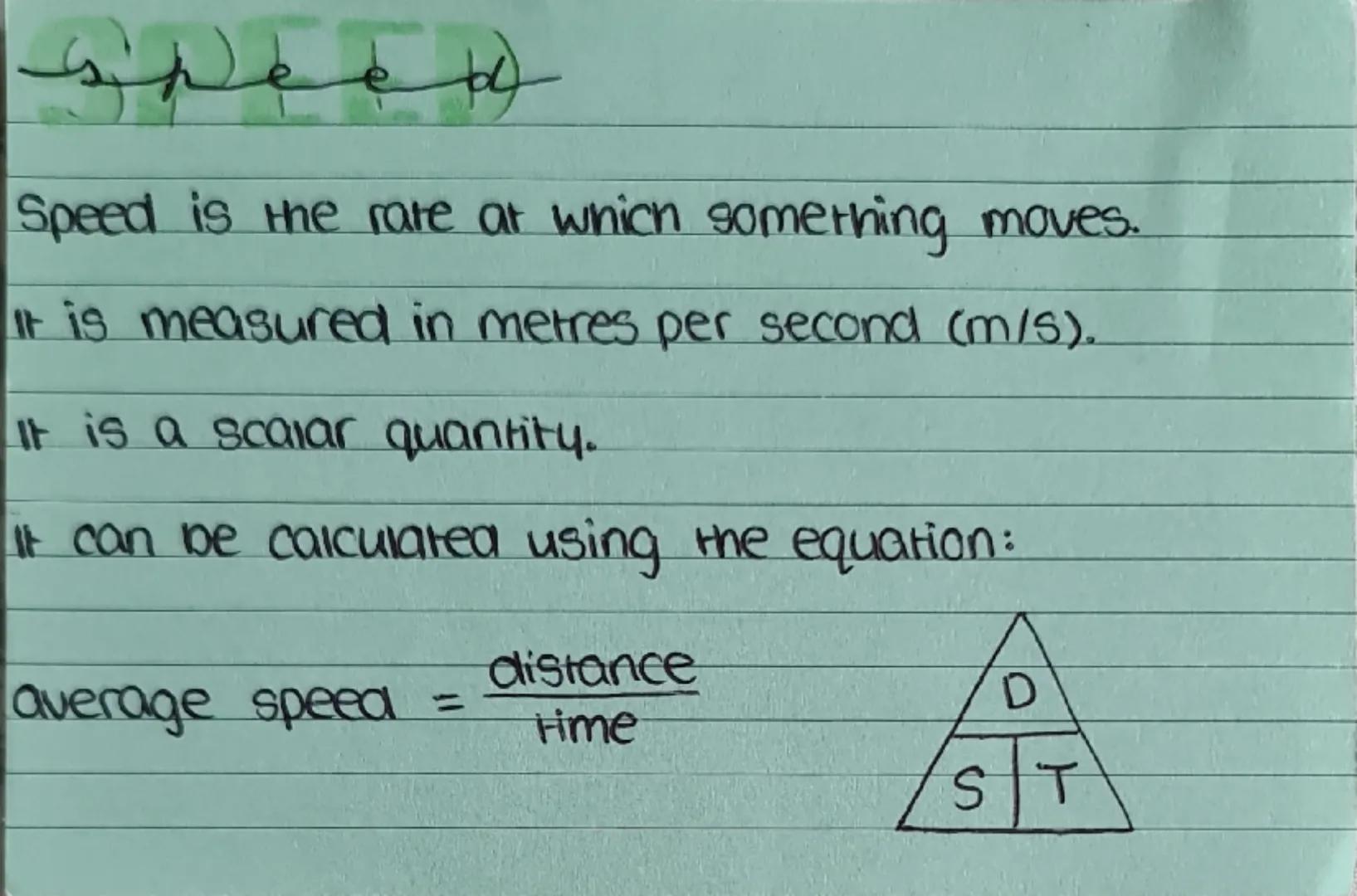
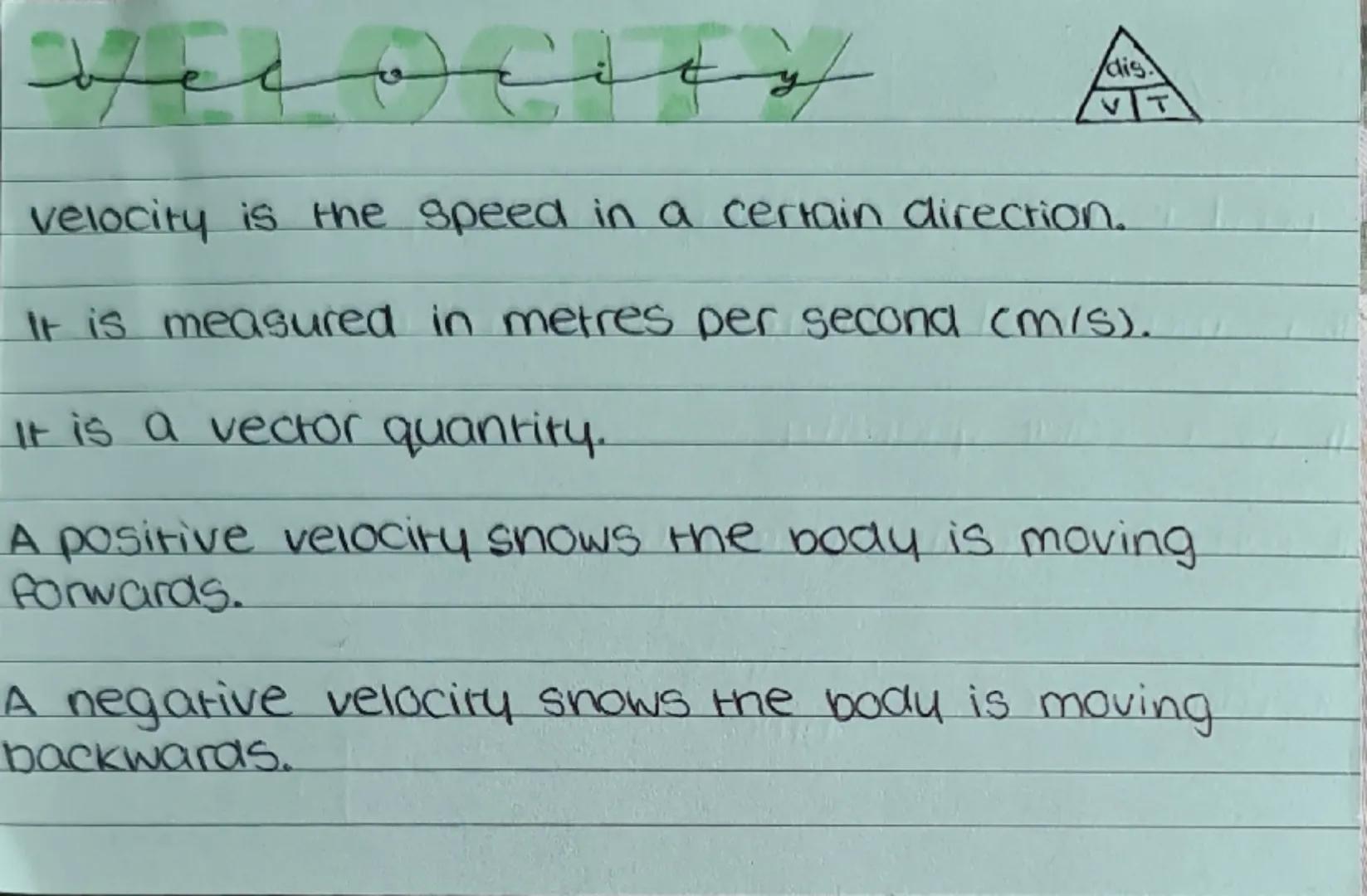
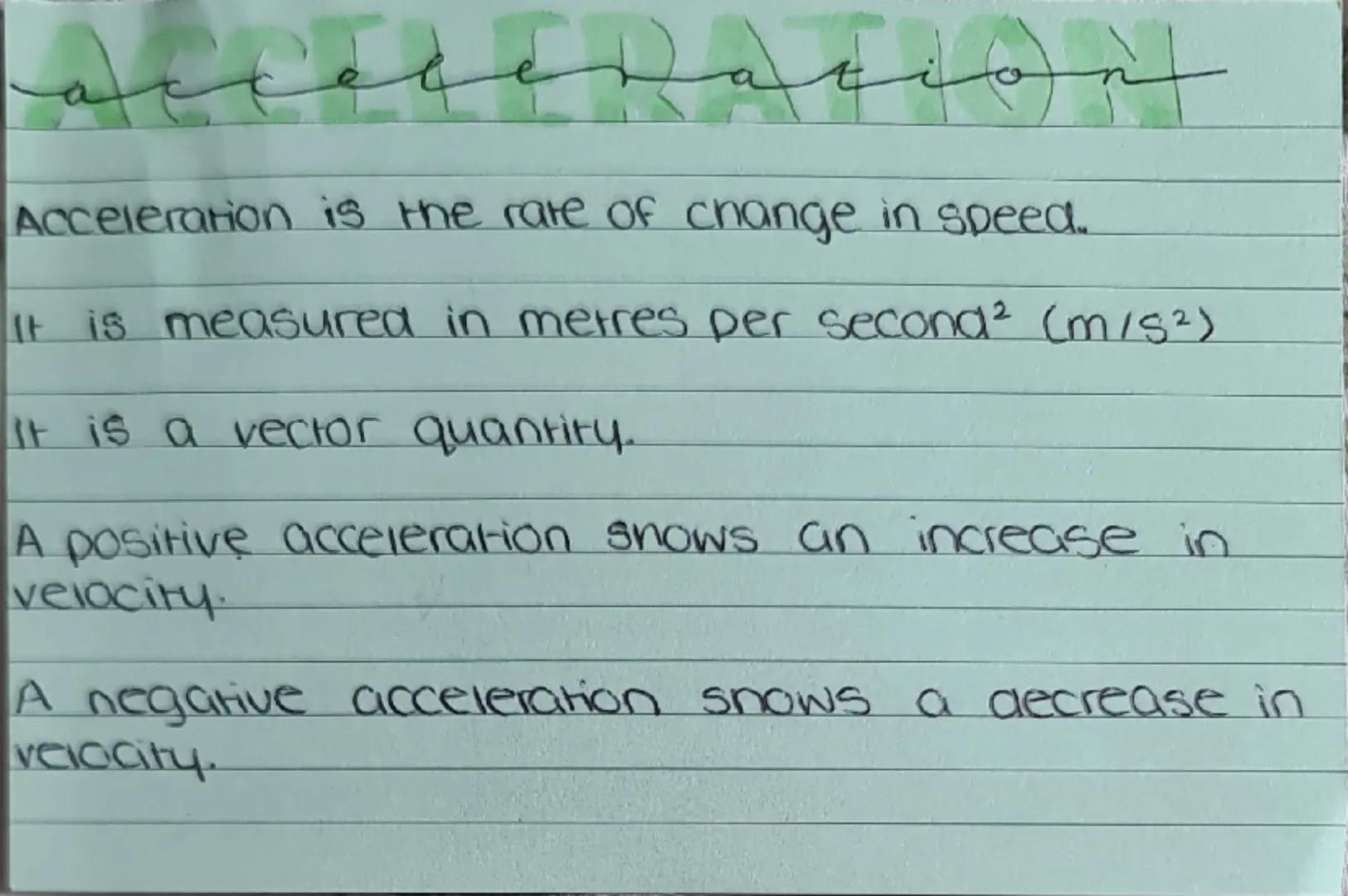
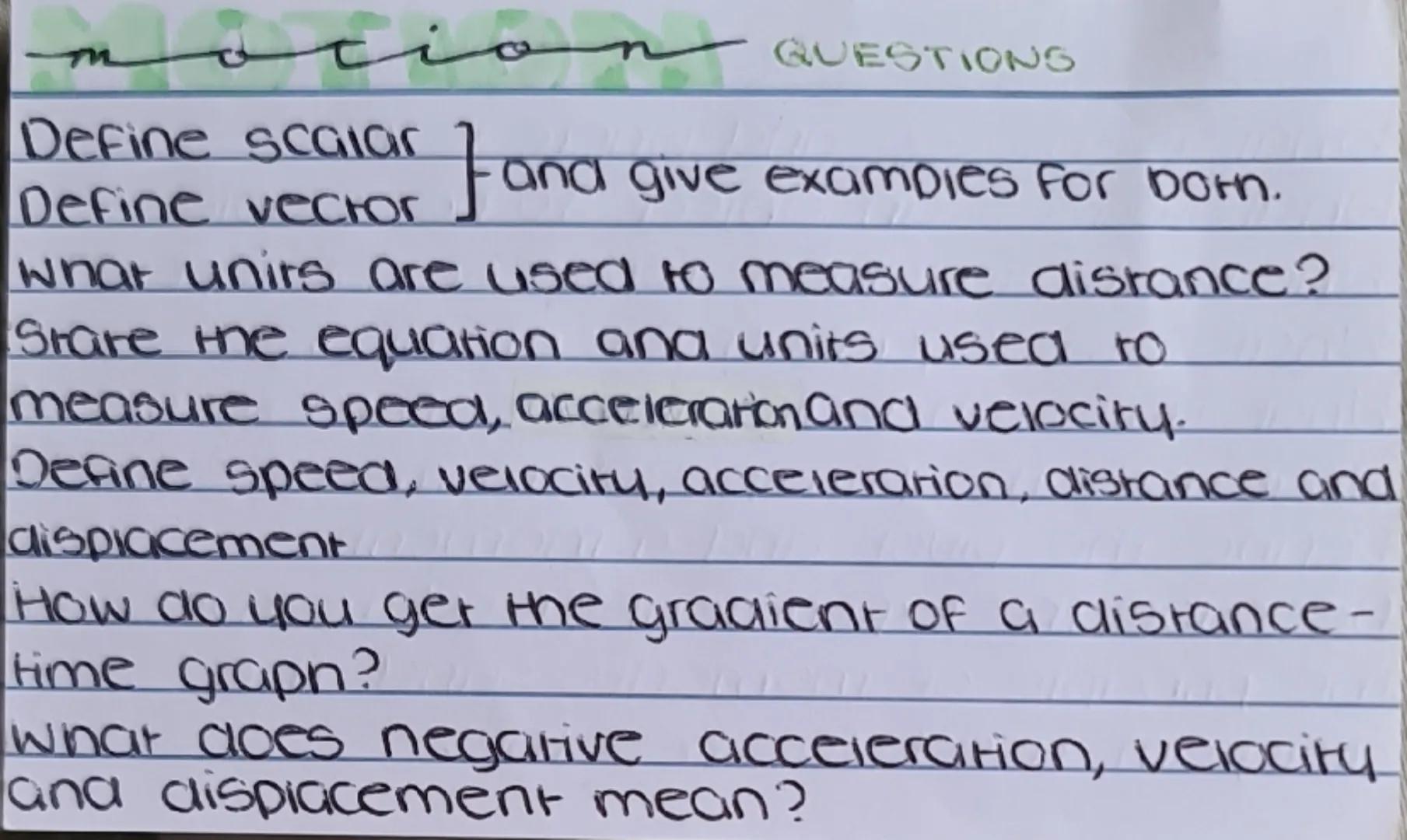
These concepts pop up constantly in physics exams, so getting them sorted now will save you loads of hassle later. Scalar quantities (like speed and distance) only have size, whilst vector quantities (like velocity, acceleration, and displacement) have both size and direction.
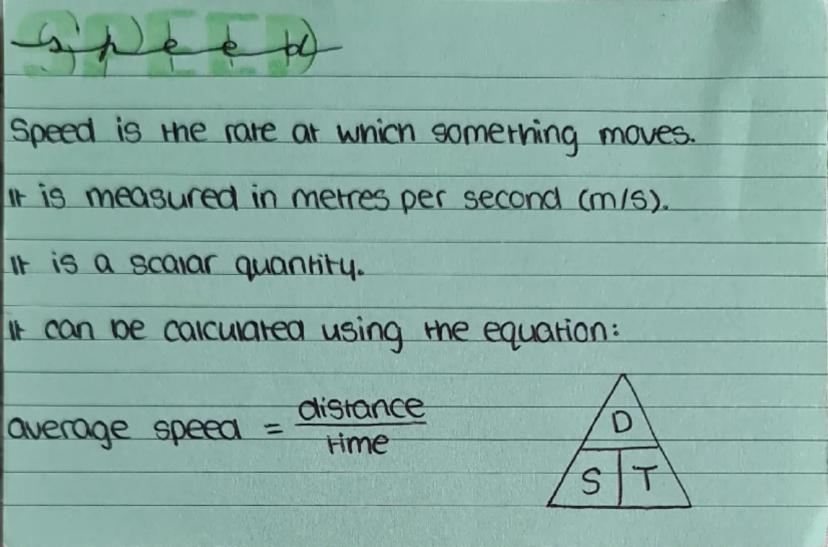
Distance uses metres (m), whilst speed, velocity use metres per second m/s, and acceleration uses metres per second squared m/s2. The gradient of a distance-time graph gives you speed - the steeper the line, the faster the movement.
Displacement is like distance but cares about direction - it's how far you end up from where you started, in a straight line. Negative values in physics usually mean 'opposite direction' - negative acceleration means slowing down, negative velocity means moving backwards, negative displacement means you're on the opposite side of your starting point.
Exam tip: Always include units in your answers and remember that negative values aren't 'wrong' - they're just telling you about direction!


 Physics
 Chemistry
 English Literature
 Sociology
 Biology