
Human cells are the fundamental building blocks of our bodies,... Show more
 Biology
 Physics
 Chemistry
 English Literature
 Sociology
Sign up to see the contentIt's free!
Access to all documents
Improve your grades
Join milions of students
By signing up you accept Terms of Service and Privacy Policy
Subjects
Classic Dramatic Literature
Modern Lyric Poetry
Influential English-Language Authors
Classic and Contemporary Novels
Literary Character Analysis
Romantic and Love Poetry
Reading Analysis and Interpretation
Evidence Analysis and Integration
Author's Stylistic Elements
Figurative Language and Rhetoric
Show all topics
Human Organ Systems
Cellular Organization and Development
Biomolecular Structure and Organization
Enzyme Structure and Regulation
Cellular Organization Types
Biological Homeostatic Processes
Cellular Membrane Structure
Autotrophic Energy Processes
Environmental Sustainability and Impact
Neural Communication Systems
Show all topics
Social Sciences Research & Practice
Social Structure and Mobility
Classic Social Influence Experiments
Social Systems Theories
Family and Relationship Dynamics
Memory Systems and Processes
Neural Bases of Behavior
Social Influence and Attraction
Psychotherapeutic Approaches
Human Agency and Responsibility
Show all topics
Chemical Sciences and Applications
Chemical Bond Types and Properties
Organic Functional Groups
Atomic Structure and Composition
Chromatographic Separation Principles
Chemical Compound Classifications
Electrochemical Cell Systems
Periodic Table Organization
Chemical Reaction Kinetics
Chemical Equation Conservation
Show all topics
Nazi Germany and Holocaust 1933-1945
World Wars and Peace Treaties
European Monarchs and Statesmen
Cold War Global Tensions
Medieval Institutions and Systems
European Renaissance and Enlightenment
Modern Global Environmental-Health Challenges
Modern Military Conflicts
Medieval Migration and Invasions
World Wars Era and Impact
Show all topics
112
•
Updated 26 Feb 2026
•

Anneh
@angeltheresegeorge07_695h
Human cells are the fundamental building blocks of our bodies,... Show more
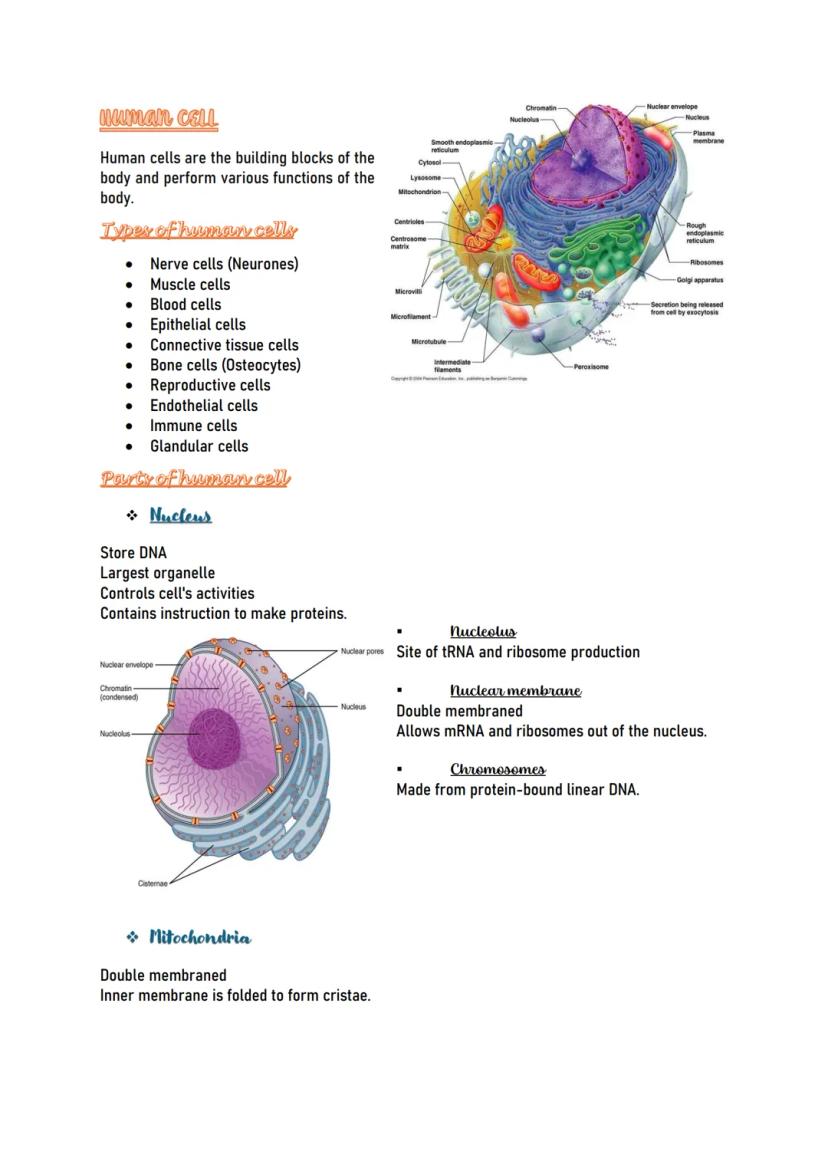
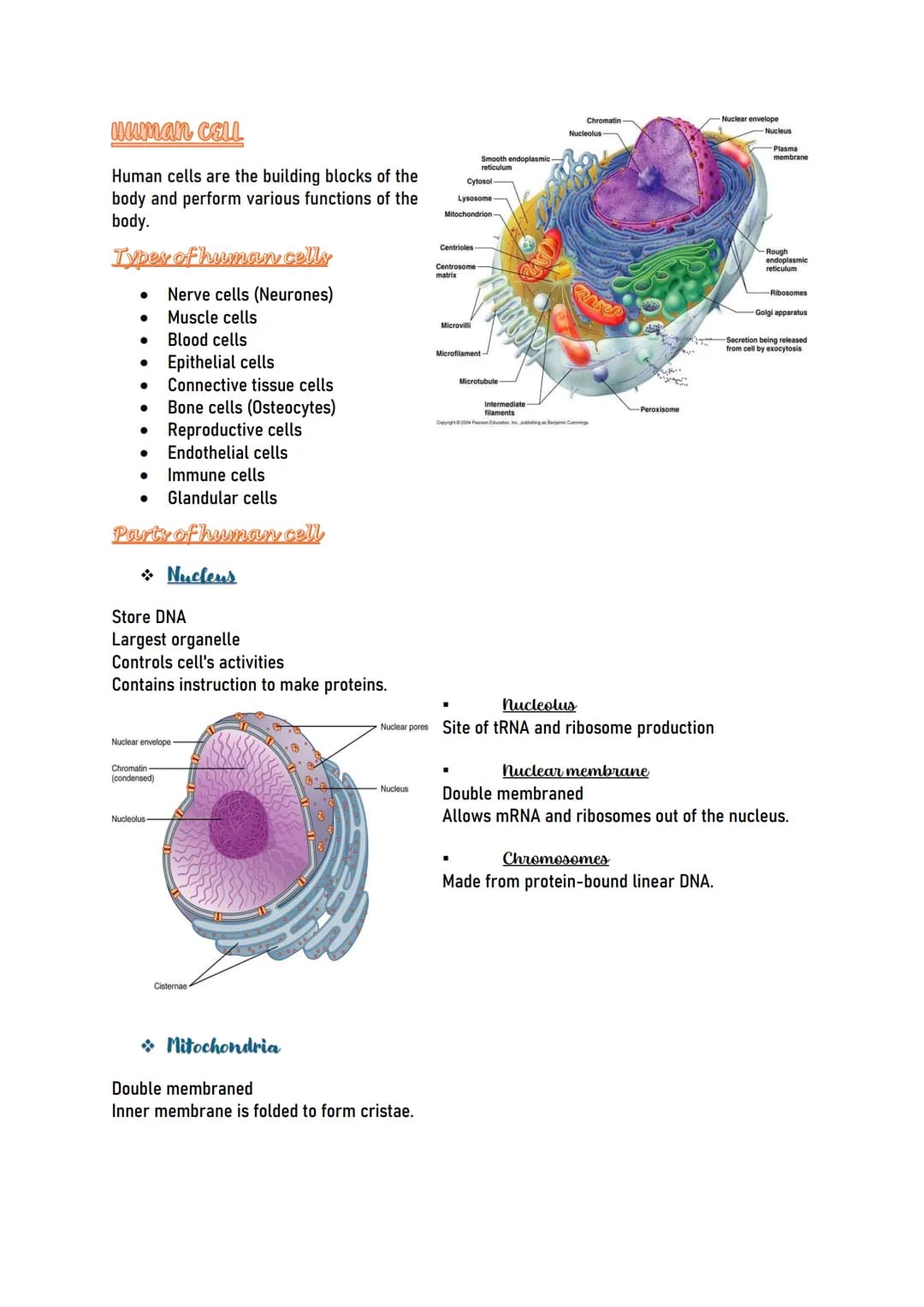
Human cells come in various specialized types, each designed for specific functions. These include nerve cells (neurons) that transmit signals, muscle cells for movement, blood cells for oxygen transport, and several others like epithelial, connective tissue, bone, reproductive, endothelial, immune, and glandular cells.
At the center of most human cells sits the nucleus, the largest organelle. Think of it as the cell's command center—it stores DNA, controls cellular activities, and contains instructions for making proteins. The nucleus is surrounded by a double-layered nuclear membrane with pores that allow materials to pass in and out.
Inside the nucleus, you'll find the nucleolus, which produces transfer RNA and ribosomes, and chromosomes made from protein-bound linear DNA. These structures contain the genetic instructions that make you uniquely you.
Did you know? The nucleus controls nearly everything that happens in your cell, similar to how a conductor leads an orchestra—ensuring all parts work together harmoniously!
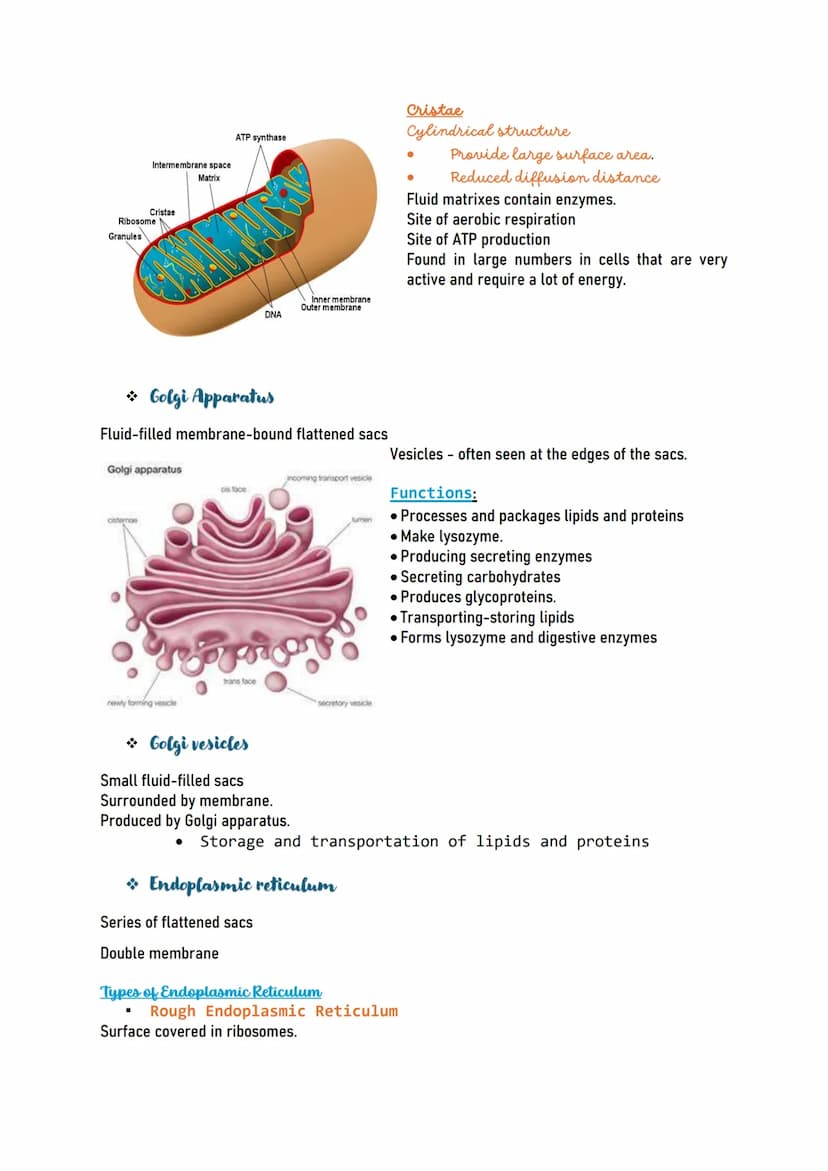
The cell also contains mitochondria, cylindrical structures with a distinctive double membrane. The inner membrane folds to form cristae, which provide a large surface area and reduced diffusion distance. Mitochondria are the cell's power plants, producing ATP (energy) through aerobic respiration. Active cells that need lots of energy, like muscle cells, contain more mitochondria.
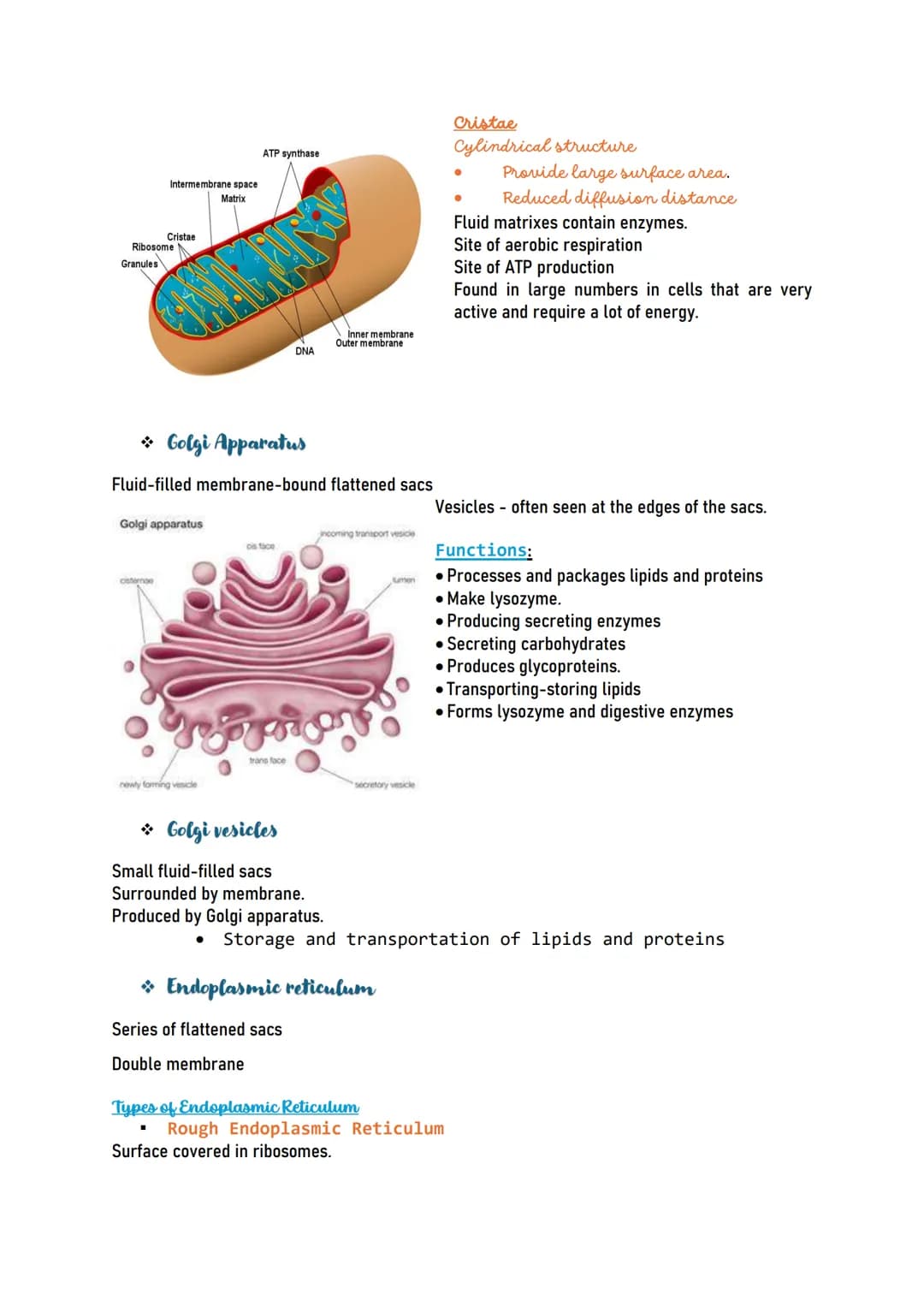
The Golgi apparatus consists of flattened, fluid-filled membrane-bound sacs with vesicles often seen at their edges. It serves as the cell's packaging and distribution center, processing and packaging lipids and proteins. It also produces enzymes, secretes carbohydrates, creates glycoproteins, and forms lysozymes and digestive enzymes.
Golgi vesicles are small fluid-filled sacs surrounded by membrane and produced by the Golgi apparatus. These vesicles store and transport lipids and proteins throughout the cell, acting like tiny delivery packages.
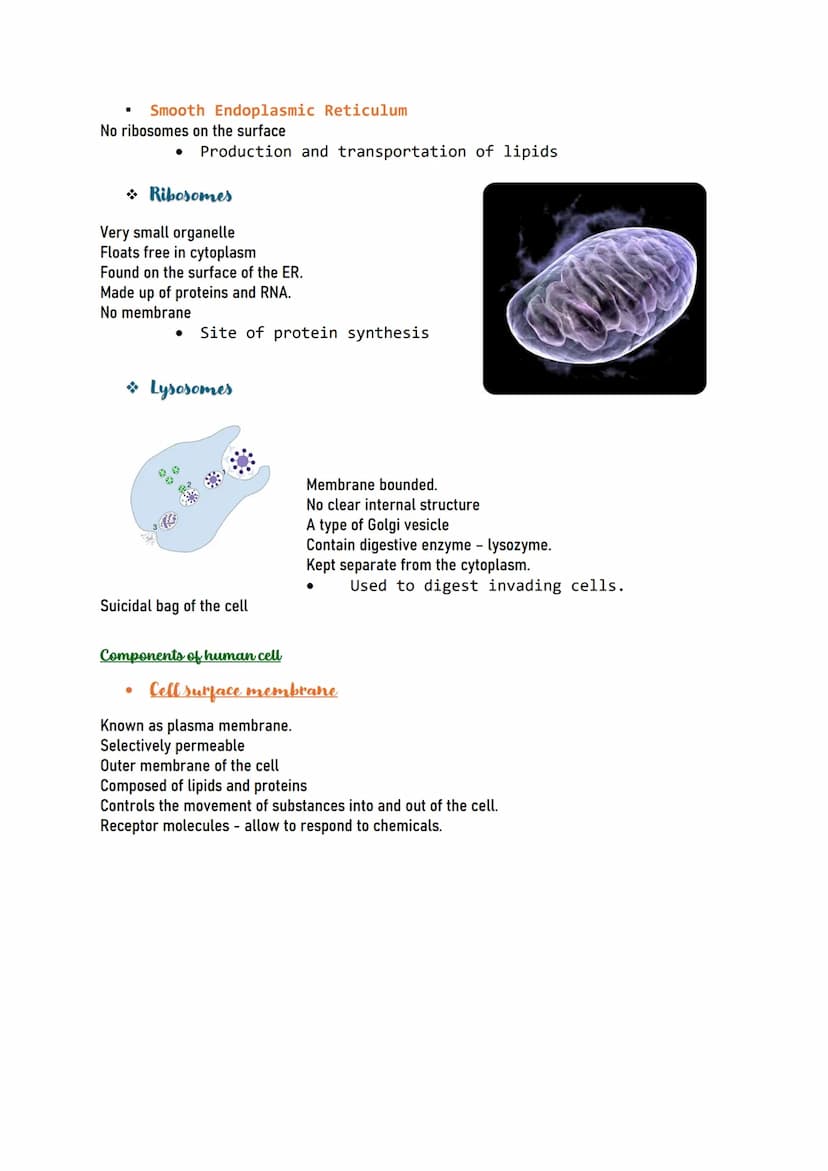
The endoplasmic reticulum (ER) is a series of flattened sacs with a double membrane. It comes in two types: Rough ER, which has ribosomes on its surface for protein production, and Smooth ER, which lacks ribosomes and focuses on lipid production and transportation.
Learning tip: Think of the Golgi apparatus as your school's cafeteria and postal service combined—it packages nutrients and delivers them exactly where they need to go in the cell!
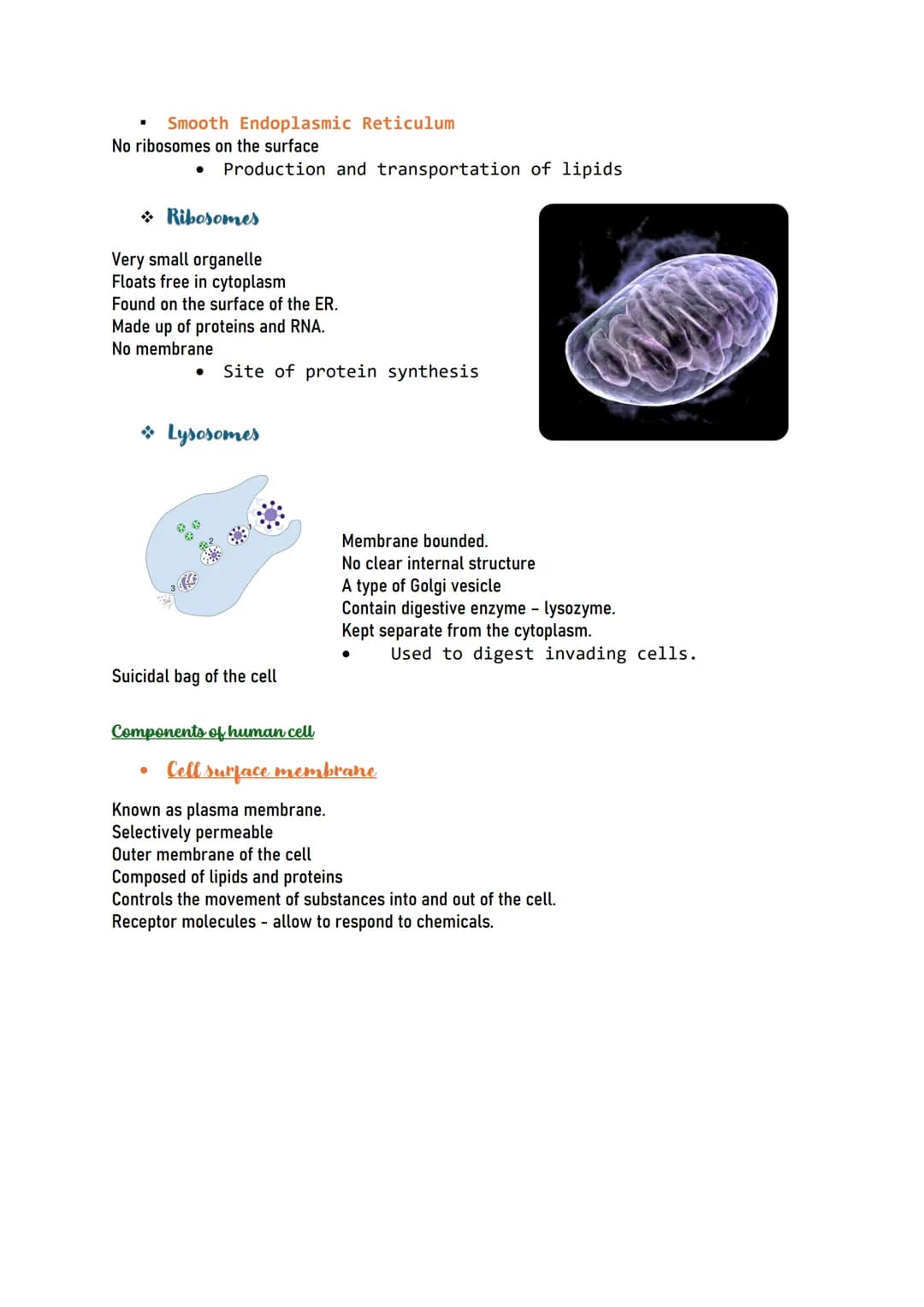
Ribosomes are very small organelles that either float freely in the cytoplasm or attach to the endoplasmic reticulum. Though tiny, they perform the crucial job of protein synthesis. Unlike most organelles, ribosomes don't have a membrane and are made up of proteins and RNA.
Lysosomes are membrane-bounded organelles without clear internal structure. They're actually a type of Golgi vesicle containing digestive enzymes called lysozyme. These enzymes are kept separate from the cytoplasm to prevent accidental damage. Lysosomes help digest invading cells and break down waste, earning them the nickname "suicidal bags of the cell."
The outer boundary of every cell is the cell surface membrane (or plasma membrane). This selectively permeable barrier controls what enters and exits the cell. It's composed of lipids and proteins and contains receptor molecules that allow the cell to respond to chemicals in its environment.
Remember this: Lysosomes are like the cell's recycling and waste disposal system—breaking down unwanted materials and invaders to protect the cell!
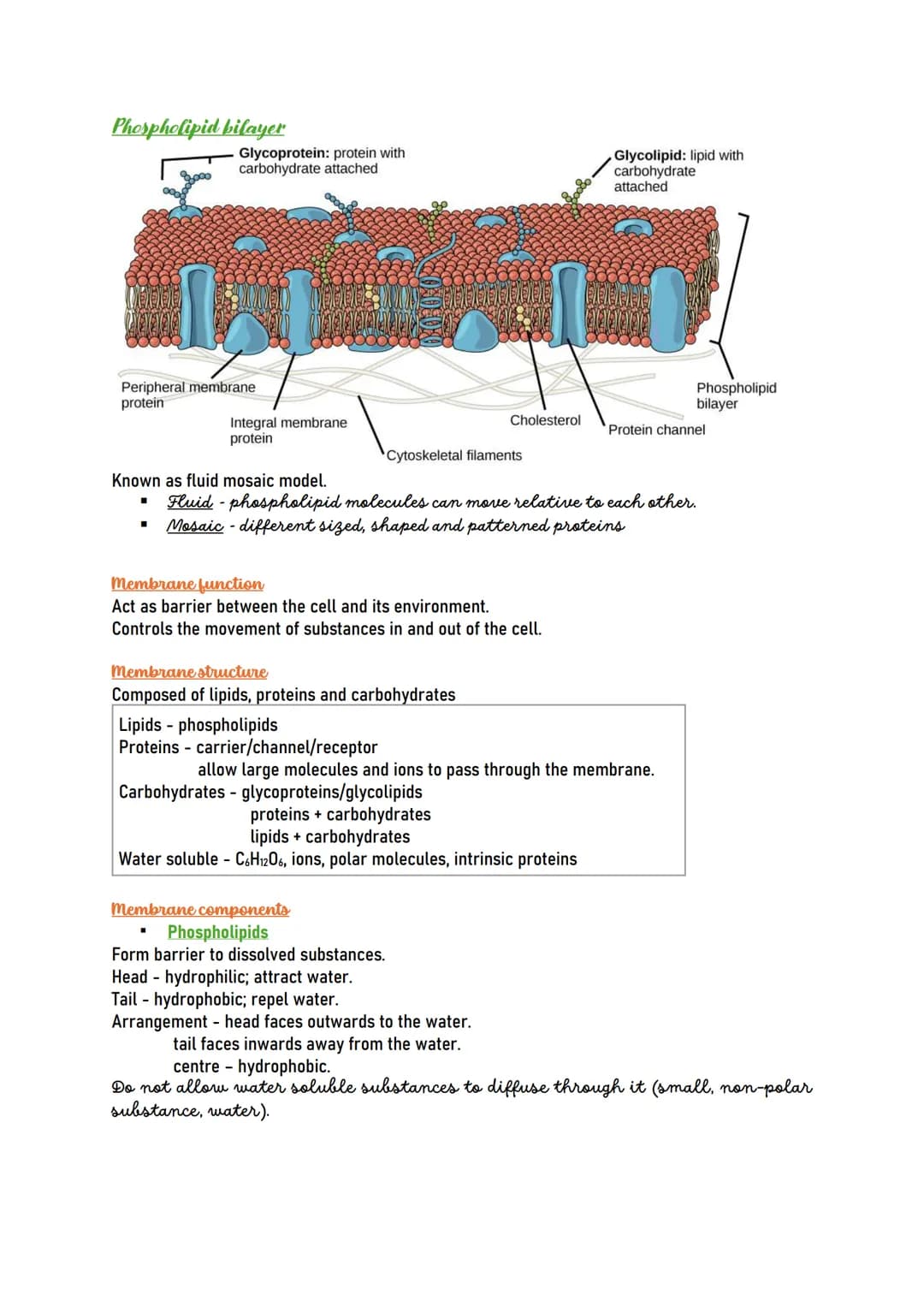
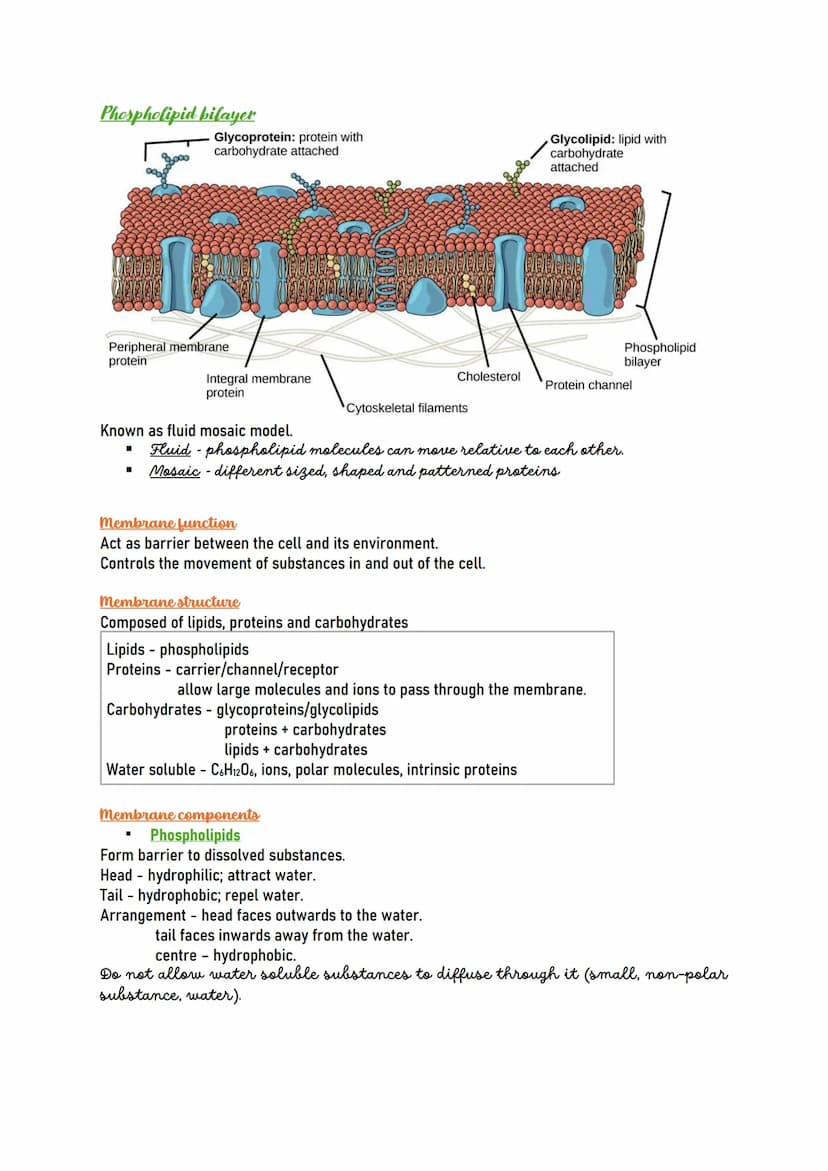
The cell membrane follows the fluid mosaic model—it's "fluid" because phospholipid molecules can move relative to each other, and "mosaic" because it contains various proteins of different sizes and shapes embedded within it. This structure creates a flexible yet protective barrier.
The membrane functions as a barrier between the cell and its environment while controlling the movement of substances in and out. It's composed of three main components: lipids (primarily phospholipids), proteins , and carbohydrates (forming glycoproteins and glycolipids).
Phospholipids form the main barrier to dissolved substances. Each phospholipid has a water-loving (hydrophilic) head that faces outward toward water, and water-repelling (hydrophobic) tails that face inward away from water. This arrangement creates a barrier that prevents water-soluble substances from freely diffusing through.
Interesting fact: If you could stretch out all the cell membranes in your body, they would cover about 25,000 square meters—roughly the size of four football fields!
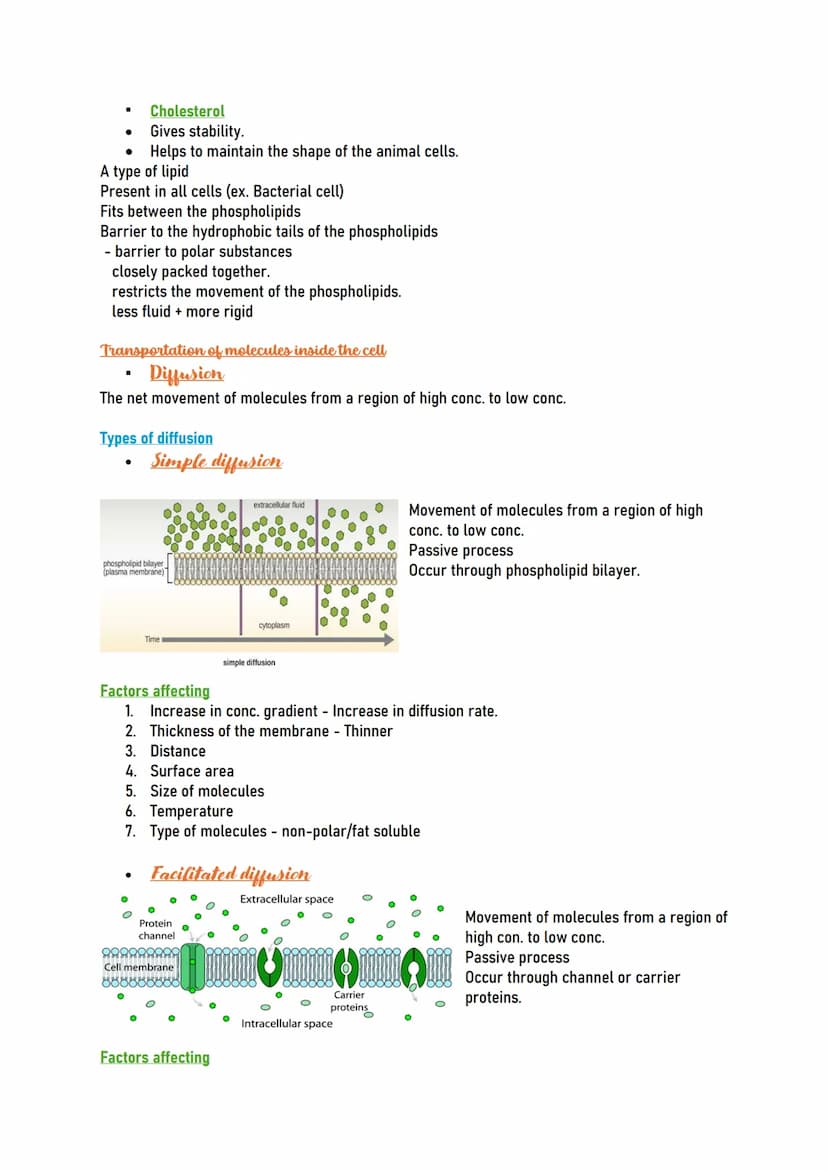
Cholesterol molecules fit between the phospholipids, providing stability and helping maintain the shape of animal cells. By creating a barrier to the hydrophobic tails and keeping phospholipids packed together, cholesterol makes the membrane less fluid and more rigid—an important structural feature that's present in all animal cells.
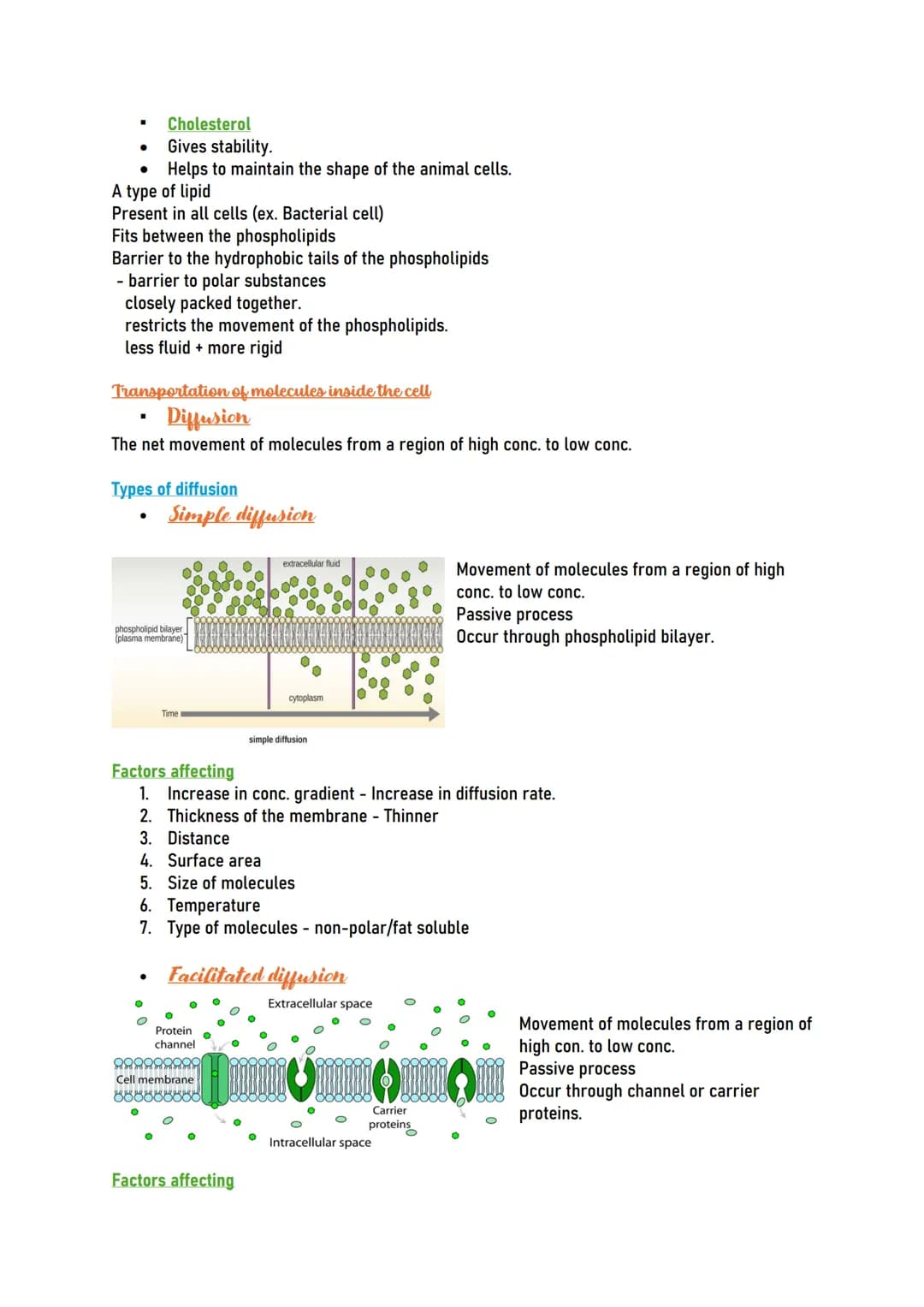
Cells use several methods to transport molecules across their membranes. Diffusion is the net movement of molecules from areas of high concentration to low concentration. In simple diffusion, molecules move directly through the phospholipid bilayer without assistance—this works for small, non-polar molecules.
The rate of diffusion depends on several factors: concentration gradient (higher differences mean faster diffusion), membrane thickness (thinner membranes allow faster diffusion), distance, surface area, molecule size, temperature, and the type of molecules .
Facilitated diffusion also moves molecules from high to low concentration areas, but uses channel or carrier proteins to help molecules cross. Unlike simple diffusion, the rate depends on both the concentration gradient and the number of channel/carrier proteins available.
Exam tip: When answering questions about membrane transport, always mention whether energy (ATP) is required—this is often the key distinction between passive and active processes!
Both simple and facilitated diffusion are passive processes, meaning they don't require energy input. They rely on the natural tendency of molecules to move from areas of high to low concentration.
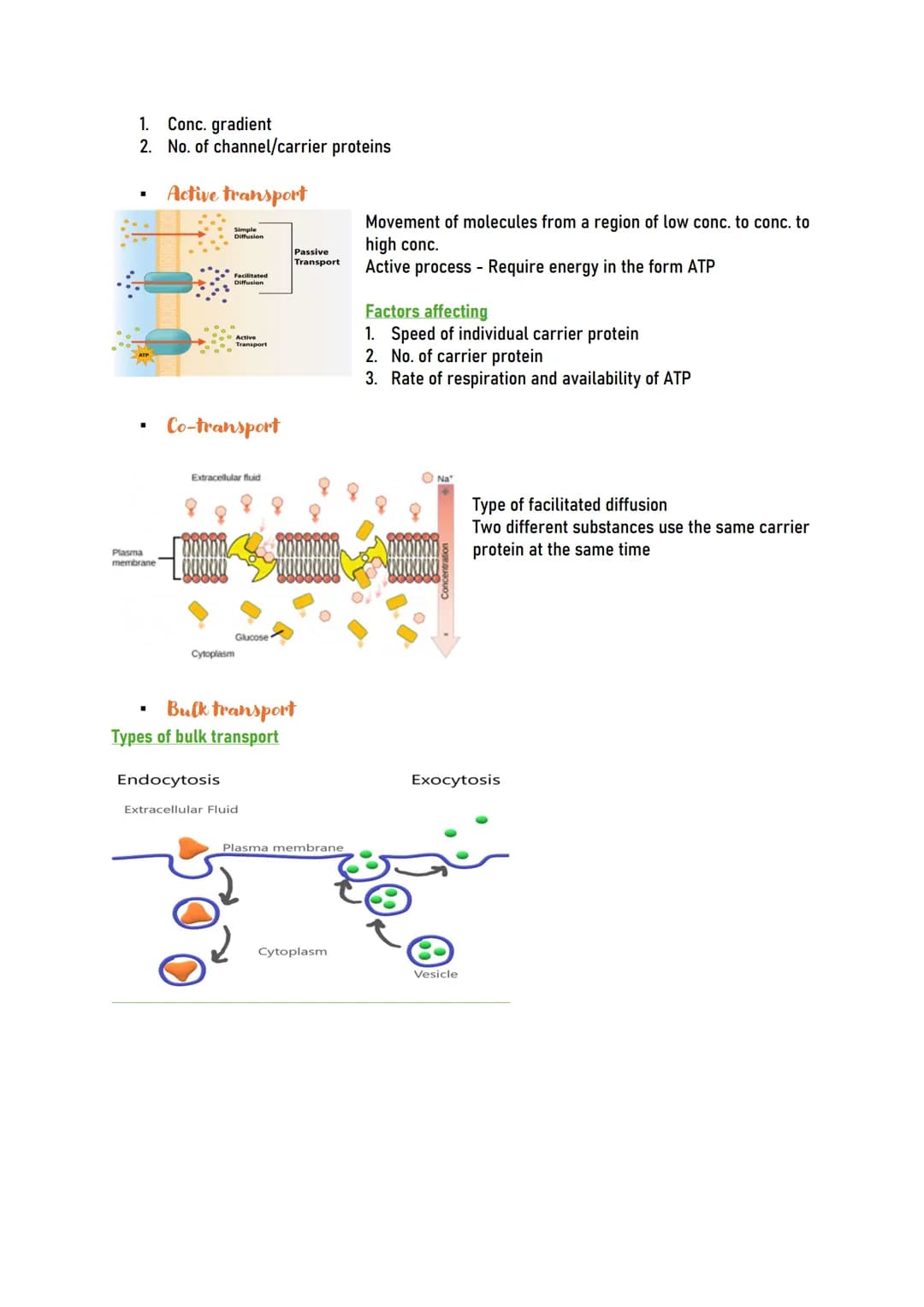
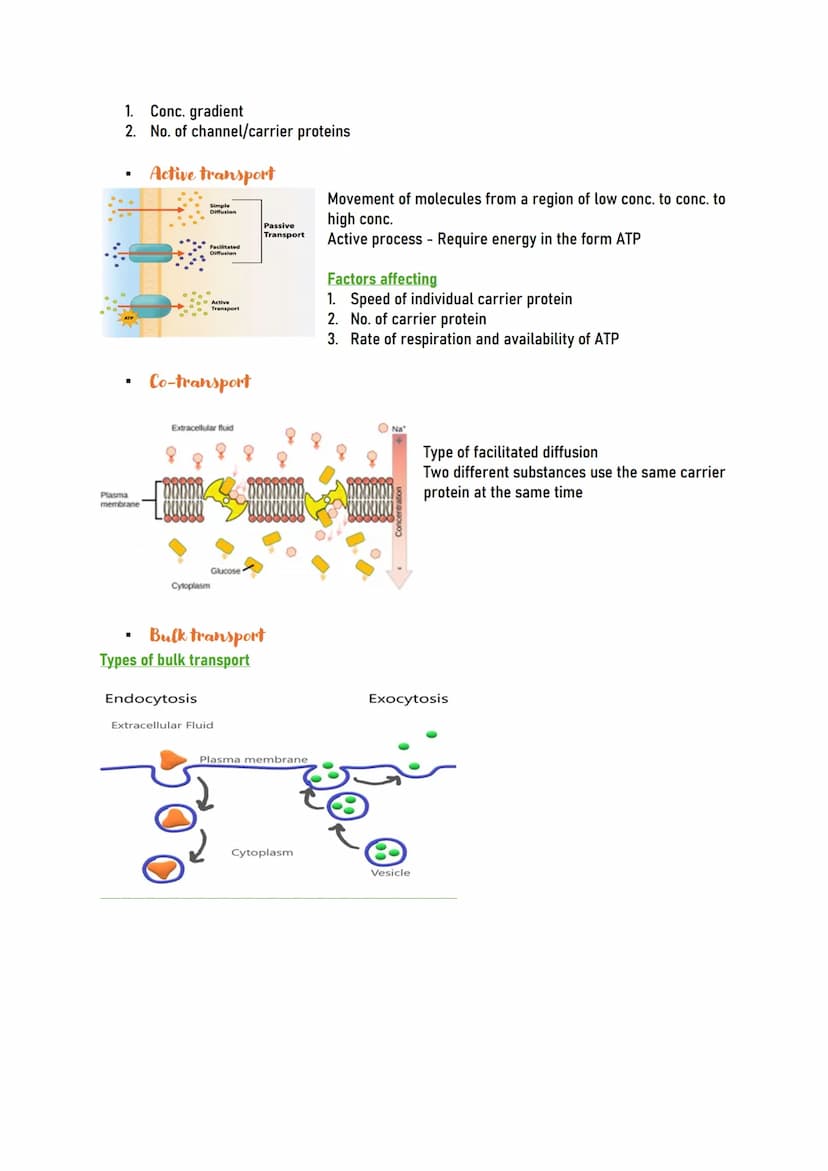
Unlike diffusion, active transport moves molecules from areas of low concentration to high concentration—against the concentration gradient. This process requires energy in the form of ATP. The speed of active transport depends on how quickly carrier proteins work, how many carrier proteins are available, and the rate of respiration providing ATP.
Co-transport is a special type of facilitated diffusion where two different substances use the same carrier protein simultaneously. This allows cells to efficiently move multiple molecules at once.
For larger materials, cells use bulk transport processes. These come in two main types: endocytosis (bringing material into the cell) and exocytosis (moving material out of the cell). Both processes involve the formation and movement of vesicles—small membrane-bound sacs that transport materials.
Make the connection: Active transport is like climbing uphill—it requires energy to move against the natural direction (concentration gradient), while passive transport is like rolling downhill—happening naturally without energy input!
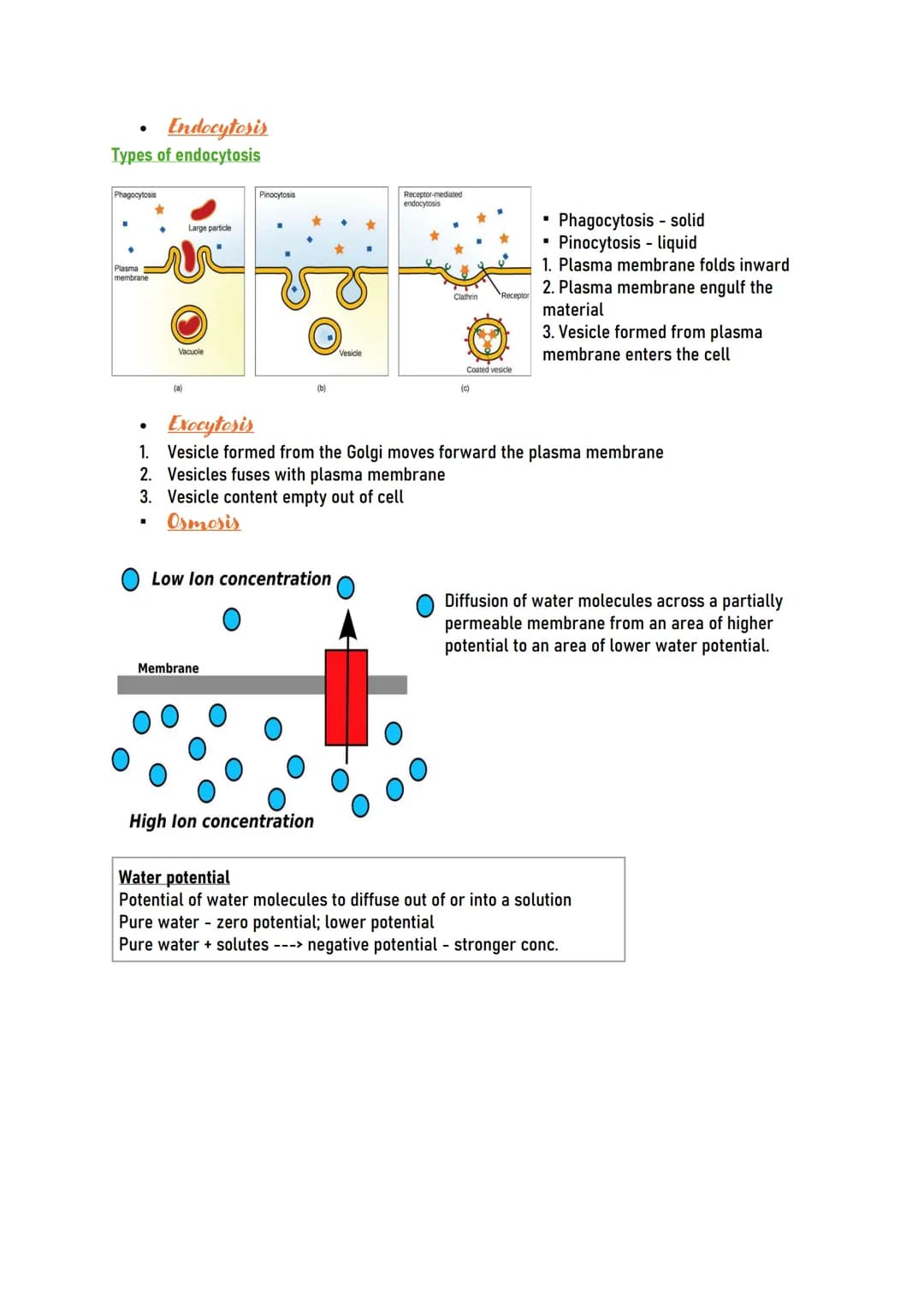
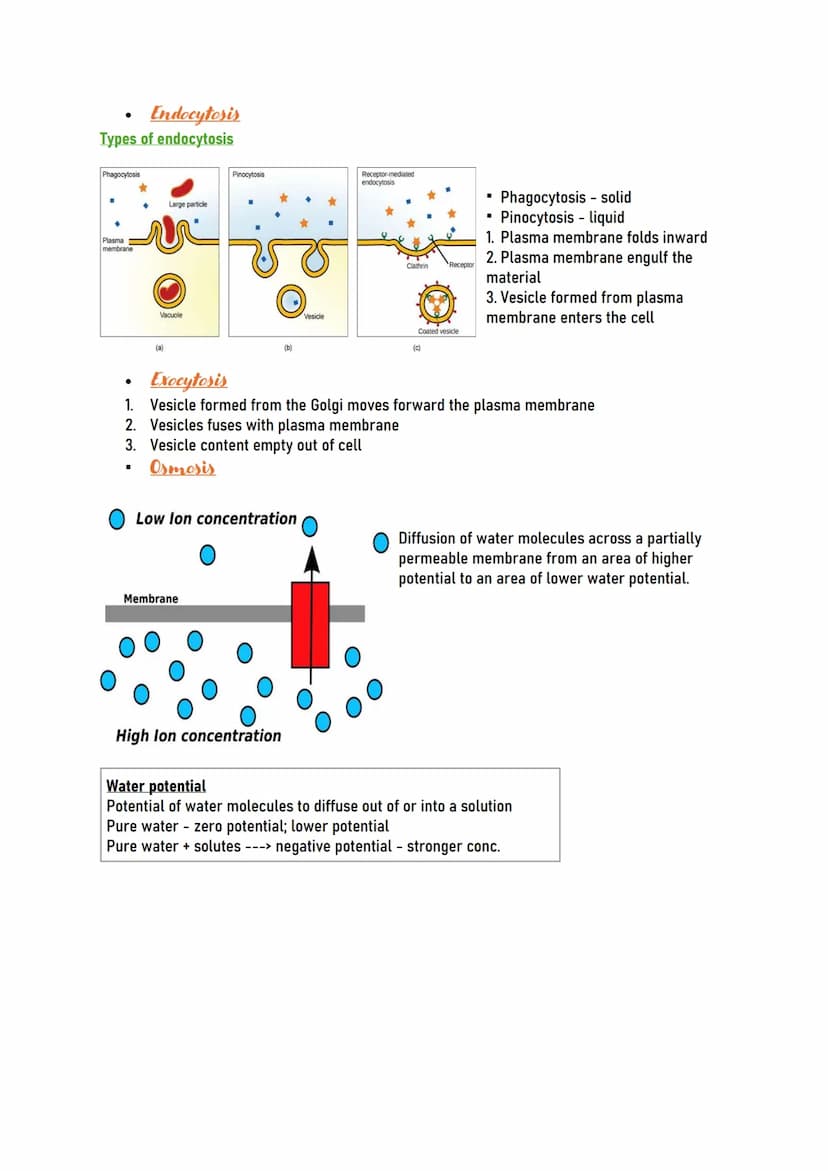
Endocytosis brings materials into the cell through three main methods: phagocytosis (for solids, like when white blood cells engulf bacteria), pinocytosis (for liquids), and receptor-mediated endocytosis (for specific molecules). In each case, the plasma membrane folds inward, engulfs the material, and forms a vesicle that enters the cell.
Exocytosis works in the opposite direction: vesicles formed from the Golgi apparatus move toward the plasma membrane, fuse with it, and release their contents outside the cell. This process is crucial for secreting hormones, enzymes, and other cellular products.
Osmosis is the diffusion of water molecules across a partially permeable membrane from an area of higher water potential to lower water potential. Water potential is simply the potential of water molecules to diffuse—pure water has zero potential, while solutions with dissolved substances have negative potential.
Visualize this: Think of water potential like crowd density at a concert. Water molecules move from less crowded areas (higher water potential) to more crowded areas (lower water potential) until the crowd is evenly distributed!
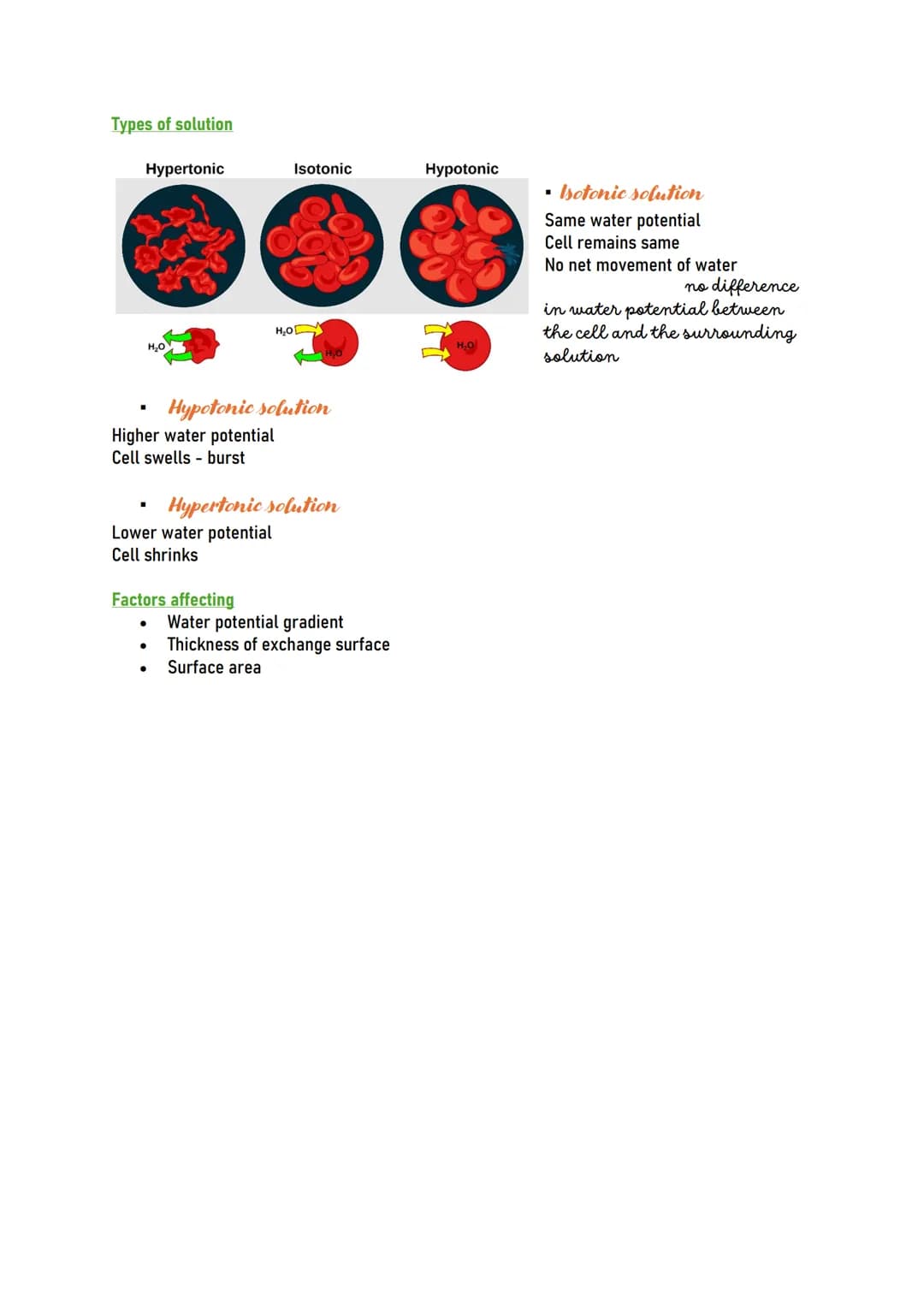
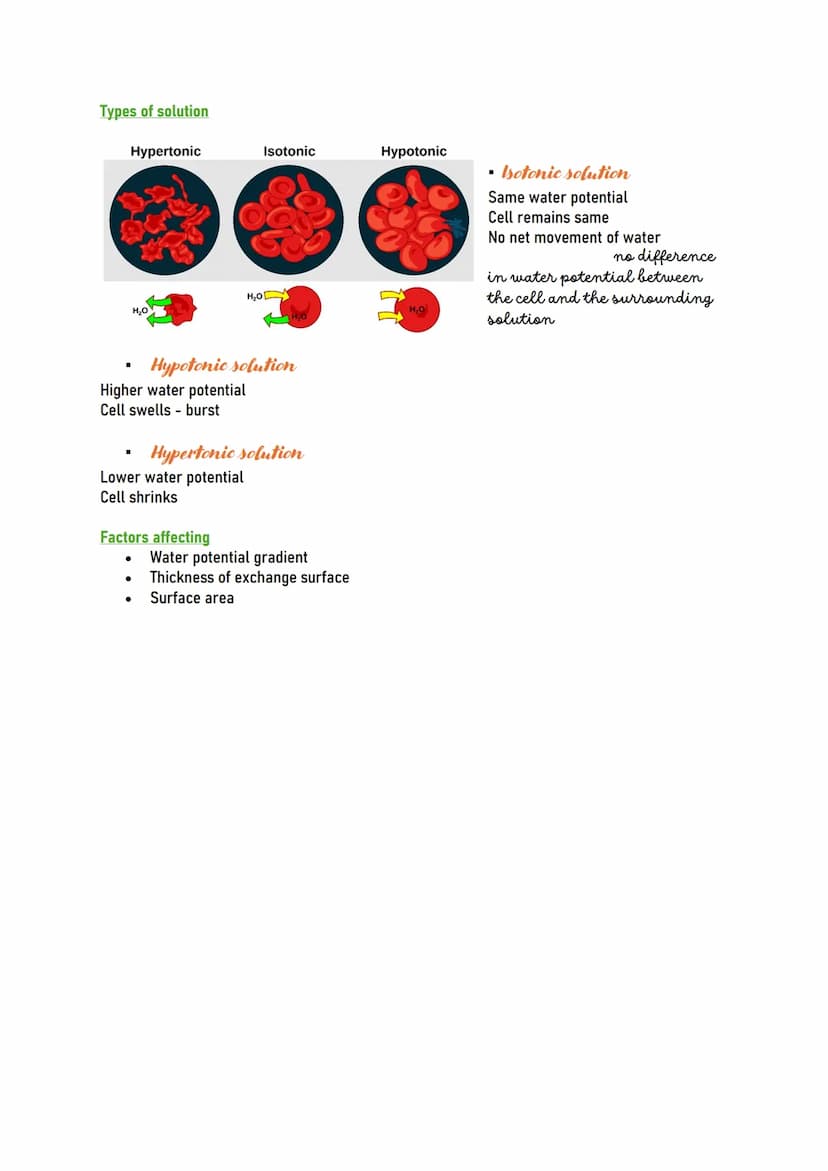
When cells are placed in different solutions, they respond based on water potential differences. In a hypotonic solution, the surrounding fluid has a higher water potential than the cell. Water rushes into the cell, causing it to swell and potentially burst—like overinflating a balloon.
In a hypertonic solution, the surrounding fluid has a lower water potential than the cell. Water leaves the cell, causing it to shrink—this is why vegetables wilt in salty water.
In an isotonic solution, the water potential is the same inside and outside the cell. There's no net movement of water, so the cell remains the same size. This balanced state is what your body tries to maintain for your cells.
Several factors affect osmosis, including the water potential gradient (bigger differences mean faster movement), the thickness of the exchange surface (thinner is faster), and the surface area available for exchange (larger area allows more movement).
Practical application: Understanding osmosis helps explain why you get wrinkly fingers in the bath! Your skin cells become hypertonic compared to the bathwater, causing water to leave cells and the skin to wrinkle.
Our AI Companion is a student-focused AI tool that offers more than just answers. Built on millions of Knowunity resources, it provides relevant information, personalised study plans, quizzes, and content directly in the chat, adapting to your individual learning journey.
You can download the app from Google Play Store and Apple App Store.
That's right! Enjoy free access to study content, connect with fellow students, and get instant help – all at your fingertips.
App Store
Google Play
The app is very easy to use and well designed. I have found everything I was looking for so far and have been able to learn a lot from the presentations! I will definitely use the app for a class assignment! And of course it also helps a lot as an inspiration.
Stefan S
iOS user
This app is really great. There are so many study notes and help [...]. My problem subject is French, for example, and the app has so many options for help. Thanks to this app, I have improved my French. I would recommend it to anyone.
Samantha Klich
Android user
Wow, I am really amazed. I just tried the app because I've seen it advertised many times and was absolutely stunned. This app is THE HELP you want for school and above all, it offers so many things, such as workouts and fact sheets, which have been VERY helpful to me personally.
Anna
iOS user
Best app on earth! no words because it’s too good
Thomas R
iOS user
Just amazing. Let's me revise 10x better, this app is a quick 10/10. I highly recommend it to anyone. I can watch and search for notes. I can save them in the subject folder. I can revise it any time when I come back. If you haven't tried this app, you're really missing out.
Basil
Android user
This app has made me feel so much more confident in my exam prep, not only through boosting my own self confidence through the features that allow you to connect with others and feel less alone, but also through the way the app itself is centred around making you feel better. It is easy to navigate, fun to use, and helpful to anyone struggling in absolutely any way.
David K
iOS user
The app's just great! All I have to do is enter the topic in the search bar and I get the response real fast. I don't have to watch 10 YouTube videos to understand something, so I'm saving my time. Highly recommended!
Sudenaz Ocak
Android user
In school I was really bad at maths but thanks to the app, I am doing better now. I am so grateful that you made the app.
Greenlight Bonnie
Android user
very reliable app to help and grow your ideas of Maths, English and other related topics in your works. please use this app if your struggling in areas, this app is key for that. wish I'd of done a review before. and it's also free so don't worry about that.
Rohan U
Android user
I know a lot of apps use fake accounts to boost their reviews but this app deserves it all. Originally I was getting 4 in my English exams and this time I got a grade 7. I didn’t even know about this app three days until the exam and it has helped A LOT. Please actually trust me and use it as I’m sure you too will see developments.
Xander S
iOS user
THE QUIZES AND FLASHCARDS ARE SO USEFUL AND I LOVE Knowunity AI. IT ALSO IS LITREALLY LIKE CHATGPT BUT SMARTER!! HELPED ME WITH MY MASCARA PROBLEMS TOO!! AS WELL AS MY REAL SUBJECTS ! DUHHH 😍😁😲🤑💗✨🎀😮
Elisha
iOS user
This apps acc the goat. I find revision so boring but this app makes it so easy to organize it all and then you can ask the freeeee ai to test yourself so good and you can easily upload your own stuff. highly recommend as someone taking mocks now
Paul T
iOS user
The app is very easy to use and well designed. I have found everything I was looking for so far and have been able to learn a lot from the presentations! I will definitely use the app for a class assignment! And of course it also helps a lot as an inspiration.
Stefan S
iOS user
This app is really great. There are so many study notes and help [...]. My problem subject is French, for example, and the app has so many options for help. Thanks to this app, I have improved my French. I would recommend it to anyone.
Samantha Klich
Android user
Wow, I am really amazed. I just tried the app because I've seen it advertised many times and was absolutely stunned. This app is THE HELP you want for school and above all, it offers so many things, such as workouts and fact sheets, which have been VERY helpful to me personally.
Anna
iOS user
Best app on earth! no words because it’s too good
Thomas R
iOS user
Just amazing. Let's me revise 10x better, this app is a quick 10/10. I highly recommend it to anyone. I can watch and search for notes. I can save them in the subject folder. I can revise it any time when I come back. If you haven't tried this app, you're really missing out.
Basil
Android user
This app has made me feel so much more confident in my exam prep, not only through boosting my own self confidence through the features that allow you to connect with others and feel less alone, but also through the way the app itself is centred around making you feel better. It is easy to navigate, fun to use, and helpful to anyone struggling in absolutely any way.
David K
iOS user
The app's just great! All I have to do is enter the topic in the search bar and I get the response real fast. I don't have to watch 10 YouTube videos to understand something, so I'm saving my time. Highly recommended!
Sudenaz Ocak
Android user
In school I was really bad at maths but thanks to the app, I am doing better now. I am so grateful that you made the app.
Greenlight Bonnie
Android user
very reliable app to help and grow your ideas of Maths, English and other related topics in your works. please use this app if your struggling in areas, this app is key for that. wish I'd of done a review before. and it's also free so don't worry about that.
Rohan U
Android user
I know a lot of apps use fake accounts to boost their reviews but this app deserves it all. Originally I was getting 4 in my English exams and this time I got a grade 7. I didn’t even know about this app three days until the exam and it has helped A LOT. Please actually trust me and use it as I’m sure you too will see developments.
Xander S
iOS user
THE QUIZES AND FLASHCARDS ARE SO USEFUL AND I LOVE Knowunity AI. IT ALSO IS LITREALLY LIKE CHATGPT BUT SMARTER!! HELPED ME WITH MY MASCARA PROBLEMS TOO!! AS WELL AS MY REAL SUBJECTS ! DUHHH 😍😁😲🤑💗✨🎀😮
Elisha
iOS user
This apps acc the goat. I find revision so boring but this app makes it so easy to organize it all and then you can ask the freeeee ai to test yourself so good and you can easily upload your own stuff. highly recommend as someone taking mocks now
Paul T
iOS user
Anneh
@angeltheresegeorge07_695h
Human cells are the fundamental building blocks of our bodies, performing a wide range of specialized functions. These microscopic structures contain various organelles that work together to keep cells—and ultimately our bodies—functioning properly. Understanding how cells operate helps us grasp... Show more
Access to all documents
Improve your grades
Join milions of students
By signing up you accept Terms of Service and Privacy Policy
Human cells come in various specialized types, each designed for specific functions. These include nerve cells (neurons) that transmit signals, muscle cells for movement, blood cells for oxygen transport, and several others like epithelial, connective tissue, bone, reproductive, endothelial, immune, and glandular cells.
At the center of most human cells sits the nucleus, the largest organelle. Think of it as the cell's command center—it stores DNA, controls cellular activities, and contains instructions for making proteins. The nucleus is surrounded by a double-layered nuclear membrane with pores that allow materials to pass in and out.
Inside the nucleus, you'll find the nucleolus, which produces transfer RNA and ribosomes, and chromosomes made from protein-bound linear DNA. These structures contain the genetic instructions that make you uniquely you.
Did you know? The nucleus controls nearly everything that happens in your cell, similar to how a conductor leads an orchestra—ensuring all parts work together harmoniously!
The cell also contains mitochondria, cylindrical structures with a distinctive double membrane. The inner membrane folds to form cristae, which provide a large surface area and reduced diffusion distance. Mitochondria are the cell's power plants, producing ATP (energy) through aerobic respiration. Active cells that need lots of energy, like muscle cells, contain more mitochondria.
Access to all documents
Improve your grades
Join milions of students
By signing up you accept Terms of Service and Privacy Policy
The Golgi apparatus consists of flattened, fluid-filled membrane-bound sacs with vesicles often seen at their edges. It serves as the cell's packaging and distribution center, processing and packaging lipids and proteins. It also produces enzymes, secretes carbohydrates, creates glycoproteins, and forms lysozymes and digestive enzymes.
Golgi vesicles are small fluid-filled sacs surrounded by membrane and produced by the Golgi apparatus. These vesicles store and transport lipids and proteins throughout the cell, acting like tiny delivery packages.
The endoplasmic reticulum (ER) is a series of flattened sacs with a double membrane. It comes in two types: Rough ER, which has ribosomes on its surface for protein production, and Smooth ER, which lacks ribosomes and focuses on lipid production and transportation.
Learning tip: Think of the Golgi apparatus as your school's cafeteria and postal service combined—it packages nutrients and delivers them exactly where they need to go in the cell!
Access to all documents
Improve your grades
Join milions of students
By signing up you accept Terms of Service and Privacy Policy
Ribosomes are very small organelles that either float freely in the cytoplasm or attach to the endoplasmic reticulum. Though tiny, they perform the crucial job of protein synthesis. Unlike most organelles, ribosomes don't have a membrane and are made up of proteins and RNA.
Lysosomes are membrane-bounded organelles without clear internal structure. They're actually a type of Golgi vesicle containing digestive enzymes called lysozyme. These enzymes are kept separate from the cytoplasm to prevent accidental damage. Lysosomes help digest invading cells and break down waste, earning them the nickname "suicidal bags of the cell."
The outer boundary of every cell is the cell surface membrane (or plasma membrane). This selectively permeable barrier controls what enters and exits the cell. It's composed of lipids and proteins and contains receptor molecules that allow the cell to respond to chemicals in its environment.
Remember this: Lysosomes are like the cell's recycling and waste disposal system—breaking down unwanted materials and invaders to protect the cell!
Access to all documents
Improve your grades
Join milions of students
By signing up you accept Terms of Service and Privacy Policy
The cell membrane follows the fluid mosaic model—it's "fluid" because phospholipid molecules can move relative to each other, and "mosaic" because it contains various proteins of different sizes and shapes embedded within it. This structure creates a flexible yet protective barrier.
The membrane functions as a barrier between the cell and its environment while controlling the movement of substances in and out. It's composed of three main components: lipids (primarily phospholipids), proteins , and carbohydrates (forming glycoproteins and glycolipids).
Phospholipids form the main barrier to dissolved substances. Each phospholipid has a water-loving (hydrophilic) head that faces outward toward water, and water-repelling (hydrophobic) tails that face inward away from water. This arrangement creates a barrier that prevents water-soluble substances from freely diffusing through.
Interesting fact: If you could stretch out all the cell membranes in your body, they would cover about 25,000 square meters—roughly the size of four football fields!
Cholesterol molecules fit between the phospholipids, providing stability and helping maintain the shape of animal cells. By creating a barrier to the hydrophobic tails and keeping phospholipids packed together, cholesterol makes the membrane less fluid and more rigid—an important structural feature that's present in all animal cells.
Access to all documents
Improve your grades
Join milions of students
By signing up you accept Terms of Service and Privacy Policy
Cells use several methods to transport molecules across their membranes. Diffusion is the net movement of molecules from areas of high concentration to low concentration. In simple diffusion, molecules move directly through the phospholipid bilayer without assistance—this works for small, non-polar molecules.
The rate of diffusion depends on several factors: concentration gradient (higher differences mean faster diffusion), membrane thickness (thinner membranes allow faster diffusion), distance, surface area, molecule size, temperature, and the type of molecules .
Facilitated diffusion also moves molecules from high to low concentration areas, but uses channel or carrier proteins to help molecules cross. Unlike simple diffusion, the rate depends on both the concentration gradient and the number of channel/carrier proteins available.
Exam tip: When answering questions about membrane transport, always mention whether energy (ATP) is required—this is often the key distinction between passive and active processes!
Both simple and facilitated diffusion are passive processes, meaning they don't require energy input. They rely on the natural tendency of molecules to move from areas of high to low concentration.
Access to all documents
Improve your grades
Join milions of students
By signing up you accept Terms of Service and Privacy Policy
Unlike diffusion, active transport moves molecules from areas of low concentration to high concentration—against the concentration gradient. This process requires energy in the form of ATP. The speed of active transport depends on how quickly carrier proteins work, how many carrier proteins are available, and the rate of respiration providing ATP.
Co-transport is a special type of facilitated diffusion where two different substances use the same carrier protein simultaneously. This allows cells to efficiently move multiple molecules at once.
For larger materials, cells use bulk transport processes. These come in two main types: endocytosis (bringing material into the cell) and exocytosis (moving material out of the cell). Both processes involve the formation and movement of vesicles—small membrane-bound sacs that transport materials.
Make the connection: Active transport is like climbing uphill—it requires energy to move against the natural direction (concentration gradient), while passive transport is like rolling downhill—happening naturally without energy input!
Access to all documents
Improve your grades
Join milions of students
By signing up you accept Terms of Service and Privacy Policy
Endocytosis brings materials into the cell through three main methods: phagocytosis (for solids, like when white blood cells engulf bacteria), pinocytosis (for liquids), and receptor-mediated endocytosis (for specific molecules). In each case, the plasma membrane folds inward, engulfs the material, and forms a vesicle that enters the cell.
Exocytosis works in the opposite direction: vesicles formed from the Golgi apparatus move toward the plasma membrane, fuse with it, and release their contents outside the cell. This process is crucial for secreting hormones, enzymes, and other cellular products.
Osmosis is the diffusion of water molecules across a partially permeable membrane from an area of higher water potential to lower water potential. Water potential is simply the potential of water molecules to diffuse—pure water has zero potential, while solutions with dissolved substances have negative potential.
Visualize this: Think of water potential like crowd density at a concert. Water molecules move from less crowded areas (higher water potential) to more crowded areas (lower water potential) until the crowd is evenly distributed!
Access to all documents
Improve your grades
Join milions of students
By signing up you accept Terms of Service and Privacy Policy
When cells are placed in different solutions, they respond based on water potential differences. In a hypotonic solution, the surrounding fluid has a higher water potential than the cell. Water rushes into the cell, causing it to swell and potentially burst—like overinflating a balloon.
In a hypertonic solution, the surrounding fluid has a lower water potential than the cell. Water leaves the cell, causing it to shrink—this is why vegetables wilt in salty water.
In an isotonic solution, the water potential is the same inside and outside the cell. There's no net movement of water, so the cell remains the same size. This balanced state is what your body tries to maintain for your cells.
Several factors affect osmosis, including the water potential gradient (bigger differences mean faster movement), the thickness of the exchange surface (thinner is faster), and the surface area available for exchange (larger area allows more movement).
Practical application: Understanding osmosis helps explain why you get wrinkly fingers in the bath! Your skin cells become hypertonic compared to the bathwater, causing water to leave cells and the skin to wrinkle.
Our AI Companion is a student-focused AI tool that offers more than just answers. Built on millions of Knowunity resources, it provides relevant information, personalised study plans, quizzes, and content directly in the chat, adapting to your individual learning journey.
You can download the app from Google Play Store and Apple App Store.
That's right! Enjoy free access to study content, connect with fellow students, and get instant help – all at your fingertips.
2
Smart Tools NEW
Transform this note into: ✓ 50+ Practice Questions ✓ Interactive Flashcards ✓ Full Mock Exam ✓ Essay Outlines
App Store
Google Play
The app is very easy to use and well designed. I have found everything I was looking for so far and have been able to learn a lot from the presentations! I will definitely use the app for a class assignment! And of course it also helps a lot as an inspiration.
Stefan S
iOS user
This app is really great. There are so many study notes and help [...]. My problem subject is French, for example, and the app has so many options for help. Thanks to this app, I have improved my French. I would recommend it to anyone.
Samantha Klich
Android user
Wow, I am really amazed. I just tried the app because I've seen it advertised many times and was absolutely stunned. This app is THE HELP you want for school and above all, it offers so many things, such as workouts and fact sheets, which have been VERY helpful to me personally.
Anna
iOS user
Best app on earth! no words because it’s too good
Thomas R
iOS user
Just amazing. Let's me revise 10x better, this app is a quick 10/10. I highly recommend it to anyone. I can watch and search for notes. I can save them in the subject folder. I can revise it any time when I come back. If you haven't tried this app, you're really missing out.
Basil
Android user
This app has made me feel so much more confident in my exam prep, not only through boosting my own self confidence through the features that allow you to connect with others and feel less alone, but also through the way the app itself is centred around making you feel better. It is easy to navigate, fun to use, and helpful to anyone struggling in absolutely any way.
David K
iOS user
The app's just great! All I have to do is enter the topic in the search bar and I get the response real fast. I don't have to watch 10 YouTube videos to understand something, so I'm saving my time. Highly recommended!
Sudenaz Ocak
Android user
In school I was really bad at maths but thanks to the app, I am doing better now. I am so grateful that you made the app.
Greenlight Bonnie
Android user
very reliable app to help and grow your ideas of Maths, English and other related topics in your works. please use this app if your struggling in areas, this app is key for that. wish I'd of done a review before. and it's also free so don't worry about that.
Rohan U
Android user
I know a lot of apps use fake accounts to boost their reviews but this app deserves it all. Originally I was getting 4 in my English exams and this time I got a grade 7. I didn’t even know about this app three days until the exam and it has helped A LOT. Please actually trust me and use it as I’m sure you too will see developments.
Xander S
iOS user
THE QUIZES AND FLASHCARDS ARE SO USEFUL AND I LOVE Knowunity AI. IT ALSO IS LITREALLY LIKE CHATGPT BUT SMARTER!! HELPED ME WITH MY MASCARA PROBLEMS TOO!! AS WELL AS MY REAL SUBJECTS ! DUHHH 😍😁😲🤑💗✨🎀😮
Elisha
iOS user
This apps acc the goat. I find revision so boring but this app makes it so easy to organize it all and then you can ask the freeeee ai to test yourself so good and you can easily upload your own stuff. highly recommend as someone taking mocks now
Paul T
iOS user
The app is very easy to use and well designed. I have found everything I was looking for so far and have been able to learn a lot from the presentations! I will definitely use the app for a class assignment! And of course it also helps a lot as an inspiration.
Stefan S
iOS user
This app is really great. There are so many study notes and help [...]. My problem subject is French, for example, and the app has so many options for help. Thanks to this app, I have improved my French. I would recommend it to anyone.
Samantha Klich
Android user
Wow, I am really amazed. I just tried the app because I've seen it advertised many times and was absolutely stunned. This app is THE HELP you want for school and above all, it offers so many things, such as workouts and fact sheets, which have been VERY helpful to me personally.
Anna
iOS user
Best app on earth! no words because it’s too good
Thomas R
iOS user
Just amazing. Let's me revise 10x better, this app is a quick 10/10. I highly recommend it to anyone. I can watch and search for notes. I can save them in the subject folder. I can revise it any time when I come back. If you haven't tried this app, you're really missing out.
Basil
Android user
This app has made me feel so much more confident in my exam prep, not only through boosting my own self confidence through the features that allow you to connect with others and feel less alone, but also through the way the app itself is centred around making you feel better. It is easy to navigate, fun to use, and helpful to anyone struggling in absolutely any way.
David K
iOS user
The app's just great! All I have to do is enter the topic in the search bar and I get the response real fast. I don't have to watch 10 YouTube videos to understand something, so I'm saving my time. Highly recommended!
Sudenaz Ocak
Android user
In school I was really bad at maths but thanks to the app, I am doing better now. I am so grateful that you made the app.
Greenlight Bonnie
Android user
very reliable app to help and grow your ideas of Maths, English and other related topics in your works. please use this app if your struggling in areas, this app is key for that. wish I'd of done a review before. and it's also free so don't worry about that.
Rohan U
Android user
I know a lot of apps use fake accounts to boost their reviews but this app deserves it all. Originally I was getting 4 in my English exams and this time I got a grade 7. I didn’t even know about this app three days until the exam and it has helped A LOT. Please actually trust me and use it as I’m sure you too will see developments.
Xander S
iOS user
THE QUIZES AND FLASHCARDS ARE SO USEFUL AND I LOVE Knowunity AI. IT ALSO IS LITREALLY LIKE CHATGPT BUT SMARTER!! HELPED ME WITH MY MASCARA PROBLEMS TOO!! AS WELL AS MY REAL SUBJECTS ! DUHHH 😍😁😲🤑💗✨🎀😮
Elisha
iOS user
This apps acc the goat. I find revision so boring but this app makes it so easy to organize it all and then you can ask the freeeee ai to test yourself so good and you can easily upload your own stuff. highly recommend as someone taking mocks now
Paul T
iOS user