Complex Structures and Advanced Expressions
These sophisticated grammar patterns will help you express complex ideas and sound more like a native speaker in your Chinese conversations.
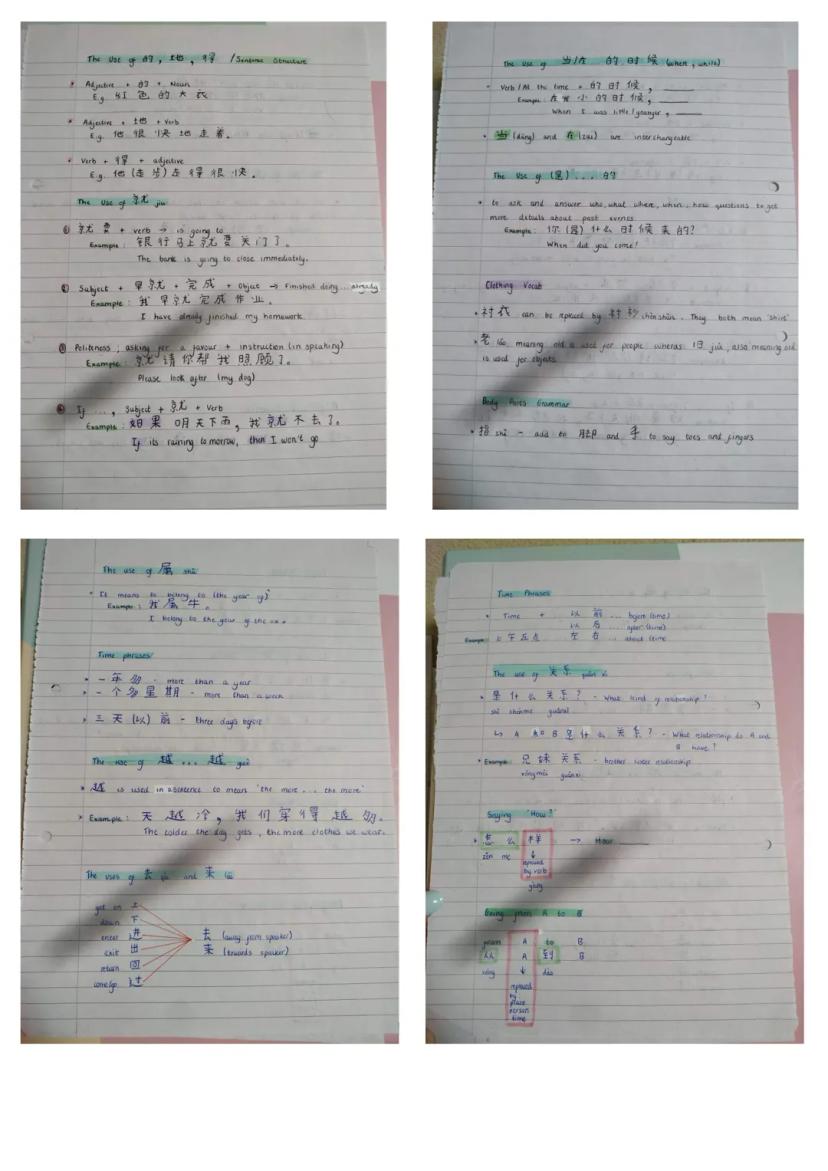
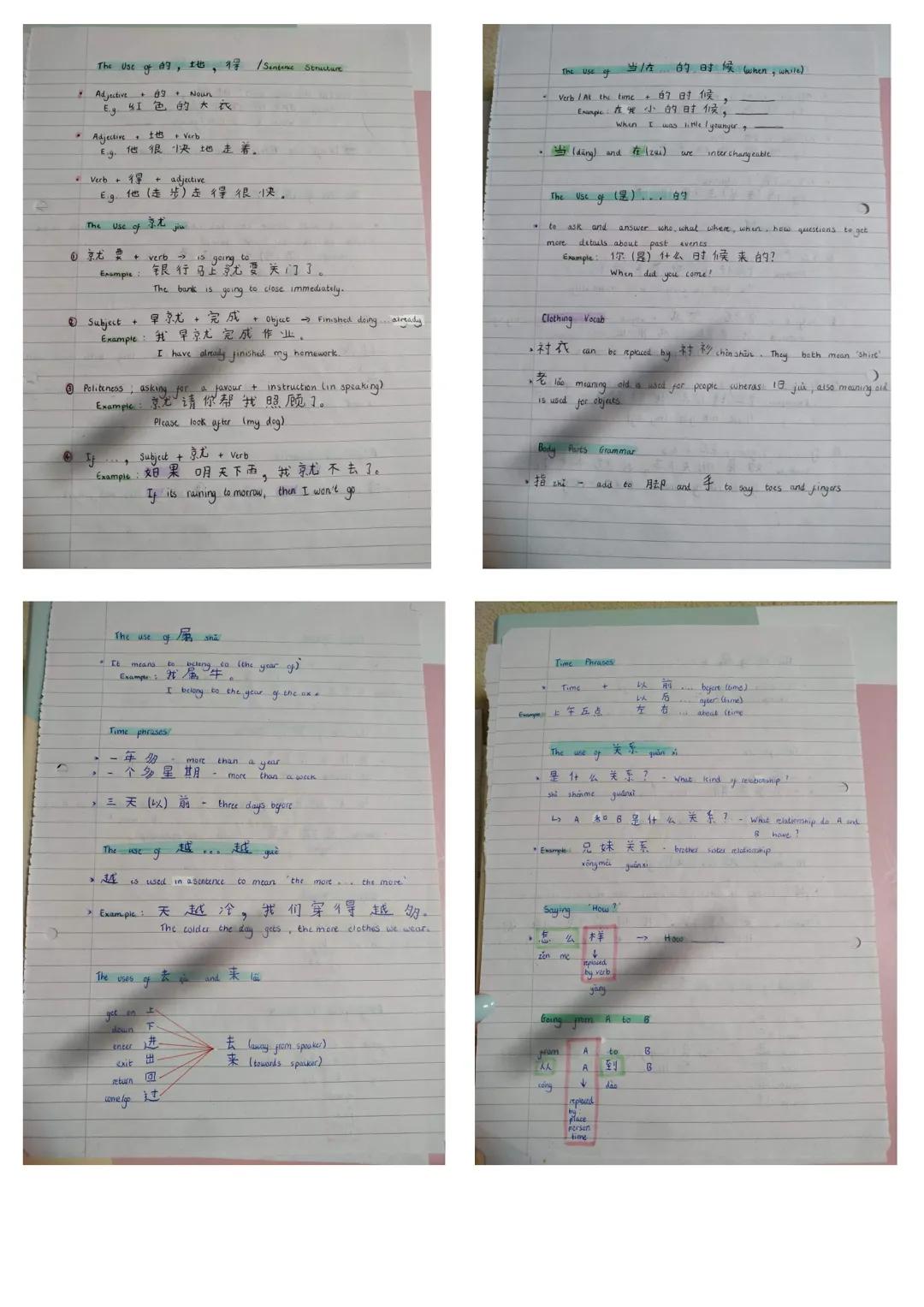
The 的, 地, 得 trio might look similar but serve completely different purposes. Use 的 between adjectives and nouns "红色的大衣"−redcoat, 地 between adjectives and verbs for describing how actions happen, and 得 after verbs to show results or degrees.
Mastering 就 gives you incredible flexibility with four distinct uses. It can mean "about to" (就要), show completion (早就), make polite requests, or create if-then statements like "如果明天下雨,我就不去了" (If it rains tomorrow, then I won't go). Each usage completely changes the meaning, so context is everything.
Time expressions with 当...的时候 help you describe when things happen, like "在我小的时候" (when I was little). You can swap 当 and 在 interchangeably without changing the meaning.
The comparison structure 越...越 creates "the more...the more" sentences that sound impressively natural: "天越冷,我们穿得越多" (The colder it gets, the more clothes we wear). This pattern shows cause and effect relationships beautifully.
Quick Tip: Start with simple 就 patterns and gradually add the more complex ones - don't try to master all four uses at once!


 Chinese
 English Literature
 Sociology
 Biology