
Chemistry is a fascinating subject that helps us understand how... Show more
 Sociology
Sign up to see the contentIt's free!
Access to all documents
Improve your grades
Join milions of students
By signing up you accept Terms of Service and Privacy Policy
Subjects

Maths

Chemistry

Biology

English Language

History
Responding to change (a2 only)
Infection and response
Homeostasis and response
Energy transfers (a2 only)
Cell biology
Organisms respond to changes in their internal and external environments (a-level only)
Biological molecules
Organisation
Substance exchange
Bioenergetics
Genetic information & variation
Inheritance, variation and evolution
Genetics & ecosystems (a2 only)
Ecology
Cells
Show all topics
Britain & the wider world: 1745 -1901
1l the quest for political stability: germany, 1871-1991
The cold war
Inter-war germany
Medieval period: 1066 -1509
2d religious conflict and the church in england, c1529-c1570
2o democracy and nazism: germany, 1918-1945
1f industrialisation and the people: britain, c1783-1885
1c the tudors: england, 1485-1603
2m wars and welfare: britain in transition, 1906-1957
World war two & the holocaust
2n revolution and dictatorship: russia, 1917-1953
2s the making of modern britain, 1951-2007
World war one
Britain: 1509 -1745
Show all topics
381
•
16 Dec 2025
•
Inesha Pavanasingam
@neshaavanasingam_vzpw
Chemistry is a fascinating subject that helps us understand how... Show more
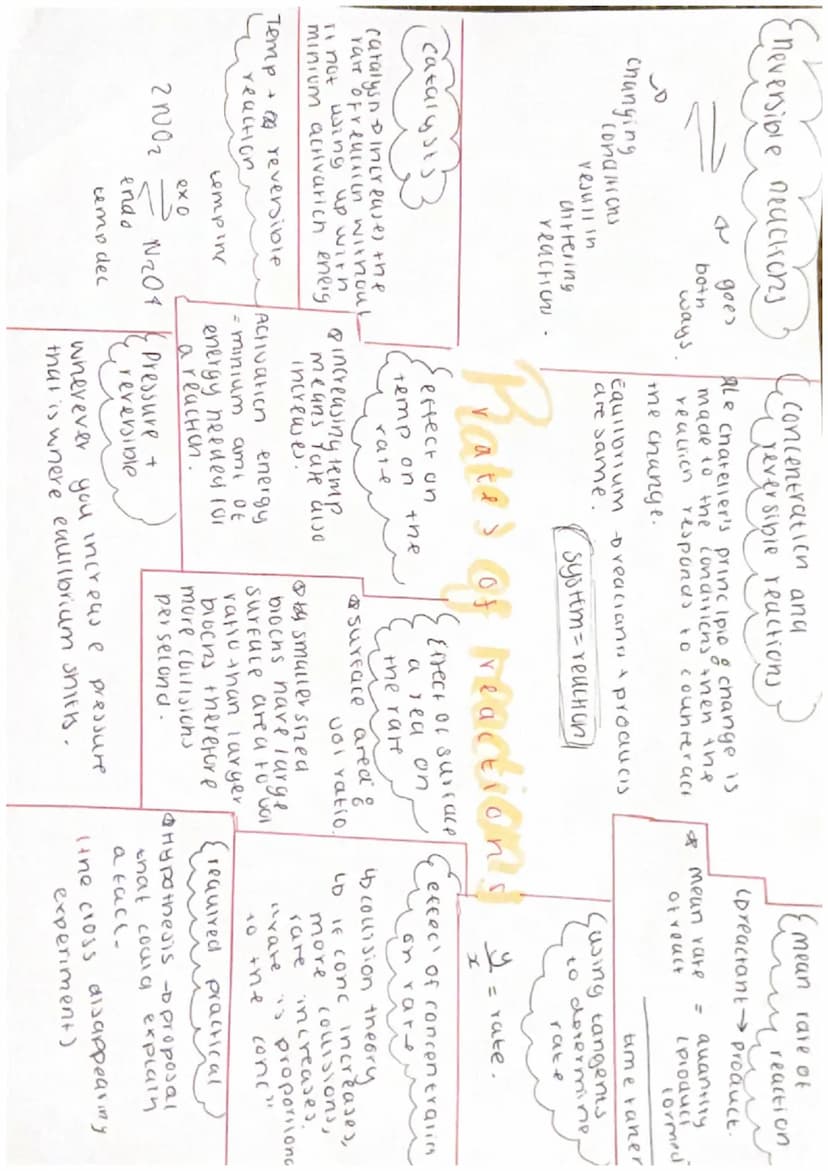
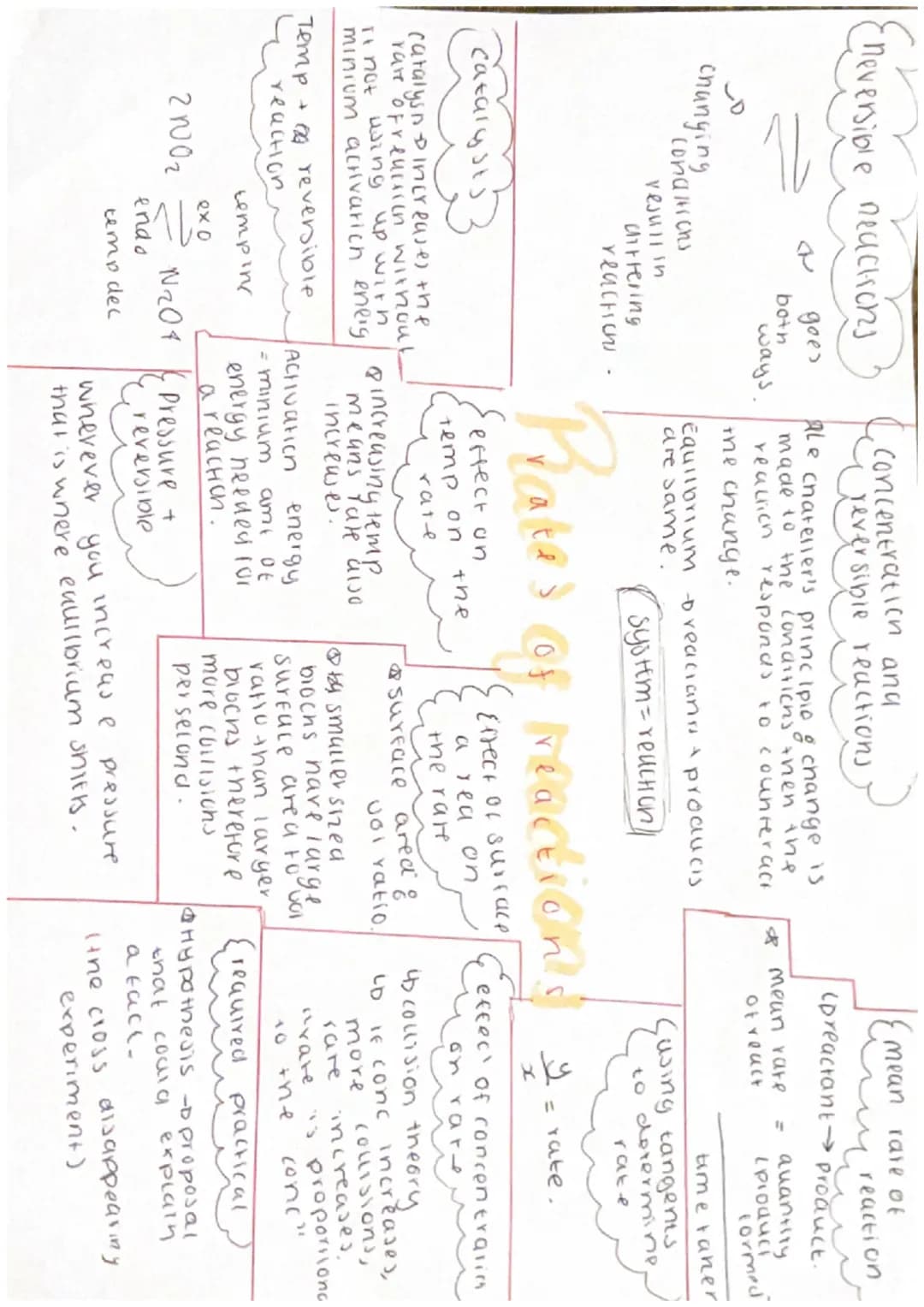
Ever wondered why some chemical reactions can go backwards? These are called reversible reactions, shown by the ⇌ symbol, where reactions can proceed in both directions simultaneously.
Temperature plays a crucial role in these reactions. For example, in the N₂O₄ ⇌ 2NO₂ reaction, increasing temperature shifts the equilibrium according to Le Chatelier's Principle, which states that when conditions change, the reaction counteracts that change. True equilibrium occurs when the rates of forward and backward reactions are equal.
The rate of reaction depends on several factors. Increasing temperature provides more energy for particles to overcome the activation energy (minimum energy needed for a reaction). Higher concentrations lead to more collisions between particles, increasing reaction rates. Similarly, larger surface area to volume ratios speed up reactions as more particles are exposed.
Remember this! Catalysts increase reaction rates without being used up by lowering the activation energy needed, making reactions more efficient without changing the equilibrium position.
When pressure changes in a reversible system, the equilibrium shifts to the side with fewer gas molecules. This knowledge is essential for understanding industrial processes that optimize conditions for maximum product yield.
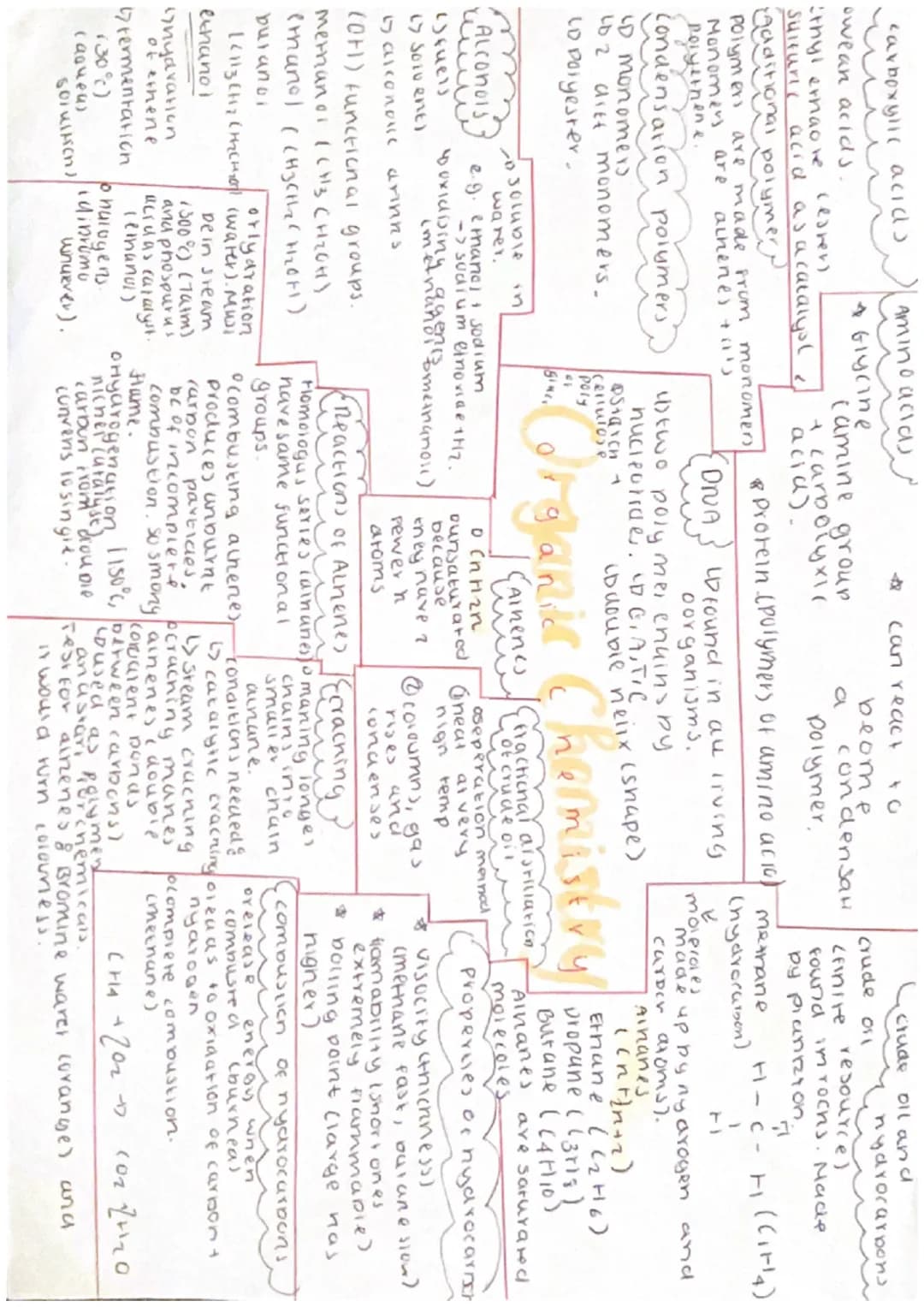
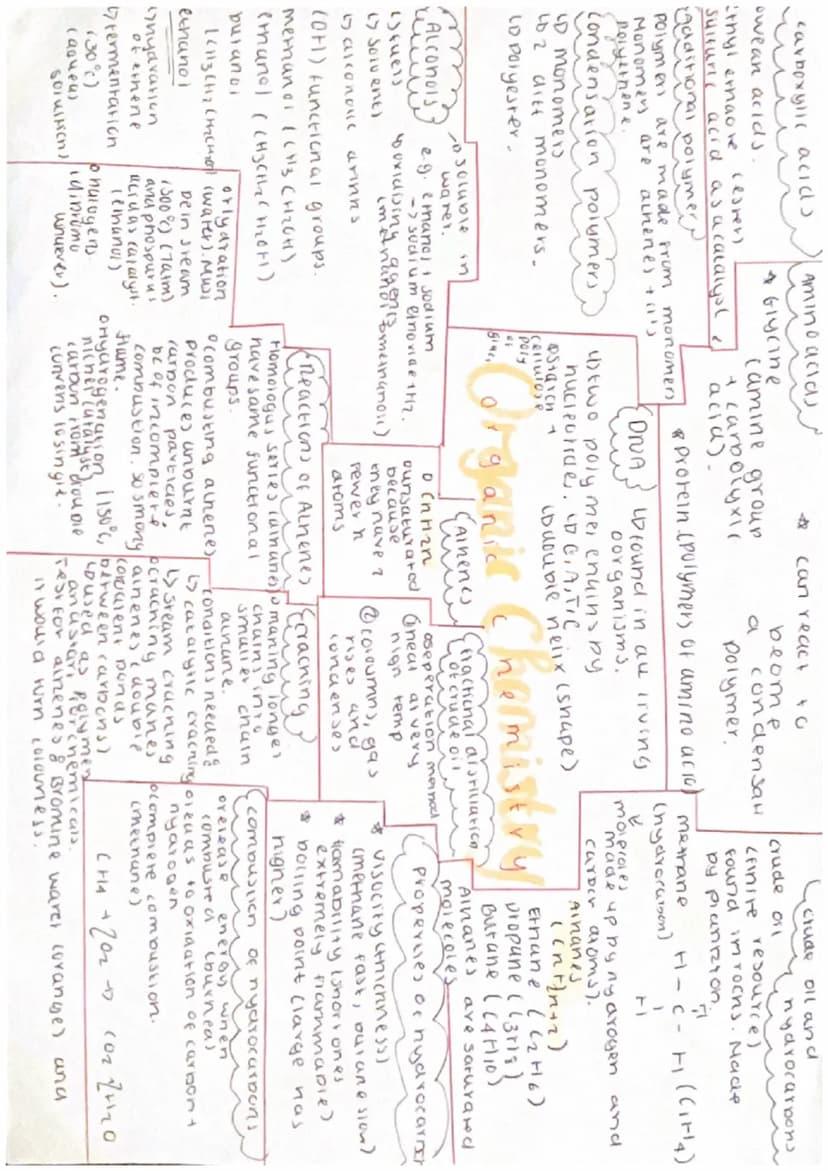
Organic chemistry is all about carbon compounds and their reactions. Hydrocarbons from crude oil form the backbone of this field, with methane (CH₄) being the simplest example. Crude oil itself is a finite resource formed from ancient plankton over millions of years.
Different hydrocarbons have distinct properties – shorter chains are more flammable with lower boiling points, while longer chains have higher viscosity. Through fractional distillation, crude oil can be separated into different fractions based on boiling points. Cracking breaks longer hydrocarbon chains into more useful shorter ones through either catalytic or steam cracking methods.
Polymers are long-chain molecules made from smaller units called monomers. Polyethene, for example, is made from ethene monomers. We distinguish between addition polymers (formed when monomers simply join) and condensation polymers (where two different monomers react, releasing water). Examples of natural polymers include proteins (made from amino acids) and DNA (made from nucleotides).
Quick tip: You can easily identify alkenes using bromine water – it changes from orange to colourless when a double bond is present, as this is where addition reactions occur!
Alcohols like ethanol (CH₃CH₂OH) contain the -OH functional group and can be produced either through fermentation (yeast, 30% concentration) or by hydration of ethene (using steam at 300°C, 1 atm with phosphoric acid catalyst).
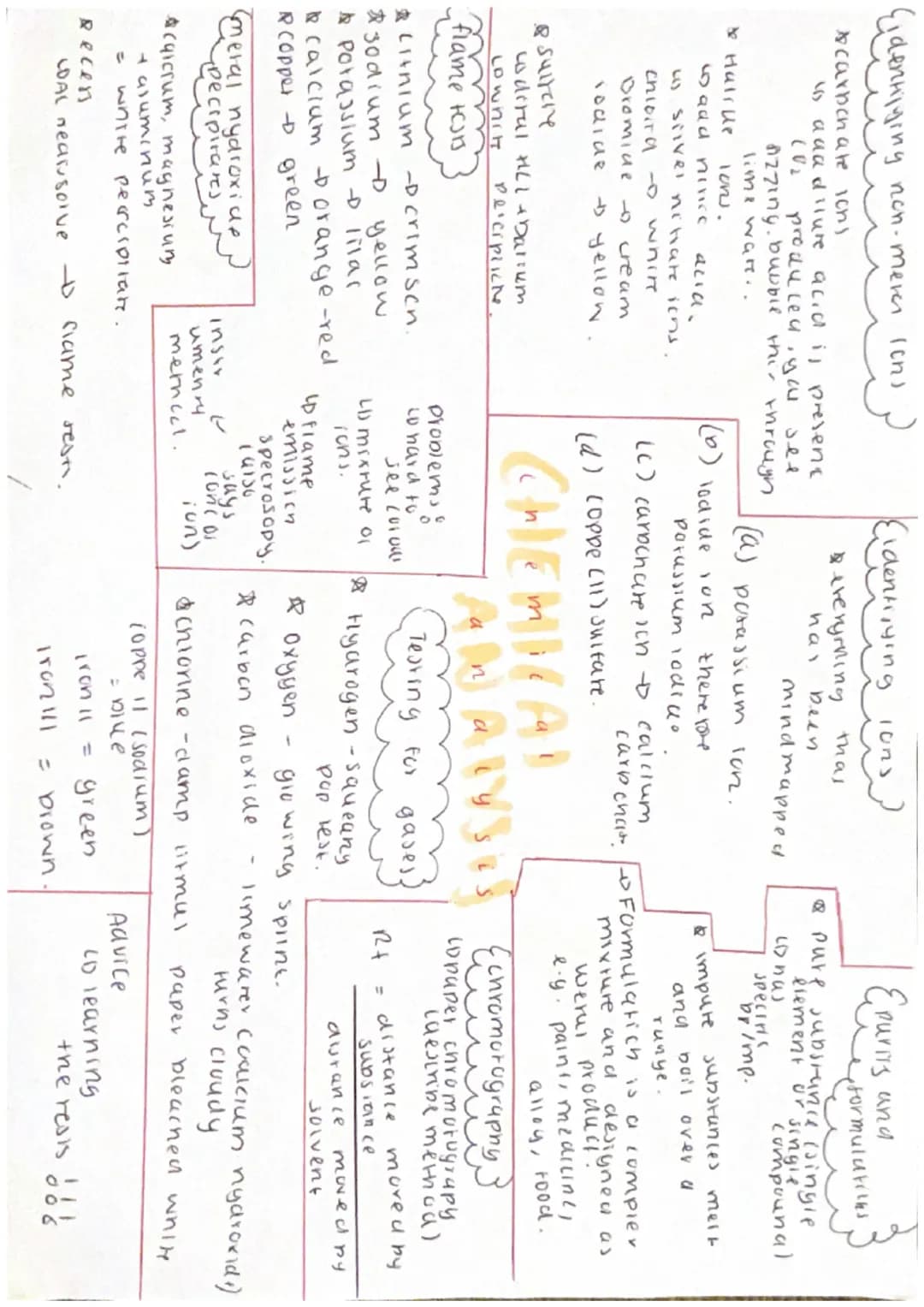
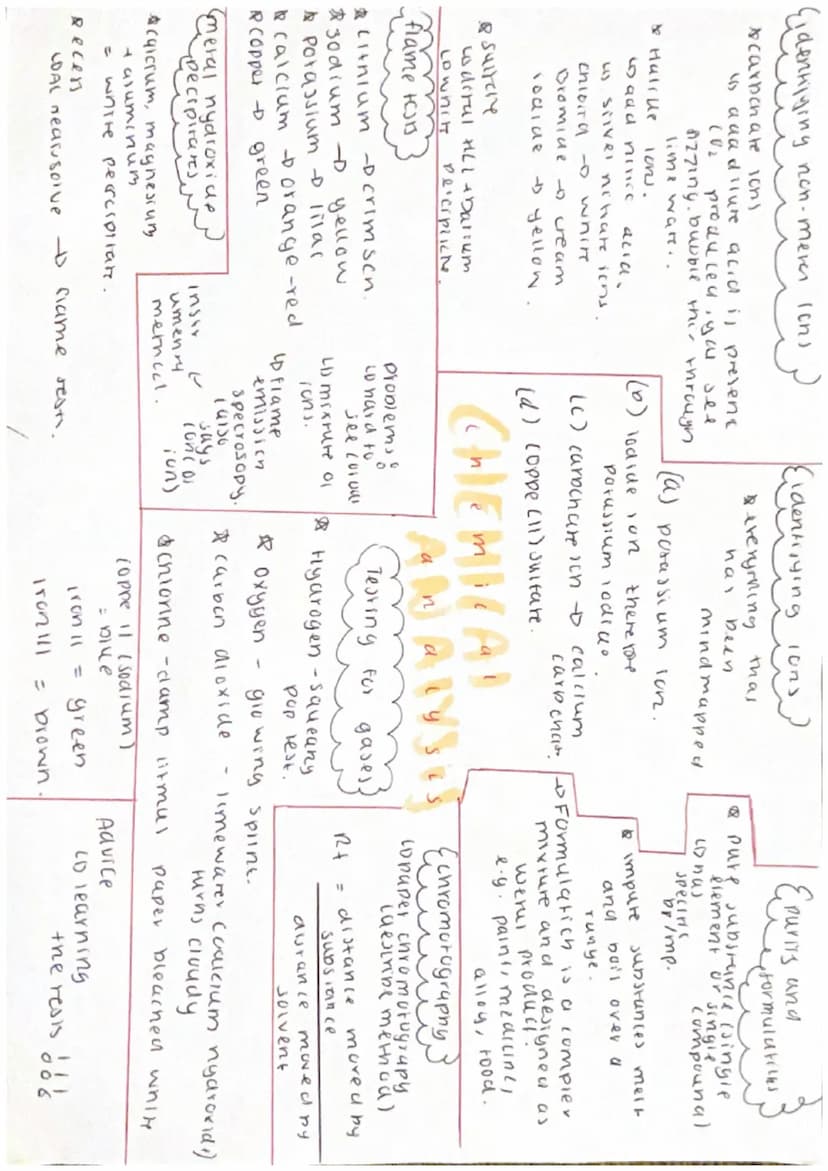
Chemical identification is a crucial skill that will definitely come up in your practical exams. When testing for carbonate ions, add dilute acid – if carbonates are present, carbon dioxide gas will be produced with fizzing. You can confirm this by bubbling the gas through limewater, which turns cloudy.
For halide ions, add dilute nitric acid and silver nitrate solution. The colour of the precipitate tells you which halide is present: chloride gives white, bromide gives cream, and iodide gives yellow precipitates. For sulfate ions, adding barium chloride solution forms a white precipitate.
Metal ions can be identified through flame tests, where different metals produce distinctive flame colours. Lithium gives crimson, sodium yellow, potassium lilac, and calcium orange-red flames. For transition metals, adding sodium hydroxide creates coloured precipitates – copper(II) gives blue, iron(II) gives green, and iron(III) gives brown.
Exam alert! Pure substances have specific melting and boiling points, while mixtures melt and boil over a range of temperatures. Remember this distinction as it often appears in exam questions!
Chemical analysis techniques like chromatography help separate and identify components in mixtures. The retention factor (Rf) is calculated by dividing the distance moved by the substance by the distance moved by the solvent – this gives a unique value for each chemical.
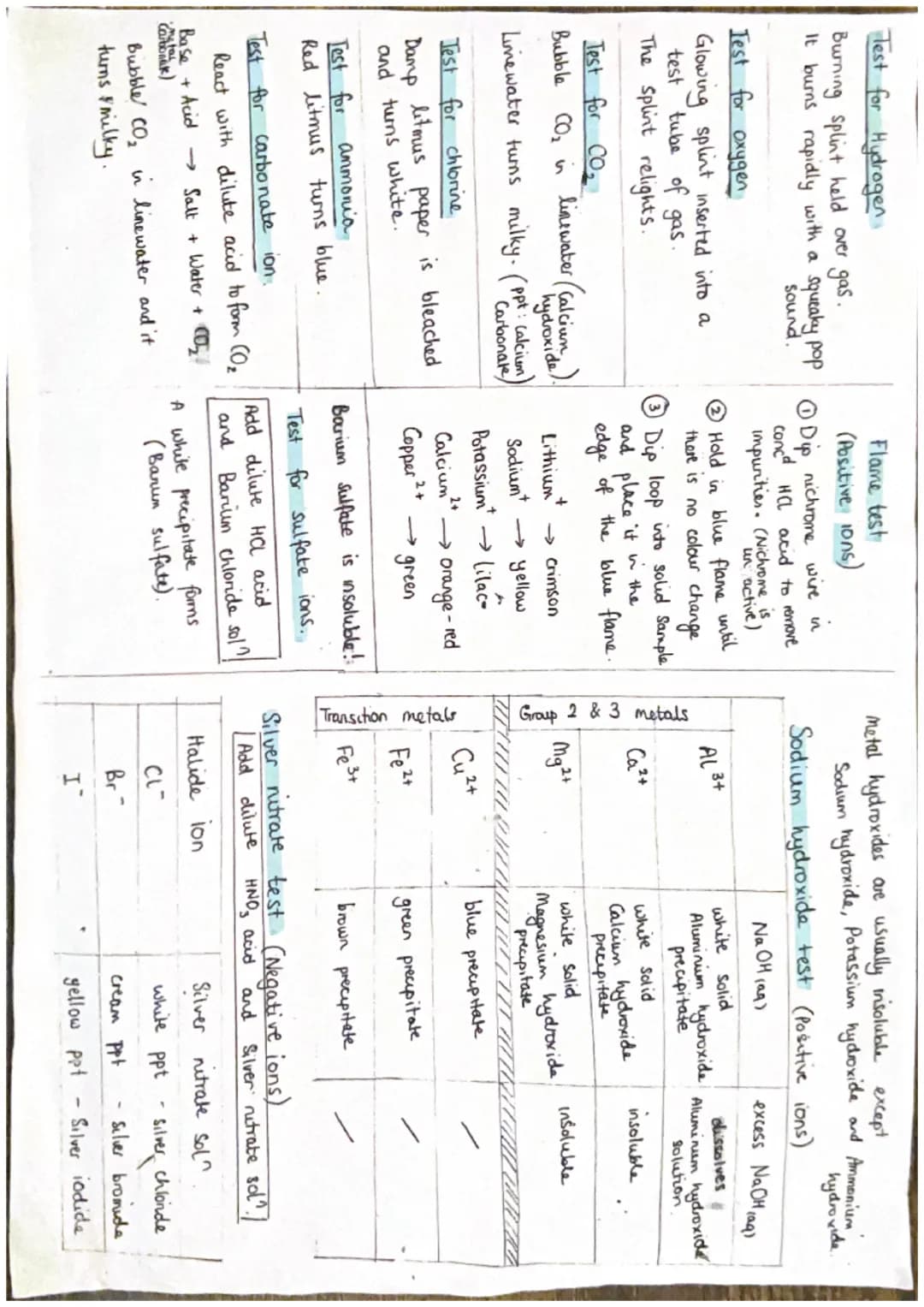
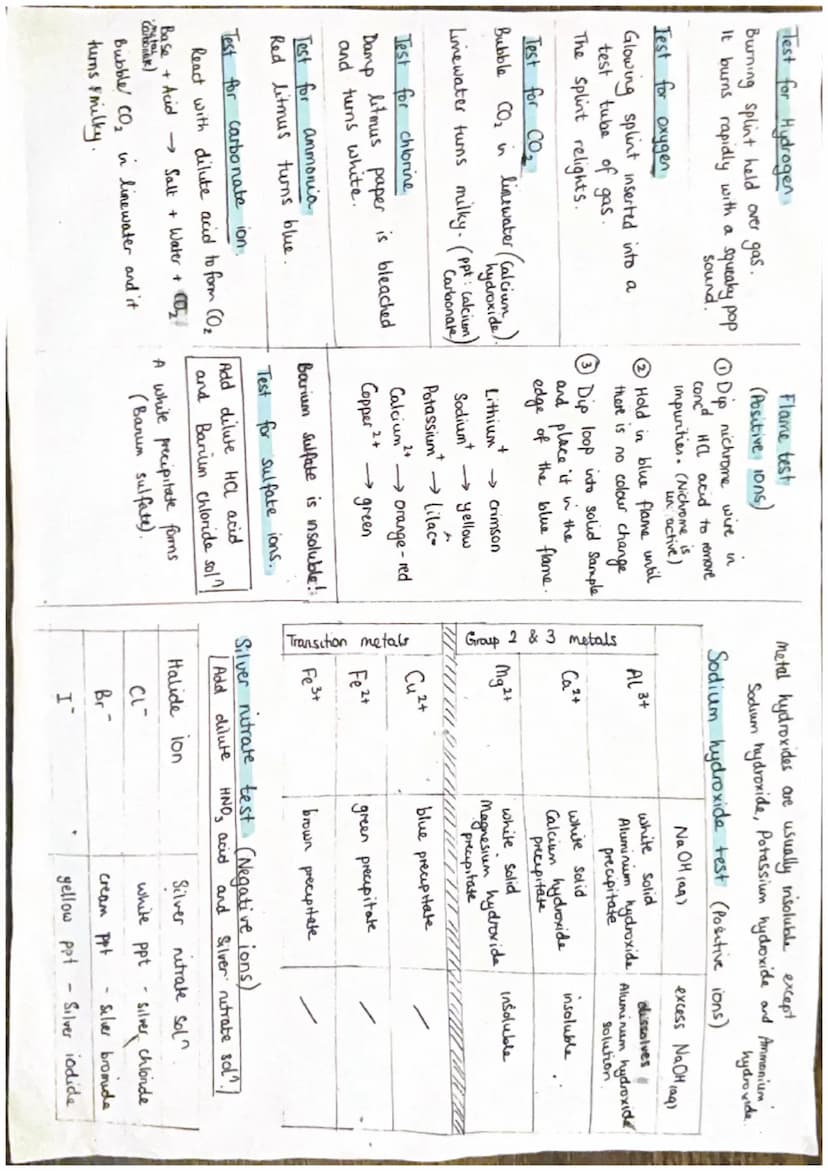
Knowing how to test for different gases and ions is essential for practical work. When testing for hydrogen gas, hold a burning splint over the test tube – a positive result gives a distinctive "squeaky pop" sound. For oxygen, a glowing splint will relight, while carbon dioxide turns limewater milky. Chlorine bleaches damp litmus paper white.
Performing a flame test for metal identification is simple but requires precise technique. First, dip a clean nichrome wire in concentrated HCl to remove impurities, then heat it in a blue flame until no colour appears. Dip the wire into your solid sample and place it in the flame edge to observe the characteristic colour – lithium (crimson), sodium (yellow), potassium (lilac), or calcium .
When testing for positive ions using sodium hydroxide, different metals produce distinctive precipitates. Aluminium forms a white precipitate that dissolves in excess sodium hydroxide. Calcium and magnesium both form insoluble white precipitates, while copper(II) forms a blue precipitate, iron(II) green, and iron(III) brown.
Practical tip: When performing the silver nitrate test for halides, always acidify with dilute nitric acid first to remove any interfering carbonate or sulfate ions that could give false positives!
For sulfate ions, add dilute HCl acid and barium chloride solution – a white precipitate forms if sulfates are present. This test is specific and commonly appears in practical assessments, so practice your observation skills.
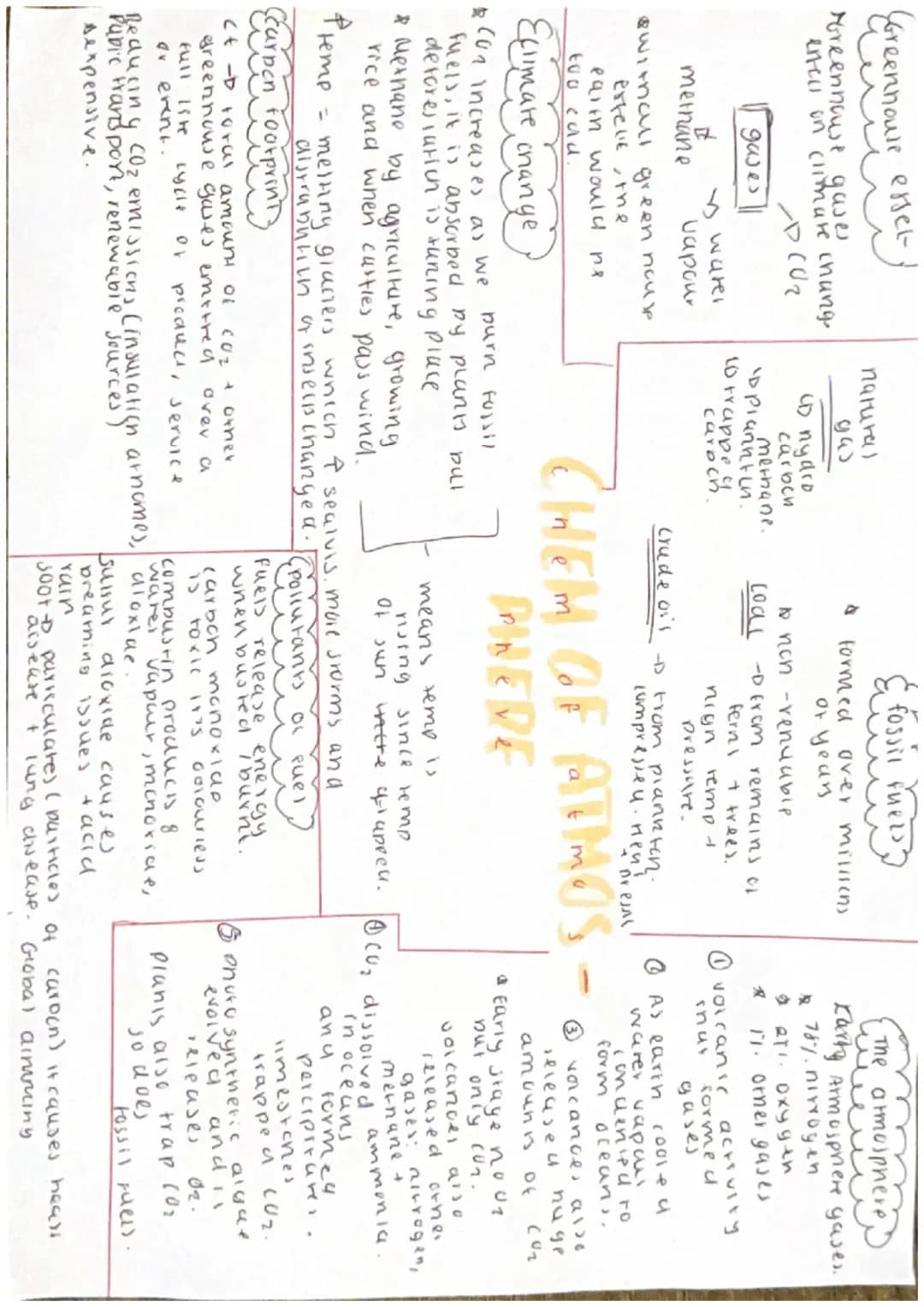
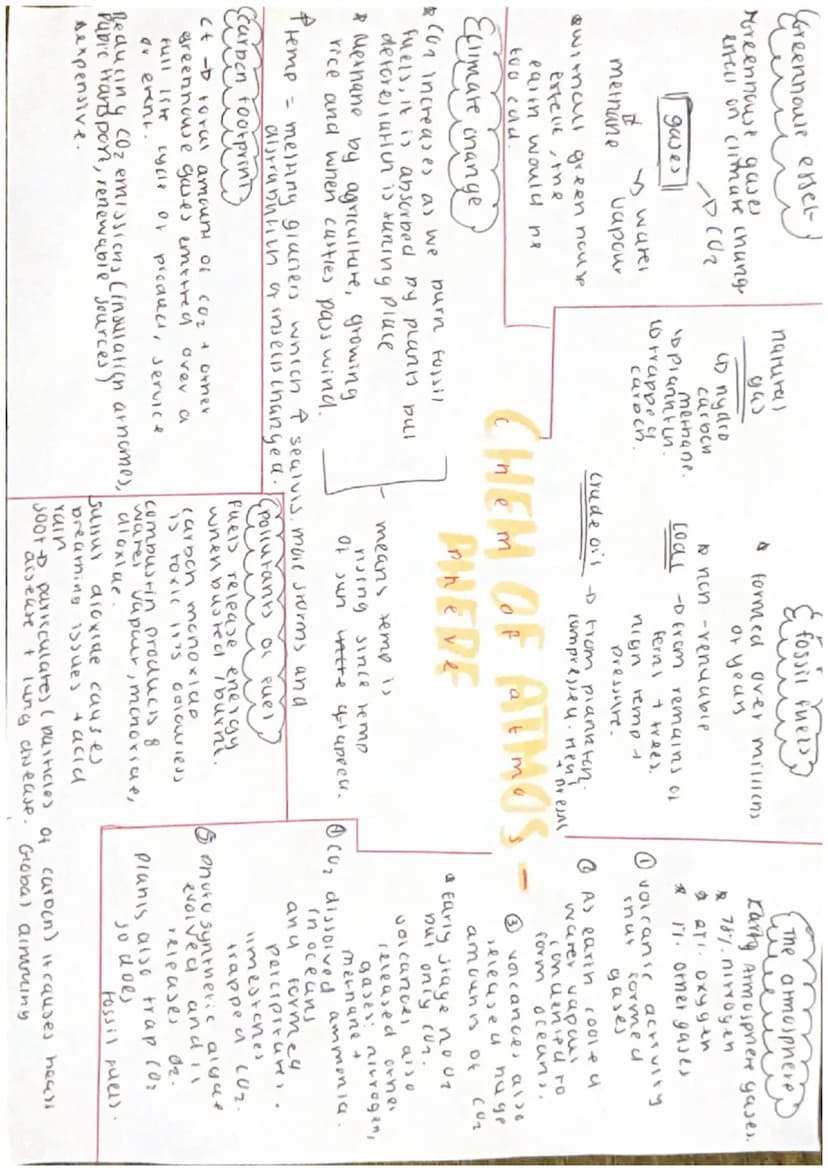
The greenhouse effect is actually essential for life on Earth – without it, our planet would be too cold. However, human activities have intensified this natural process, leading to climate change. The main greenhouse gases include carbon dioxide, water vapour and methane.
Fossil fuels formed over millions of years from the remains of ancient organisms – coal from plants and trees, crude oil from plankton. When we burn these non-renewable resources, we release carbon dioxide that had been trapped for millions of years. While plants absorb some CO₂, deforestation reduces this natural carbon sink. Methane from agriculture (particularly cattle farming and rice growing) is another significant contributor.
Rising temperatures from global warming have serious consequences – melting glaciers raise sea levels, while weather patterns become more extreme with increased storms. The carbon footprint measures the total greenhouse gases emitted over a product's lifecycle, helping us understand our environmental impact.
Real-world connection: Carbon monoxide from incomplete combustion isn't just a greenhouse gas – it's a toxic, colourless gas that can be deadly. This is why proper ventilation is essential when using gas appliances!
Earth's atmosphere has evolved dramatically over time. Early Earth had very different atmospheric composition formed through volcanic activity. As the planet cooled, water vapour condensed to form oceans, and eventually photosynthetic organisms evolved, releasing oxygen and transforming the atmosphere to what we know today.
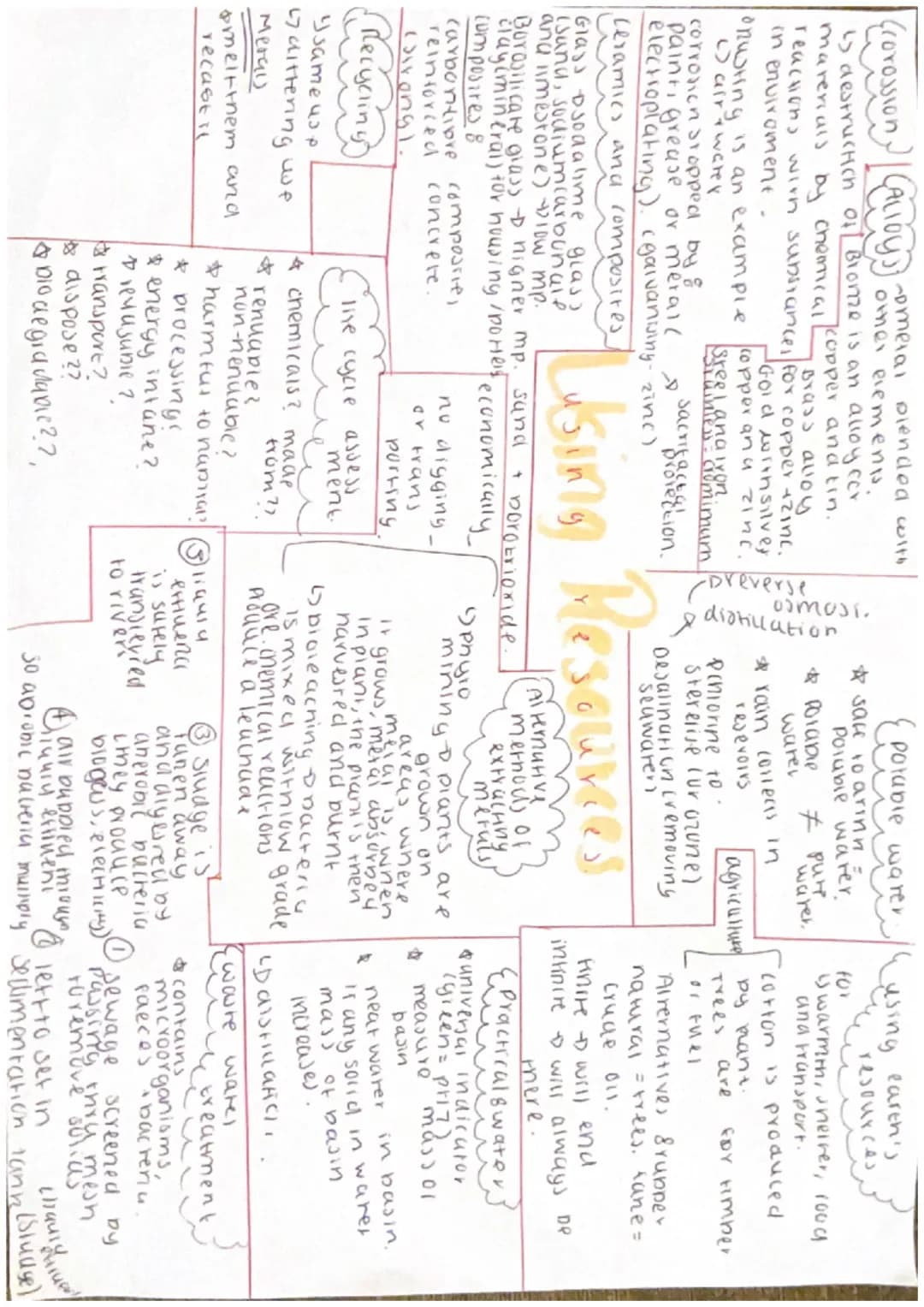
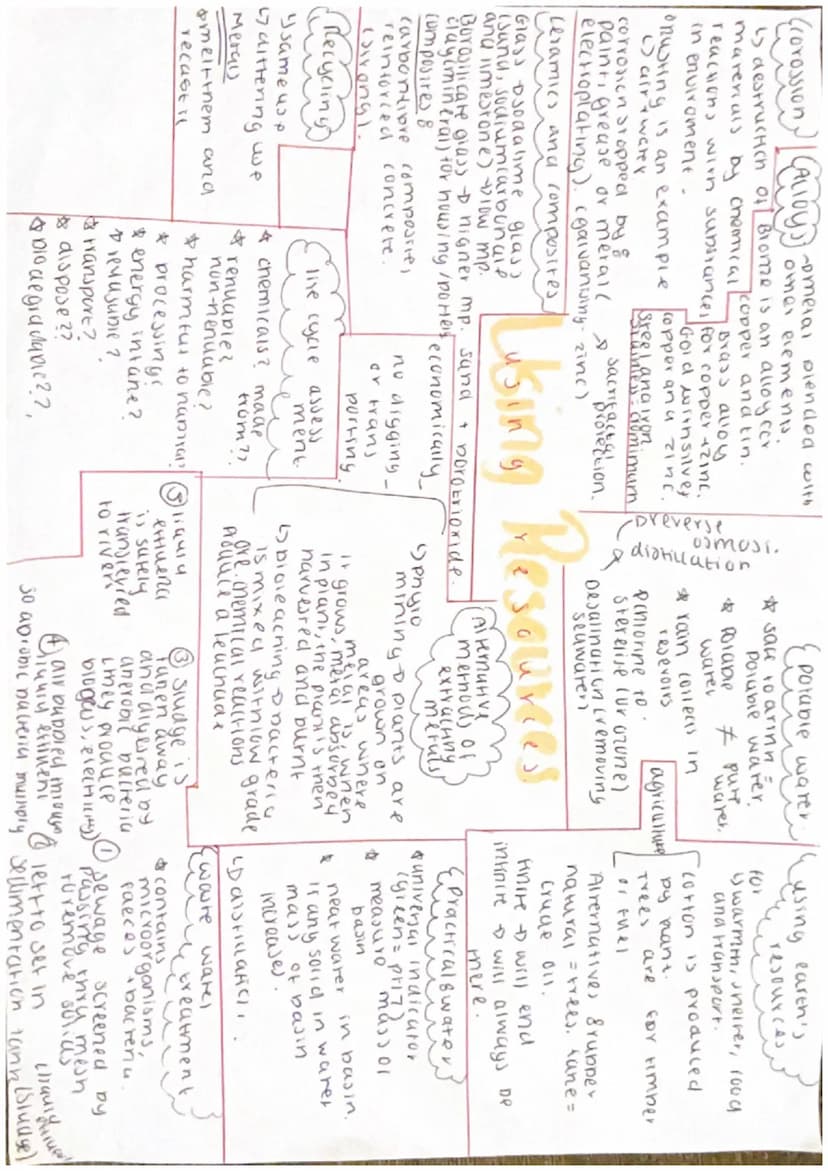
Corrosion is the destruction of materials (particularly metals) through chemical reactions with their environment. We can prevent it using various methods – applying protective coatings like paint or grease, electroplating with resistant metals, or using sacrificial protection where metals like zinc corrode preferentially to protect iron (galvanising).
Alloys blend metals with other elements to improve properties. Common examples include bronze (copper and tin), brass (copper and zinc), and stainless steel (iron with chromium). These materials often perform better than pure metals for specific applications.
Ensuring potable water (safe to drink but not necessarily pure) is a crucial process. Water collected in reservoirs undergoes filtration and chlorine treatment to kill bacteria. For areas with limited freshwater, desalination removes salt from seawater through methods like reverse osmosis or distillation, though these processes require significant energy.
Sustainability focus: Life cycle assessments evaluate a product's entire environmental impact – from raw material extraction through manufacturing, use, and disposal. Understanding these helps us make more sustainable choices!
Recycling materials like metals (melting and recasting) and glass reduces our dependence on raw materials and saves energy. When extracting metals from low-grade ores, environmentally-friendly methods like phytoextraction (using plants to absorb metals) and bioleaching (using bacteria to extract metals) are becoming more important as we strive for sustainability.
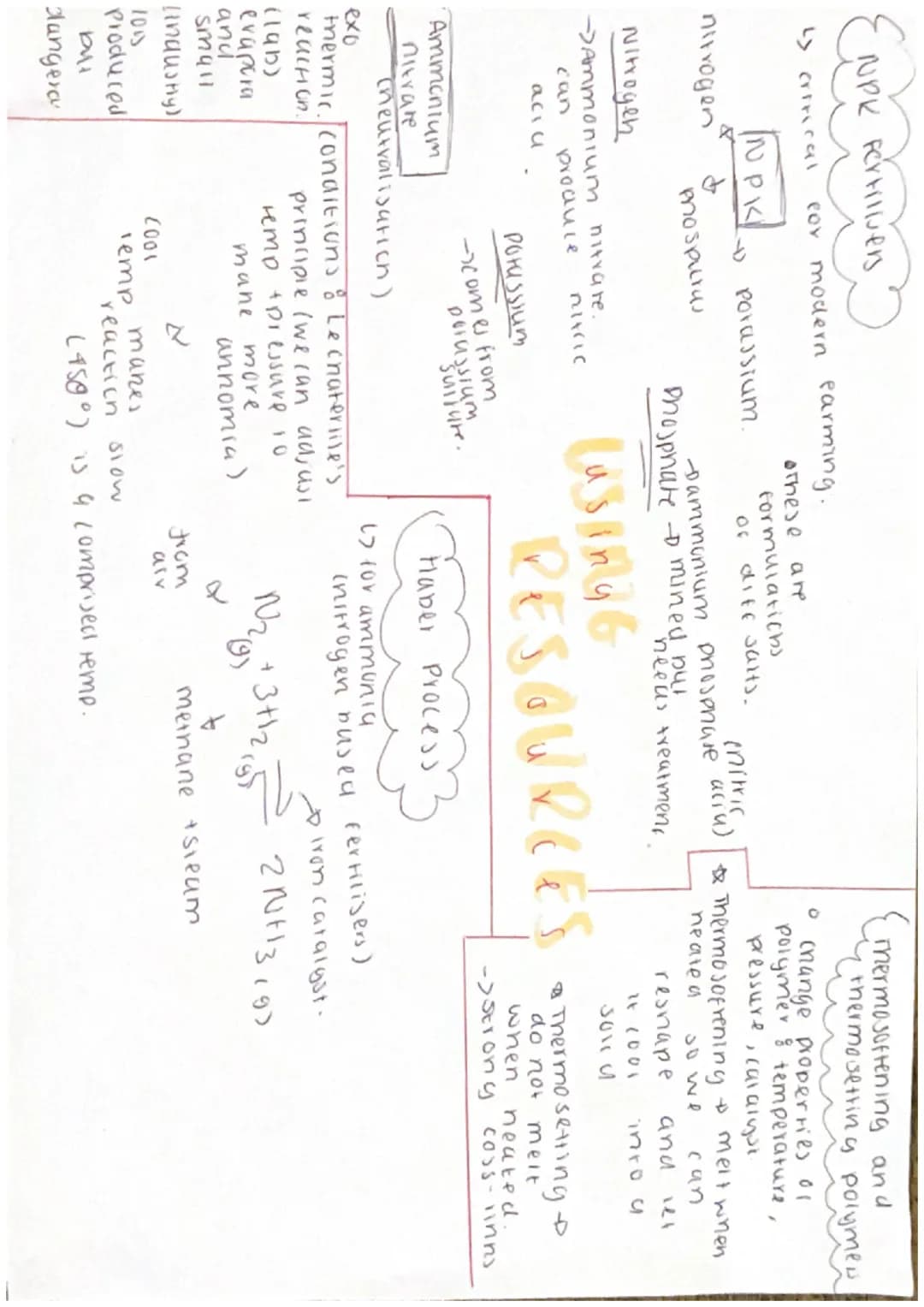
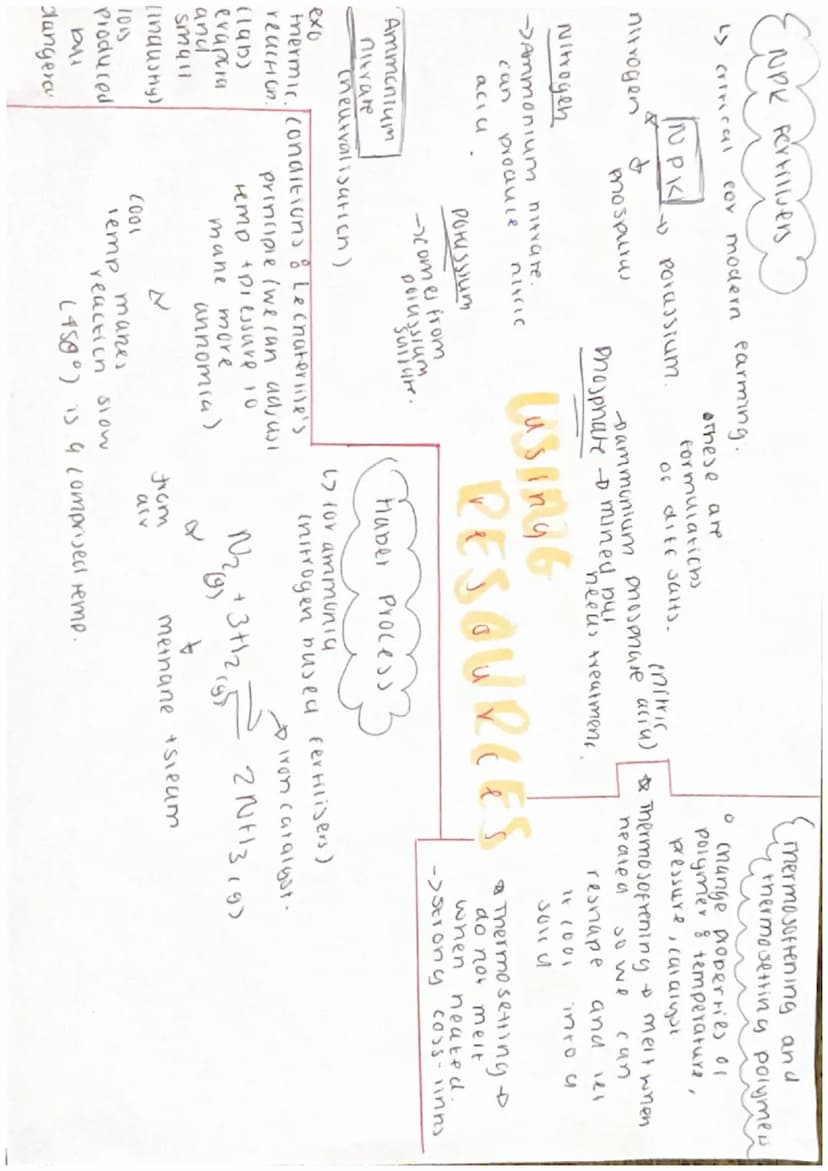
Modern farming relies heavily on NPK fertilizers containing nitrogen, phosphorus, and potassium. The Haber Process is crucial for producing the ammonia needed for nitrogen-based fertilizers, combining nitrogen from air with hydrogen (often from methane and steam) under high pressure (200 atm) at 450°C with an iron catalyst.
This is a perfect example of applying Le Chatelier's Principle in industry – despite the reaction being exothermic, a compromise temperature is used because the reaction would be too slow at lower temperatures. The high pressure favours ammonia production as there are fewer gas molecules on the product side of the equation: N₂ + 3H₂ ⇌ 2NH₃.
Polymers come in two main types with very different properties. Thermosoftening polymers melt when heated, allowing them to be reshaped and recycled. By contrast, thermosetting polymers have strong cross-links between chains and don't melt when heated, making them more suitable for applications requiring heat resistance.
Exam connection: The Haber Process combines several key chemistry concepts – equilibrium, reaction rates, catalysis, and industrial applications. Questions about optimizing conditions for this process are common in exams!
The conditions used in industrial processes are carefully chosen to maximize yield while considering practical factors like energy costs, equipment limitations, and reaction rates – demonstrating how theoretical chemistry principles are applied in real-world manufacturing.
Our AI Companion is a student-focused AI tool that offers more than just answers. Built on millions of Knowunity resources, it provides relevant information, personalised study plans, quizzes, and content directly in the chat, adapting to your individual learning journey.
You can download the app from Google Play Store and Apple App Store.
That's right! Enjoy free access to study content, connect with fellow students, and get instant help – all at your fingertips.
Quotes from every main character
English LiteratureApp Store
Google Play
The app is very easy to use and well designed. I have found everything I was looking for so far and have been able to learn a lot from the presentations! I will definitely use the app for a class assignment! And of course it also helps a lot as an inspiration.
Stefan S
iOS user
This app is really great. There are so many study notes and help [...]. My problem subject is French, for example, and the app has so many options for help. Thanks to this app, I have improved my French. I would recommend it to anyone.
Samantha Klich
Android user
Wow, I am really amazed. I just tried the app because I've seen it advertised many times and was absolutely stunned. This app is THE HELP you want for school and above all, it offers so many things, such as workouts and fact sheets, which have been VERY helpful to me personally.
Anna
iOS user
Best app on earth! no words because it’s too good
Thomas R
iOS user
Just amazing. Let's me revise 10x better, this app is a quick 10/10. I highly recommend it to anyone. I can watch and search for notes. I can save them in the subject folder. I can revise it any time when I come back. If you haven't tried this app, you're really missing out.
Basil
Android user
This app has made me feel so much more confident in my exam prep, not only through boosting my own self confidence through the features that allow you to connect with others and feel less alone, but also through the way the app itself is centred around making you feel better. It is easy to navigate, fun to use, and helpful to anyone struggling in absolutely any way.
David K
iOS user
The app's just great! All I have to do is enter the topic in the search bar and I get the response real fast. I don't have to watch 10 YouTube videos to understand something, so I'm saving my time. Highly recommended!
Sudenaz Ocak
Android user
In school I was really bad at maths but thanks to the app, I am doing better now. I am so grateful that you made the app.
Greenlight Bonnie
Android user
very reliable app to help and grow your ideas of Maths, English and other related topics in your works. please use this app if your struggling in areas, this app is key for that. wish I'd of done a review before. and it's also free so don't worry about that.
Rohan U
Android user
I know a lot of apps use fake accounts to boost their reviews but this app deserves it all. Originally I was getting 4 in my English exams and this time I got a grade 7. I didn’t even know about this app three days until the exam and it has helped A LOT. Please actually trust me and use it as I’m sure you too will see developments.
Xander S
iOS user
THE QUIZES AND FLASHCARDS ARE SO USEFUL AND I LOVE THE SCHOOLGPT. IT ALSO IS LITREALLY LIKE CHATGPT BUT SMARTER!! HELPED ME WITH MY MASCARA PROBLEMS TOO!! AS WELL AS MY REAL SUBJECTS ! DUHHH 😍😁😲🤑💗✨🎀😮
Elisha
iOS user
This apps acc the goat. I find revision so boring but this app makes it so easy to organize it all and then you can ask the freeeee ai to test yourself so good and you can easily upload your own stuff. highly recommend as someone taking mocks now
Paul T
iOS user
The app is very easy to use and well designed. I have found everything I was looking for so far and have been able to learn a lot from the presentations! I will definitely use the app for a class assignment! And of course it also helps a lot as an inspiration.
Stefan S
iOS user
This app is really great. There are so many study notes and help [...]. My problem subject is French, for example, and the app has so many options for help. Thanks to this app, I have improved my French. I would recommend it to anyone.
Samantha Klich
Android user
Wow, I am really amazed. I just tried the app because I've seen it advertised many times and was absolutely stunned. This app is THE HELP you want for school and above all, it offers so many things, such as workouts and fact sheets, which have been VERY helpful to me personally.
Anna
iOS user
Best app on earth! no words because it’s too good
Thomas R
iOS user
Just amazing. Let's me revise 10x better, this app is a quick 10/10. I highly recommend it to anyone. I can watch and search for notes. I can save them in the subject folder. I can revise it any time when I come back. If you haven't tried this app, you're really missing out.
Basil
Android user
This app has made me feel so much more confident in my exam prep, not only through boosting my own self confidence through the features that allow you to connect with others and feel less alone, but also through the way the app itself is centred around making you feel better. It is easy to navigate, fun to use, and helpful to anyone struggling in absolutely any way.
David K
iOS user
The app's just great! All I have to do is enter the topic in the search bar and I get the response real fast. I don't have to watch 10 YouTube videos to understand something, so I'm saving my time. Highly recommended!
Sudenaz Ocak
Android user
In school I was really bad at maths but thanks to the app, I am doing better now. I am so grateful that you made the app.
Greenlight Bonnie
Android user
very reliable app to help and grow your ideas of Maths, English and other related topics in your works. please use this app if your struggling in areas, this app is key for that. wish I'd of done a review before. and it's also free so don't worry about that.
Rohan U
Android user
I know a lot of apps use fake accounts to boost their reviews but this app deserves it all. Originally I was getting 4 in my English exams and this time I got a grade 7. I didn’t even know about this app three days until the exam and it has helped A LOT. Please actually trust me and use it as I’m sure you too will see developments.
Xander S
iOS user
THE QUIZES AND FLASHCARDS ARE SO USEFUL AND I LOVE THE SCHOOLGPT. IT ALSO IS LITREALLY LIKE CHATGPT BUT SMARTER!! HELPED ME WITH MY MASCARA PROBLEMS TOO!! AS WELL AS MY REAL SUBJECTS ! DUHHH 😍😁😲🤑💗✨🎀😮
Elisha
iOS user
This apps acc the goat. I find revision so boring but this app makes it so easy to organize it all and then you can ask the freeeee ai to test yourself so good and you can easily upload your own stuff. highly recommend as someone taking mocks now
Paul T
iOS user
Inesha Pavanasingam
@neshaavanasingam_vzpw
Chemistry is a fascinating subject that helps us understand how matter behaves and interacts. From chemical reactions to materials science, this summary covers key concepts you'll need to master for your exams. We'll explore everything from reversible reactions and chemical... Show more
Access to all documents
Improve your grades
Join milions of students
By signing up you accept Terms of Service and Privacy Policy
Ever wondered why some chemical reactions can go backwards? These are called reversible reactions, shown by the ⇌ symbol, where reactions can proceed in both directions simultaneously.
Temperature plays a crucial role in these reactions. For example, in the N₂O₄ ⇌ 2NO₂ reaction, increasing temperature shifts the equilibrium according to Le Chatelier's Principle, which states that when conditions change, the reaction counteracts that change. True equilibrium occurs when the rates of forward and backward reactions are equal.
The rate of reaction depends on several factors. Increasing temperature provides more energy for particles to overcome the activation energy (minimum energy needed for a reaction). Higher concentrations lead to more collisions between particles, increasing reaction rates. Similarly, larger surface area to volume ratios speed up reactions as more particles are exposed.
Remember this! Catalysts increase reaction rates without being used up by lowering the activation energy needed, making reactions more efficient without changing the equilibrium position.
When pressure changes in a reversible system, the equilibrium shifts to the side with fewer gas molecules. This knowledge is essential for understanding industrial processes that optimize conditions for maximum product yield.
Access to all documents
Improve your grades
Join milions of students
By signing up you accept Terms of Service and Privacy Policy
Organic chemistry is all about carbon compounds and their reactions. Hydrocarbons from crude oil form the backbone of this field, with methane (CH₄) being the simplest example. Crude oil itself is a finite resource formed from ancient plankton over millions of years.
Different hydrocarbons have distinct properties – shorter chains are more flammable with lower boiling points, while longer chains have higher viscosity. Through fractional distillation, crude oil can be separated into different fractions based on boiling points. Cracking breaks longer hydrocarbon chains into more useful shorter ones through either catalytic or steam cracking methods.
Polymers are long-chain molecules made from smaller units called monomers. Polyethene, for example, is made from ethene monomers. We distinguish between addition polymers (formed when monomers simply join) and condensation polymers (where two different monomers react, releasing water). Examples of natural polymers include proteins (made from amino acids) and DNA (made from nucleotides).
Quick tip: You can easily identify alkenes using bromine water – it changes from orange to colourless when a double bond is present, as this is where addition reactions occur!
Alcohols like ethanol (CH₃CH₂OH) contain the -OH functional group and can be produced either through fermentation (yeast, 30% concentration) or by hydration of ethene (using steam at 300°C, 1 atm with phosphoric acid catalyst).
Access to all documents
Improve your grades
Join milions of students
By signing up you accept Terms of Service and Privacy Policy
Chemical identification is a crucial skill that will definitely come up in your practical exams. When testing for carbonate ions, add dilute acid – if carbonates are present, carbon dioxide gas will be produced with fizzing. You can confirm this by bubbling the gas through limewater, which turns cloudy.
For halide ions, add dilute nitric acid and silver nitrate solution. The colour of the precipitate tells you which halide is present: chloride gives white, bromide gives cream, and iodide gives yellow precipitates. For sulfate ions, adding barium chloride solution forms a white precipitate.
Metal ions can be identified through flame tests, where different metals produce distinctive flame colours. Lithium gives crimson, sodium yellow, potassium lilac, and calcium orange-red flames. For transition metals, adding sodium hydroxide creates coloured precipitates – copper(II) gives blue, iron(II) gives green, and iron(III) gives brown.
Exam alert! Pure substances have specific melting and boiling points, while mixtures melt and boil over a range of temperatures. Remember this distinction as it often appears in exam questions!
Chemical analysis techniques like chromatography help separate and identify components in mixtures. The retention factor (Rf) is calculated by dividing the distance moved by the substance by the distance moved by the solvent – this gives a unique value for each chemical.
Access to all documents
Improve your grades
Join milions of students
By signing up you accept Terms of Service and Privacy Policy
Knowing how to test for different gases and ions is essential for practical work. When testing for hydrogen gas, hold a burning splint over the test tube – a positive result gives a distinctive "squeaky pop" sound. For oxygen, a glowing splint will relight, while carbon dioxide turns limewater milky. Chlorine bleaches damp litmus paper white.
Performing a flame test for metal identification is simple but requires precise technique. First, dip a clean nichrome wire in concentrated HCl to remove impurities, then heat it in a blue flame until no colour appears. Dip the wire into your solid sample and place it in the flame edge to observe the characteristic colour – lithium (crimson), sodium (yellow), potassium (lilac), or calcium .
When testing for positive ions using sodium hydroxide, different metals produce distinctive precipitates. Aluminium forms a white precipitate that dissolves in excess sodium hydroxide. Calcium and magnesium both form insoluble white precipitates, while copper(II) forms a blue precipitate, iron(II) green, and iron(III) brown.
Practical tip: When performing the silver nitrate test for halides, always acidify with dilute nitric acid first to remove any interfering carbonate or sulfate ions that could give false positives!
For sulfate ions, add dilute HCl acid and barium chloride solution – a white precipitate forms if sulfates are present. This test is specific and commonly appears in practical assessments, so practice your observation skills.
Access to all documents
Improve your grades
Join milions of students
By signing up you accept Terms of Service and Privacy Policy
The greenhouse effect is actually essential for life on Earth – without it, our planet would be too cold. However, human activities have intensified this natural process, leading to climate change. The main greenhouse gases include carbon dioxide, water vapour and methane.
Fossil fuels formed over millions of years from the remains of ancient organisms – coal from plants and trees, crude oil from plankton. When we burn these non-renewable resources, we release carbon dioxide that had been trapped for millions of years. While plants absorb some CO₂, deforestation reduces this natural carbon sink. Methane from agriculture (particularly cattle farming and rice growing) is another significant contributor.
Rising temperatures from global warming have serious consequences – melting glaciers raise sea levels, while weather patterns become more extreme with increased storms. The carbon footprint measures the total greenhouse gases emitted over a product's lifecycle, helping us understand our environmental impact.
Real-world connection: Carbon monoxide from incomplete combustion isn't just a greenhouse gas – it's a toxic, colourless gas that can be deadly. This is why proper ventilation is essential when using gas appliances!
Earth's atmosphere has evolved dramatically over time. Early Earth had very different atmospheric composition formed through volcanic activity. As the planet cooled, water vapour condensed to form oceans, and eventually photosynthetic organisms evolved, releasing oxygen and transforming the atmosphere to what we know today.
Access to all documents
Improve your grades
Join milions of students
By signing up you accept Terms of Service and Privacy Policy
Corrosion is the destruction of materials (particularly metals) through chemical reactions with their environment. We can prevent it using various methods – applying protective coatings like paint or grease, electroplating with resistant metals, or using sacrificial protection where metals like zinc corrode preferentially to protect iron (galvanising).
Alloys blend metals with other elements to improve properties. Common examples include bronze (copper and tin), brass (copper and zinc), and stainless steel (iron with chromium). These materials often perform better than pure metals for specific applications.
Ensuring potable water (safe to drink but not necessarily pure) is a crucial process. Water collected in reservoirs undergoes filtration and chlorine treatment to kill bacteria. For areas with limited freshwater, desalination removes salt from seawater through methods like reverse osmosis or distillation, though these processes require significant energy.
Sustainability focus: Life cycle assessments evaluate a product's entire environmental impact – from raw material extraction through manufacturing, use, and disposal. Understanding these helps us make more sustainable choices!
Recycling materials like metals (melting and recasting) and glass reduces our dependence on raw materials and saves energy. When extracting metals from low-grade ores, environmentally-friendly methods like phytoextraction (using plants to absorb metals) and bioleaching (using bacteria to extract metals) are becoming more important as we strive for sustainability.
Access to all documents
Improve your grades
Join milions of students
By signing up you accept Terms of Service and Privacy Policy
Modern farming relies heavily on NPK fertilizers containing nitrogen, phosphorus, and potassium. The Haber Process is crucial for producing the ammonia needed for nitrogen-based fertilizers, combining nitrogen from air with hydrogen (often from methane and steam) under high pressure (200 atm) at 450°C with an iron catalyst.
This is a perfect example of applying Le Chatelier's Principle in industry – despite the reaction being exothermic, a compromise temperature is used because the reaction would be too slow at lower temperatures. The high pressure favours ammonia production as there are fewer gas molecules on the product side of the equation: N₂ + 3H₂ ⇌ 2NH₃.
Polymers come in two main types with very different properties. Thermosoftening polymers melt when heated, allowing them to be reshaped and recycled. By contrast, thermosetting polymers have strong cross-links between chains and don't melt when heated, making them more suitable for applications requiring heat resistance.
Exam connection: The Haber Process combines several key chemistry concepts – equilibrium, reaction rates, catalysis, and industrial applications. Questions about optimizing conditions for this process are common in exams!
The conditions used in industrial processes are carefully chosen to maximize yield while considering practical factors like energy costs, equipment limitations, and reaction rates – demonstrating how theoretical chemistry principles are applied in real-world manufacturing.
Our AI Companion is a student-focused AI tool that offers more than just answers. Built on millions of Knowunity resources, it provides relevant information, personalised study plans, quizzes, and content directly in the chat, adapting to your individual learning journey.
You can download the app from Google Play Store and Apple App Store.
That's right! Enjoy free access to study content, connect with fellow students, and get instant help – all at your fingertips.
3
Smart Tools NEW
Transform this note into: ✓ 50+ Practice Questions ✓ Interactive Flashcards ✓ Full Mock Exam ✓ Essay Outlines
Quotes from every main character
English LiteratureApp Store
Google Play
The app is very easy to use and well designed. I have found everything I was looking for so far and have been able to learn a lot from the presentations! I will definitely use the app for a class assignment! And of course it also helps a lot as an inspiration.
Stefan S
iOS user
This app is really great. There are so many study notes and help [...]. My problem subject is French, for example, and the app has so many options for help. Thanks to this app, I have improved my French. I would recommend it to anyone.
Samantha Klich
Android user
Wow, I am really amazed. I just tried the app because I've seen it advertised many times and was absolutely stunned. This app is THE HELP you want for school and above all, it offers so many things, such as workouts and fact sheets, which have been VERY helpful to me personally.
Anna
iOS user
Best app on earth! no words because it’s too good
Thomas R
iOS user
Just amazing. Let's me revise 10x better, this app is a quick 10/10. I highly recommend it to anyone. I can watch and search for notes. I can save them in the subject folder. I can revise it any time when I come back. If you haven't tried this app, you're really missing out.
Basil
Android user
This app has made me feel so much more confident in my exam prep, not only through boosting my own self confidence through the features that allow you to connect with others and feel less alone, but also through the way the app itself is centred around making you feel better. It is easy to navigate, fun to use, and helpful to anyone struggling in absolutely any way.
David K
iOS user
The app's just great! All I have to do is enter the topic in the search bar and I get the response real fast. I don't have to watch 10 YouTube videos to understand something, so I'm saving my time. Highly recommended!
Sudenaz Ocak
Android user
In school I was really bad at maths but thanks to the app, I am doing better now. I am so grateful that you made the app.
Greenlight Bonnie
Android user
very reliable app to help and grow your ideas of Maths, English and other related topics in your works. please use this app if your struggling in areas, this app is key for that. wish I'd of done a review before. and it's also free so don't worry about that.
Rohan U
Android user
I know a lot of apps use fake accounts to boost their reviews but this app deserves it all. Originally I was getting 4 in my English exams and this time I got a grade 7. I didn’t even know about this app three days until the exam and it has helped A LOT. Please actually trust me and use it as I’m sure you too will see developments.
Xander S
iOS user
THE QUIZES AND FLASHCARDS ARE SO USEFUL AND I LOVE THE SCHOOLGPT. IT ALSO IS LITREALLY LIKE CHATGPT BUT SMARTER!! HELPED ME WITH MY MASCARA PROBLEMS TOO!! AS WELL AS MY REAL SUBJECTS ! DUHHH 😍😁😲🤑💗✨🎀😮
Elisha
iOS user
This apps acc the goat. I find revision so boring but this app makes it so easy to organize it all and then you can ask the freeeee ai to test yourself so good and you can easily upload your own stuff. highly recommend as someone taking mocks now
Paul T
iOS user
The app is very easy to use and well designed. I have found everything I was looking for so far and have been able to learn a lot from the presentations! I will definitely use the app for a class assignment! And of course it also helps a lot as an inspiration.
Stefan S
iOS user
This app is really great. There are so many study notes and help [...]. My problem subject is French, for example, and the app has so many options for help. Thanks to this app, I have improved my French. I would recommend it to anyone.
Samantha Klich
Android user
Wow, I am really amazed. I just tried the app because I've seen it advertised many times and was absolutely stunned. This app is THE HELP you want for school and above all, it offers so many things, such as workouts and fact sheets, which have been VERY helpful to me personally.
Anna
iOS user
Best app on earth! no words because it’s too good
Thomas R
iOS user
Just amazing. Let's me revise 10x better, this app is a quick 10/10. I highly recommend it to anyone. I can watch and search for notes. I can save them in the subject folder. I can revise it any time when I come back. If you haven't tried this app, you're really missing out.
Basil
Android user
This app has made me feel so much more confident in my exam prep, not only through boosting my own self confidence through the features that allow you to connect with others and feel less alone, but also through the way the app itself is centred around making you feel better. It is easy to navigate, fun to use, and helpful to anyone struggling in absolutely any way.
David K
iOS user
The app's just great! All I have to do is enter the topic in the search bar and I get the response real fast. I don't have to watch 10 YouTube videos to understand something, so I'm saving my time. Highly recommended!
Sudenaz Ocak
Android user
In school I was really bad at maths but thanks to the app, I am doing better now. I am so grateful that you made the app.
Greenlight Bonnie
Android user
very reliable app to help and grow your ideas of Maths, English and other related topics in your works. please use this app if your struggling in areas, this app is key for that. wish I'd of done a review before. and it's also free so don't worry about that.
Rohan U
Android user
I know a lot of apps use fake accounts to boost their reviews but this app deserves it all. Originally I was getting 4 in my English exams and this time I got a grade 7. I didn’t even know about this app three days until the exam and it has helped A LOT. Please actually trust me and use it as I’m sure you too will see developments.
Xander S
iOS user
THE QUIZES AND FLASHCARDS ARE SO USEFUL AND I LOVE THE SCHOOLGPT. IT ALSO IS LITREALLY LIKE CHATGPT BUT SMARTER!! HELPED ME WITH MY MASCARA PROBLEMS TOO!! AS WELL AS MY REAL SUBJECTS ! DUHHH 😍😁😲🤑💗✨🎀😮
Elisha
iOS user
This apps acc the goat. I find revision so boring but this app makes it so easy to organize it all and then you can ask the freeeee ai to test yourself so good and you can easily upload your own stuff. highly recommend as someone taking mocks now
Paul T
iOS user