The Early Atmosphere and How It Changed
Imagine Earth 4 billion years ago - you definitely wouldn't want to breathe that air! Volcanic activity was everywhere, belching out massive amounts of gases that created our planet's first atmosphere.
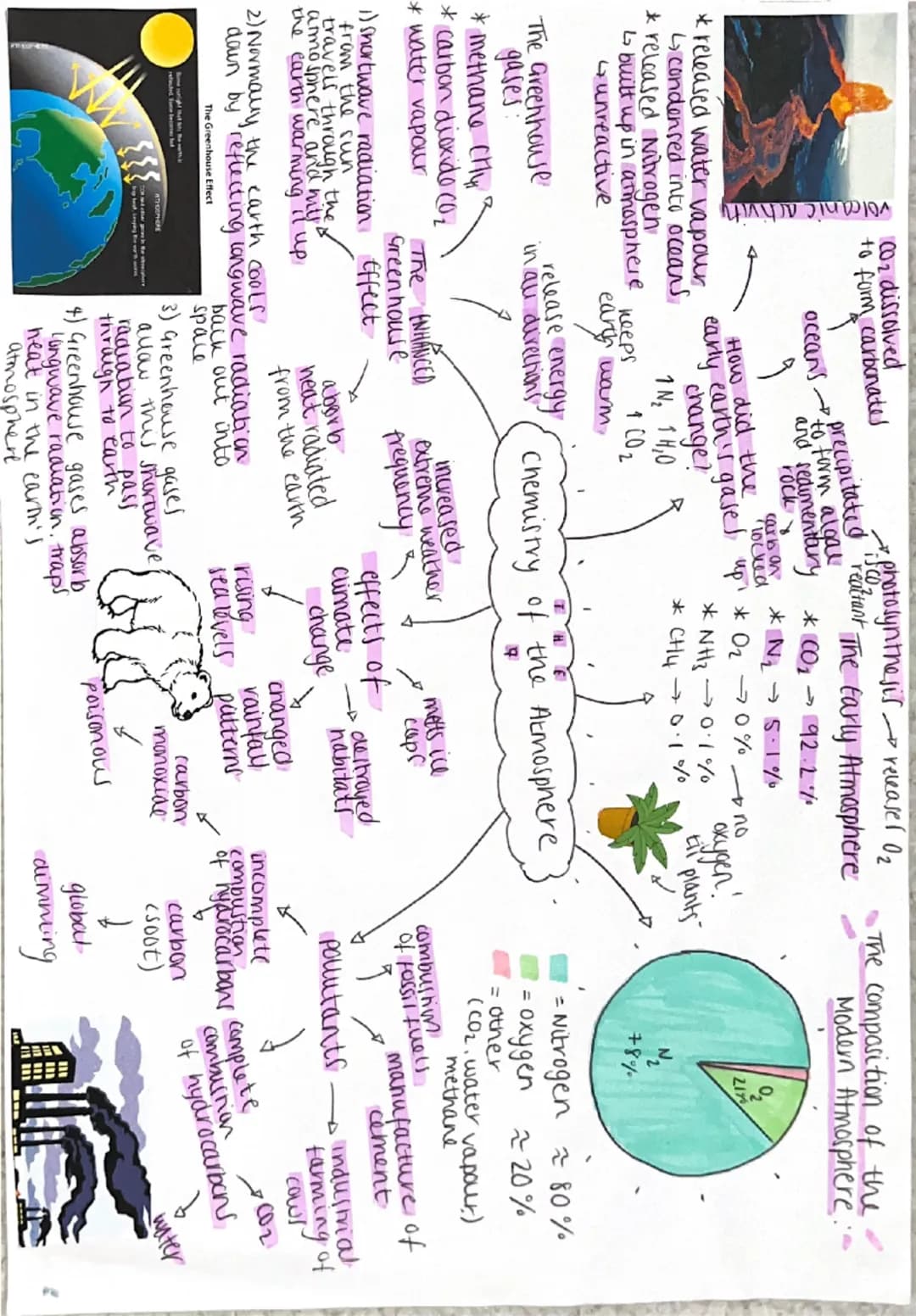
The early atmosphere was mostly carbon dioxide (92.2%) and nitrogen (5.1%), with tiny amounts of ammonia and methane. Water vapour from volcanoes eventually condensed into oceans as the planet cooled down. This was crucial because it set the stage for life to begin.
Everything changed when photosynthesis evolved. Algae and early plants started gobbling up CO₂ and pumping out oxygen instead. Meanwhile, CO₂ dissolved into the oceans and formed carbonates, which turned into sedimentary rocks. This natural process slowly removed most of the carbon dioxide from our atmosphere.
Key Point: The nitrogen released by volcanoes stuck around because it's unreactive - that's why our atmosphere is still mostly nitrogen today!
The Modern Atmosphere and Greenhouse Effect
Today's atmosphere is much friendlier: 78% nitrogen, 21% oxygen, and small amounts of other gases including water vapour, CO₂, and methane. But even these tiny amounts of greenhouse gases have a massive impact on our planet's temperature.
Here's how the greenhouse effect works: shortwave radiation from the sun passes through our atmosphere and warms Earth's surface. Normally, Earth cools down by reflecting longwave radiation back to space. However, greenhouse gases act like a blanket - they let the sun's energy in but trap some of the heat trying to escape.
The enhanced greenhouse effect happens when human activities pump extra greenhouse gases into the atmosphere. Combustion of fossil fuels releases CO₂, whilst farming cattle produces methane. Manufacturing cement and incomplete combustion of hydrocarbons add even more gases to the mix.
Climate Impact: This enhanced effect leads to extreme weather, rising sea levels, melting ice caps, destroyed habitats, and changing rainfall patterns - making climate change one of the biggest challenges of our time.

 Chemistry
 English Literature
 Sociology
 Biology