Giant Covalent Structures & Metallic Bonding
Ever wondered why diamond is so incredibly hard whilst graphite (pencil lead) is soft and slippery? It's all about how the atoms are arranged and bonded together.
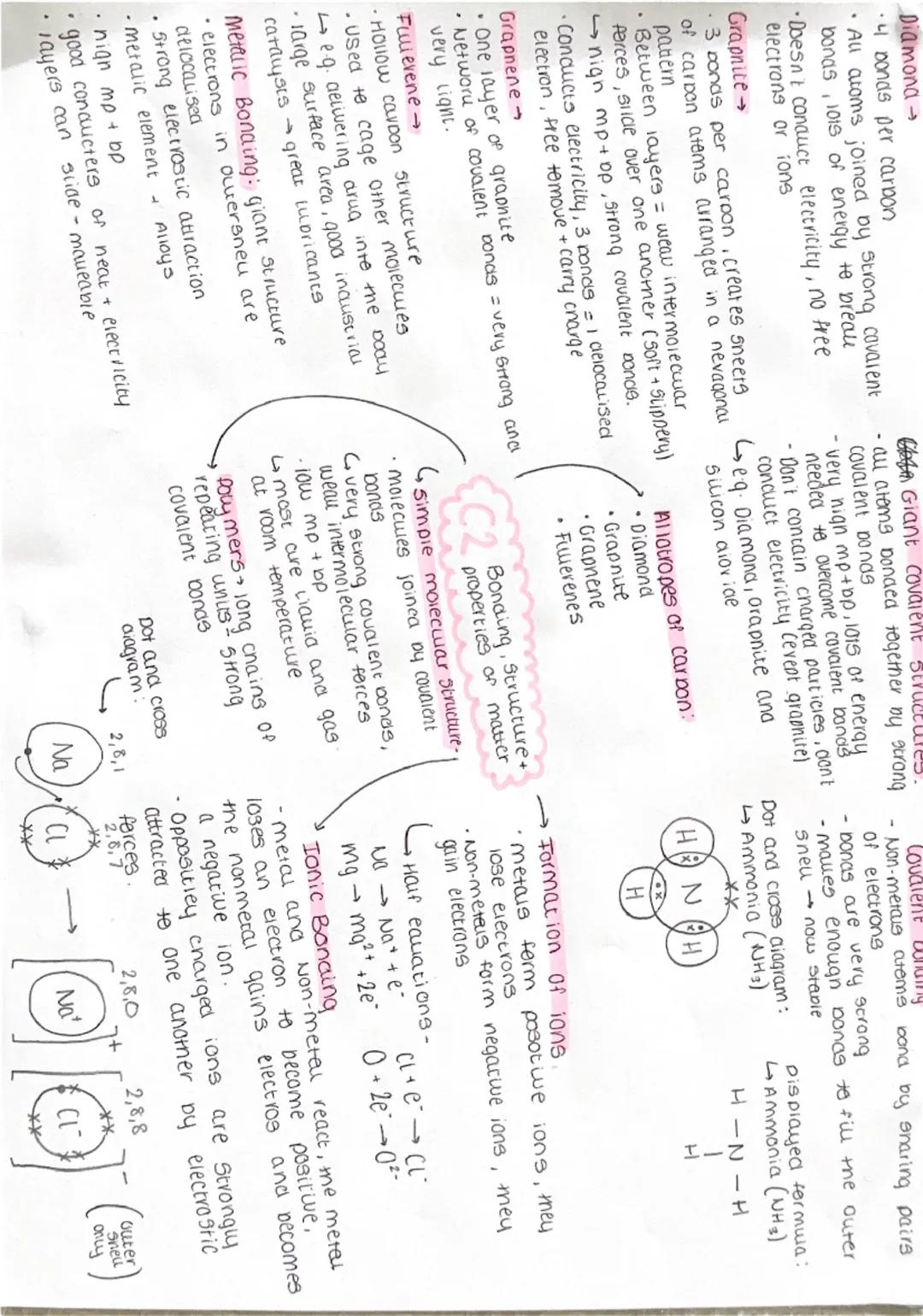
Giant covalent structures are like massive 3D puzzles where every atom is connected by strong covalent bonds. Diamond, graphite, and silicon dioxide all fall into this category. Because breaking these structures means snapping loads of strong bonds, they have very high melting and boiling points. Most don't conduct electricity since there aren't any charged particles floating about.
Diamond has each carbon atom making 4 bonds, creating an incredibly strong 3D network - that's why it's the hardest natural substance. Graphite is different though - each carbon only makes 3 bonds, forming layers that can slide over each other. Those spare electrons become delocalised, meaning graphite can conduct electricity. Graphene (just one layer of graphite) is amazingly strong yet incredibly light, whilst fullerenes create hollow cage-like structures perfect for trapping other molecules.
Key Point: The number of bonds each atom makes completely changes the material's properties - diamond (4 bonds) is hard, graphite (3 bonds) is slippery but conducts electricity.
Metallic bonding works differently - electrons from the outer shells become delocalised, creating a "sea of electrons" that holds everything together through electrostatic attraction. This explains why metals conduct electricity and heat so well, and why you can hammer them into different shapes without them shattering.

 Chemistry
 English Literature
 Sociology
 Biology