
Your body is like an incredibly complex machine where millions... Show more
 Biology
 English Literature
 Sociology
Sign up to see the contentIt's free!
Access to all documents
Improve your grades
Join milions of students
By signing up you accept Terms of Service and Privacy Policy
Subjects
Classic Dramatic Literature
Modern Lyric Poetry
Influential English-Language Authors
Classic and Contemporary Novels
Literary Character Analysis
Romantic and Love Poetry
Reading Analysis and Interpretation
Evidence Analysis and Integration
Author's Stylistic Elements
Figurative Language and Rhetoric
Show all topics
Human Organ Systems
Cellular Organization and Development
Biomolecular Structure and Organization
Enzyme Structure and Regulation
Cellular Organization Types
Biological Homeostatic Processes
Cellular Membrane Structure
Autotrophic Energy Processes
Environmental Sustainability and Impact
Neural Communication Systems
Show all topics
Social Sciences Research & Practice
Social Structure and Mobility
Classic Social Influence Experiments
Social Systems Theories
Family and Relationship Dynamics
Memory Systems and Processes
Neural Bases of Behavior
Social Influence and Attraction
Psychotherapeutic Approaches
Human Agency and Responsibility
Show all topics
Chemical Sciences and Applications
Chemical Bond Types and Properties
Organic Functional Groups
Atomic Structure and Composition
Chromatographic Separation Principles
Chemical Compound Classifications
Electrochemical Cell Systems
Periodic Table Organization
Chemical Reaction Kinetics
Chemical Equation Conservation
Show all topics
Nazi Germany and Holocaust 1933-1945
World Wars and Peace Treaties
European Monarchs and Statesmen
Cold War Global Tensions
Medieval Institutions and Systems
European Renaissance and Enlightenment
Modern Global Environmental-Health Challenges
Modern Military Conflicts
Medieval Migration and Invasions
World Wars Era and Impact
Show all topics
274
•
22 Jan 2026
•

Eniola Hammed
@eniolahammed
Your body is like an incredibly complex machine where millions... Show more






Ever wondered how your body manages to coordinate billions of cells to keep you functioning? It's all about organisation. Cells are the basic building blocks that make up every living thing, including you.
These cells don't work alone - they group together to form tissues, which are collections of similar cells that do the same job. Think of muscle tissue that helps you move or the epithelial tissue that lines your organs.
When different tissues team up, they create organs like your stomach, which combines muscle tissue (to churn food) with epithelial tissue (to line the inside). Finally, organs work together in organ systems - your stomach partners with your liver and intestines to form the digestive system.
Quick Check: Remember the hierarchy - cells → tissues → organs → organ systems. Each level gets more complex!

Your digestive system is basically a sophisticated food processor that breaks down everything you eat into tiny molecules your cells can actually use. The massive burger you had for lunch needs to be completely dismantled before your body can benefit from it.
Your digestive organs each have specific roles: salivary glands and the pancreas produce enzymes that break down food, whilst your stomach creates acid to kill bacteria and help enzymes work properly. The small intestine is where all the useful nutrients get absorbed into your bloodstream.
Your liver produces bile (stored in the gall bladder) which helps digest fats, whilst the large intestine removes water from waste to form faeces. It's like a perfectly coordinated assembly line, but in reverse!
Did You Know?: Your stomach acid is so strong it could dissolve metal, but special mucus protects your stomach lining from damage.

Enzymes are incredible protein molecules that speed up chemical reactions in your body without getting used up themselves. Think of them as highly specialised molecular scissors that can cut up large food molecules or glue small ones together.
Each enzyme has a uniquely shaped active site where the substrate (the molecule being broken down) fits perfectly. This is called the lock and key hypothesis - like a key fitting into a specific lock, only the right substrate can bind to each enzyme's active site.
Temperature and pH are crucial for enzyme function. Most enzymes work best at around 37°C (your body temperature) and a neutral pH of 7. If conditions get too extreme, enzymes become denatured - their shape changes permanently and they stop working entirely.
The three main digestive enzymes are: carbohydrases (break down carbohydrates into sugars), proteases (break proteins into amino acids), and lipases (break fats into fatty acids and glycerol). Each type is produced in specific locations throughout your digestive system.
Exam Tip: Remember that enzymes are very specific - each type only works on particular molecules, just like keys only fit certain locks.

You can identify different biological molecules using simple chemical tests. Benedict's test turns brick red for sugars, iodine test turns blue-black for starch, and Biuret test turns purple for proteins. For lipids, you can use either the emulsion test (adding ethanol creates a cloudy layer) or Sudan III test (creates a red layer on top).
Bile might not sound glamorous, but it's essential for fat digestion. Produced in your liver and stored in your gall bladder, bile has two crucial jobs: neutralising stomach acid when it reaches the small intestine, and breaking large fat droplets into smaller ones (emulsification).
When investigating enzyme activity, scientists often measure how quickly reactions happen at different pH levels. A classic experiment involves tracking how fast amylase breaks down starch using iodine solution - when the starch disappears, the iodine stays brown instead of turning blue-black.
Practical Tip: In enzyme experiments, always control variables like temperature whilst only changing the factor you're investigating (like pH).

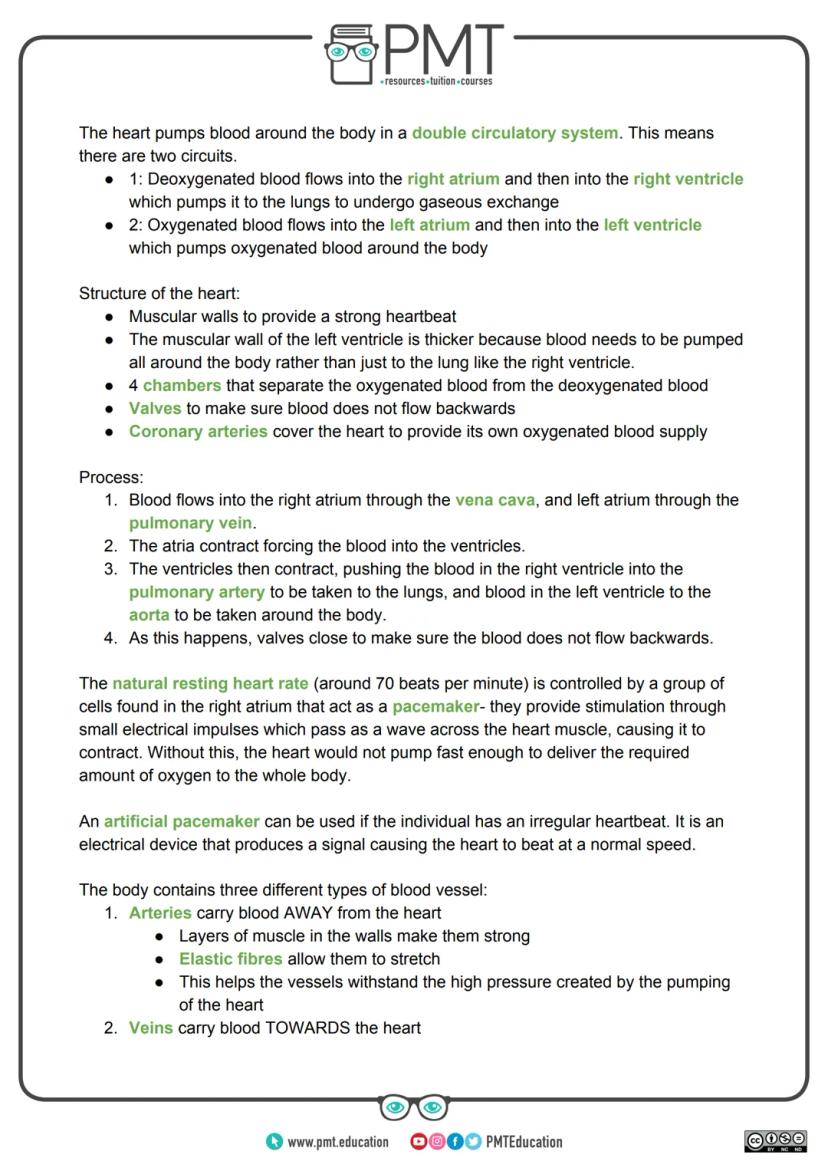
Your heart is an amazing muscular pump that never gets a break, beating roughly 100,000 times every day. It operates a double circulatory system with two separate circuits - one pumping blood to your lungs for oxygen, another pumping oxygenated blood around your entire body.
The heart has four chambers: two atria (top chambers) that receive blood, and two ventricles (bottom chambers) that pump blood out. The left ventricle has much thicker walls because it needs to pump blood all around your body, not just to your lungs like the right ventricle.
Valves ensure blood flows in the right direction, whilst coronary arteries supply the heart muscle itself with oxygen and nutrients. Your heart rate is controlled by a natural pacemaker in the right atrium that sends electrical impulses across the heart muscle.
Blood travels through three types of vessels: arteries (carry blood away from the heart with thick, elastic walls), veins (carry blood back to the heart with valves and wide lumens), and capillaries (tiny vessels with walls just one cell thick for efficient substance exchange).
Memory Aid: Remember 'A' for arteries = Away from heart, and veins have Valves to prevent backflow.

Your lungs are remarkable organs that extract oxygen from air and remove carbon dioxide waste from your blood. Located in your thorax and protected by your ribcage, they're perfectly designed for efficient gas exchange.
Ventilation (breathing) works through pressure changes. When your diaphragm moves down and your intercostal muscles lift your ribcage up and out, your chest volume increases. This creates lower pressure inside your lungs, so air rushes in from the higher pressure environment outside.
Gas exchange happens in tiny air sacs called alveoli. Oxygen diffuses from the alveoli (high concentration) into the blood (low concentration), whilst carbon dioxide moves the opposite way. The alveoli are perfectly adapted with their huge surface area, thin walls for short diffusion distances, and rich blood supply to maintain concentration gradients.
Air travels through an amazing pathway: trachea → bronchi → bronchioles → alveoli. Each step gets smaller and more branched, maximising the surface area for gas exchange.
Key Concept: Diffusion always happens from high to low concentration - oxygen goes into blood, carbon dioxide goes into lungs.
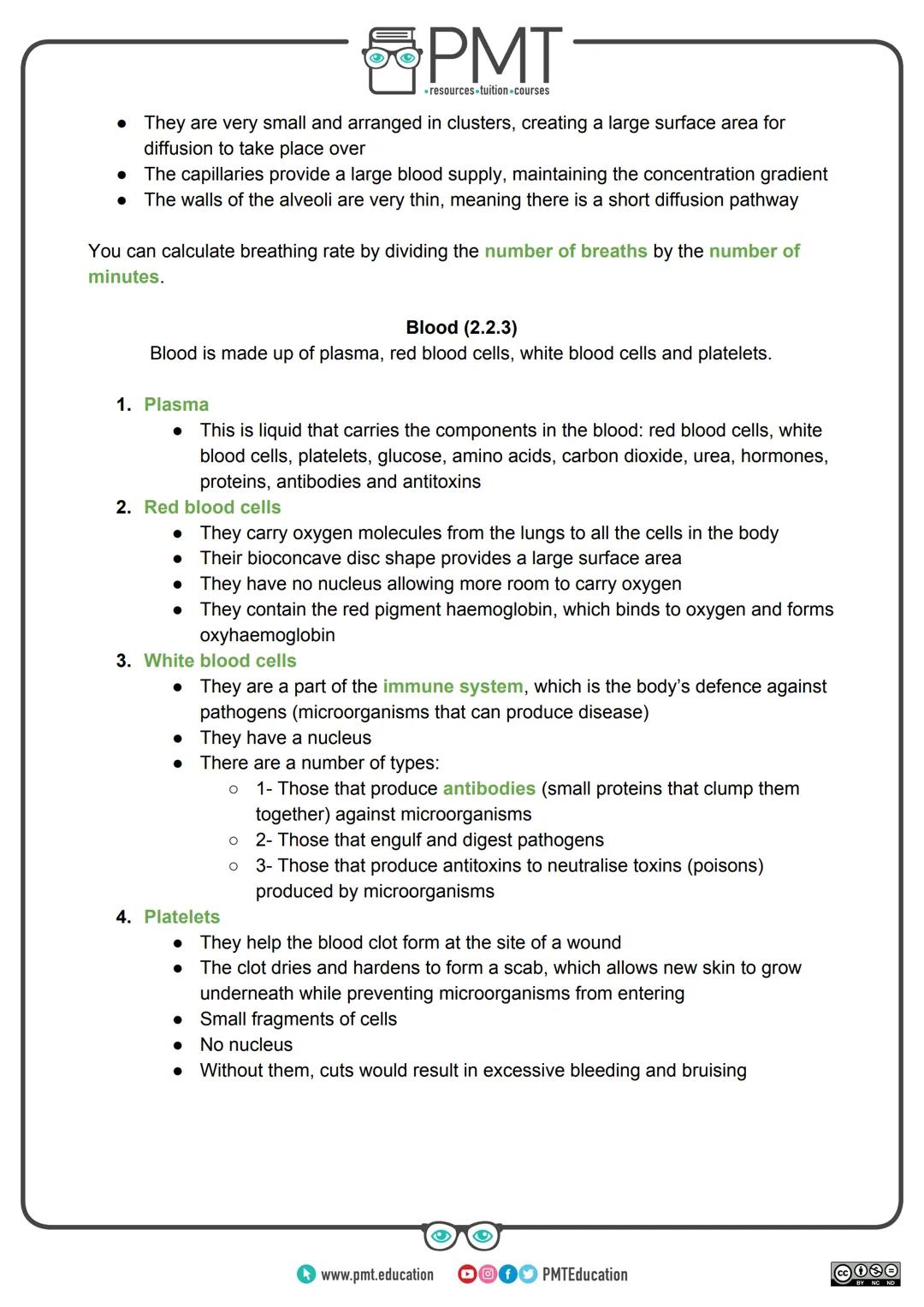
Your blood is far more complex than just a red liquid - it's a sophisticated transport system containing four main components, each with vital roles. Plasma is the liquid part that carries everything else, including nutrients, waste products, hormones, and proteins around your body.
Red blood cells are your oxygen delivery service. Their biconcave shape maximises surface area, they have no nucleus to make room for more haemoglobin (the protein that binds oxygen), and they're packed with this red pigment that forms oxyhaemoglobin when carrying oxygen.
White blood cells are your immune system's soldiers, defending against pathogens . Some produce antibodies that clump pathogens together, others engulf and digest invaders, and some produce antitoxins to neutralise poisons.
Platelets are tiny cell fragments that prevent you from bleeding to death. When you get cut, they help form blood clots that dry into scabs, giving new skin time to grow underneath whilst keeping harmful microorganisms out.
Amazing Fact: A single drop of blood contains millions of red blood cells, thousands of white blood cells, and hundreds of thousands of platelets!
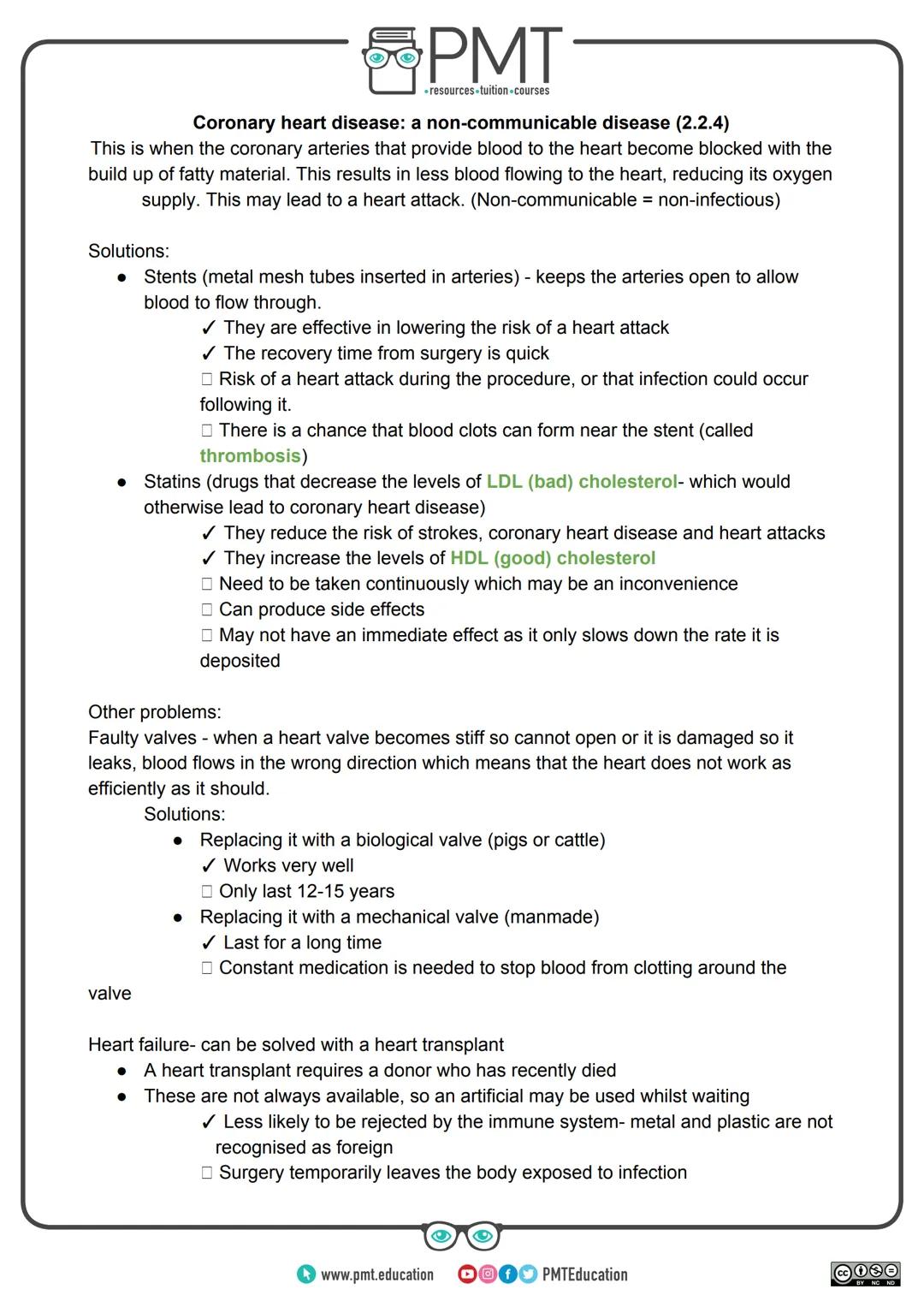
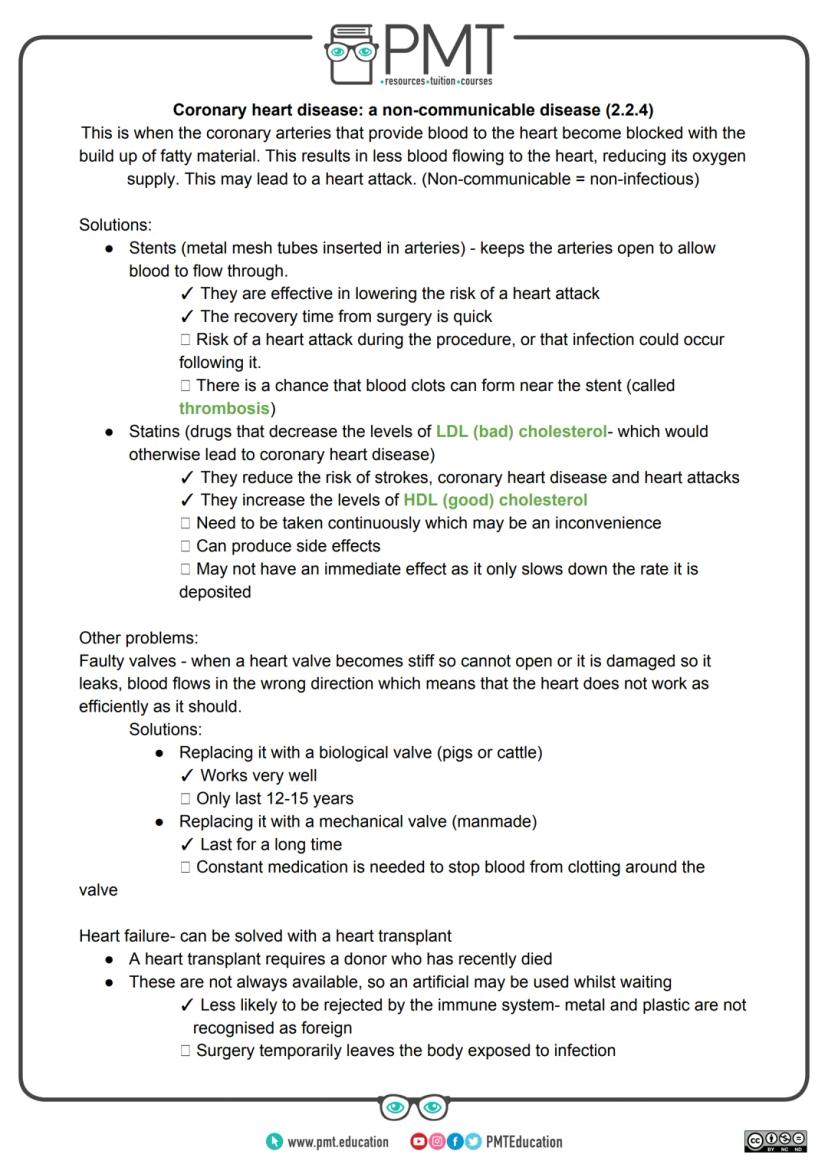
Coronary heart disease happens when the arteries supplying your heart become blocked with fatty material, reducing oxygen supply and potentially causing heart attacks. It's a non-communicable disease, meaning it's not infectious but can be life-threatening.
Stents are tiny metal mesh tubes inserted into blocked arteries to keep them open. They're effective and have quick recovery times, but carry risks of infection, blood clots, and complications during surgery.
Statins are drugs that reduce harmful LDL cholesterol levels in your blood, decreasing the risk of further blockages. They also increase beneficial HDL cholesterol, but need to be taken continuously and can have side effects.
Other heart problems include faulty valves (which can be replaced with biological or mechanical versions) and heart failure (which might require a transplant or artificial heart). Each treatment has benefits and drawbacks - biological valves work well but only last 12-15 years, whilst mechanical valves last longer but require blood-thinning medication.
Prevention: Regular exercise, healthy diet, and not smoking are the best ways to prevent coronary heart disease in the first place.
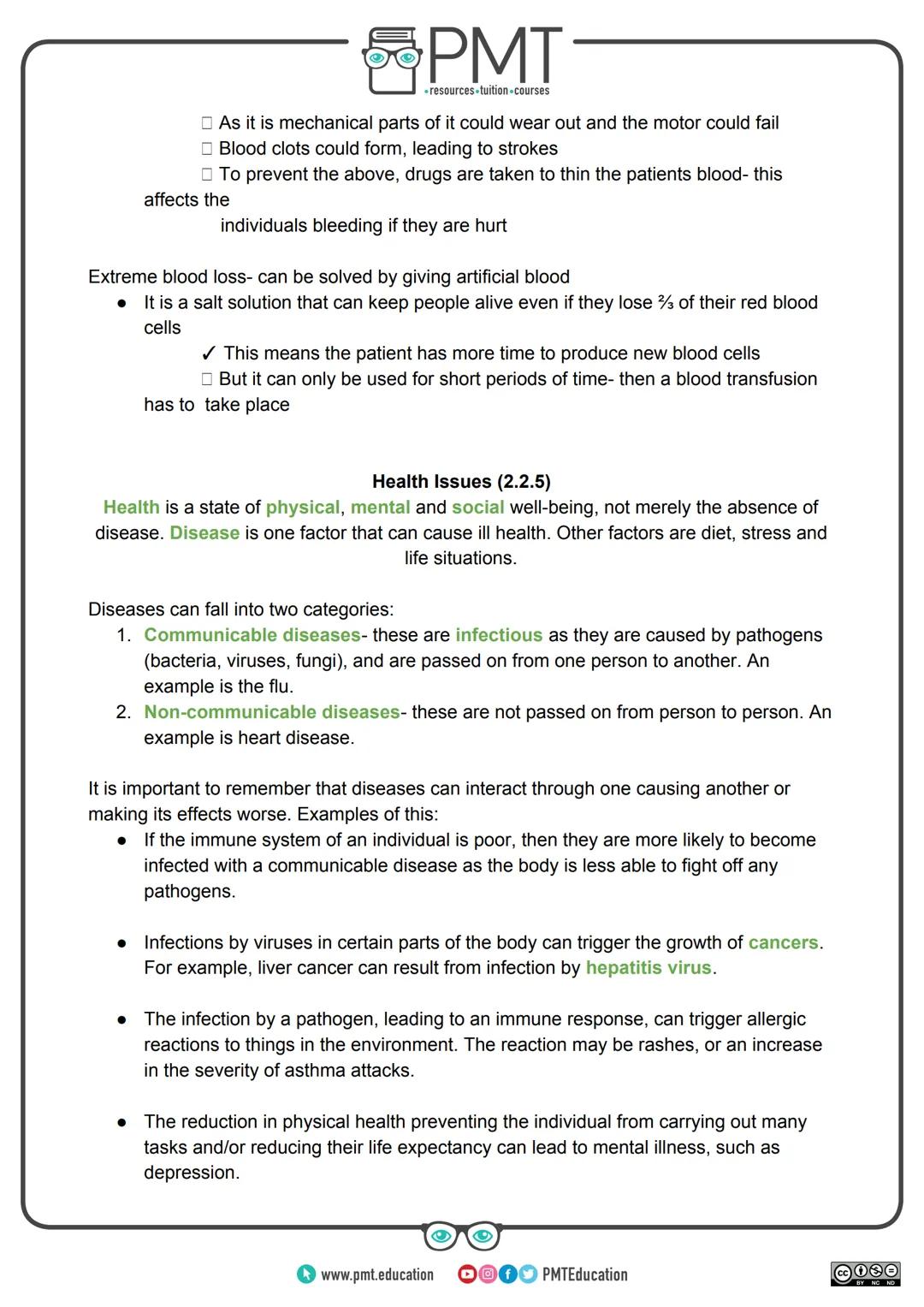
Health isn't just about not being ill - it's a complete state of physical, mental, and social well-being. Many factors including diet, stress, and life situations can affect your health, not just diseases.
Diseases fall into two categories: communicable diseases (infectious ones caused by pathogens like bacteria and viruses) and non-communicable diseases . What's fascinating is how these diseases can interact with each other.
A weakened immune system makes you more vulnerable to infections. Some viral infections can trigger cancers (like hepatitis leading to liver cancer), whilst immune responses to pathogens can cause allergic reactions or worsen asthma. Physical illness often leads to mental health problems like depression.
Diet, stress, and life situations all significantly impact health. Poor nutrition can cause diabetes and obesity, chronic stress contributes to heart disease and mental illness, whilst factors like where you live, your income, and access to healthcare affect both physical and mental well-being.
Real World: Understanding disease patterns helps scientists identify risk factors and develop prevention strategies for entire populations.

Non-communicable diseases create enormous human and financial costs globally. They affect millions of people each year, devastating families and communities whilst draining healthcare resources. When diseases strike working-age populations, entire economies can suffer.
Risk factors increase your likelihood of developing these diseases. They can be lifestyle choices (like diet and exercise), environmental exposures (like asbestos or UV radiation), or genetic factors. Understanding the difference between correlation and causation is crucial - just because two factors are linked doesn't mean one causes the other.
Cardiovascular disease provides clear examples of lifestyle impacts. Diets high in bad cholesterol lead to blocked arteries and high blood pressure. Smoking damages artery walls, making them more likely to become blocked. However, regular exercise strengthens your heart and lowers blood pressure.
Scientists need to find causal mechanisms - actual explanations of how risk factors lead to disease - before they can prove causation. This involves years of research studying large populations and understanding the biological processes involved.
Take Action: Many non-communicable diseases are preventable through lifestyle choices - you have more control over your health than you might think!
Our AI Companion is a student-focused AI tool that offers more than just answers. Built on millions of Knowunity resources, it provides relevant information, personalised study plans, quizzes, and content directly in the chat, adapting to your individual learning journey.
You can download the app from Google Play Store and Apple App Store.
That's right! Enjoy free access to study content, connect with fellow students, and get instant help – all at your fingertips.
App Store
Google Play
The app is very easy to use and well designed. I have found everything I was looking for so far and have been able to learn a lot from the presentations! I will definitely use the app for a class assignment! And of course it also helps a lot as an inspiration.
Stefan S
iOS user
This app is really great. There are so many study notes and help [...]. My problem subject is French, for example, and the app has so many options for help. Thanks to this app, I have improved my French. I would recommend it to anyone.
Samantha Klich
Android user
Wow, I am really amazed. I just tried the app because I've seen it advertised many times and was absolutely stunned. This app is THE HELP you want for school and above all, it offers so many things, such as workouts and fact sheets, which have been VERY helpful to me personally.
Anna
iOS user
Best app on earth! no words because it’s too good
Thomas R
iOS user
Just amazing. Let's me revise 10x better, this app is a quick 10/10. I highly recommend it to anyone. I can watch and search for notes. I can save them in the subject folder. I can revise it any time when I come back. If you haven't tried this app, you're really missing out.
Basil
Android user
This app has made me feel so much more confident in my exam prep, not only through boosting my own self confidence through the features that allow you to connect with others and feel less alone, but also through the way the app itself is centred around making you feel better. It is easy to navigate, fun to use, and helpful to anyone struggling in absolutely any way.
David K
iOS user
The app's just great! All I have to do is enter the topic in the search bar and I get the response real fast. I don't have to watch 10 YouTube videos to understand something, so I'm saving my time. Highly recommended!
Sudenaz Ocak
Android user
In school I was really bad at maths but thanks to the app, I am doing better now. I am so grateful that you made the app.
Greenlight Bonnie
Android user
very reliable app to help and grow your ideas of Maths, English and other related topics in your works. please use this app if your struggling in areas, this app is key for that. wish I'd of done a review before. and it's also free so don't worry about that.
Rohan U
Android user
I know a lot of apps use fake accounts to boost their reviews but this app deserves it all. Originally I was getting 4 in my English exams and this time I got a grade 7. I didn’t even know about this app three days until the exam and it has helped A LOT. Please actually trust me and use it as I’m sure you too will see developments.
Xander S
iOS user
THE QUIZES AND FLASHCARDS ARE SO USEFUL AND I LOVE Knowunity AI. IT ALSO IS LITREALLY LIKE CHATGPT BUT SMARTER!! HELPED ME WITH MY MASCARA PROBLEMS TOO!! AS WELL AS MY REAL SUBJECTS ! DUHHH 😍😁😲🤑💗✨🎀😮
Elisha
iOS user
This apps acc the goat. I find revision so boring but this app makes it so easy to organize it all and then you can ask the freeeee ai to test yourself so good and you can easily upload your own stuff. highly recommend as someone taking mocks now
Paul T
iOS user
The app is very easy to use and well designed. I have found everything I was looking for so far and have been able to learn a lot from the presentations! I will definitely use the app for a class assignment! And of course it also helps a lot as an inspiration.
Stefan S
iOS user
This app is really great. There are so many study notes and help [...]. My problem subject is French, for example, and the app has so many options for help. Thanks to this app, I have improved my French. I would recommend it to anyone.
Samantha Klich
Android user
Wow, I am really amazed. I just tried the app because I've seen it advertised many times and was absolutely stunned. This app is THE HELP you want for school and above all, it offers so many things, such as workouts and fact sheets, which have been VERY helpful to me personally.
Anna
iOS user
Best app on earth! no words because it’s too good
Thomas R
iOS user
Just amazing. Let's me revise 10x better, this app is a quick 10/10. I highly recommend it to anyone. I can watch and search for notes. I can save them in the subject folder. I can revise it any time when I come back. If you haven't tried this app, you're really missing out.
Basil
Android user
This app has made me feel so much more confident in my exam prep, not only through boosting my own self confidence through the features that allow you to connect with others and feel less alone, but also through the way the app itself is centred around making you feel better. It is easy to navigate, fun to use, and helpful to anyone struggling in absolutely any way.
David K
iOS user
The app's just great! All I have to do is enter the topic in the search bar and I get the response real fast. I don't have to watch 10 YouTube videos to understand something, so I'm saving my time. Highly recommended!
Sudenaz Ocak
Android user
In school I was really bad at maths but thanks to the app, I am doing better now. I am so grateful that you made the app.
Greenlight Bonnie
Android user
very reliable app to help and grow your ideas of Maths, English and other related topics in your works. please use this app if your struggling in areas, this app is key for that. wish I'd of done a review before. and it's also free so don't worry about that.
Rohan U
Android user
I know a lot of apps use fake accounts to boost their reviews but this app deserves it all. Originally I was getting 4 in my English exams and this time I got a grade 7. I didn’t even know about this app three days until the exam and it has helped A LOT. Please actually trust me and use it as I’m sure you too will see developments.
Xander S
iOS user
THE QUIZES AND FLASHCARDS ARE SO USEFUL AND I LOVE Knowunity AI. IT ALSO IS LITREALLY LIKE CHATGPT BUT SMARTER!! HELPED ME WITH MY MASCARA PROBLEMS TOO!! AS WELL AS MY REAL SUBJECTS ! DUHHH 😍😁😲🤑💗✨🎀😮
Elisha
iOS user
This apps acc the goat. I find revision so boring but this app makes it so easy to organize it all and then you can ask the freeeee ai to test yourself so good and you can easily upload your own stuff. highly recommend as someone taking mocks now
Paul T
iOS user
Eniola Hammed
@eniolahammed
Your body is like an incredibly complex machine where millions of cells work together in perfect harmony. Understanding how these cells organise into tissues, organs, and organ systems is key to grasping how your body keeps you alive and healthy... Show more
Access to all documents
Improve your grades
Join milions of students
By signing up you accept Terms of Service and Privacy Policy
Ever wondered how your body manages to coordinate billions of cells to keep you functioning? It's all about organisation. Cells are the basic building blocks that make up every living thing, including you.
These cells don't work alone - they group together to form tissues, which are collections of similar cells that do the same job. Think of muscle tissue that helps you move or the epithelial tissue that lines your organs.
When different tissues team up, they create organs like your stomach, which combines muscle tissue (to churn food) with epithelial tissue (to line the inside). Finally, organs work together in organ systems - your stomach partners with your liver and intestines to form the digestive system.
Quick Check: Remember the hierarchy - cells → tissues → organs → organ systems. Each level gets more complex!
Access to all documents
Improve your grades
Join milions of students
By signing up you accept Terms of Service and Privacy Policy
Your digestive system is basically a sophisticated food processor that breaks down everything you eat into tiny molecules your cells can actually use. The massive burger you had for lunch needs to be completely dismantled before your body can benefit from it.
Your digestive organs each have specific roles: salivary glands and the pancreas produce enzymes that break down food, whilst your stomach creates acid to kill bacteria and help enzymes work properly. The small intestine is where all the useful nutrients get absorbed into your bloodstream.
Your liver produces bile (stored in the gall bladder) which helps digest fats, whilst the large intestine removes water from waste to form faeces. It's like a perfectly coordinated assembly line, but in reverse!
Did You Know?: Your stomach acid is so strong it could dissolve metal, but special mucus protects your stomach lining from damage.
Access to all documents
Improve your grades
Join milions of students
By signing up you accept Terms of Service and Privacy Policy
Enzymes are incredible protein molecules that speed up chemical reactions in your body without getting used up themselves. Think of them as highly specialised molecular scissors that can cut up large food molecules or glue small ones together.
Each enzyme has a uniquely shaped active site where the substrate (the molecule being broken down) fits perfectly. This is called the lock and key hypothesis - like a key fitting into a specific lock, only the right substrate can bind to each enzyme's active site.
Temperature and pH are crucial for enzyme function. Most enzymes work best at around 37°C (your body temperature) and a neutral pH of 7. If conditions get too extreme, enzymes become denatured - their shape changes permanently and they stop working entirely.
The three main digestive enzymes are: carbohydrases (break down carbohydrates into sugars), proteases (break proteins into amino acids), and lipases (break fats into fatty acids and glycerol). Each type is produced in specific locations throughout your digestive system.
Exam Tip: Remember that enzymes are very specific - each type only works on particular molecules, just like keys only fit certain locks.
Access to all documents
Improve your grades
Join milions of students
By signing up you accept Terms of Service and Privacy Policy
You can identify different biological molecules using simple chemical tests. Benedict's test turns brick red for sugars, iodine test turns blue-black for starch, and Biuret test turns purple for proteins. For lipids, you can use either the emulsion test (adding ethanol creates a cloudy layer) or Sudan III test (creates a red layer on top).
Bile might not sound glamorous, but it's essential for fat digestion. Produced in your liver and stored in your gall bladder, bile has two crucial jobs: neutralising stomach acid when it reaches the small intestine, and breaking large fat droplets into smaller ones (emulsification).
When investigating enzyme activity, scientists often measure how quickly reactions happen at different pH levels. A classic experiment involves tracking how fast amylase breaks down starch using iodine solution - when the starch disappears, the iodine stays brown instead of turning blue-black.
Practical Tip: In enzyme experiments, always control variables like temperature whilst only changing the factor you're investigating (like pH).
Access to all documents
Improve your grades
Join milions of students
By signing up you accept Terms of Service and Privacy Policy
Your heart is an amazing muscular pump that never gets a break, beating roughly 100,000 times every day. It operates a double circulatory system with two separate circuits - one pumping blood to your lungs for oxygen, another pumping oxygenated blood around your entire body.
The heart has four chambers: two atria (top chambers) that receive blood, and two ventricles (bottom chambers) that pump blood out. The left ventricle has much thicker walls because it needs to pump blood all around your body, not just to your lungs like the right ventricle.
Valves ensure blood flows in the right direction, whilst coronary arteries supply the heart muscle itself with oxygen and nutrients. Your heart rate is controlled by a natural pacemaker in the right atrium that sends electrical impulses across the heart muscle.
Blood travels through three types of vessels: arteries (carry blood away from the heart with thick, elastic walls), veins (carry blood back to the heart with valves and wide lumens), and capillaries (tiny vessels with walls just one cell thick for efficient substance exchange).
Memory Aid: Remember 'A' for arteries = Away from heart, and veins have Valves to prevent backflow.
Access to all documents
Improve your grades
Join milions of students
By signing up you accept Terms of Service and Privacy Policy
Your lungs are remarkable organs that extract oxygen from air and remove carbon dioxide waste from your blood. Located in your thorax and protected by your ribcage, they're perfectly designed for efficient gas exchange.
Ventilation (breathing) works through pressure changes. When your diaphragm moves down and your intercostal muscles lift your ribcage up and out, your chest volume increases. This creates lower pressure inside your lungs, so air rushes in from the higher pressure environment outside.
Gas exchange happens in tiny air sacs called alveoli. Oxygen diffuses from the alveoli (high concentration) into the blood (low concentration), whilst carbon dioxide moves the opposite way. The alveoli are perfectly adapted with their huge surface area, thin walls for short diffusion distances, and rich blood supply to maintain concentration gradients.
Air travels through an amazing pathway: trachea → bronchi → bronchioles → alveoli. Each step gets smaller and more branched, maximising the surface area for gas exchange.
Key Concept: Diffusion always happens from high to low concentration - oxygen goes into blood, carbon dioxide goes into lungs.
Access to all documents
Improve your grades
Join milions of students
By signing up you accept Terms of Service and Privacy Policy
Your blood is far more complex than just a red liquid - it's a sophisticated transport system containing four main components, each with vital roles. Plasma is the liquid part that carries everything else, including nutrients, waste products, hormones, and proteins around your body.
Red blood cells are your oxygen delivery service. Their biconcave shape maximises surface area, they have no nucleus to make room for more haemoglobin (the protein that binds oxygen), and they're packed with this red pigment that forms oxyhaemoglobin when carrying oxygen.
White blood cells are your immune system's soldiers, defending against pathogens . Some produce antibodies that clump pathogens together, others engulf and digest invaders, and some produce antitoxins to neutralise poisons.
Platelets are tiny cell fragments that prevent you from bleeding to death. When you get cut, they help form blood clots that dry into scabs, giving new skin time to grow underneath whilst keeping harmful microorganisms out.
Amazing Fact: A single drop of blood contains millions of red blood cells, thousands of white blood cells, and hundreds of thousands of platelets!
Access to all documents
Improve your grades
Join milions of students
By signing up you accept Terms of Service and Privacy Policy
Coronary heart disease happens when the arteries supplying your heart become blocked with fatty material, reducing oxygen supply and potentially causing heart attacks. It's a non-communicable disease, meaning it's not infectious but can be life-threatening.
Stents are tiny metal mesh tubes inserted into blocked arteries to keep them open. They're effective and have quick recovery times, but carry risks of infection, blood clots, and complications during surgery.
Statins are drugs that reduce harmful LDL cholesterol levels in your blood, decreasing the risk of further blockages. They also increase beneficial HDL cholesterol, but need to be taken continuously and can have side effects.
Other heart problems include faulty valves (which can be replaced with biological or mechanical versions) and heart failure (which might require a transplant or artificial heart). Each treatment has benefits and drawbacks - biological valves work well but only last 12-15 years, whilst mechanical valves last longer but require blood-thinning medication.
Prevention: Regular exercise, healthy diet, and not smoking are the best ways to prevent coronary heart disease in the first place.
Access to all documents
Improve your grades
Join milions of students
By signing up you accept Terms of Service and Privacy Policy
Health isn't just about not being ill - it's a complete state of physical, mental, and social well-being. Many factors including diet, stress, and life situations can affect your health, not just diseases.
Diseases fall into two categories: communicable diseases (infectious ones caused by pathogens like bacteria and viruses) and non-communicable diseases . What's fascinating is how these diseases can interact with each other.
A weakened immune system makes you more vulnerable to infections. Some viral infections can trigger cancers (like hepatitis leading to liver cancer), whilst immune responses to pathogens can cause allergic reactions or worsen asthma. Physical illness often leads to mental health problems like depression.
Diet, stress, and life situations all significantly impact health. Poor nutrition can cause diabetes and obesity, chronic stress contributes to heart disease and mental illness, whilst factors like where you live, your income, and access to healthcare affect both physical and mental well-being.
Real World: Understanding disease patterns helps scientists identify risk factors and develop prevention strategies for entire populations.
Access to all documents
Improve your grades
Join milions of students
By signing up you accept Terms of Service and Privacy Policy
Non-communicable diseases create enormous human and financial costs globally. They affect millions of people each year, devastating families and communities whilst draining healthcare resources. When diseases strike working-age populations, entire economies can suffer.
Risk factors increase your likelihood of developing these diseases. They can be lifestyle choices (like diet and exercise), environmental exposures (like asbestos or UV radiation), or genetic factors. Understanding the difference between correlation and causation is crucial - just because two factors are linked doesn't mean one causes the other.
Cardiovascular disease provides clear examples of lifestyle impacts. Diets high in bad cholesterol lead to blocked arteries and high blood pressure. Smoking damages artery walls, making them more likely to become blocked. However, regular exercise strengthens your heart and lowers blood pressure.
Scientists need to find causal mechanisms - actual explanations of how risk factors lead to disease - before they can prove causation. This involves years of research studying large populations and understanding the biological processes involved.
Take Action: Many non-communicable diseases are preventable through lifestyle choices - you have more control over your health than you might think!
Our AI Companion is a student-focused AI tool that offers more than just answers. Built on millions of Knowunity resources, it provides relevant information, personalised study plans, quizzes, and content directly in the chat, adapting to your individual learning journey.
You can download the app from Google Play Store and Apple App Store.
That's right! Enjoy free access to study content, connect with fellow students, and get instant help – all at your fingertips.
5
Smart Tools NEW
Transform this note into: ✓ 50+ Practice Questions ✓ Interactive Flashcards ✓ Full Mock Exam ✓ Essay Outlines
App Store
Google Play
The app is very easy to use and well designed. I have found everything I was looking for so far and have been able to learn a lot from the presentations! I will definitely use the app for a class assignment! And of course it also helps a lot as an inspiration.
Stefan S
iOS user
This app is really great. There are so many study notes and help [...]. My problem subject is French, for example, and the app has so many options for help. Thanks to this app, I have improved my French. I would recommend it to anyone.
Samantha Klich
Android user
Wow, I am really amazed. I just tried the app because I've seen it advertised many times and was absolutely stunned. This app is THE HELP you want for school and above all, it offers so many things, such as workouts and fact sheets, which have been VERY helpful to me personally.
Anna
iOS user
Best app on earth! no words because it’s too good
Thomas R
iOS user
Just amazing. Let's me revise 10x better, this app is a quick 10/10. I highly recommend it to anyone. I can watch and search for notes. I can save them in the subject folder. I can revise it any time when I come back. If you haven't tried this app, you're really missing out.
Basil
Android user
This app has made me feel so much more confident in my exam prep, not only through boosting my own self confidence through the features that allow you to connect with others and feel less alone, but also through the way the app itself is centred around making you feel better. It is easy to navigate, fun to use, and helpful to anyone struggling in absolutely any way.
David K
iOS user
The app's just great! All I have to do is enter the topic in the search bar and I get the response real fast. I don't have to watch 10 YouTube videos to understand something, so I'm saving my time. Highly recommended!
Sudenaz Ocak
Android user
In school I was really bad at maths but thanks to the app, I am doing better now. I am so grateful that you made the app.
Greenlight Bonnie
Android user
very reliable app to help and grow your ideas of Maths, English and other related topics in your works. please use this app if your struggling in areas, this app is key for that. wish I'd of done a review before. and it's also free so don't worry about that.
Rohan U
Android user
I know a lot of apps use fake accounts to boost their reviews but this app deserves it all. Originally I was getting 4 in my English exams and this time I got a grade 7. I didn’t even know about this app three days until the exam and it has helped A LOT. Please actually trust me and use it as I’m sure you too will see developments.
Xander S
iOS user
THE QUIZES AND FLASHCARDS ARE SO USEFUL AND I LOVE Knowunity AI. IT ALSO IS LITREALLY LIKE CHATGPT BUT SMARTER!! HELPED ME WITH MY MASCARA PROBLEMS TOO!! AS WELL AS MY REAL SUBJECTS ! DUHHH 😍😁😲🤑💗✨🎀😮
Elisha
iOS user
This apps acc the goat. I find revision so boring but this app makes it so easy to organize it all and then you can ask the freeeee ai to test yourself so good and you can easily upload your own stuff. highly recommend as someone taking mocks now
Paul T
iOS user
The app is very easy to use and well designed. I have found everything I was looking for so far and have been able to learn a lot from the presentations! I will definitely use the app for a class assignment! And of course it also helps a lot as an inspiration.
Stefan S
iOS user
This app is really great. There are so many study notes and help [...]. My problem subject is French, for example, and the app has so many options for help. Thanks to this app, I have improved my French. I would recommend it to anyone.
Samantha Klich
Android user
Wow, I am really amazed. I just tried the app because I've seen it advertised many times and was absolutely stunned. This app is THE HELP you want for school and above all, it offers so many things, such as workouts and fact sheets, which have been VERY helpful to me personally.
Anna
iOS user
Best app on earth! no words because it’s too good
Thomas R
iOS user
Just amazing. Let's me revise 10x better, this app is a quick 10/10. I highly recommend it to anyone. I can watch and search for notes. I can save them in the subject folder. I can revise it any time when I come back. If you haven't tried this app, you're really missing out.
Basil
Android user
This app has made me feel so much more confident in my exam prep, not only through boosting my own self confidence through the features that allow you to connect with others and feel less alone, but also through the way the app itself is centred around making you feel better. It is easy to navigate, fun to use, and helpful to anyone struggling in absolutely any way.
David K
iOS user
The app's just great! All I have to do is enter the topic in the search bar and I get the response real fast. I don't have to watch 10 YouTube videos to understand something, so I'm saving my time. Highly recommended!
Sudenaz Ocak
Android user
In school I was really bad at maths but thanks to the app, I am doing better now. I am so grateful that you made the app.
Greenlight Bonnie
Android user
very reliable app to help and grow your ideas of Maths, English and other related topics in your works. please use this app if your struggling in areas, this app is key for that. wish I'd of done a review before. and it's also free so don't worry about that.
Rohan U
Android user
I know a lot of apps use fake accounts to boost their reviews but this app deserves it all. Originally I was getting 4 in my English exams and this time I got a grade 7. I didn’t even know about this app three days until the exam and it has helped A LOT. Please actually trust me and use it as I’m sure you too will see developments.
Xander S
iOS user
THE QUIZES AND FLASHCARDS ARE SO USEFUL AND I LOVE Knowunity AI. IT ALSO IS LITREALLY LIKE CHATGPT BUT SMARTER!! HELPED ME WITH MY MASCARA PROBLEMS TOO!! AS WELL AS MY REAL SUBJECTS ! DUHHH 😍😁😲🤑💗✨🎀😮
Elisha
iOS user
This apps acc the goat. I find revision so boring but this app makes it so easy to organize it all and then you can ask the freeeee ai to test yourself so good and you can easily upload your own stuff. highly recommend as someone taking mocks now
Paul T
iOS user