
Ever wondered how your body automatically keeps everything running smoothly... Show more
 English Literature
 Sociology
Sign up to see the contentIt's free!
Access to all documents
Improve your grades
Join milions of students
Knowunity AI
Subjects
Triangle Congruence and Similarity Theorems
Triangle Properties and Classification
Linear Equations and Graphs
Geometric Angle Relationships
Trigonometric Functions and Identities
Equation Solving Techniques
Circle Geometry Fundamentals
Division Operations and Methods
Basic Differentiation Rules
Exponent and Logarithm Properties
Show all topics
Human Organ Systems
Reproductive Cell Cycles
Biological Sciences Subdisciplines
Cellular Energy Metabolism
Autotrophic Energy Processes
Inheritance Patterns and Principles
Biomolecular Structure and Organization
Cell Cycle and Division Mechanics
Cellular Organization and Development
Biological Structural Organization
Show all topics
Chemical Sciences and Applications
Atomic Structure and Composition
Molecular Electron Structure Representation
Atomic Electron Behavior
Matter Properties and Water
Mole Concept and Calculations
Gas Laws and Behavior
Periodic Table Organization
Chemical Thermodynamics Fundamentals
Chemical Bond Types and Properties
Show all topics
European Renaissance and Enlightenment
European Cultural Movements 800-1920
American Revolution Era 1763-1797
American Civil War 1861-1865
Global Imperial Systems
Mongol and Chinese Dynasties
U.S. Presidents and World Leaders
Historical Sources and Documentation
World Wars Era and Impact
World Religious Systems
Show all topics
Classic and Contemporary Novels
Literary Character Analysis
Rhetorical Theory and Practice
Classic Literary Narratives
Reading Analysis and Interpretation
Narrative Structure and Techniques
English Language Components
Influential English-Language Authors
Basic Sentence Structure
Narrative Voice and Perspective
Show all topics
535
•
Updated Mar 14, 2026
•
Molly
@mollwess07
Ever wondered how your body automatically keeps everything running smoothly... Show more
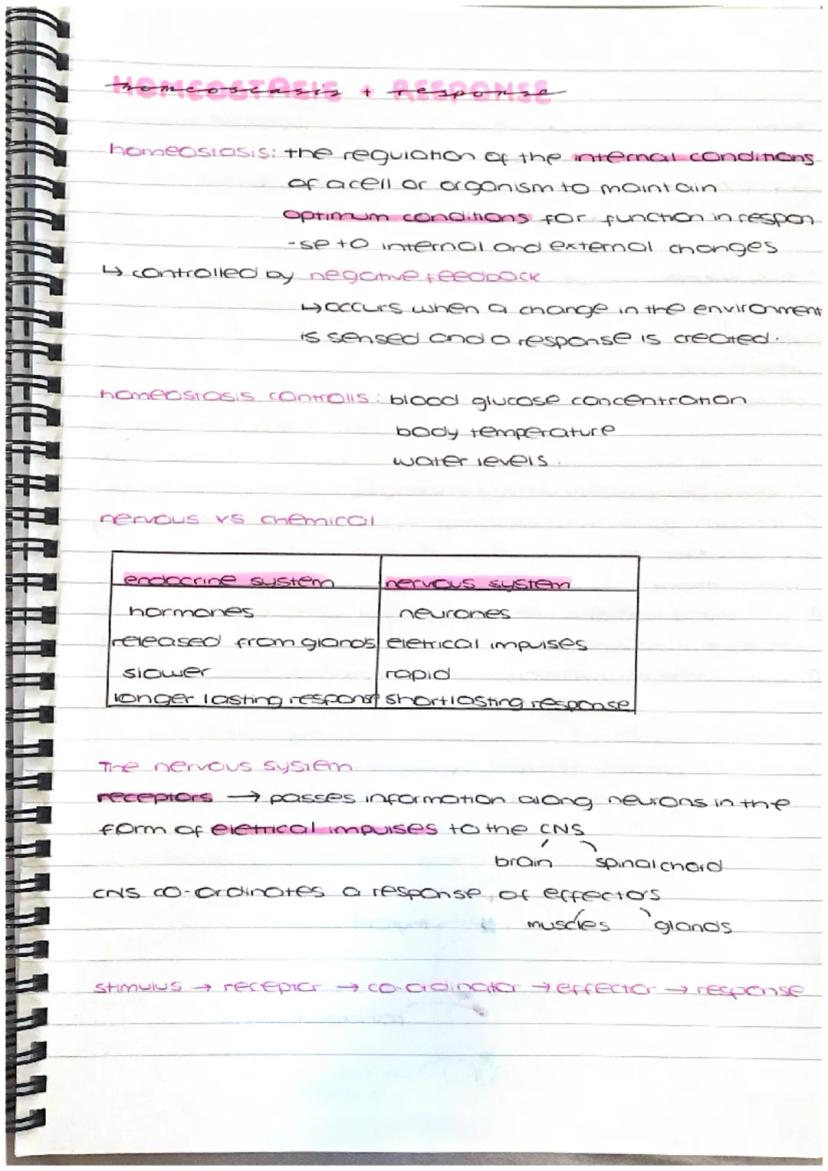
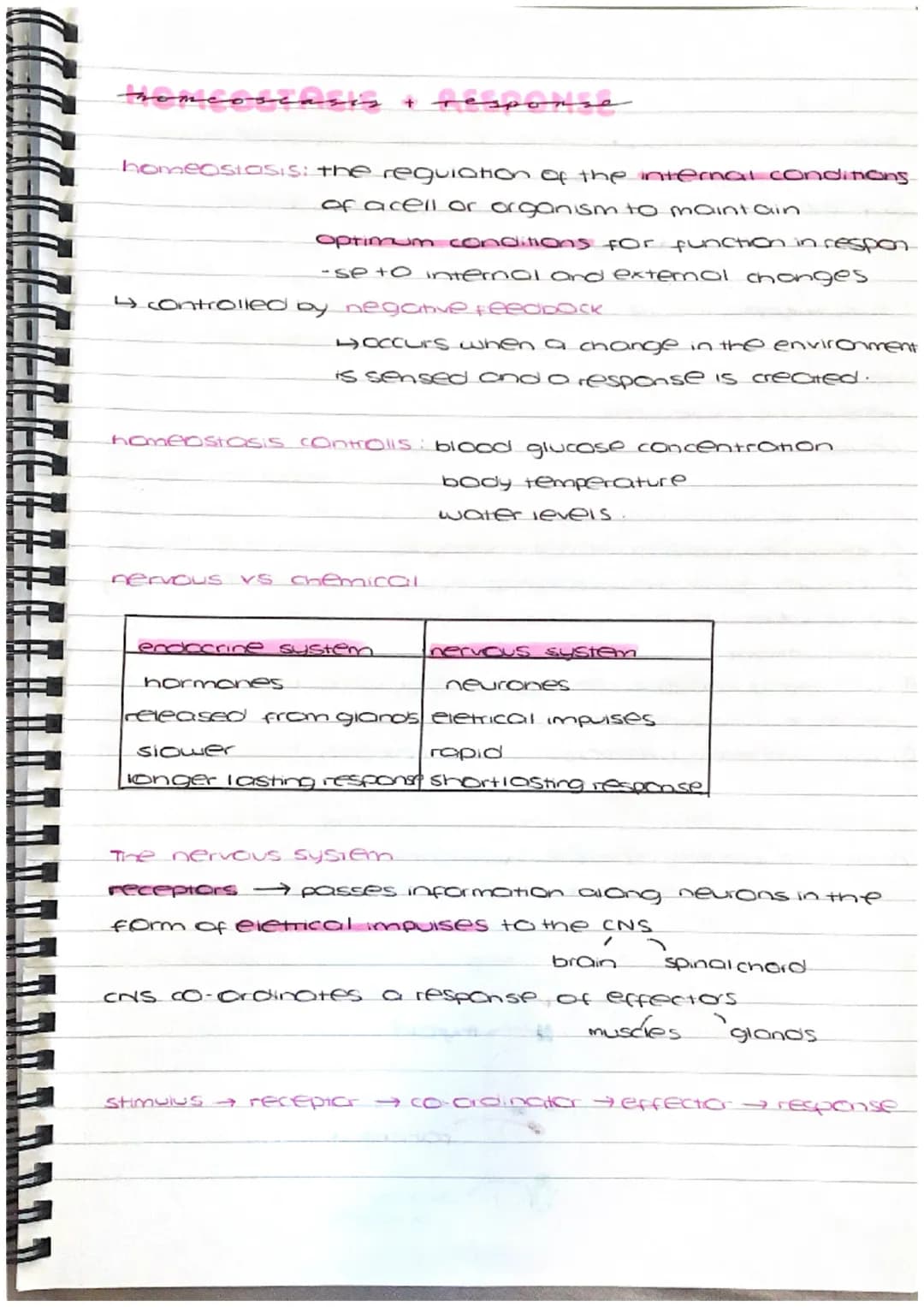
Homeostasis is basically your body's internal thermostat and control centre rolled into one. It's the process that keeps your blood sugar levels steady, maintains your body temperature, and balances your water levels - all without you having to consciously think about it.
Your body uses negative feedback to maintain this balance. When something changes (like your temperature rising), sensors detect it and trigger responses to bring things back to normal. Think of it like your heating system at home - when it gets too cold, the thermostat kicks the heating on.
You've got two main communication networks working 24/7 to coordinate these responses. The nervous system uses electrical impulses that travel super fast but don't last long - perfect for quick reactions. The endocrine system uses hormones carried in your blood, which work slower but have longer-lasting effects.
Quick Tip: Remember that receptors detect changes, the CNS (brain and spinal cord) processes the information, and effectors (muscles and glands) carry out the response!
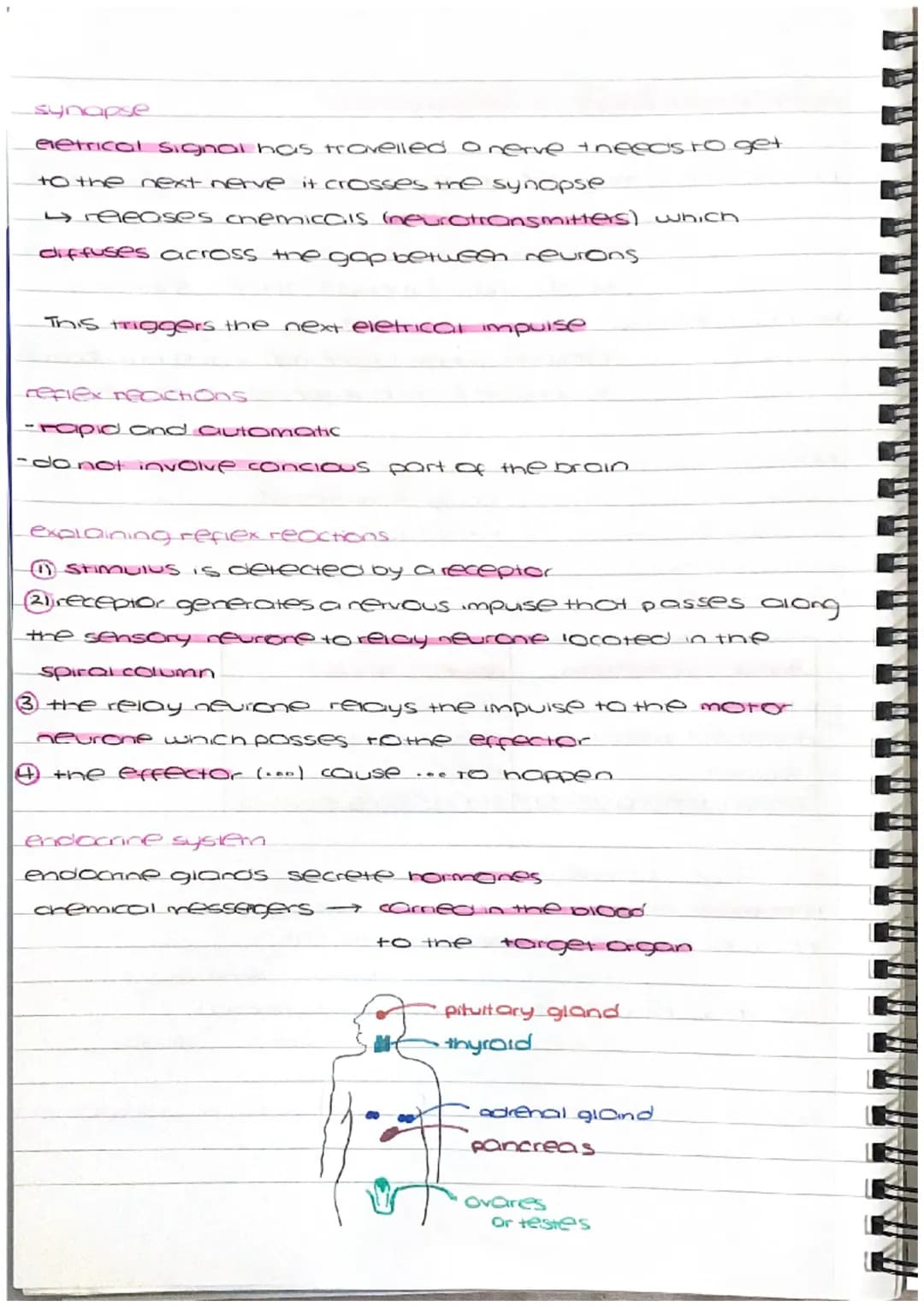
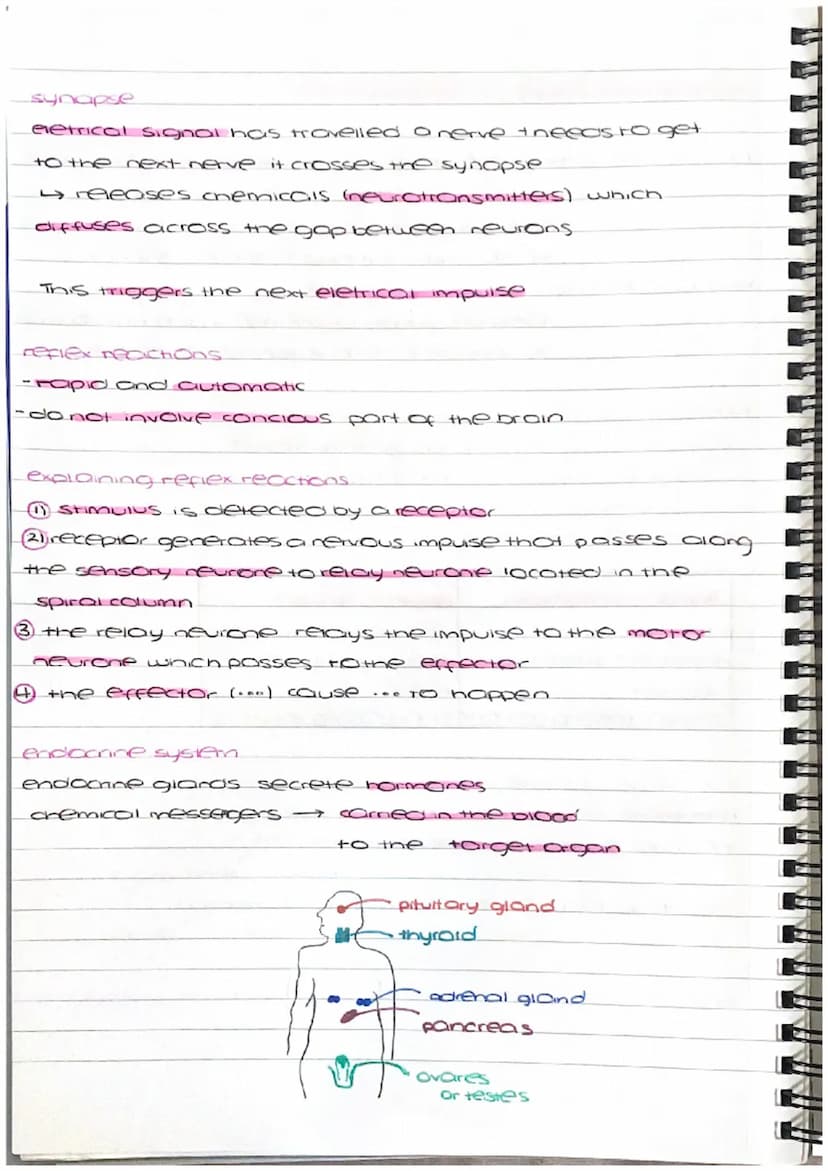
When an electrical signal reaches the end of a nerve, it can't just jump to the next one like electricity through a wire. Instead, it has to cross a tiny gap called a synapse by releasing chemical messengers called neurotransmitters.
Reflex reactions are your nervous system's emergency responses - they're rapid, automatic, and completely bypass your conscious brain. That's why you pull your hand away from something hot before you even realise it's burning you!
Here's how a reflex works: a stimulus hits a receptor, which sends an impulse along a sensory neurone to a relay neurone in your spinal cord. This relay neurone immediately passes the message to a motor neurone, which triggers the effector to respond.
Meanwhile, your endocrine system consists of various glands scattered throughout your body. These glands secrete hormones - chemical messengers that travel through your bloodstream to reach specific target organs where they trigger responses.
Remember: Reflexes are so fast because they don't waste time going to your brain first - the spinal cord handles everything!
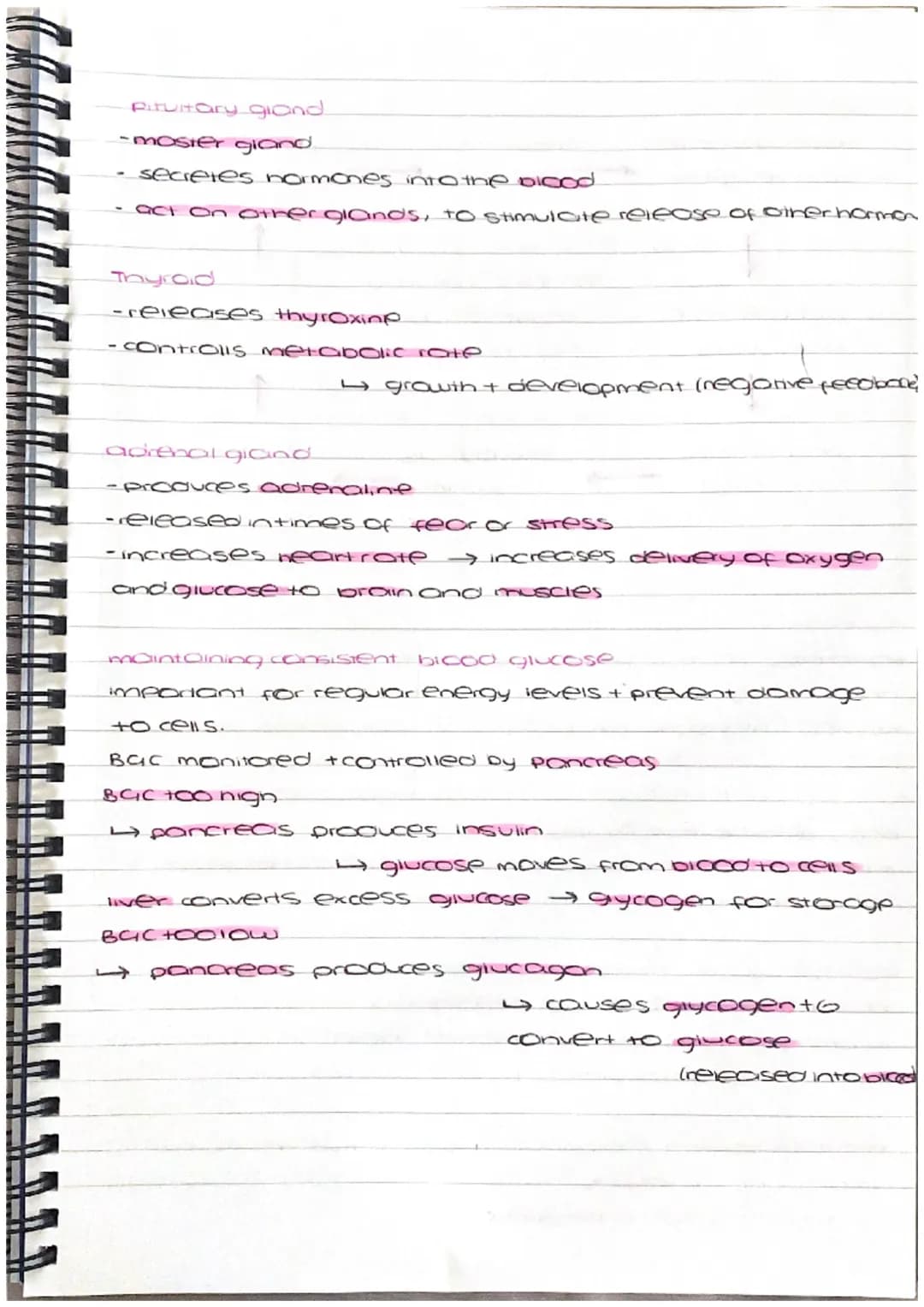
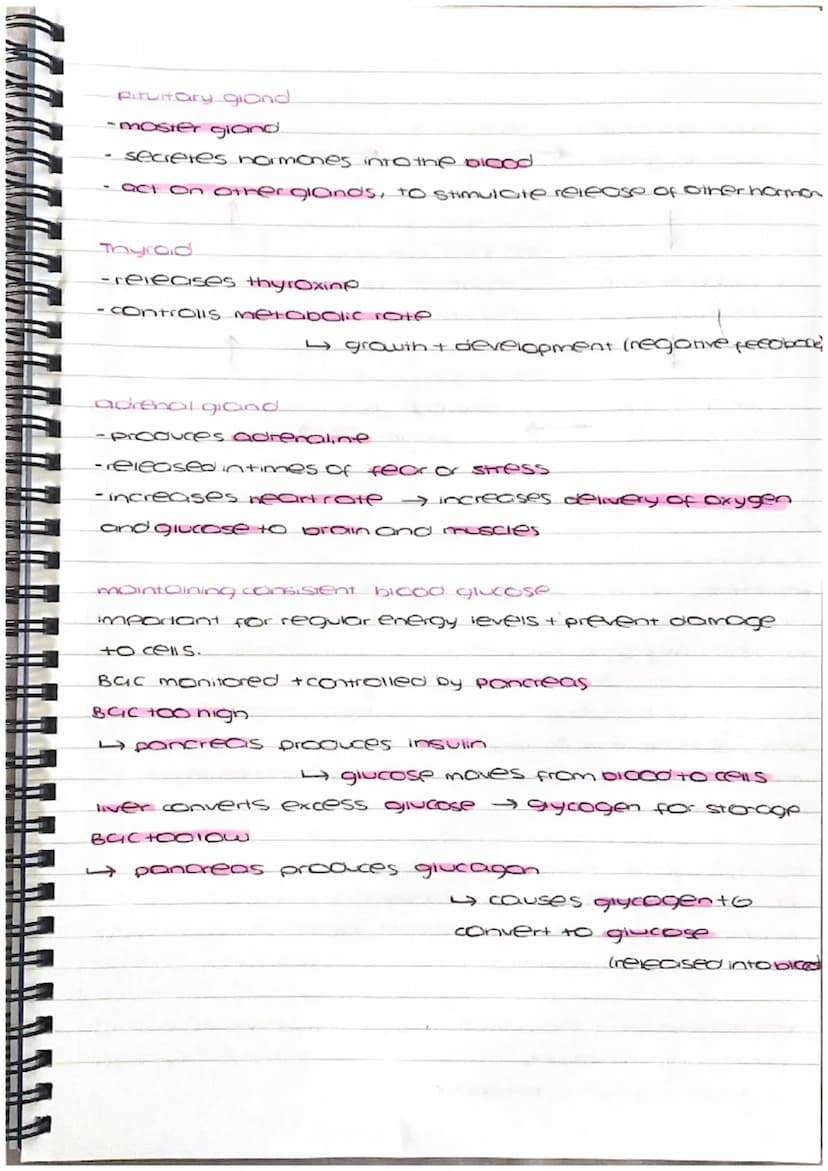
The pituitary gland is often called the "master gland" because it controls other glands by releasing hormones that tell them what to do. Your thyroid releases thyroxine to control your metabolic rate and help with growth, whilst your adrenal glands pump out adrenaline when you're stressed or scared.
Blood glucose control is absolutely crucial for keeping your energy levels stable and preventing cell damage. Your pancreas acts like a glucose monitoring station, constantly checking your blood sugar levels.
When blood glucose gets too high, your pancreas releases insulin, which helps glucose move from your blood into your cells. Your liver also converts excess glucose into glycogen for storage. When blood glucose drops too low, your pancreas releases glucagon, which tells your liver to convert stored glycogen back into glucose.
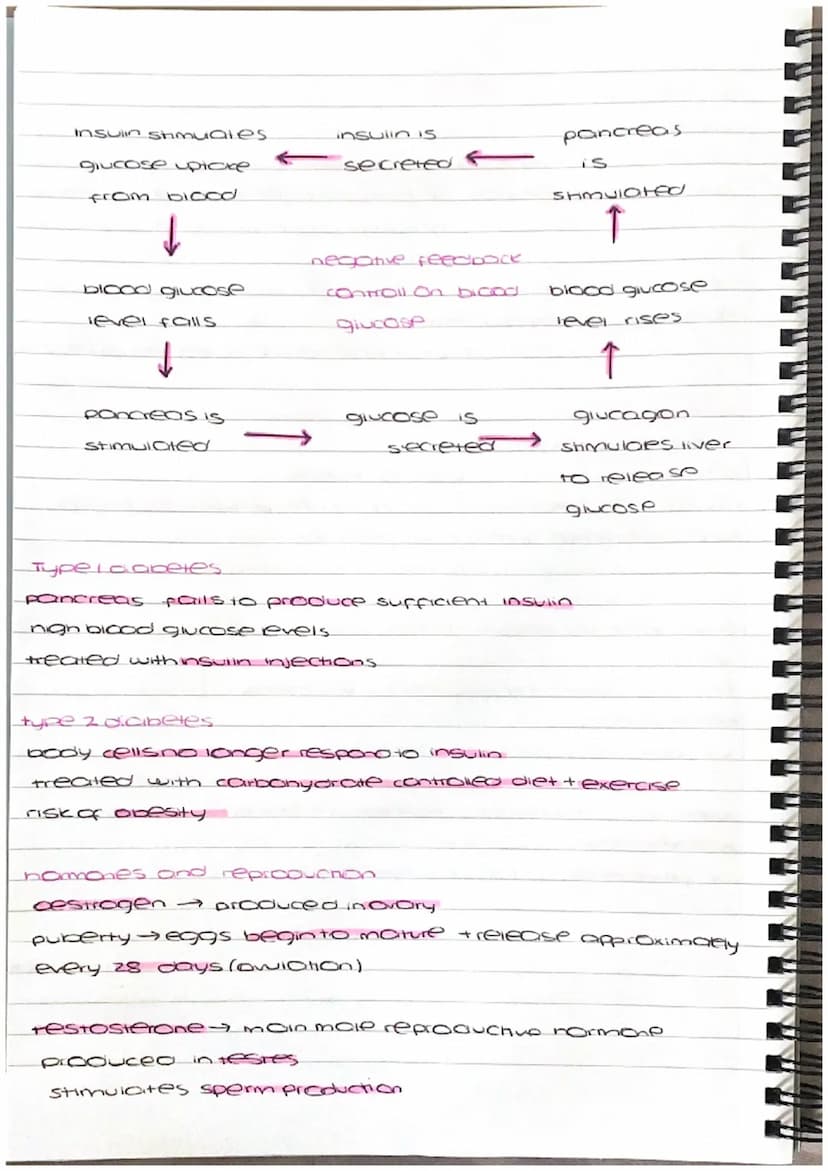
This entire system works through negative feedback - high glucose triggers responses that lower it, and low glucose triggers responses that raise it, keeping everything perfectly balanced.
Key Fact: Think of insulin as the key that unlocks cells so glucose can get in, and glucagon as the signal to release stored energy!
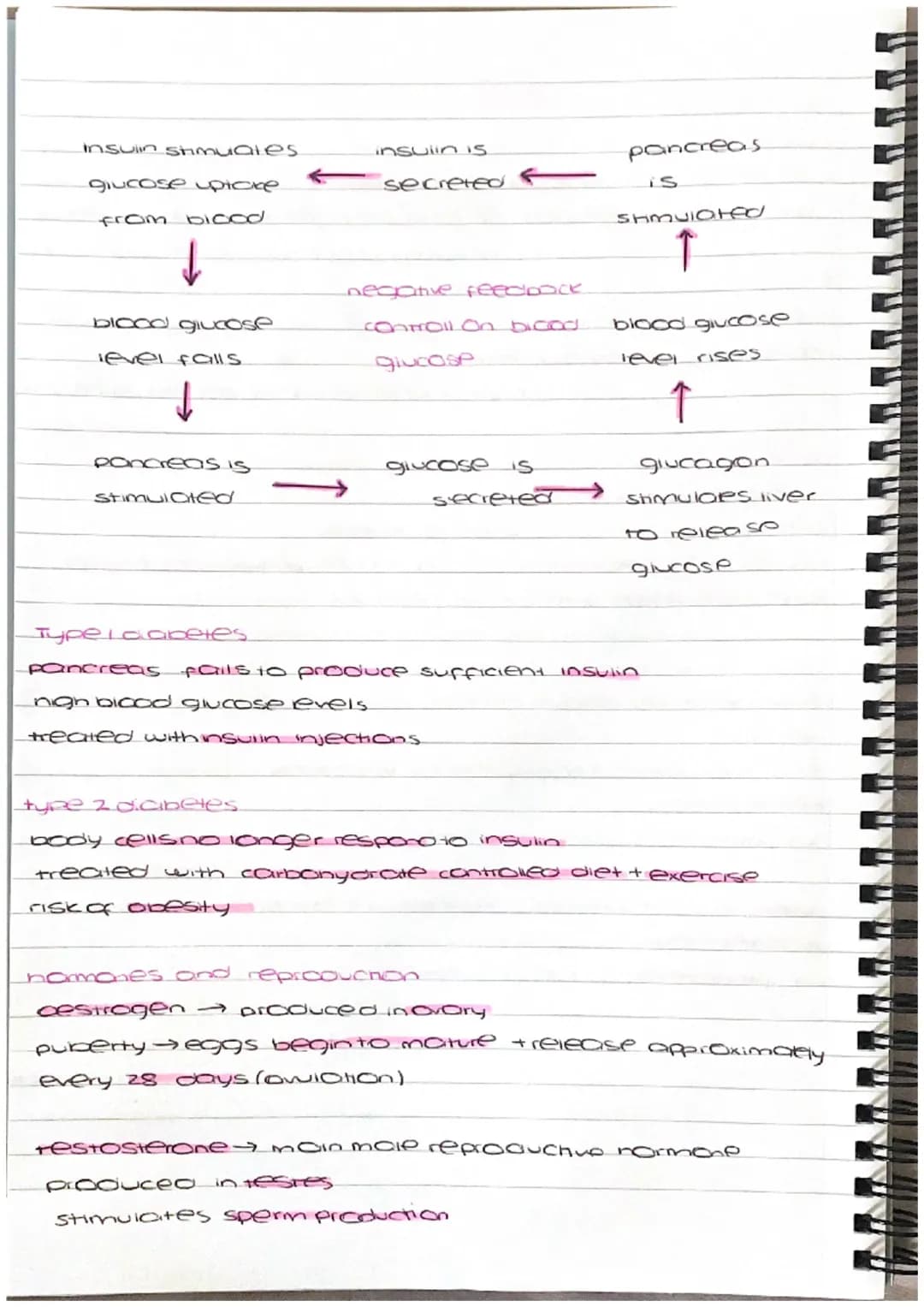
Type 1 diabetes occurs when your pancreas can't produce enough insulin, leading to dangerously high blood glucose levels. People with Type 1 need insulin injections to survive. Type 2 diabetes happens when your body's cells stop responding properly to insulin - this can often be managed through diet, exercise, and weight control.
Your reproductive system relies heavily on hormones too. Oestrogen, produced in the ovaries, triggers puberty in females and controls the monthly release of eggs. Testosterone, made in the testes, stimulates sperm production and male development.
These hormones don't just control reproduction - they affect everything from bone density to mood. The delicate balance between them changes throughout life, which is why puberty can feel like such an emotional rollercoaster!
Understanding how these systems work helps explain why maintaining a healthy lifestyle through proper diet and exercise is so important for preventing diabetes and supporting overall hormone balance.
Did You Know: Your pancreas is constantly adjusting insulin and glucagon production - it's like having a personal blood sugar manager working round the clock!
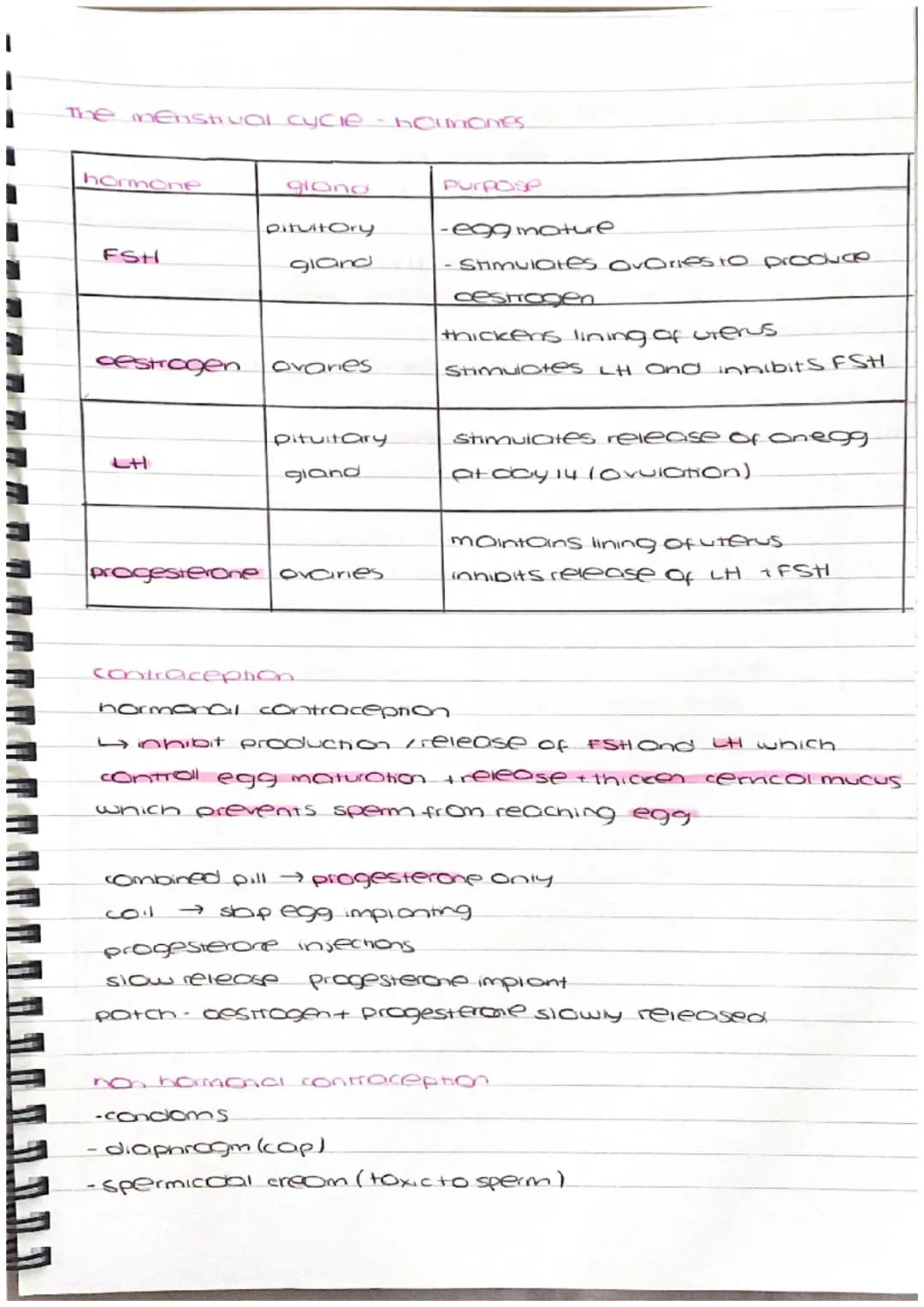
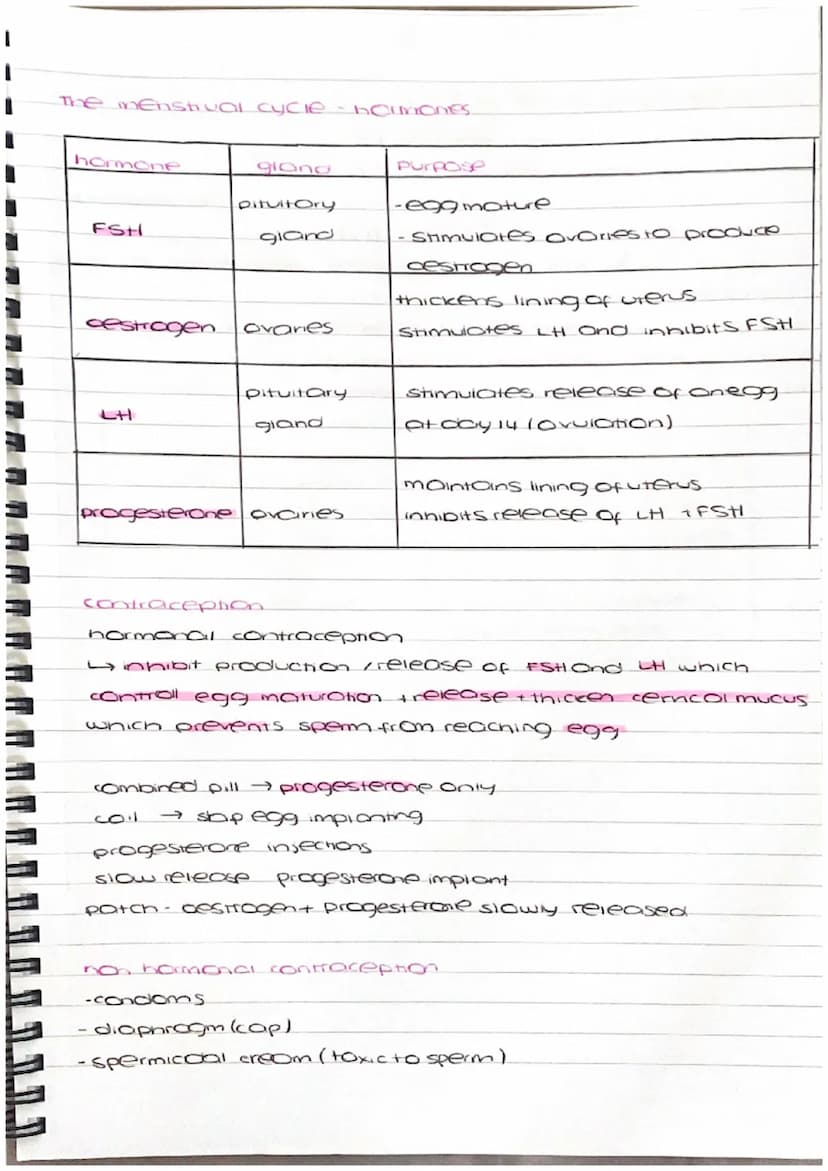
Four key hormones orchestrate the menstrual cycle like a perfectly timed dance. FSH from the pituitary gland kicks things off by maturing eggs and stimulating oestrogen production. Oestrogen then thickens the uterus lining and triggers LH release, which causes ovulation around day 14.
After ovulation, progesterone maintains the uterus lining but also inhibits FSH and LH - this prevents more eggs from developing during the cycle. If pregnancy doesn't occur, progesterone levels drop and the cycle starts again.
Hormonal contraceptives work by disrupting this natural cycle. They typically contain synthetic versions of oestrogen and progesterone that stop FSH and LH production, preventing egg maturation and release. They also thicken cervical mucus, making it harder for sperm to reach any eggs.
Non-hormonal methods like condoms, diaphragms, and spermicidal creams work by creating physical or chemical barriers that prevent sperm from reaching eggs. These methods don't interfere with your natural hormone cycles.
Top Tip: Understanding your menstrual cycle helps you make informed choices about contraception and recognise what's normal for your body!
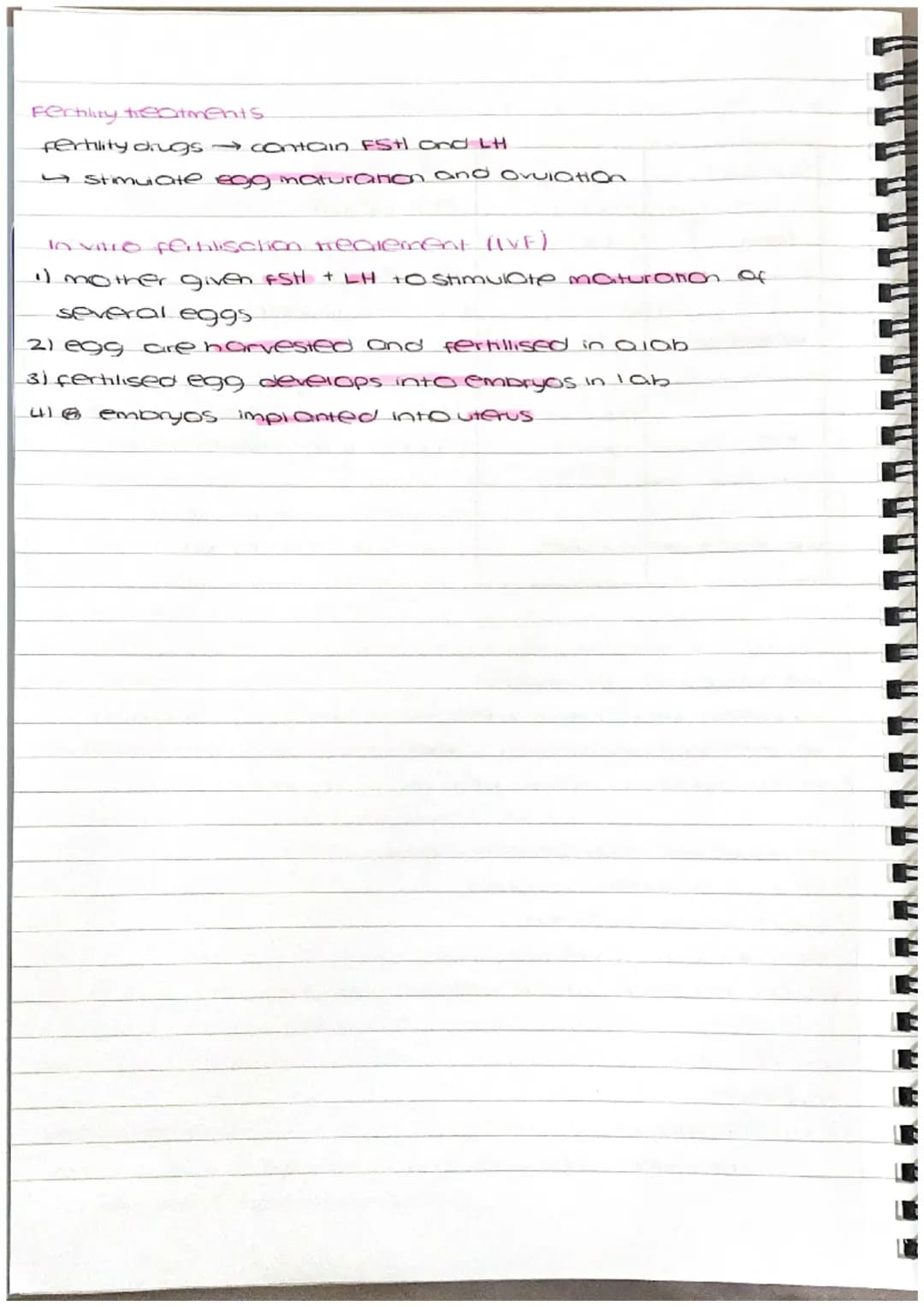
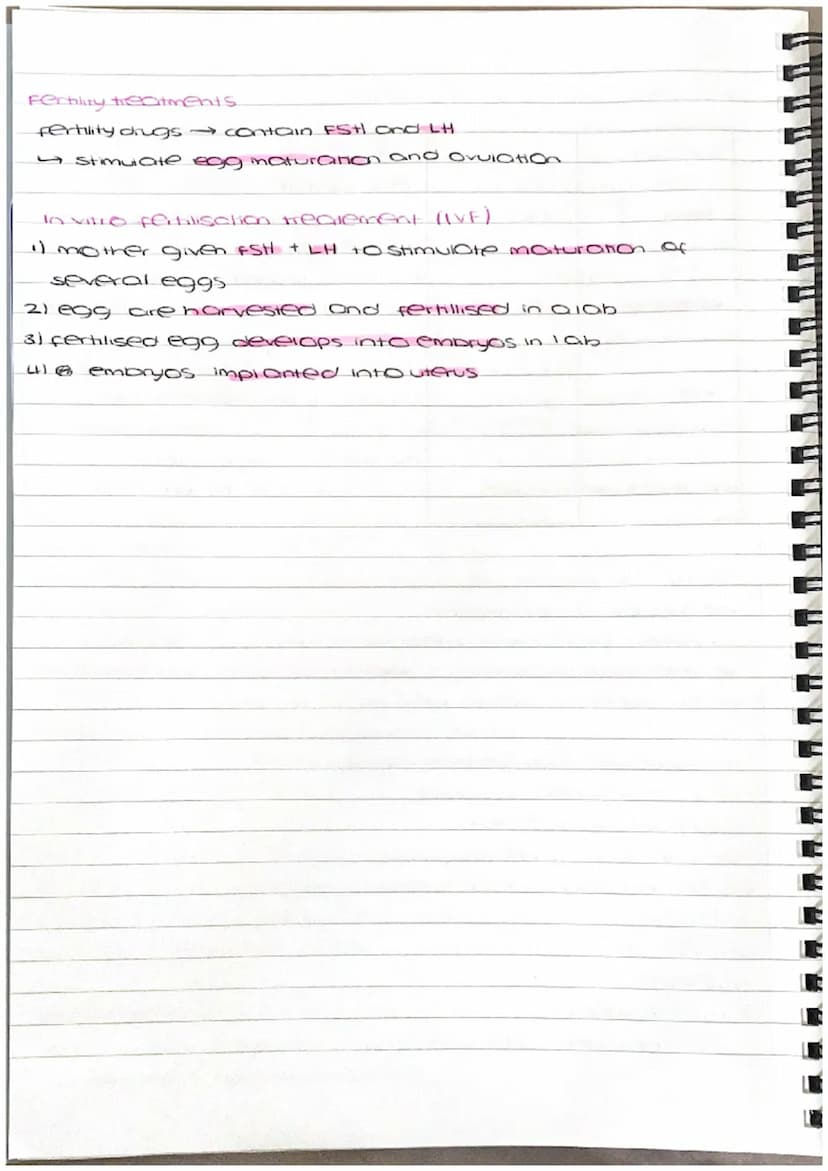
When couples struggle to conceive naturally, fertility drugs containing FSH and LH can help stimulate egg maturation and ovulation. These treatments essentially give the natural process a boost when it's not working effectively on its own.
IVF (In Vitro Fertilisation) is a more complex treatment that literally means "fertilisation in glass." First, the mother receives FSH and LH injections to stimulate multiple eggs to mature - this increases the chances of success.
The mature eggs are then carefully harvested and fertilised with sperm in laboratory conditions. The resulting embryos develop in the lab for several days before the healthiest ones are selected for implantation back into the uterus.
This process bypasses many potential fertility problems by taking the fertilisation process outside the body where it can be carefully monitored and controlled. While IVF doesn't guarantee pregnancy, it has helped millions of families worldwide and continues to improve with advancing technology.
Interesting Fact: IVF was first successful in 1978, and the first "test tube baby," Louise Brown, is now a mother herself!
Our AI Companion is a student-focused AI tool that offers more than just answers. Built on millions of Knowunity resources, it provides relevant information, personalised study plans, quizzes, and content directly in the chat, adapting to your individual learning journey.
You can download the app from Google Play Store and Apple App Store.
That's right! Enjoy free access to study content, connect with fellow students, and get instant help – all at your fingertips.
Explore the intricate mechanisms of homeostasis, including the nervous and endocrine systems, reflex actions, and the role of hormones. This study note covers essential topics such as diabetes management, kidney failure treatments, puberty, the menstrual cycle, contraception methods, and plant hormones. Ideal for students preparing for exams or seeking a comprehensive understanding of physiological responses and regulatory systems.
 Biology
App Store
Google Play
The app is very easy to use and well designed. I have found everything I was looking for so far and have been able to learn a lot from the presentations! I will definitely use the app for a class assignment! And of course it also helps a lot as an inspiration.
Stefan S
iOS user
This app is really great. There are so many study notes and help [...]. My problem subject is French, for example, and the app has so many options for help. Thanks to this app, I have improved my French. I would recommend it to anyone.
Samantha Klich
Android user
Wow, I am really amazed. I just tried the app because I've seen it advertised many times and was absolutely stunned. This app is THE HELP you want for school and above all, it offers so many things, such as workouts and fact sheets, which have been VERY helpful to me personally.
Anna
iOS user
Best app on earth! no words because it’s too good
Thomas R
iOS user
Just amazing. Let's me revise 10x better, this app is a quick 10/10. I highly recommend it to anyone. I can watch and search for notes. I can save them in the subject folder. I can revise it any time when I come back. If you haven't tried this app, you're really missing out.
Basil
Android user
This app has made me feel so much more confident in my exam prep, not only through boosting my own self confidence through the features that allow you to connect with others and feel less alone, but also through the way the app itself is centred around making you feel better. It is easy to navigate, fun to use, and helpful to anyone struggling in absolutely any way.
David K
iOS user
The app's just great! All I have to do is enter the topic in the search bar and I get the response real fast. I don't have to watch 10 YouTube videos to understand something, so I'm saving my time. Highly recommended!
Sudenaz Ocak
Android user
In school I was really bad at maths but thanks to the app, I am doing better now. I am so grateful that you made the app.
Greenlight Bonnie
Android user
very reliable app to help and grow your ideas of Maths, English and other related topics in your works. please use this app if your struggling in areas, this app is key for that. wish I'd of done a review before. and it's also free so don't worry about that.
Rohan U
Android user
I know a lot of apps use fake accounts to boost their reviews but this app deserves it all. Originally I was getting 4 in my English exams and this time I got a grade 7. I didn’t even know about this app three days until the exam and it has helped A LOT. Please actually trust me and use it as I’m sure you too will see developments.
Xander S
iOS user
THE QUIZES AND FLASHCARDS ARE SO USEFUL AND I LOVE Knowunity AI. IT ALSO IS LITREALLY LIKE CHATGPT BUT SMARTER!! HELPED ME WITH MY MASCARA PROBLEMS TOO!! AS WELL AS MY REAL SUBJECTS ! DUHHH 😍😁😲🤑💗✨🎀😮
Elisha
iOS user
This apps acc the goat. I find revision so boring but this app makes it so easy to organize it all and then you can ask the freeeee ai to test yourself so good and you can easily upload your own stuff. highly recommend as someone taking mocks now
Paul T
iOS user
The app is very easy to use and well designed. I have found everything I was looking for so far and have been able to learn a lot from the presentations! I will definitely use the app for a class assignment! And of course it also helps a lot as an inspiration.
Stefan S
iOS user
This app is really great. There are so many study notes and help [...]. My problem subject is French, for example, and the app has so many options for help. Thanks to this app, I have improved my French. I would recommend it to anyone.
Samantha Klich
Android user
Wow, I am really amazed. I just tried the app because I've seen it advertised many times and was absolutely stunned. This app is THE HELP you want for school and above all, it offers so many things, such as workouts and fact sheets, which have been VERY helpful to me personally.
Anna
iOS user
Best app on earth! no words because it’s too good
Thomas R
iOS user
Just amazing. Let's me revise 10x better, this app is a quick 10/10. I highly recommend it to anyone. I can watch and search for notes. I can save them in the subject folder. I can revise it any time when I come back. If you haven't tried this app, you're really missing out.
Basil
Android user
This app has made me feel so much more confident in my exam prep, not only through boosting my own self confidence through the features that allow you to connect with others and feel less alone, but also through the way the app itself is centred around making you feel better. It is easy to navigate, fun to use, and helpful to anyone struggling in absolutely any way.
David K
iOS user
The app's just great! All I have to do is enter the topic in the search bar and I get the response real fast. I don't have to watch 10 YouTube videos to understand something, so I'm saving my time. Highly recommended!
Sudenaz Ocak
Android user
In school I was really bad at maths but thanks to the app, I am doing better now. I am so grateful that you made the app.
Greenlight Bonnie
Android user
very reliable app to help and grow your ideas of Maths, English and other related topics in your works. please use this app if your struggling in areas, this app is key for that. wish I'd of done a review before. and it's also free so don't worry about that.
Rohan U
Android user
I know a lot of apps use fake accounts to boost their reviews but this app deserves it all. Originally I was getting 4 in my English exams and this time I got a grade 7. I didn’t even know about this app three days until the exam and it has helped A LOT. Please actually trust me and use it as I’m sure you too will see developments.
Xander S
iOS user
THE QUIZES AND FLASHCARDS ARE SO USEFUL AND I LOVE Knowunity AI. IT ALSO IS LITREALLY LIKE CHATGPT BUT SMARTER!! HELPED ME WITH MY MASCARA PROBLEMS TOO!! AS WELL AS MY REAL SUBJECTS ! DUHHH 😍😁😲🤑💗✨🎀😮
Elisha
iOS user
This apps acc the goat. I find revision so boring but this app makes it so easy to organize it all and then you can ask the freeeee ai to test yourself so good and you can easily upload your own stuff. highly recommend as someone taking mocks now
Paul T
iOS user
Molly
@mollwess07
Ever wondered how your body automatically keeps everything running smoothly without you having to think about it? Homeostasis is your body's incredible ability to maintain perfect internal conditions, and it works through two amazing communication systems that coordinate everything from... Show more
Access to all documents
Improve your grades
Join milions of students
Homeostasis is basically your body's internal thermostat and control centre rolled into one. It's the process that keeps your blood sugar levels steady, maintains your body temperature, and balances your water levels - all without you having to consciously think about it.
Your body uses negative feedback to maintain this balance. When something changes (like your temperature rising), sensors detect it and trigger responses to bring things back to normal. Think of it like your heating system at home - when it gets too cold, the thermostat kicks the heating on.
You've got two main communication networks working 24/7 to coordinate these responses. The nervous system uses electrical impulses that travel super fast but don't last long - perfect for quick reactions. The endocrine system uses hormones carried in your blood, which work slower but have longer-lasting effects.
Quick Tip: Remember that receptors detect changes, the CNS (brain and spinal cord) processes the information, and effectors (muscles and glands) carry out the response!
Access to all documents
Improve your grades
Join milions of students
When an electrical signal reaches the end of a nerve, it can't just jump to the next one like electricity through a wire. Instead, it has to cross a tiny gap called a synapse by releasing chemical messengers called neurotransmitters.
Reflex reactions are your nervous system's emergency responses - they're rapid, automatic, and completely bypass your conscious brain. That's why you pull your hand away from something hot before you even realise it's burning you!
Here's how a reflex works: a stimulus hits a receptor, which sends an impulse along a sensory neurone to a relay neurone in your spinal cord. This relay neurone immediately passes the message to a motor neurone, which triggers the effector to respond.
Meanwhile, your endocrine system consists of various glands scattered throughout your body. These glands secrete hormones - chemical messengers that travel through your bloodstream to reach specific target organs where they trigger responses.
Remember: Reflexes are so fast because they don't waste time going to your brain first - the spinal cord handles everything!
Access to all documents
Improve your grades
Join milions of students
The pituitary gland is often called the "master gland" because it controls other glands by releasing hormones that tell them what to do. Your thyroid releases thyroxine to control your metabolic rate and help with growth, whilst your adrenal glands pump out adrenaline when you're stressed or scared.
Blood glucose control is absolutely crucial for keeping your energy levels stable and preventing cell damage. Your pancreas acts like a glucose monitoring station, constantly checking your blood sugar levels.
When blood glucose gets too high, your pancreas releases insulin, which helps glucose move from your blood into your cells. Your liver also converts excess glucose into glycogen for storage. When blood glucose drops too low, your pancreas releases glucagon, which tells your liver to convert stored glycogen back into glucose.
This entire system works through negative feedback - high glucose triggers responses that lower it, and low glucose triggers responses that raise it, keeping everything perfectly balanced.
Key Fact: Think of insulin as the key that unlocks cells so glucose can get in, and glucagon as the signal to release stored energy!
Access to all documents
Improve your grades
Join milions of students
Type 1 diabetes occurs when your pancreas can't produce enough insulin, leading to dangerously high blood glucose levels. People with Type 1 need insulin injections to survive. Type 2 diabetes happens when your body's cells stop responding properly to insulin - this can often be managed through diet, exercise, and weight control.
Your reproductive system relies heavily on hormones too. Oestrogen, produced in the ovaries, triggers puberty in females and controls the monthly release of eggs. Testosterone, made in the testes, stimulates sperm production and male development.
These hormones don't just control reproduction - they affect everything from bone density to mood. The delicate balance between them changes throughout life, which is why puberty can feel like such an emotional rollercoaster!
Understanding how these systems work helps explain why maintaining a healthy lifestyle through proper diet and exercise is so important for preventing diabetes and supporting overall hormone balance.
Did You Know: Your pancreas is constantly adjusting insulin and glucagon production - it's like having a personal blood sugar manager working round the clock!
Access to all documents
Improve your grades
Join milions of students
Four key hormones orchestrate the menstrual cycle like a perfectly timed dance. FSH from the pituitary gland kicks things off by maturing eggs and stimulating oestrogen production. Oestrogen then thickens the uterus lining and triggers LH release, which causes ovulation around day 14.
After ovulation, progesterone maintains the uterus lining but also inhibits FSH and LH - this prevents more eggs from developing during the cycle. If pregnancy doesn't occur, progesterone levels drop and the cycle starts again.
Hormonal contraceptives work by disrupting this natural cycle. They typically contain synthetic versions of oestrogen and progesterone that stop FSH and LH production, preventing egg maturation and release. They also thicken cervical mucus, making it harder for sperm to reach any eggs.
Non-hormonal methods like condoms, diaphragms, and spermicidal creams work by creating physical or chemical barriers that prevent sperm from reaching eggs. These methods don't interfere with your natural hormone cycles.
Top Tip: Understanding your menstrual cycle helps you make informed choices about contraception and recognise what's normal for your body!
Access to all documents
Improve your grades
Join milions of students
When couples struggle to conceive naturally, fertility drugs containing FSH and LH can help stimulate egg maturation and ovulation. These treatments essentially give the natural process a boost when it's not working effectively on its own.
IVF (In Vitro Fertilisation) is a more complex treatment that literally means "fertilisation in glass." First, the mother receives FSH and LH injections to stimulate multiple eggs to mature - this increases the chances of success.
The mature eggs are then carefully harvested and fertilised with sperm in laboratory conditions. The resulting embryos develop in the lab for several days before the healthiest ones are selected for implantation back into the uterus.
This process bypasses many potential fertility problems by taking the fertilisation process outside the body where it can be carefully monitored and controlled. While IVF doesn't guarantee pregnancy, it has helped millions of families worldwide and continues to improve with advancing technology.
Interesting Fact: IVF was first successful in 1978, and the first "test tube baby," Louise Brown, is now a mother herself!
Our AI Companion is a student-focused AI tool that offers more than just answers. Built on millions of Knowunity resources, it provides relevant information, personalised study plans, quizzes, and content directly in the chat, adapting to your individual learning journey.
You can download the app from Google Play Store and Apple App Store.
That's right! Enjoy free access to study content, connect with fellow students, and get instant help – all at your fingertips.
6
Smart Tools NEW
Transform this note into: ✓ 50+ Practice Questions ✓ Interactive Flashcards ✓ Full Mock Exam ✓ Essay Outlines
Explore the intricate workings of the Nervous and Endocrine Systems in this comprehensive summary. Understand key concepts such as homeostasis, reflex arcs, synaptic transmission, and hormonal control. This resource covers the roles of the Central Nervous System, the importance of blood glucose regulation, and the fight or flight response, making it essential for biology students preparing for exams.
BiologyExplore the intricate systems of homeostasis and hormonal control in this comprehensive study note. Covering key concepts such as the menstrual cycle, nervous and endocrine systems, negative feedback mechanisms, and blood glucose regulation, this resource is essential for GCSE AQA Biology students. Understand how the body maintains stability through hormonal coordination and reflex actions.
BiologyVery detailed notes on homeostasis from Biology paper 2 AQA (Combined higher)
BiologyExplore key concepts in biology focusing on homeostasis, hormonal coordination, and the structure and function of the eye. This comprehensive summary covers essential topics such as the nervous and endocrine systems, blood glucose regulation, and plant responses. Ideal for higher-tier students preparing for exams.
BiologyExplore the key functions and components of the endocrine system, including hormone production by glands such as the pituitary, thyroid, and adrenal glands. Understand the differences between hormonal and nervous responses, and learn how hormones like adrenaline and insulin regulate vital body processes. This summary is ideal for biology students preparing for exams.
BiologyExplore the key functions and components of the endocrine system, including major glands like the pituitary, thyroid, and adrenal glands. Understand hormone regulation, the role of insulin and glucagon in blood sugar control, and the impact of hormones on growth, metabolism, and reproduction. This summary provides essential insights for GCSE Biology students.
BiologyExplore the intricate mechanisms of homeostasis, including the nervous and endocrine systems, reflex actions, and the role of hormones. This study note covers essential topics such as diabetes management, kidney failure treatments, puberty, the menstrual cycle, contraception methods, and plant hormones. Ideal for students preparing for exams or seeking a comprehensive understanding of physiological responses and regulatory systems.
BiologyApp Store
Google Play
The app is very easy to use and well designed. I have found everything I was looking for so far and have been able to learn a lot from the presentations! I will definitely use the app for a class assignment! And of course it also helps a lot as an inspiration.
Stefan S
iOS user
This app is really great. There are so many study notes and help [...]. My problem subject is French, for example, and the app has so many options for help. Thanks to this app, I have improved my French. I would recommend it to anyone.
Samantha Klich
Android user
Wow, I am really amazed. I just tried the app because I've seen it advertised many times and was absolutely stunned. This app is THE HELP you want for school and above all, it offers so many things, such as workouts and fact sheets, which have been VERY helpful to me personally.
Anna
iOS user
Best app on earth! no words because it’s too good
Thomas R
iOS user
Just amazing. Let's me revise 10x better, this app is a quick 10/10. I highly recommend it to anyone. I can watch and search for notes. I can save them in the subject folder. I can revise it any time when I come back. If you haven't tried this app, you're really missing out.
Basil
Android user
This app has made me feel so much more confident in my exam prep, not only through boosting my own self confidence through the features that allow you to connect with others and feel less alone, but also through the way the app itself is centred around making you feel better. It is easy to navigate, fun to use, and helpful to anyone struggling in absolutely any way.
David K
iOS user
The app's just great! All I have to do is enter the topic in the search bar and I get the response real fast. I don't have to watch 10 YouTube videos to understand something, so I'm saving my time. Highly recommended!
Sudenaz Ocak
Android user
In school I was really bad at maths but thanks to the app, I am doing better now. I am so grateful that you made the app.
Greenlight Bonnie
Android user
very reliable app to help and grow your ideas of Maths, English and other related topics in your works. please use this app if your struggling in areas, this app is key for that. wish I'd of done a review before. and it's also free so don't worry about that.
Rohan U
Android user
I know a lot of apps use fake accounts to boost their reviews but this app deserves it all. Originally I was getting 4 in my English exams and this time I got a grade 7. I didn’t even know about this app three days until the exam and it has helped A LOT. Please actually trust me and use it as I’m sure you too will see developments.
Xander S
iOS user
THE QUIZES AND FLASHCARDS ARE SO USEFUL AND I LOVE Knowunity AI. IT ALSO IS LITREALLY LIKE CHATGPT BUT SMARTER!! HELPED ME WITH MY MASCARA PROBLEMS TOO!! AS WELL AS MY REAL SUBJECTS ! DUHHH 😍😁😲🤑💗✨🎀😮
Elisha
iOS user
This apps acc the goat. I find revision so boring but this app makes it so easy to organize it all and then you can ask the freeeee ai to test yourself so good and you can easily upload your own stuff. highly recommend as someone taking mocks now
Paul T
iOS user
The app is very easy to use and well designed. I have found everything I was looking for so far and have been able to learn a lot from the presentations! I will definitely use the app for a class assignment! And of course it also helps a lot as an inspiration.
Stefan S
iOS user
This app is really great. There are so many study notes and help [...]. My problem subject is French, for example, and the app has so many options for help. Thanks to this app, I have improved my French. I would recommend it to anyone.
Samantha Klich
Android user
Wow, I am really amazed. I just tried the app because I've seen it advertised many times and was absolutely stunned. This app is THE HELP you want for school and above all, it offers so many things, such as workouts and fact sheets, which have been VERY helpful to me personally.
Anna
iOS user
Best app on earth! no words because it’s too good
Thomas R
iOS user
Just amazing. Let's me revise 10x better, this app is a quick 10/10. I highly recommend it to anyone. I can watch and search for notes. I can save them in the subject folder. I can revise it any time when I come back. If you haven't tried this app, you're really missing out.
Basil
Android user
This app has made me feel so much more confident in my exam prep, not only through boosting my own self confidence through the features that allow you to connect with others and feel less alone, but also through the way the app itself is centred around making you feel better. It is easy to navigate, fun to use, and helpful to anyone struggling in absolutely any way.
David K
iOS user
The app's just great! All I have to do is enter the topic in the search bar and I get the response real fast. I don't have to watch 10 YouTube videos to understand something, so I'm saving my time. Highly recommended!
Sudenaz Ocak
Android user
In school I was really bad at maths but thanks to the app, I am doing better now. I am so grateful that you made the app.
Greenlight Bonnie
Android user
very reliable app to help and grow your ideas of Maths, English and other related topics in your works. please use this app if your struggling in areas, this app is key for that. wish I'd of done a review before. and it's also free so don't worry about that.
Rohan U
Android user
I know a lot of apps use fake accounts to boost their reviews but this app deserves it all. Originally I was getting 4 in my English exams and this time I got a grade 7. I didn’t even know about this app three days until the exam and it has helped A LOT. Please actually trust me and use it as I’m sure you too will see developments.
Xander S
iOS user
THE QUIZES AND FLASHCARDS ARE SO USEFUL AND I LOVE Knowunity AI. IT ALSO IS LITREALLY LIKE CHATGPT BUT SMARTER!! HELPED ME WITH MY MASCARA PROBLEMS TOO!! AS WELL AS MY REAL SUBJECTS ! DUHHH 😍😁😲🤑💗✨🎀😮
Elisha
iOS user
This apps acc the goat. I find revision so boring but this app makes it so easy to organize it all and then you can ask the freeeee ai to test yourself so good and you can easily upload your own stuff. highly recommend as someone taking mocks now
Paul T
iOS user