
Ever wondered how your body breaks down that sandwich you... Show more
 Biology
 Sociology
 English Literature
Sign up to see the contentIt's free!
Access to all documents
Improve your grades
Join milions of students
Knowunity AI
Subjects
Triangle Congruence and Similarity Theorems
Triangle Properties and Classification
Linear Equations and Graphs
Geometric Angle Relationships
Trigonometric Functions and Identities
Equation Solving Techniques
Circle Geometry Fundamentals
Division Operations and Methods
Basic Differentiation Rules
Exponent and Logarithm Properties
Show all topics
Human Organ Systems
Reproductive Cell Cycles
Biological Sciences Subdisciplines
Cellular Energy Metabolism
Autotrophic Energy Processes
Inheritance Patterns and Principles
Biomolecular Structure and Organization
Cell Cycle and Division Mechanics
Cellular Organization and Development
Biological Structural Organization
Show all topics
Chemical Sciences and Applications
Atomic Structure and Composition
Molecular Electron Structure Representation
Atomic Electron Behavior
Matter Properties and Water
Mole Concept and Calculations
Gas Laws and Behavior
Periodic Table Organization
Chemical Thermodynamics Fundamentals
Chemical Bond Types and Properties
Show all topics
European Renaissance and Enlightenment
European Cultural Movements 800-1920
American Revolution Era 1763-1797
American Civil War 1861-1865
Global Imperial Systems
Mongol and Chinese Dynasties
U.S. Presidents and World Leaders
Historical Sources and Documentation
World Wars Era and Impact
World Religious Systems
Show all topics
Classic and Contemporary Novels
Literary Character Analysis
Rhetorical Theory and Practice
Classic Literary Narratives
Reading Analysis and Interpretation
Narrative Structure and Techniques
English Language Components
Influential English-Language Authors
Basic Sentence Structure
Narrative Voice and Perspective
Show all topics
106
•
Updated Apr 4, 2026
•
G
@gurneet
Ever wondered how your body breaks down that sandwich you... Show more
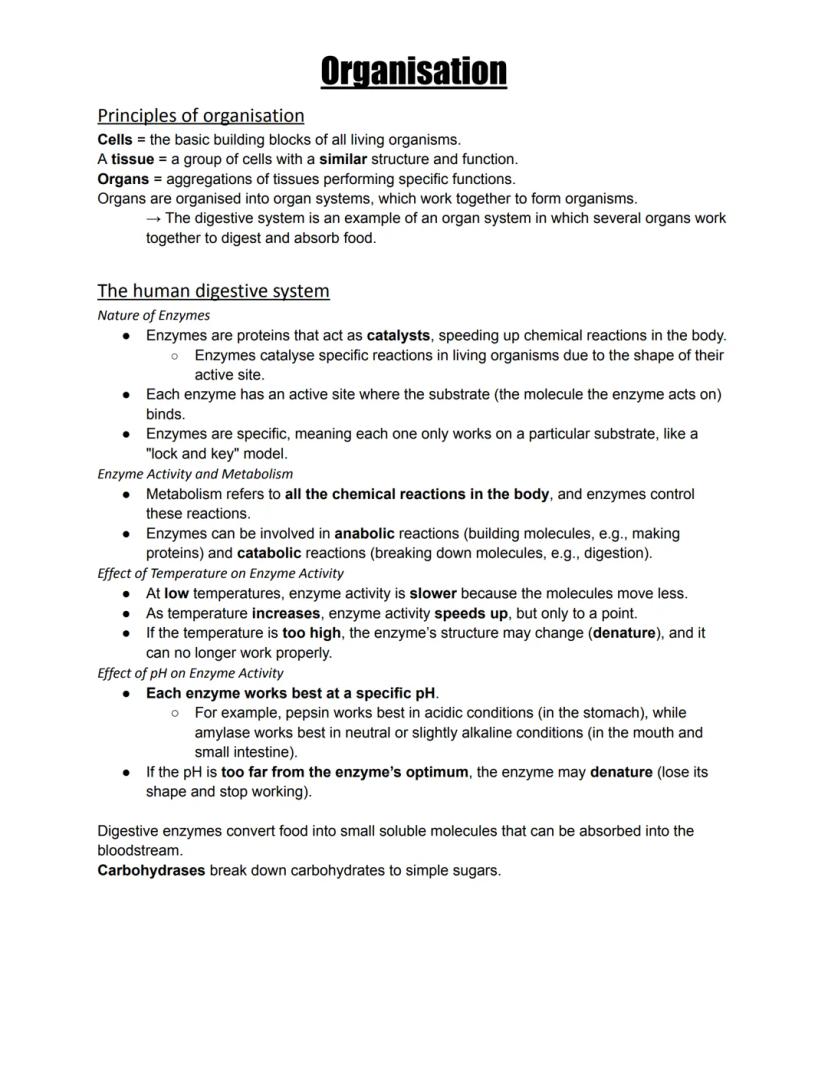






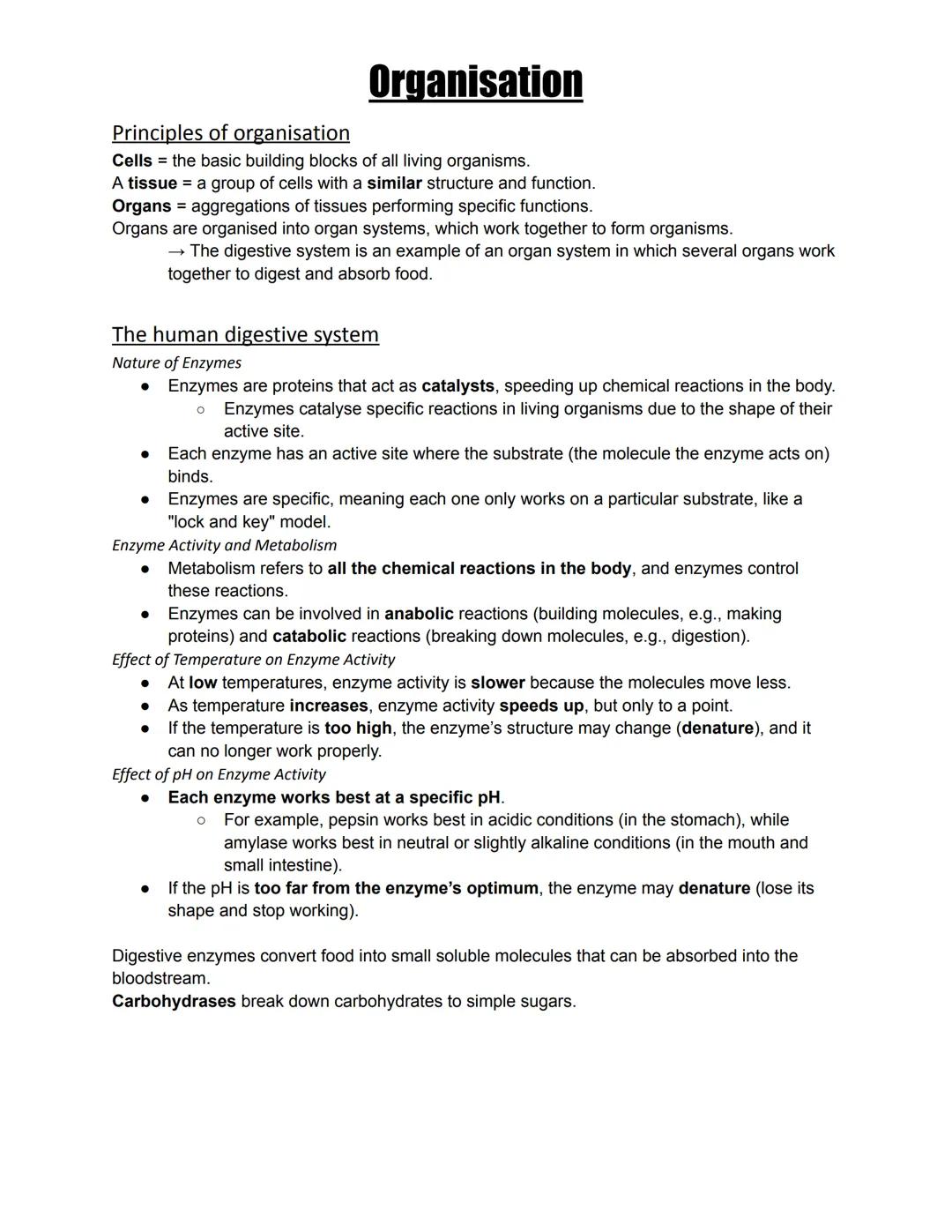
Your body is brilliantly organised - cells group together to form tissues, which combine into organs, and these work together as organ systems. Think of it like building blocks getting more complex at each level!
Enzymes are like molecular scissors that speed up chemical reactions in your body. Each enzyme has a specific active site that only fits one type of molecule (called a substrate) - it's literally like a lock and key system. This means pepsin can only work on proteins, not fats or carbohydrates.
Temperature and pH massively affect how well enzymes work. Too hot and they denature (lose their shape permanently), too cold and they work sluggishly. Each enzyme has its perfect conditions - pepsin loves the acidic environment of your stomach, while amylase prefers the neutral conditions in your mouth.
Carbohydrases like amylase break down complex carbs into simple sugars your body can actually use. You produce amylase in three places: your salivary glands, pancreas, and small intestine - talk about being thorough!
Quick Tip: Remember that enzymes are reusable - they don't get used up in reactions, so one enzyme molecule can work on thousands of substrate molecules.

Proteases are the protein-busting enzymes that break down your chicken dinner into amino acids. Pepsin kicks things off in your stomach's acidic environment, then pancreatic proteases finish the job in your small intestine.
Lipases tackle fats and oils, breaking them down into glycerol and fatty acids. These enzymes are mainly produced by your pancreas and work in the small intestine where all the final digestion happens.
Here's where bile becomes crucial - it's made in your liver and stored in your gallbladder like a chemical weapon against fat! Bile is alkaline, so it neutralises stomach acid and creates the perfect environment for lipases to work.
But bile's cleverest trick is emulsification - it breaks big fat globules into tiny droplets, massively increasing the surface area for lipases to attack. More surface area equals faster digestion, which means you can actually absorb those essential fatty acids.
Remember: Your digestive products don't just disappear - glucose fuels respiration, amino acids build new proteins, and fatty acids become part of cell membranes.

Your heart is essentially two pumps working side by side in a double circulatory system. The right side pumps blood to your lungs for a fresh oxygen supply, while the left side sends oxygenated blood around your entire body.
The heart's natural rhythm comes from a cluster of cells in the right atrium that act like a built-in pacemaker. When this goes wrong, doctors can fit artificial pacemakers to keep your heart beating steadily.
Your lungs are perfectly designed for gas exchange. Air travels through your trachea, into bronchi, then smaller bronchioles, finally reaching tiny alveoli - microscopic air sacs surrounded by capillaries.
The alveoli are where the magic happens: oxygen diffuses from the air into your bloodstream while carbon dioxide moves the opposite way to be breathed out. The incredibly thin walls and massive surface area make this exchange super efficient.
Key Point: Your left ventricle has thicker walls than the right because it needs to pump blood around your entire body, not just to your nearby lungs.

Arteries are the motorways of your circulatory system - thick walls and small lumens handle the high pressure as blood rushes away from your heart. Their elastic fibres stretch and recoil with each heartbeat, keeping blood flowing smoothly.
Veins have a completely different job: bringing blood back to your heart at low pressure. They've got thinner walls, larger lumens for easier flow, and crucially, valves that stop blood flowing backwards.
Capillaries are where the real action happens - walls just one cell thick allow easy exchange of oxygen, nutrients, and waste products between blood and tissues. Their incredibly narrow diameter ensures every cell gets close contact with the blood supply.
Plasma is blood's liquid component, carrying everything from glucose and hormones to waste products like carbon dioxide. It's basically your body's internal transport system, delivering what cells need and removing what they don't.
Did You Know: Your capillaries are so narrow that red blood cells have to squeeze through in single file - that's why they need to be flexible!

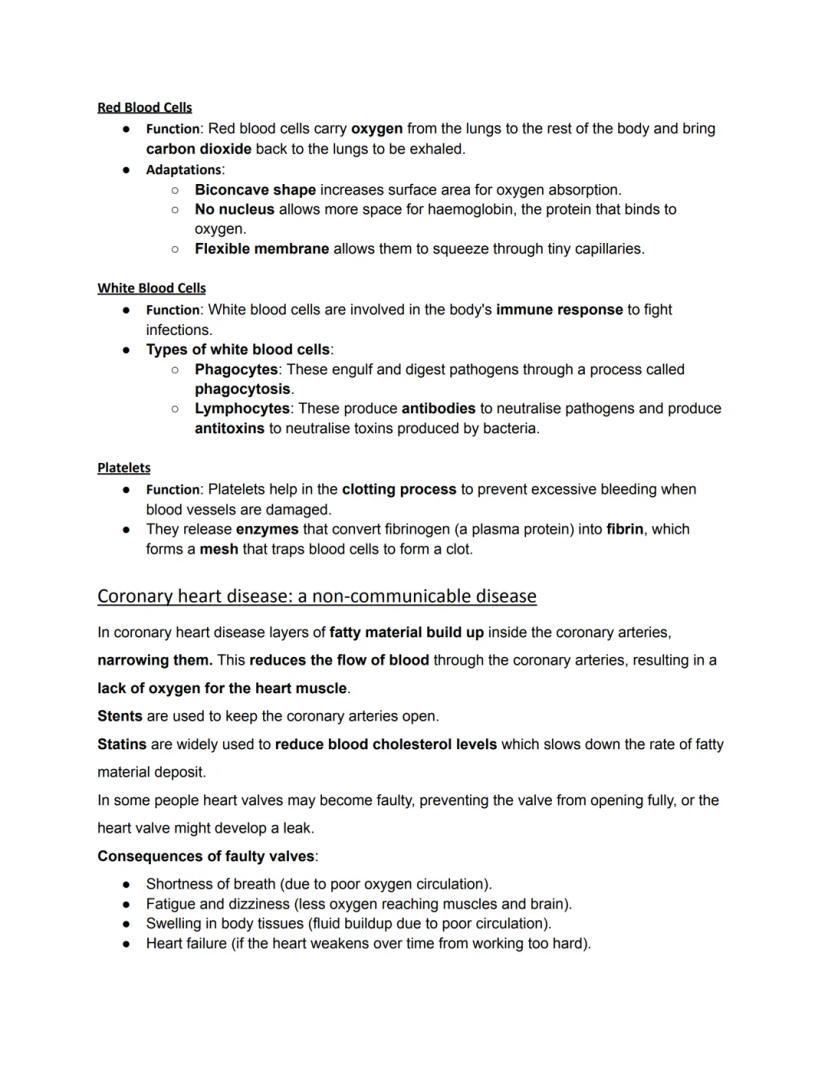
Red blood cells are oxygen-carrying specialists with some brilliant adaptations. Their biconcave shape (dimpled like a doughnut) increases surface area, they've ditched their nucleus for more space to carry haemoglobin, and they're flexible enough to squeeze through tiny capillaries.
White blood cells are your immune system's army. Phagocytes literally eat harmful bacteria through phagocytosis, while lymphocytes produce antibodies that neutralise specific pathogens and antitoxins that deal with bacterial poisons.
Platelets are your body's emergency repair kit. When you cut yourself, they release enzymes that convert fibrinogen into fibrin, creating a mesh that traps blood cells and forms a clot.
Coronary heart disease happens when fatty deposits narrow your heart's blood supply. Stents prop arteries open, statins reduce cholesterol levels, and faulty heart valves can cause breathlessness, fatigue, and dangerous fluid buildup.
Health Alert: Faulty heart valves force your heart to work harder, potentially leading to heart failure if left untreated.

Heart problems have various solutions, each with trade-offs. Drugs like statins are non-invasive but need lifelong use and can cause side effects. Mechanical devices like stents require surgery but provide immediate improvement. Heart transplants can save lives but involve major surgery, lifelong immunosuppressive drugs, and donor shortages.
Health isn't just about avoiding disease - it's complete physical and mental wellbeing. Diseases often interact: a weakened immune system makes you vulnerable to infections, some viruses can trigger cancers, and severe physical illness frequently leads to depression.
Non-communicable diseases (NCDs) create costs at every level. Individuals face reduced quality of life and lost income. Communities deal with increased healthcare demands and reduced productivity. Nations spend billions on treatment while losing economic output from sick workers.
Lifestyle factors massively influence NCD risk. Poor diet increases obesity, diabetes, and heart disease risk. Excessive alcohol damages your liver and heart. Smoking causes lung cancer, heart disease, and harms unborn babies during pregnancy.
Reality Check: Many NCDs result from multiple interacting factors - genetics, lifestyle, and environment all play their part.

Cancer results from cells losing control of their growth and division. Benign tumours stay put and don't invade other tissues, but malignant tumours are the dangerous ones - they spread through your bloodstream and form secondary tumours elsewhere.
Risk factors increase your chances of developing disease. Some have proven causal mechanisms - we know exactly how smoking damages your lungs or how obesity triggers Type 2 diabetes. Others show correlation but the exact mechanism isn't fully understood yet.
Lifestyle choices dramatically affect cancer risk. Carcinogens like ionising radiation damage DNA directly. Smoking introduces dozens of cancer-causing chemicals into your body. Poor diet and lack of exercise weaken your immune system's ability to spot and destroy abnormal cells.
Genetic risk factors mean some people inherit higher cancer susceptibility, but remember - having a genetic predisposition doesn't guarantee you'll develop cancer. Environmental and lifestyle factors still play huge roles in determining your actual risk.
Important: Most cancers result from multiple factors interacting over time, not single causes - that's why prevention strategies focus on reducing overall risk.
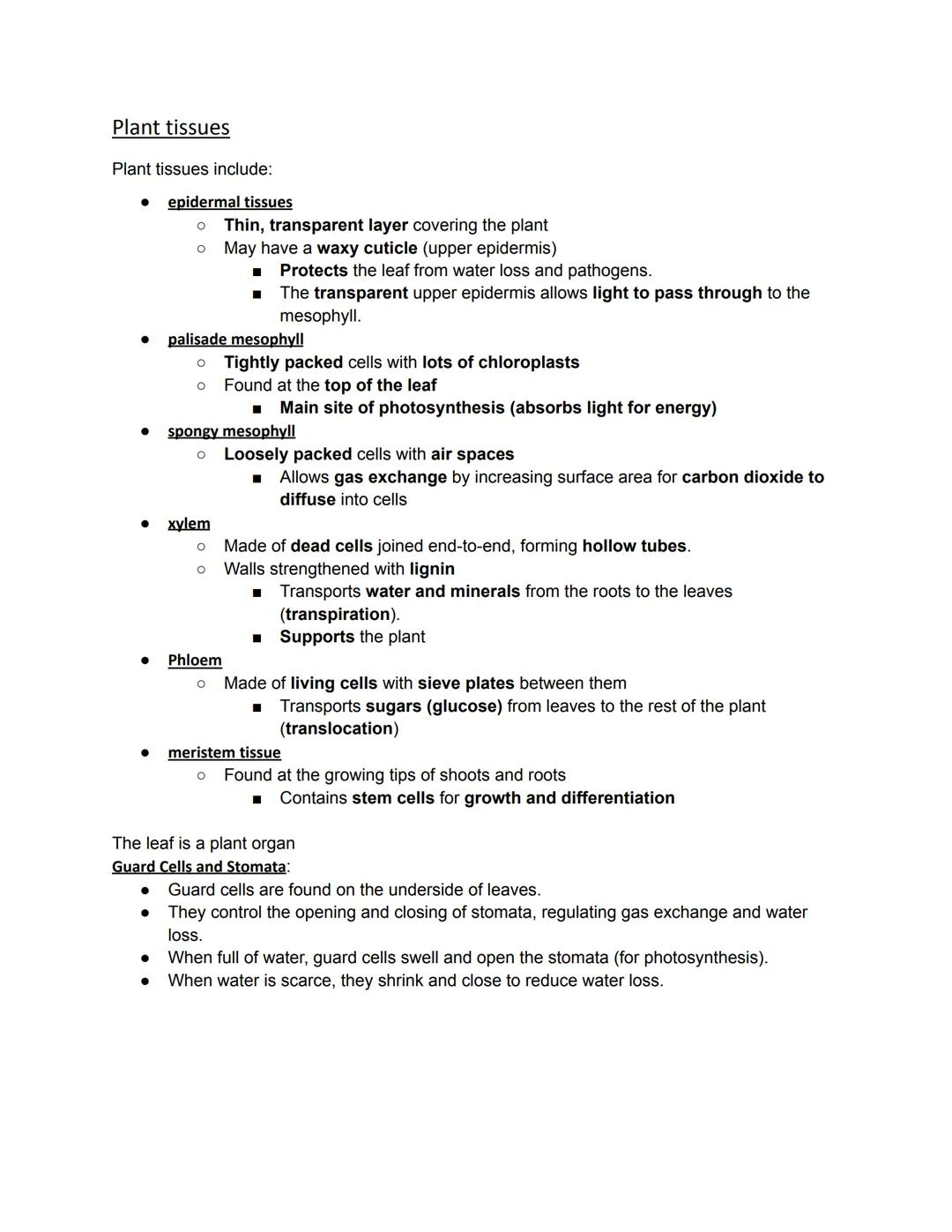
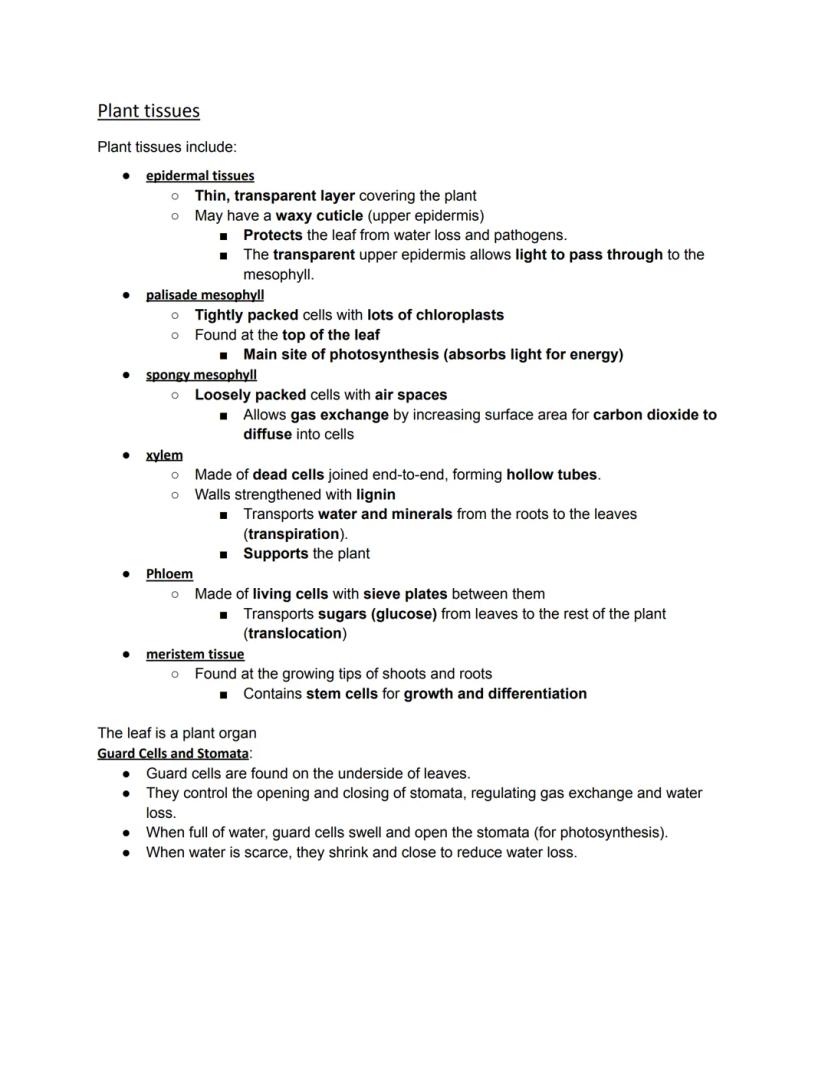
Plants have specialised tissues just like animals do. The epidermis forms a protective barrier, often with a waxy cuticle to prevent water loss. The transparent upper epidermis lets light through to the photosynthetic layers beneath.
Palisade mesophyll cells are packed with chloroplasts and positioned at the leaf's top to capture maximum sunlight for photosynthesis. Below them, spongy mesophyll has air spaces that increase surface area for gas exchange.
Xylem vessels are like plant plumbing - dead, hollow tubes strengthened with lignin that transport water and minerals from roots to leaves. Phloem tubes are alive and transport sugars from leaves to wherever the plant needs energy or storage.
Guard cells control stomata (tiny pores) that regulate gas exchange and water loss. When guard cells swell with water, stomata open for photosynthesis. When water's scarce, they shrink and close to prevent dehydration.
Plant Fact: Most stomata are on leaf undersides to reduce water loss while still allowing gas exchange.

Root hair cells are perfectly adapted for absorption with their huge surface area and thin walls. They take up water by osmosis and mineral ions by active transport, even when minerals are scarce in the soil.
Transpiration is water loss from leaves that creates a continuous pull, drawing water up through xylem from roots to leaves. It's driven by evaporation from mesophyll cells and diffusion of water vapour through stomata.
Several factors affect transpiration rate: more light opens stomata faster, higher temperatures speed up evaporation, high humidity reduces the concentration gradient, and wind removes water vapour quickly.
Translocation moves sugars through phloem from leaves to growing regions or storage areas. Unlike xylem's one-way flow, phloem transport is bidirectional - sugars can move up or down depending on where they're needed.
Key Difference: Xylem transports water and minerals upwards only, while phloem transports sugars in both directions as needed.

Phloem tissue consists of sieve tube elements (living cells with holes in their end walls) and companion cells that provide energy for active transport. The sieve plates allow sugar solutions to flow between cells efficiently.
Stomatal control is remarkably sophisticated: stomata open during daylight for photosynthesis, close at night to conserve water, and shut during hot, dry conditions to prevent wilting. Guard cells respond to light, carbon dioxide levels, and water availability.
Translocation process starts with sugar production in leaves during photosynthesis. Phloem then distributes these sugars to growing shoots, developing roots, flowers, and storage organs like bulbs or tubers.
The transpiration stream creates negative pressure that pulls water up through xylem vessels. This continuous flow delivers water for photosynthesis and dissolved minerals for healthy growth, while also helping cool the plant through evaporation.
Amazing Fact: A large tree can transpire hundreds of litres of water per day, creating enough suction to pull water over 100 metres up to the top branches!
Our AI Companion is a student-focused AI tool that offers more than just answers. Built on millions of Knowunity resources, it provides relevant information, personalised study plans, quizzes, and content directly in the chat, adapting to your individual learning journey.
You can download the app from Google Play Store and Apple App Store.
That's right! Enjoy free access to study content, connect with fellow students, and get instant help – all at your fingertips.
App Store
Google Play
The app is very easy to use and well designed. I have found everything I was looking for so far and have been able to learn a lot from the presentations! I will definitely use the app for a class assignment! And of course it also helps a lot as an inspiration.
Stefan S
iOS user
This app is really great. There are so many study notes and help [...]. My problem subject is French, for example, and the app has so many options for help. Thanks to this app, I have improved my French. I would recommend it to anyone.
Samantha Klich
Android user
Wow, I am really amazed. I just tried the app because I've seen it advertised many times and was absolutely stunned. This app is THE HELP you want for school and above all, it offers so many things, such as workouts and fact sheets, which have been VERY helpful to me personally.
Anna
iOS user
Best app on earth! no words because it’s too good
Thomas R
iOS user
Just amazing. Let's me revise 10x better, this app is a quick 10/10. I highly recommend it to anyone. I can watch and search for notes. I can save them in the subject folder. I can revise it any time when I come back. If you haven't tried this app, you're really missing out.
Basil
Android user
This app has made me feel so much more confident in my exam prep, not only through boosting my own self confidence through the features that allow you to connect with others and feel less alone, but also through the way the app itself is centred around making you feel better. It is easy to navigate, fun to use, and helpful to anyone struggling in absolutely any way.
David K
iOS user
The app's just great! All I have to do is enter the topic in the search bar and I get the response real fast. I don't have to watch 10 YouTube videos to understand something, so I'm saving my time. Highly recommended!
Sudenaz Ocak
Android user
In school I was really bad at maths but thanks to the app, I am doing better now. I am so grateful that you made the app.
Greenlight Bonnie
Android user
very reliable app to help and grow your ideas of Maths, English and other related topics in your works. please use this app if your struggling in areas, this app is key for that. wish I'd of done a review before. and it's also free so don't worry about that.
Rohan U
Android user
I know a lot of apps use fake accounts to boost their reviews but this app deserves it all. Originally I was getting 4 in my English exams and this time I got a grade 7. I didn’t even know about this app three days until the exam and it has helped A LOT. Please actually trust me and use it as I’m sure you too will see developments.
Xander S
iOS user
THE QUIZES AND FLASHCARDS ARE SO USEFUL AND I LOVE Knowunity AI. IT ALSO IS LITREALLY LIKE CHATGPT BUT SMARTER!! HELPED ME WITH MY MASCARA PROBLEMS TOO!! AS WELL AS MY REAL SUBJECTS ! DUHHH 😍😁😲🤑💗✨🎀😮
Elisha
iOS user
This apps acc the goat. I find revision so boring but this app makes it so easy to organize it all and then you can ask the freeeee ai to test yourself so good and you can easily upload your own stuff. highly recommend as someone taking mocks now
Paul T
iOS user
The app is very easy to use and well designed. I have found everything I was looking for so far and have been able to learn a lot from the presentations! I will definitely use the app for a class assignment! And of course it also helps a lot as an inspiration.
Stefan S
iOS user
This app is really great. There are so many study notes and help [...]. My problem subject is French, for example, and the app has so many options for help. Thanks to this app, I have improved my French. I would recommend it to anyone.
Samantha Klich
Android user
Wow, I am really amazed. I just tried the app because I've seen it advertised many times and was absolutely stunned. This app is THE HELP you want for school and above all, it offers so many things, such as workouts and fact sheets, which have been VERY helpful to me personally.
Anna
iOS user
Best app on earth! no words because it’s too good
Thomas R
iOS user
Just amazing. Let's me revise 10x better, this app is a quick 10/10. I highly recommend it to anyone. I can watch and search for notes. I can save them in the subject folder. I can revise it any time when I come back. If you haven't tried this app, you're really missing out.
Basil
Android user
This app has made me feel so much more confident in my exam prep, not only through boosting my own self confidence through the features that allow you to connect with others and feel less alone, but also through the way the app itself is centred around making you feel better. It is easy to navigate, fun to use, and helpful to anyone struggling in absolutely any way.
David K
iOS user
The app's just great! All I have to do is enter the topic in the search bar and I get the response real fast. I don't have to watch 10 YouTube videos to understand something, so I'm saving my time. Highly recommended!
Sudenaz Ocak
Android user
In school I was really bad at maths but thanks to the app, I am doing better now. I am so grateful that you made the app.
Greenlight Bonnie
Android user
very reliable app to help and grow your ideas of Maths, English and other related topics in your works. please use this app if your struggling in areas, this app is key for that. wish I'd of done a review before. and it's also free so don't worry about that.
Rohan U
Android user
I know a lot of apps use fake accounts to boost their reviews but this app deserves it all. Originally I was getting 4 in my English exams and this time I got a grade 7. I didn’t even know about this app three days until the exam and it has helped A LOT. Please actually trust me and use it as I’m sure you too will see developments.
Xander S
iOS user
THE QUIZES AND FLASHCARDS ARE SO USEFUL AND I LOVE Knowunity AI. IT ALSO IS LITREALLY LIKE CHATGPT BUT SMARTER!! HELPED ME WITH MY MASCARA PROBLEMS TOO!! AS WELL AS MY REAL SUBJECTS ! DUHHH 😍😁😲🤑💗✨🎀😮
Elisha
iOS user
This apps acc the goat. I find revision so boring but this app makes it so easy to organize it all and then you can ask the freeeee ai to test yourself so good and you can easily upload your own stuff. highly recommend as someone taking mocks now
Paul T
iOS user
G
@gurneet
Ever wondered how your body breaks down that sandwich you ate for lunch, or how your heart keeps pumping blood 24/7? This guide covers the essential biological processes that keep you alive - from digestive enzymes breaking down food to... Show more
Access to all documents
Improve your grades
Join milions of students
Your body is brilliantly organised - cells group together to form tissues, which combine into organs, and these work together as organ systems. Think of it like building blocks getting more complex at each level!
Enzymes are like molecular scissors that speed up chemical reactions in your body. Each enzyme has a specific active site that only fits one type of molecule (called a substrate) - it's literally like a lock and key system. This means pepsin can only work on proteins, not fats or carbohydrates.
Temperature and pH massively affect how well enzymes work. Too hot and they denature (lose their shape permanently), too cold and they work sluggishly. Each enzyme has its perfect conditions - pepsin loves the acidic environment of your stomach, while amylase prefers the neutral conditions in your mouth.
Carbohydrases like amylase break down complex carbs into simple sugars your body can actually use. You produce amylase in three places: your salivary glands, pancreas, and small intestine - talk about being thorough!
Quick Tip: Remember that enzymes are reusable - they don't get used up in reactions, so one enzyme molecule can work on thousands of substrate molecules.
Access to all documents
Improve your grades
Join milions of students
Proteases are the protein-busting enzymes that break down your chicken dinner into amino acids. Pepsin kicks things off in your stomach's acidic environment, then pancreatic proteases finish the job in your small intestine.
Lipases tackle fats and oils, breaking them down into glycerol and fatty acids. These enzymes are mainly produced by your pancreas and work in the small intestine where all the final digestion happens.
Here's where bile becomes crucial - it's made in your liver and stored in your gallbladder like a chemical weapon against fat! Bile is alkaline, so it neutralises stomach acid and creates the perfect environment for lipases to work.
But bile's cleverest trick is emulsification - it breaks big fat globules into tiny droplets, massively increasing the surface area for lipases to attack. More surface area equals faster digestion, which means you can actually absorb those essential fatty acids.
Remember: Your digestive products don't just disappear - glucose fuels respiration, amino acids build new proteins, and fatty acids become part of cell membranes.
Access to all documents
Improve your grades
Join milions of students
Your heart is essentially two pumps working side by side in a double circulatory system. The right side pumps blood to your lungs for a fresh oxygen supply, while the left side sends oxygenated blood around your entire body.
The heart's natural rhythm comes from a cluster of cells in the right atrium that act like a built-in pacemaker. When this goes wrong, doctors can fit artificial pacemakers to keep your heart beating steadily.
Your lungs are perfectly designed for gas exchange. Air travels through your trachea, into bronchi, then smaller bronchioles, finally reaching tiny alveoli - microscopic air sacs surrounded by capillaries.
The alveoli are where the magic happens: oxygen diffuses from the air into your bloodstream while carbon dioxide moves the opposite way to be breathed out. The incredibly thin walls and massive surface area make this exchange super efficient.
Key Point: Your left ventricle has thicker walls than the right because it needs to pump blood around your entire body, not just to your nearby lungs.
Access to all documents
Improve your grades
Join milions of students
Arteries are the motorways of your circulatory system - thick walls and small lumens handle the high pressure as blood rushes away from your heart. Their elastic fibres stretch and recoil with each heartbeat, keeping blood flowing smoothly.
Veins have a completely different job: bringing blood back to your heart at low pressure. They've got thinner walls, larger lumens for easier flow, and crucially, valves that stop blood flowing backwards.
Capillaries are where the real action happens - walls just one cell thick allow easy exchange of oxygen, nutrients, and waste products between blood and tissues. Their incredibly narrow diameter ensures every cell gets close contact with the blood supply.
Plasma is blood's liquid component, carrying everything from glucose and hormones to waste products like carbon dioxide. It's basically your body's internal transport system, delivering what cells need and removing what they don't.
Did You Know: Your capillaries are so narrow that red blood cells have to squeeze through in single file - that's why they need to be flexible!
Access to all documents
Improve your grades
Join milions of students
Red blood cells are oxygen-carrying specialists with some brilliant adaptations. Their biconcave shape (dimpled like a doughnut) increases surface area, they've ditched their nucleus for more space to carry haemoglobin, and they're flexible enough to squeeze through tiny capillaries.
White blood cells are your immune system's army. Phagocytes literally eat harmful bacteria through phagocytosis, while lymphocytes produce antibodies that neutralise specific pathogens and antitoxins that deal with bacterial poisons.
Platelets are your body's emergency repair kit. When you cut yourself, they release enzymes that convert fibrinogen into fibrin, creating a mesh that traps blood cells and forms a clot.
Coronary heart disease happens when fatty deposits narrow your heart's blood supply. Stents prop arteries open, statins reduce cholesterol levels, and faulty heart valves can cause breathlessness, fatigue, and dangerous fluid buildup.
Health Alert: Faulty heart valves force your heart to work harder, potentially leading to heart failure if left untreated.
Access to all documents
Improve your grades
Join milions of students
Heart problems have various solutions, each with trade-offs. Drugs like statins are non-invasive but need lifelong use and can cause side effects. Mechanical devices like stents require surgery but provide immediate improvement. Heart transplants can save lives but involve major surgery, lifelong immunosuppressive drugs, and donor shortages.
Health isn't just about avoiding disease - it's complete physical and mental wellbeing. Diseases often interact: a weakened immune system makes you vulnerable to infections, some viruses can trigger cancers, and severe physical illness frequently leads to depression.
Non-communicable diseases (NCDs) create costs at every level. Individuals face reduced quality of life and lost income. Communities deal with increased healthcare demands and reduced productivity. Nations spend billions on treatment while losing economic output from sick workers.
Lifestyle factors massively influence NCD risk. Poor diet increases obesity, diabetes, and heart disease risk. Excessive alcohol damages your liver and heart. Smoking causes lung cancer, heart disease, and harms unborn babies during pregnancy.
Reality Check: Many NCDs result from multiple interacting factors - genetics, lifestyle, and environment all play their part.
Access to all documents
Improve your grades
Join milions of students
Cancer results from cells losing control of their growth and division. Benign tumours stay put and don't invade other tissues, but malignant tumours are the dangerous ones - they spread through your bloodstream and form secondary tumours elsewhere.
Risk factors increase your chances of developing disease. Some have proven causal mechanisms - we know exactly how smoking damages your lungs or how obesity triggers Type 2 diabetes. Others show correlation but the exact mechanism isn't fully understood yet.
Lifestyle choices dramatically affect cancer risk. Carcinogens like ionising radiation damage DNA directly. Smoking introduces dozens of cancer-causing chemicals into your body. Poor diet and lack of exercise weaken your immune system's ability to spot and destroy abnormal cells.
Genetic risk factors mean some people inherit higher cancer susceptibility, but remember - having a genetic predisposition doesn't guarantee you'll develop cancer. Environmental and lifestyle factors still play huge roles in determining your actual risk.
Important: Most cancers result from multiple factors interacting over time, not single causes - that's why prevention strategies focus on reducing overall risk.
Access to all documents
Improve your grades
Join milions of students
Plants have specialised tissues just like animals do. The epidermis forms a protective barrier, often with a waxy cuticle to prevent water loss. The transparent upper epidermis lets light through to the photosynthetic layers beneath.
Palisade mesophyll cells are packed with chloroplasts and positioned at the leaf's top to capture maximum sunlight for photosynthesis. Below them, spongy mesophyll has air spaces that increase surface area for gas exchange.
Xylem vessels are like plant plumbing - dead, hollow tubes strengthened with lignin that transport water and minerals from roots to leaves. Phloem tubes are alive and transport sugars from leaves to wherever the plant needs energy or storage.
Guard cells control stomata (tiny pores) that regulate gas exchange and water loss. When guard cells swell with water, stomata open for photosynthesis. When water's scarce, they shrink and close to prevent dehydration.
Plant Fact: Most stomata are on leaf undersides to reduce water loss while still allowing gas exchange.
Access to all documents
Improve your grades
Join milions of students
Root hair cells are perfectly adapted for absorption with their huge surface area and thin walls. They take up water by osmosis and mineral ions by active transport, even when minerals are scarce in the soil.
Transpiration is water loss from leaves that creates a continuous pull, drawing water up through xylem from roots to leaves. It's driven by evaporation from mesophyll cells and diffusion of water vapour through stomata.
Several factors affect transpiration rate: more light opens stomata faster, higher temperatures speed up evaporation, high humidity reduces the concentration gradient, and wind removes water vapour quickly.
Translocation moves sugars through phloem from leaves to growing regions or storage areas. Unlike xylem's one-way flow, phloem transport is bidirectional - sugars can move up or down depending on where they're needed.
Key Difference: Xylem transports water and minerals upwards only, while phloem transports sugars in both directions as needed.
Access to all documents
Improve your grades
Join milions of students
Phloem tissue consists of sieve tube elements (living cells with holes in their end walls) and companion cells that provide energy for active transport. The sieve plates allow sugar solutions to flow between cells efficiently.
Stomatal control is remarkably sophisticated: stomata open during daylight for photosynthesis, close at night to conserve water, and shut during hot, dry conditions to prevent wilting. Guard cells respond to light, carbon dioxide levels, and water availability.
Translocation process starts with sugar production in leaves during photosynthesis. Phloem then distributes these sugars to growing shoots, developing roots, flowers, and storage organs like bulbs or tubers.
The transpiration stream creates negative pressure that pulls water up through xylem vessels. This continuous flow delivers water for photosynthesis and dissolved minerals for healthy growth, while also helping cool the plant through evaporation.
Amazing Fact: A large tree can transpire hundreds of litres of water per day, creating enough suction to pull water over 100 metres up to the top branches!
Our AI Companion is a student-focused AI tool that offers more than just answers. Built on millions of Knowunity resources, it provides relevant information, personalised study plans, quizzes, and content directly in the chat, adapting to your individual learning journey.
You can download the app from Google Play Store and Apple App Store.
That's right! Enjoy free access to study content, connect with fellow students, and get instant help – all at your fingertips.
1
Smart Tools NEW
Transform this note into: ✓ 50+ Practice Questions ✓ Interactive Flashcards ✓ Full Mock Exam ✓ Essay Outlines
App Store
Google Play
The app is very easy to use and well designed. I have found everything I was looking for so far and have been able to learn a lot from the presentations! I will definitely use the app for a class assignment! And of course it also helps a lot as an inspiration.
Stefan S
iOS user
This app is really great. There are so many study notes and help [...]. My problem subject is French, for example, and the app has so many options for help. Thanks to this app, I have improved my French. I would recommend it to anyone.
Samantha Klich
Android user
Wow, I am really amazed. I just tried the app because I've seen it advertised many times and was absolutely stunned. This app is THE HELP you want for school and above all, it offers so many things, such as workouts and fact sheets, which have been VERY helpful to me personally.
Anna
iOS user
Best app on earth! no words because it’s too good
Thomas R
iOS user
Just amazing. Let's me revise 10x better, this app is a quick 10/10. I highly recommend it to anyone. I can watch and search for notes. I can save them in the subject folder. I can revise it any time when I come back. If you haven't tried this app, you're really missing out.
Basil
Android user
This app has made me feel so much more confident in my exam prep, not only through boosting my own self confidence through the features that allow you to connect with others and feel less alone, but also through the way the app itself is centred around making you feel better. It is easy to navigate, fun to use, and helpful to anyone struggling in absolutely any way.
David K
iOS user
The app's just great! All I have to do is enter the topic in the search bar and I get the response real fast. I don't have to watch 10 YouTube videos to understand something, so I'm saving my time. Highly recommended!
Sudenaz Ocak
Android user
In school I was really bad at maths but thanks to the app, I am doing better now. I am so grateful that you made the app.
Greenlight Bonnie
Android user
very reliable app to help and grow your ideas of Maths, English and other related topics in your works. please use this app if your struggling in areas, this app is key for that. wish I'd of done a review before. and it's also free so don't worry about that.
Rohan U
Android user
I know a lot of apps use fake accounts to boost their reviews but this app deserves it all. Originally I was getting 4 in my English exams and this time I got a grade 7. I didn’t even know about this app three days until the exam and it has helped A LOT. Please actually trust me and use it as I’m sure you too will see developments.
Xander S
iOS user
THE QUIZES AND FLASHCARDS ARE SO USEFUL AND I LOVE Knowunity AI. IT ALSO IS LITREALLY LIKE CHATGPT BUT SMARTER!! HELPED ME WITH MY MASCARA PROBLEMS TOO!! AS WELL AS MY REAL SUBJECTS ! DUHHH 😍😁😲🤑💗✨🎀😮
Elisha
iOS user
This apps acc the goat. I find revision so boring but this app makes it so easy to organize it all and then you can ask the freeeee ai to test yourself so good and you can easily upload your own stuff. highly recommend as someone taking mocks now
Paul T
iOS user
The app is very easy to use and well designed. I have found everything I was looking for so far and have been able to learn a lot from the presentations! I will definitely use the app for a class assignment! And of course it also helps a lot as an inspiration.
Stefan S
iOS user
This app is really great. There are so many study notes and help [...]. My problem subject is French, for example, and the app has so many options for help. Thanks to this app, I have improved my French. I would recommend it to anyone.
Samantha Klich
Android user
Wow, I am really amazed. I just tried the app because I've seen it advertised many times and was absolutely stunned. This app is THE HELP you want for school and above all, it offers so many things, such as workouts and fact sheets, which have been VERY helpful to me personally.
Anna
iOS user
Best app on earth! no words because it’s too good
Thomas R
iOS user
Just amazing. Let's me revise 10x better, this app is a quick 10/10. I highly recommend it to anyone. I can watch and search for notes. I can save them in the subject folder. I can revise it any time when I come back. If you haven't tried this app, you're really missing out.
Basil
Android user
This app has made me feel so much more confident in my exam prep, not only through boosting my own self confidence through the features that allow you to connect with others and feel less alone, but also through the way the app itself is centred around making you feel better. It is easy to navigate, fun to use, and helpful to anyone struggling in absolutely any way.
David K
iOS user
The app's just great! All I have to do is enter the topic in the search bar and I get the response real fast. I don't have to watch 10 YouTube videos to understand something, so I'm saving my time. Highly recommended!
Sudenaz Ocak
Android user
In school I was really bad at maths but thanks to the app, I am doing better now. I am so grateful that you made the app.
Greenlight Bonnie
Android user
very reliable app to help and grow your ideas of Maths, English and other related topics in your works. please use this app if your struggling in areas, this app is key for that. wish I'd of done a review before. and it's also free so don't worry about that.
Rohan U
Android user
I know a lot of apps use fake accounts to boost their reviews but this app deserves it all. Originally I was getting 4 in my English exams and this time I got a grade 7. I didn’t even know about this app three days until the exam and it has helped A LOT. Please actually trust me and use it as I’m sure you too will see developments.
Xander S
iOS user
THE QUIZES AND FLASHCARDS ARE SO USEFUL AND I LOVE Knowunity AI. IT ALSO IS LITREALLY LIKE CHATGPT BUT SMARTER!! HELPED ME WITH MY MASCARA PROBLEMS TOO!! AS WELL AS MY REAL SUBJECTS ! DUHHH 😍😁😲🤑💗✨🎀😮
Elisha
iOS user
This apps acc the goat. I find revision so boring but this app makes it so easy to organize it all and then you can ask the freeeee ai to test yourself so good and you can easily upload your own stuff. highly recommend as someone taking mocks now
Paul T
iOS user