
Ever wondered how your muscles keep working during intense exercise... Show more
 English Literature
 Sociology
Sign up to see the contentIt's free!
Access to all documents
Improve your grades
Join milions of students
By signing up you accept Terms of Service and Privacy Policy
Subjects
Classic Dramatic Literature
Modern Lyric Poetry
Influential English-Language Authors
Classic and Contemporary Novels
Literary Character Analysis
Romantic and Love Poetry
Reading Analysis and Interpretation
Evidence Analysis and Integration
Author's Stylistic Elements
Figurative Language and Rhetoric
Show all topics
Human Organ Systems
Cellular Organization and Development
Biomolecular Structure and Organization
Enzyme Structure and Regulation
Cellular Organization Types
Biological Homeostatic Processes
Cellular Membrane Structure
Autotrophic Energy Processes
Environmental Sustainability and Impact
Neural Communication Systems
Show all topics
Social Sciences Research & Practice
Social Structure and Mobility
Classic Social Influence Experiments
Social Systems Theories
Family and Relationship Dynamics
Memory Systems and Processes
Neural Bases of Behavior
Social Influence and Attraction
Psychotherapeutic Approaches
Human Agency and Responsibility
Show all topics
Chemical Sciences and Applications
Chemical Bond Types and Properties
Organic Functional Groups
Atomic Structure and Composition
Chromatographic Separation Principles
Chemical Compound Classifications
Electrochemical Cell Systems
Periodic Table Organization
Chemical Reaction Kinetics
Chemical Equation Conservation
Show all topics
Nazi Germany and Holocaust 1933-1945
World Wars and Peace Treaties
European Monarchs and Statesmen
Cold War Global Tensions
Medieval Institutions and Systems
European Renaissance and Enlightenment
Modern Global Environmental-Health Challenges
Modern Military Conflicts
Medieval Migration and Invasions
World Wars Era and Impact
Show all topics
278
•
18 Jan 2026
•

Morgan
@morganb240605
Ever wondered how your muscles keep working during intense exercise... Show more
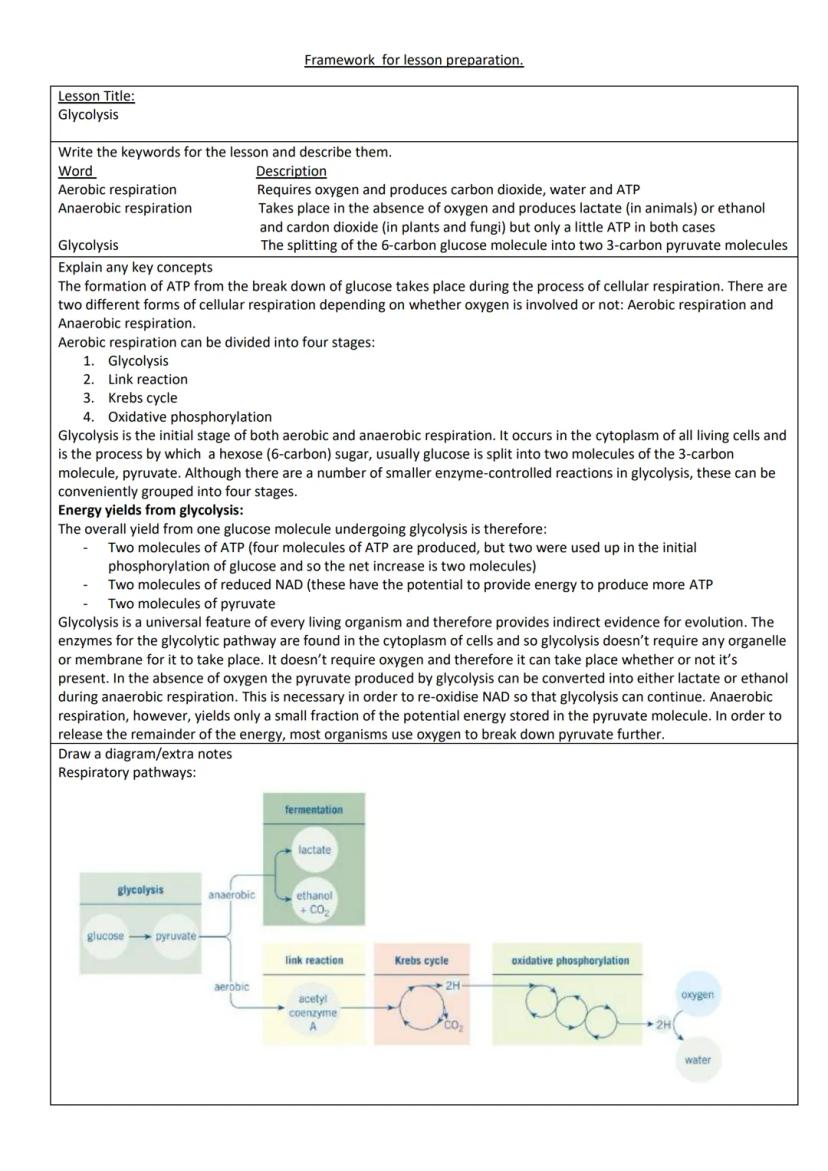
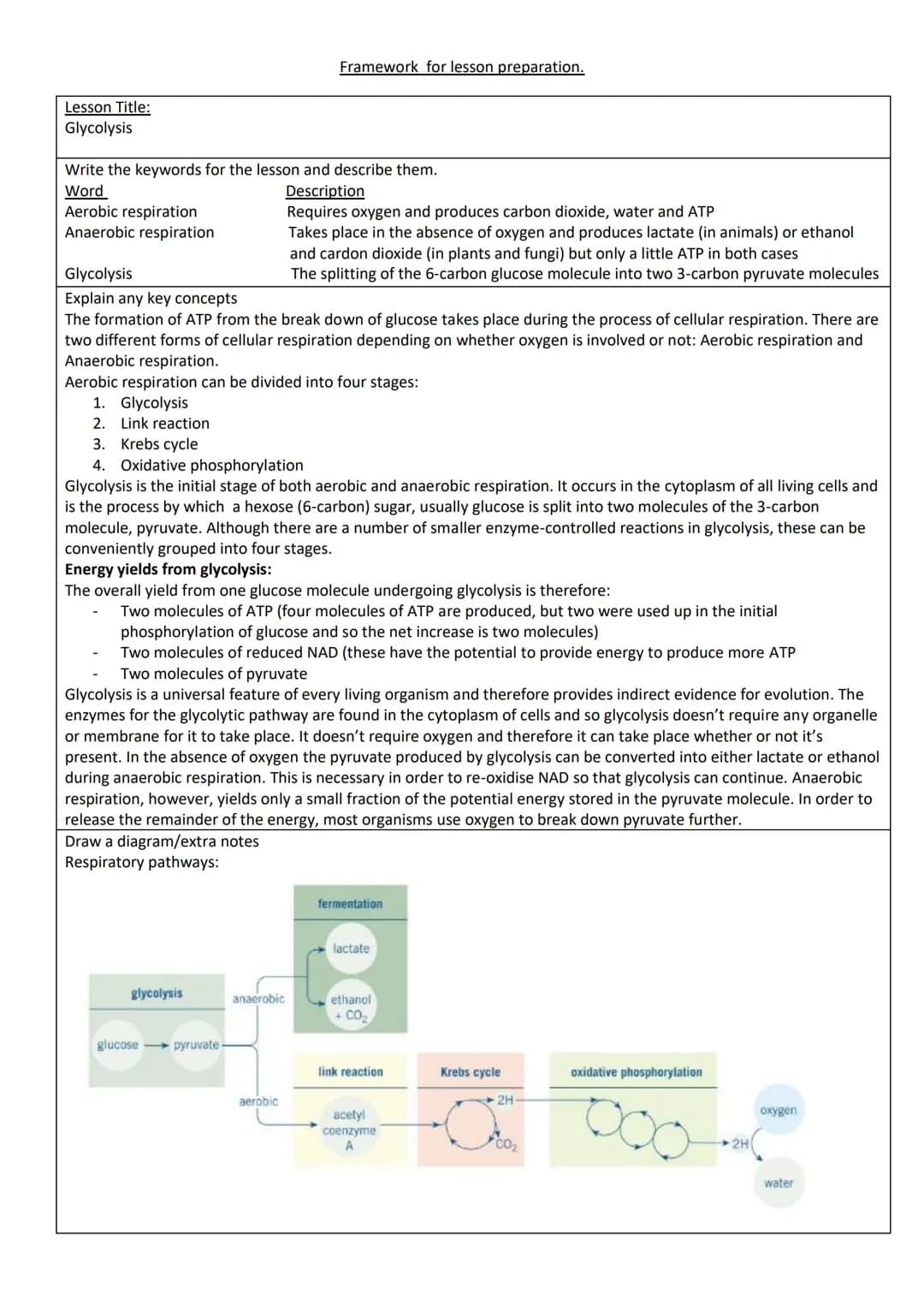
Your cells are constantly hungry for energy, and glycolysis is their first port of call. This process happens in every living cell on Earth, making it one of biology's most universal features.
Glycolysis splits glucose into two smaller 3-carbon molecules called pyruvate. The brilliant thing is that this happens in your cell's cytoplasm and doesn't need oxygen at all. Think of it as the opening act that sets up everything else in respiration.
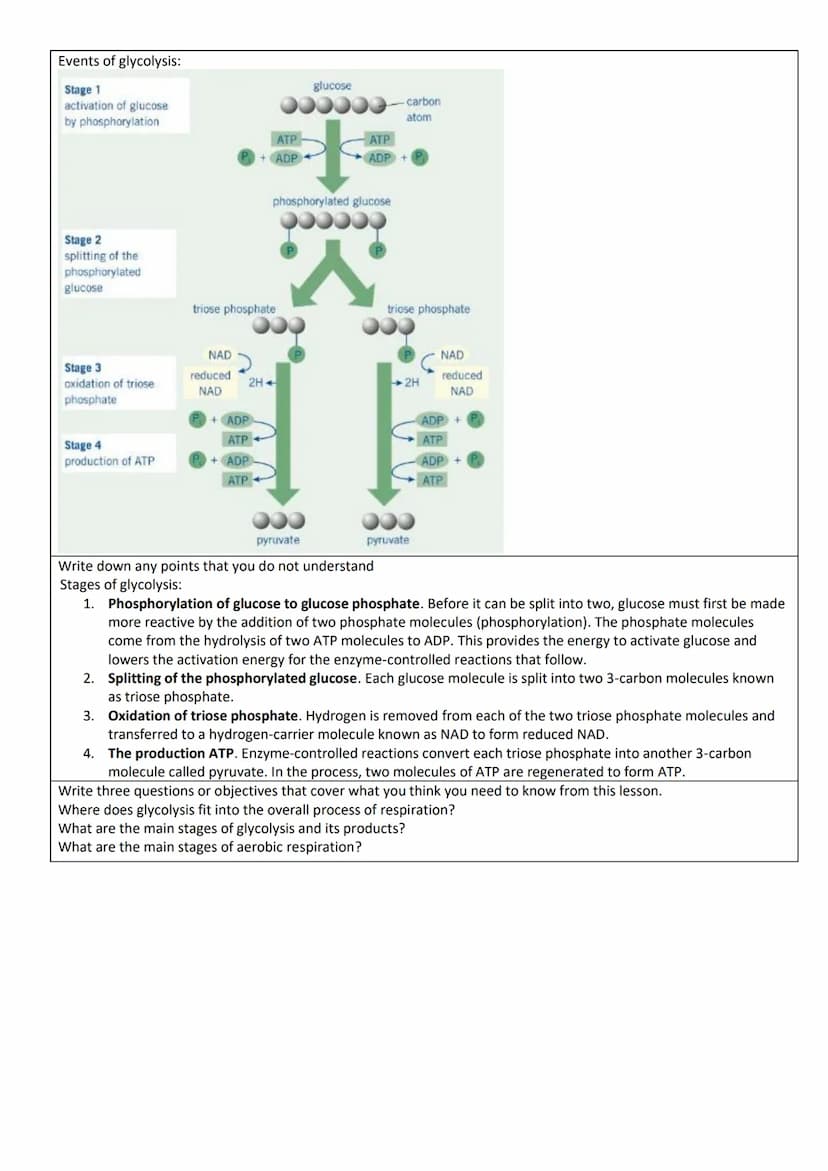
The process has four main stages: first, glucose gets activated by adding phosphate groups (using up 2 ATP molecules). Then it splits into two 3-carbon pieces called triose phosphate. Next, these molecules get oxidised, releasing hydrogen that gets picked up by NAD. Finally, the magic happens - 4 ATP molecules are produced, giving you a net gain of 2 ATP.
Quick tip: Remember that glycolysis gives you 2 ATP, 2 reduced NAD, and 2 pyruvate molecules from each glucose. These products are crucial for what happens next in respiration!
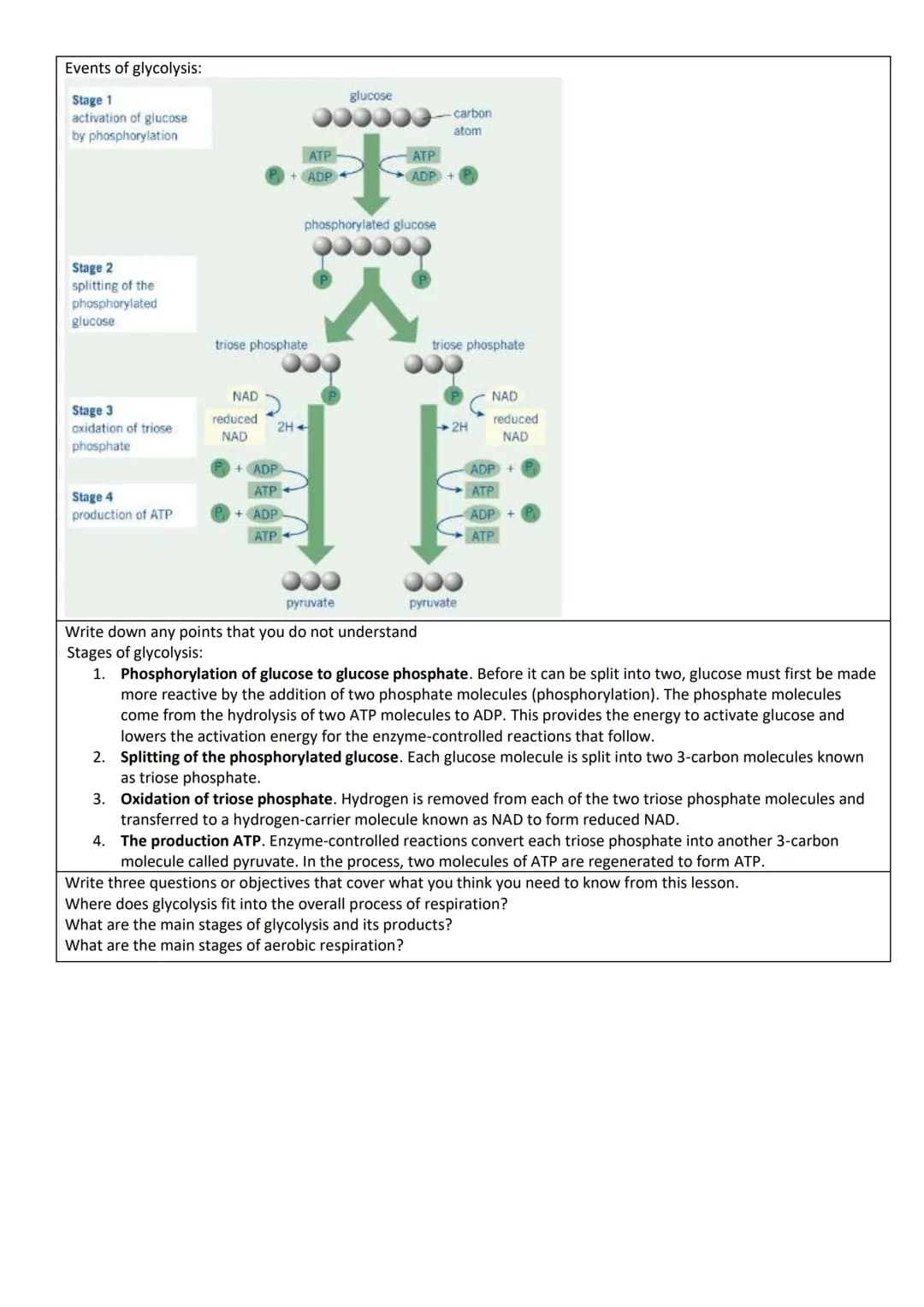
Breaking down glycolysis into bite-sized chunks makes it much easier to understand. Each stage has a specific job that leads smoothly into the next.
Stage 1 is all about activation - glucose needs to be "switched on" by adding two phosphate groups from ATP molecules. This might seem wasteful, but it's like investing money to make more money later. The phosphorylation makes glucose reactive enough for the enzymes to work with.
Stage 2 sees the phosphorylated glucose split down the middle into two identical 3-carbon molecules called triose phosphate. Now you've got two molecules working in parallel instead of one.
Stages 3 and 4 work together beautifully. The triose phosphate molecules get oxidised (losing hydrogen to NAD), then transform into pyruvate whilst regenerating 4 ATP molecules. Since you used 2 ATP at the start, your net profit is 2 ATP molecules.
Remember: The hydrogen captured by NAD is incredibly valuable - it'll be used later to make loads more ATP during oxidative phosphorylation!
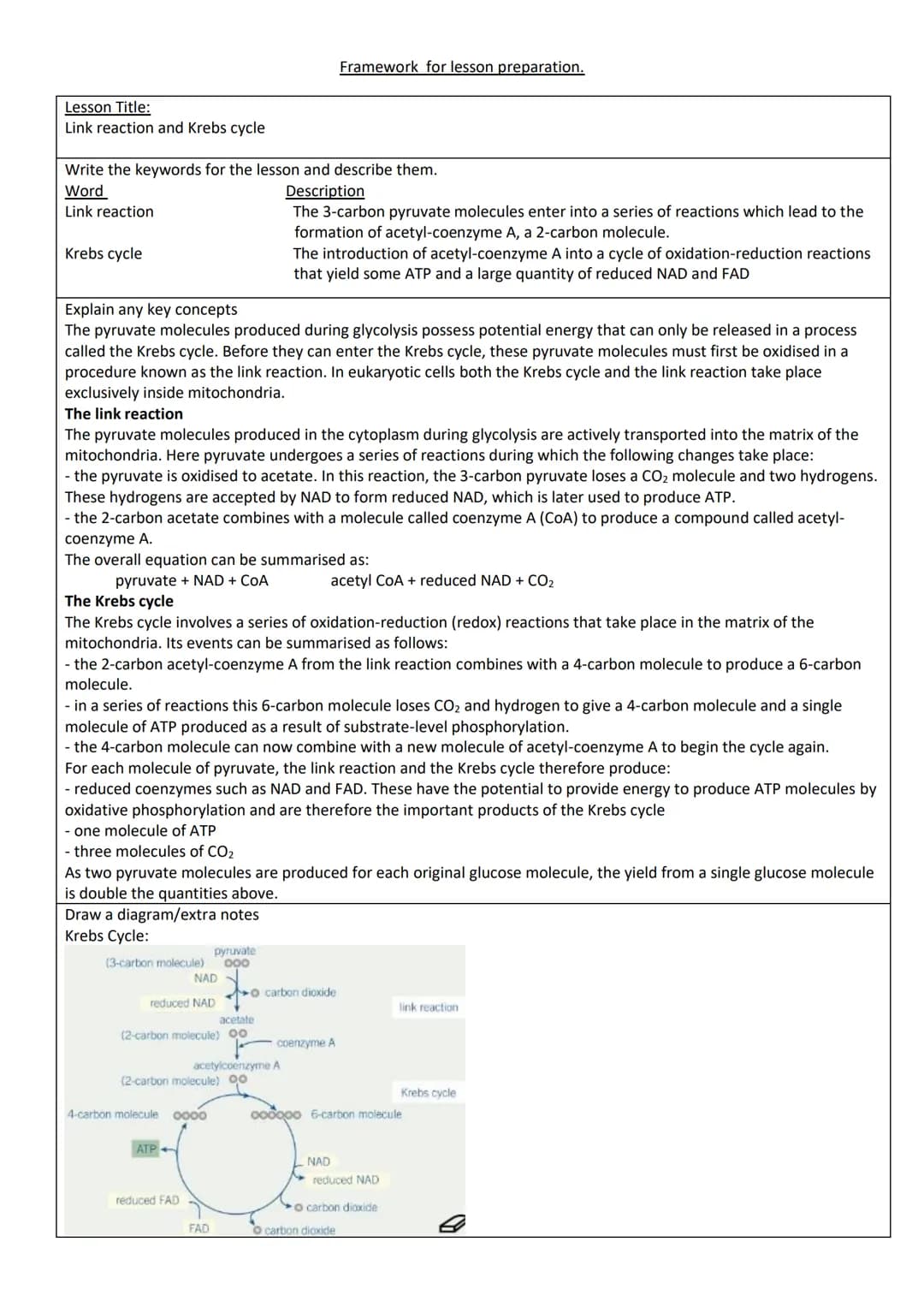
Once glycolysis is done, your pyruvate molecules need a passport to enter the mitochondria where the real energy extraction happens. The link reaction and Krebs cycle are like a sophisticated energy-harvesting factory.
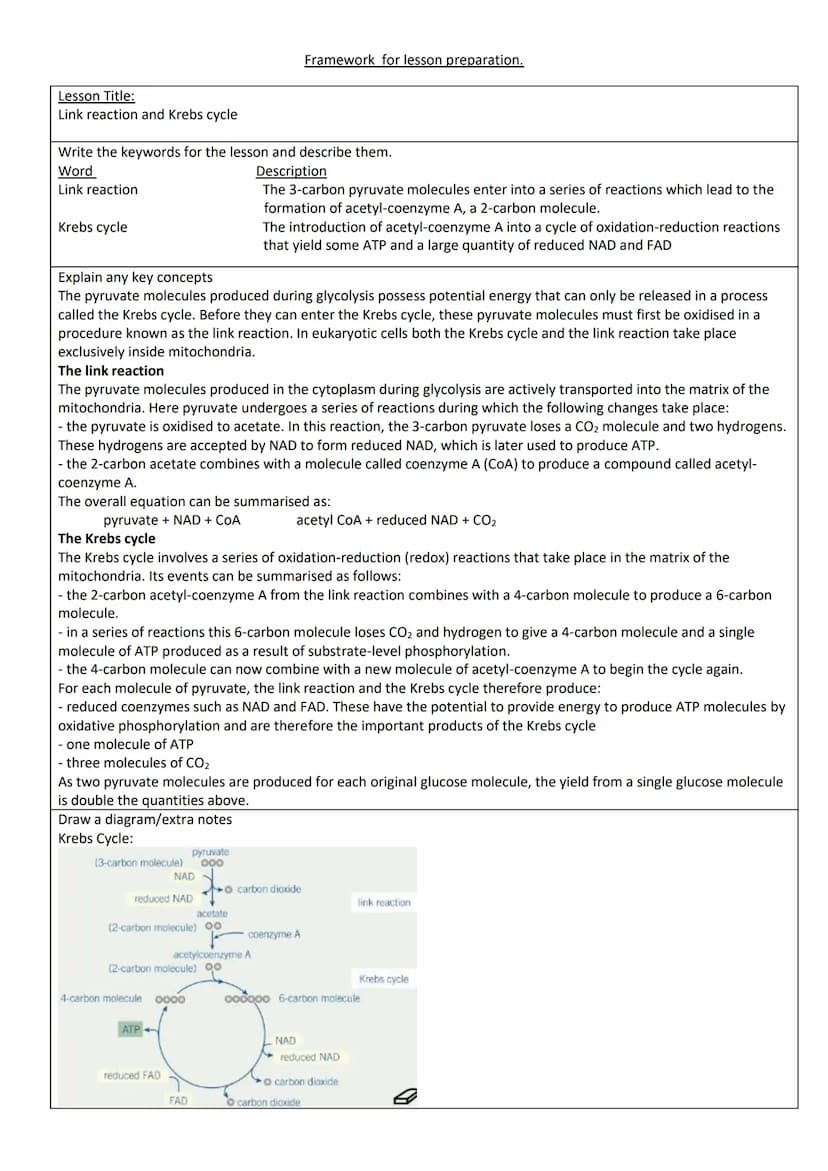
The link reaction transforms your 3-carbon pyruvate into 2-carbon acetyl-coenzyme A. During this makeover, pyruvate loses a carbon dioxide molecule and hands over hydrogen to NAD. It's a bit like stripping down a car to get the valuable parts.
The Krebs cycle is where acetyl-coenzyme A joins a 4-carbon molecule to create a 6-carbon compound. This then gets systematically broken down back to the 4-carbon molecule, releasing CO₂, hydrogen (captured by NAD and FAD), and one ATP molecule. The cycle then starts again with fresh acetyl-coenzyme A.
Key insight: The Krebs cycle's main job isn't making ATP directly - it's creating reduced NAD and FAD that will generate lots of ATP in the next stage!
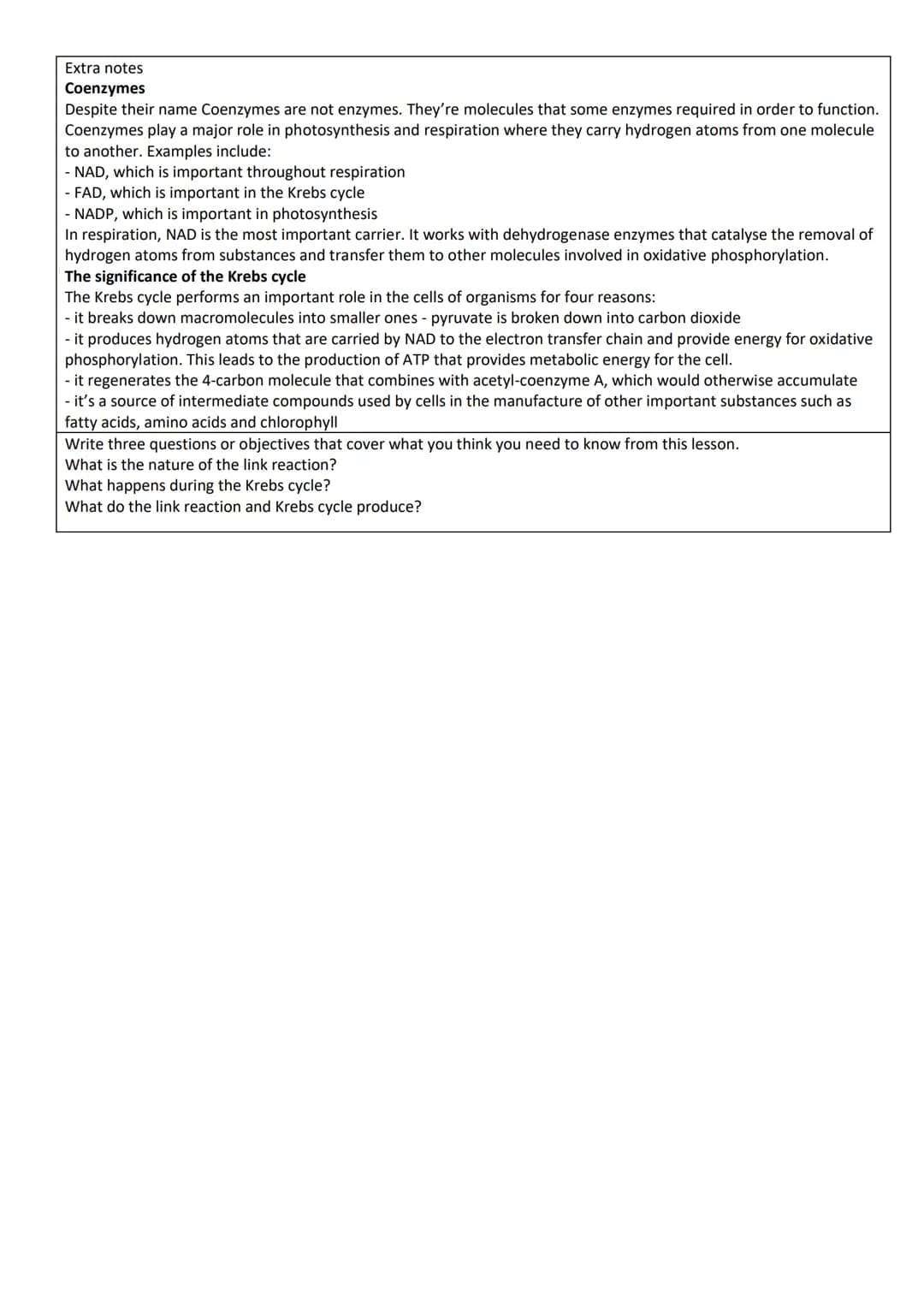
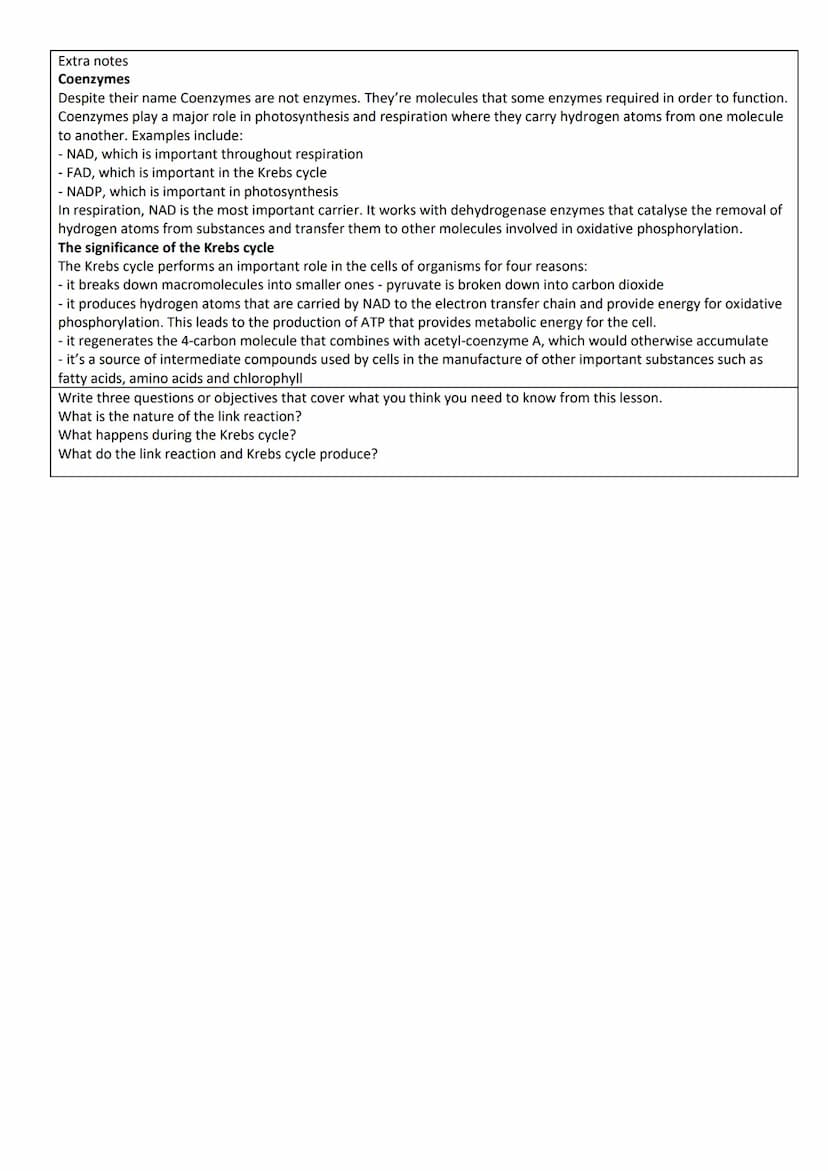
Coenzymes aren't actually enzymes despite their name - think of them as helpful assistants that enzymes need to do their jobs properly. NAD, FAD, and NADP are the superstars of cellular respiration and photosynthesis.
These coenzymes work like hydrogen taxis, picking up hydrogen atoms from one molecule and dropping them off at another. NAD is the most important one in respiration, working with dehydrogenase enzymes to strip hydrogen from molecules and ferry it to where it's needed.
The Krebs cycle does four essential jobs for your cells: it breaks down large molecules into smaller ones, produces hydrogen carriers for ATP production, regenerates the molecules needed to keep the cycle running, and creates building blocks for other important substances like amino acids.
Think about it: Without coenzymes like NAD, respiration would grind to a halt - they're absolutely essential for transferring energy around your cells!
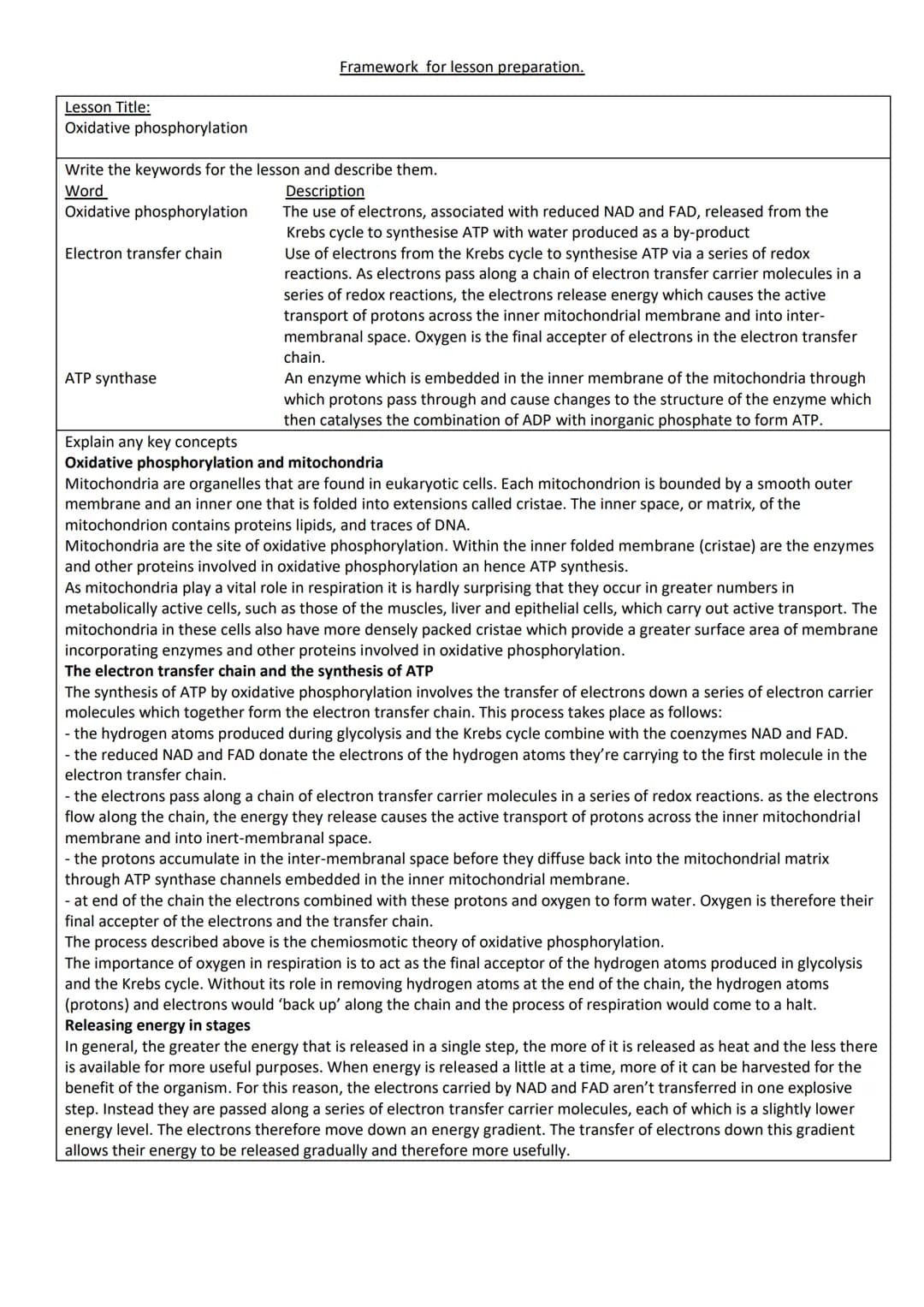
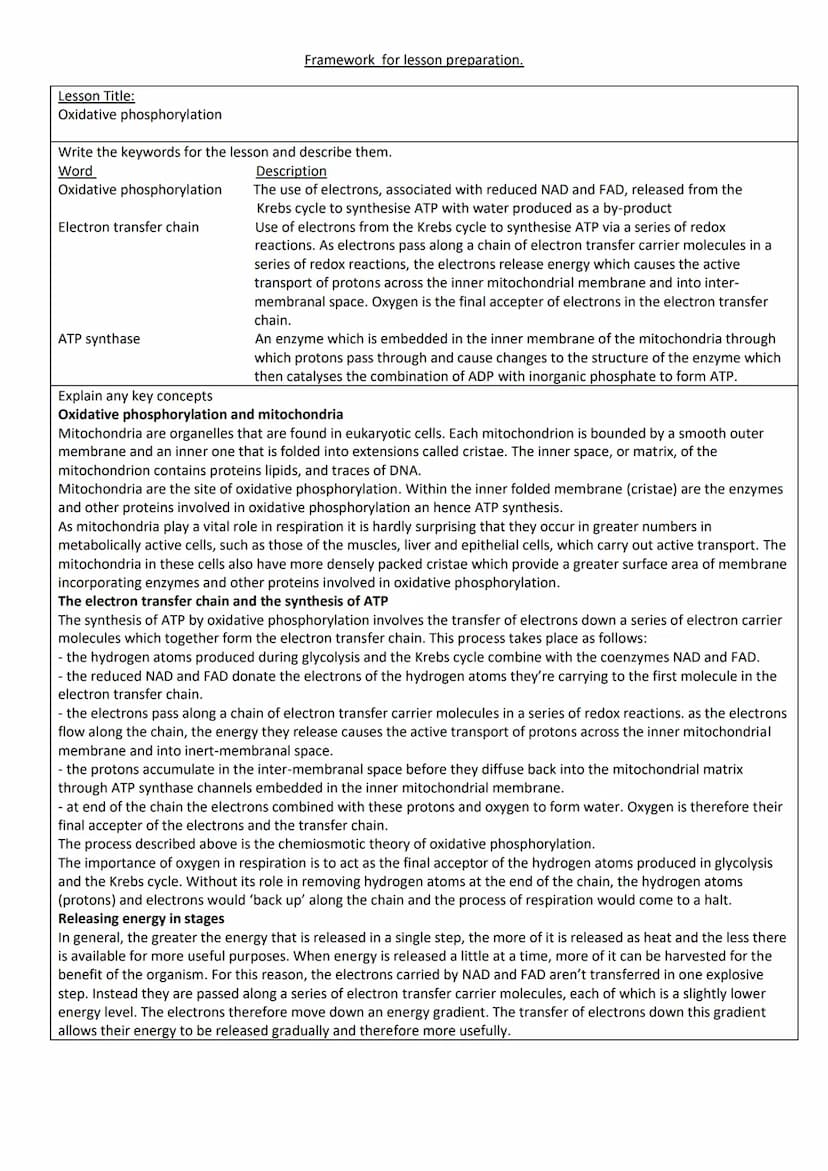
Oxidative phosphorylation is where the real magic happens - this is your cell's main ATP production line. All those hydrogen atoms collected by NAD and FAD finally get put to work in the mitochondria's inner membrane.
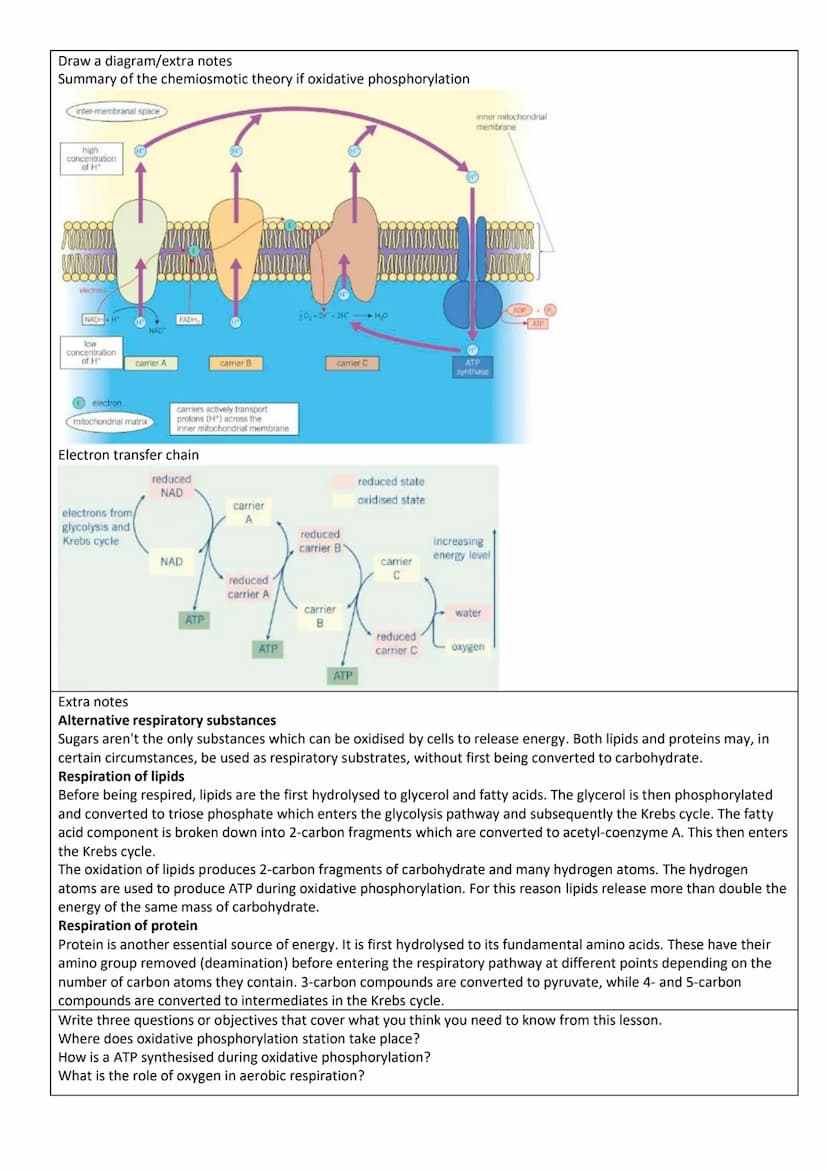
The electron transfer chain works like a sophisticated power station. Electrons from reduced NAD and FAD get passed along a series of carrier molecules, releasing energy bit by bit rather than all at once. This gradual release is crucial - it's like walking down stairs instead of jumping off a cliff.
As electrons flow down the chain, their energy pumps protons across the inner mitochondrial membrane. These protons then flow back through ATP synthase channels, and this flow powers the production of ATP from ADP. Finally, oxygen acts as the ultimate electron acceptor, combining with protons and electrons to form water.
Critical point: Oxygen is essential as the final electron acceptor - without it, the whole electron transport chain backs up and respiration stops!
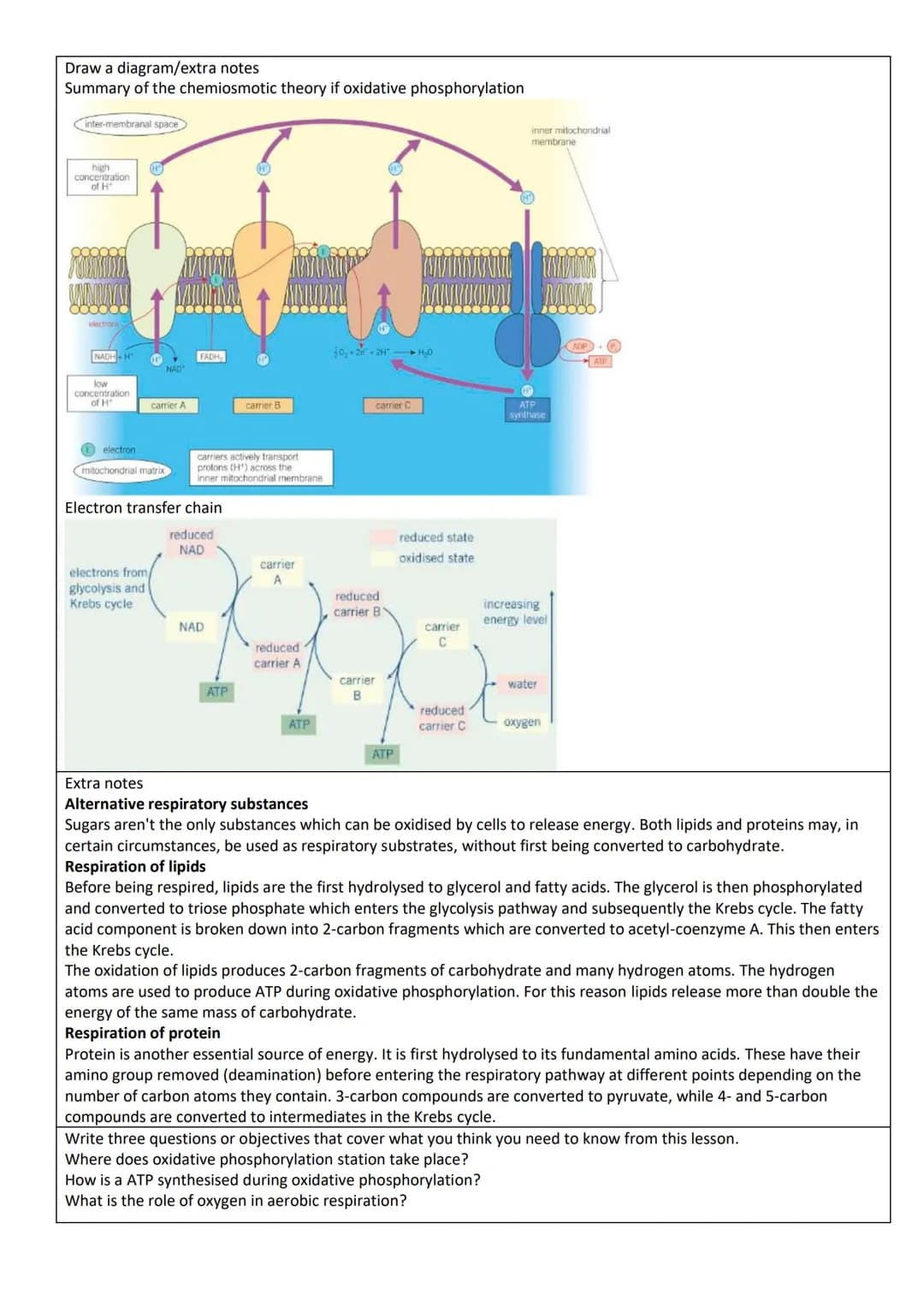
The chemiosmotic theory explains how your mitochondria work like tiny hydroelectric power stations. Protons build up on one side of the inner membrane, creating a gradient that drives ATP production when they flow back through ATP synthase.
Your cells aren't picky about fuel sources. Lipids can be broken down into glycerol (which enters glycolysis) and fatty acids . This is why fats release more than twice the energy of carbohydrates - they produce loads of hydrogen atoms for oxidative phosphorylation.
Proteins can also fuel respiration after being broken down into amino acids. These lose their amino groups and enter the respiratory pathway at different points depending on their size. It's like having multiple entry points into a motorway system.
Fascinating fact: Metabolically active cells like muscle and liver cells have more mitochondria with densely packed cristae to meet their huge energy demands!
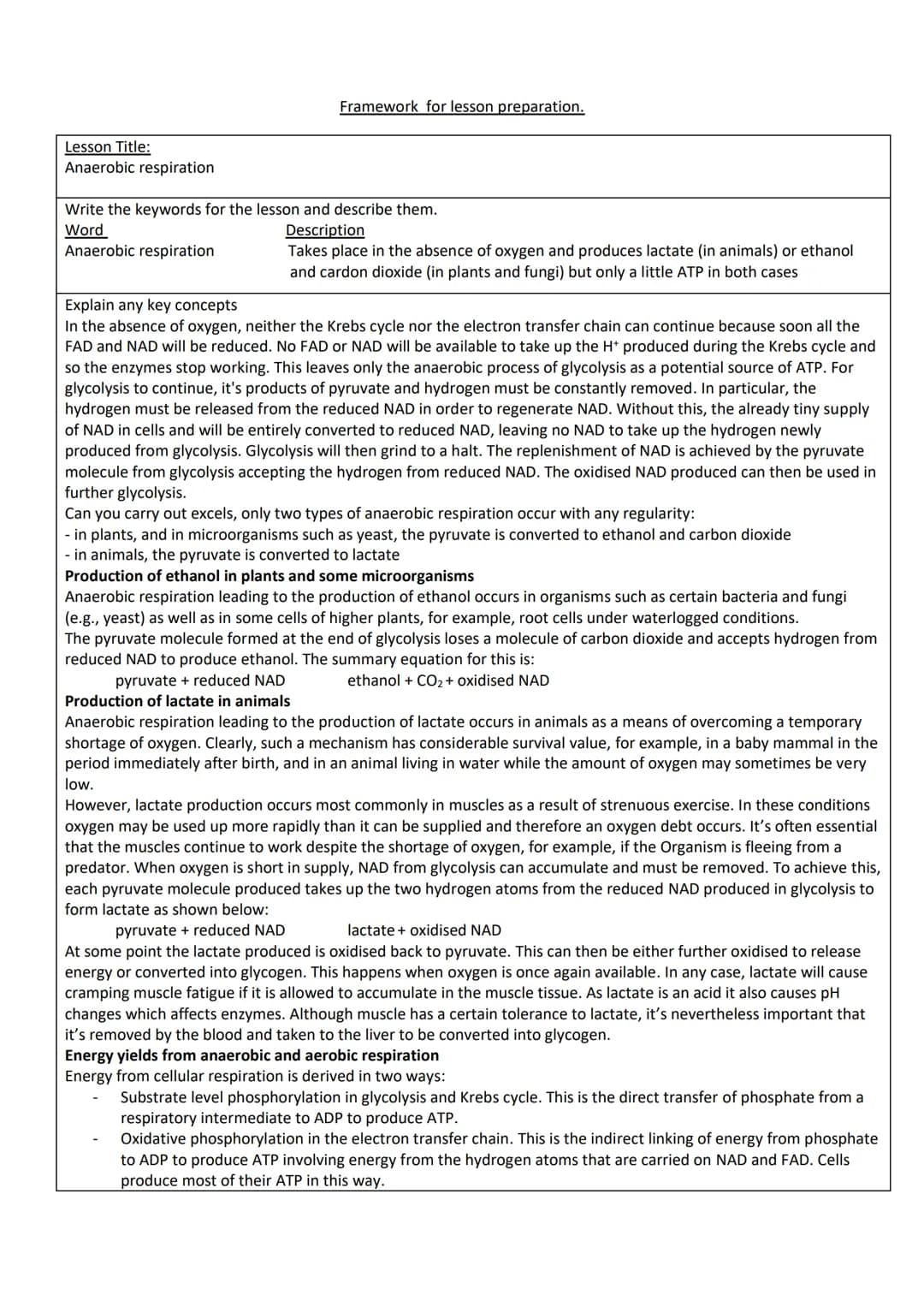
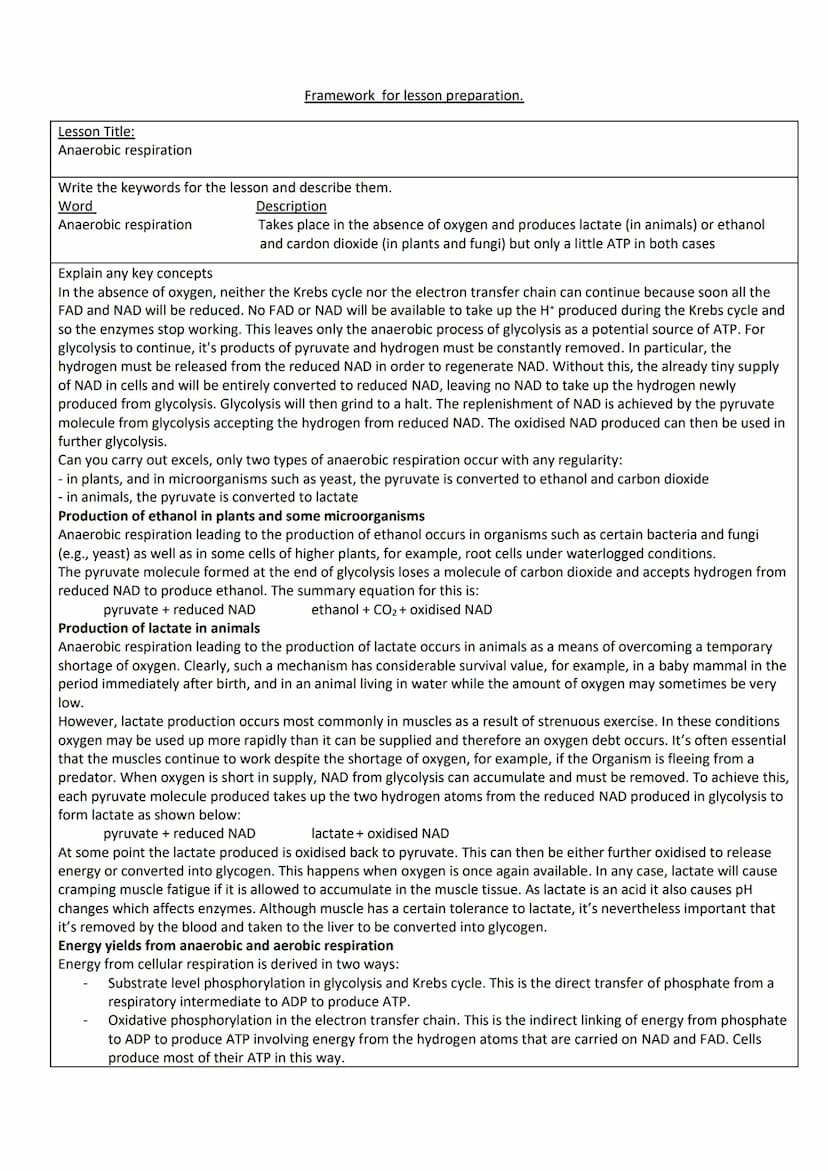
When oxygen runs out, your cells don't just give up - they switch to anaerobic respiration. This happens during intense exercise when your muscles use oxygen faster than your blood can deliver it, creating an "oxygen debt."
Without oxygen, the Krebs cycle and electron transport chain shut down because NAD and FAD can't be regenerated. Your cells fall back on glycolysis alone, but there's a problem - the NAD gets used up and needs regenerating to keep glycolysis running.
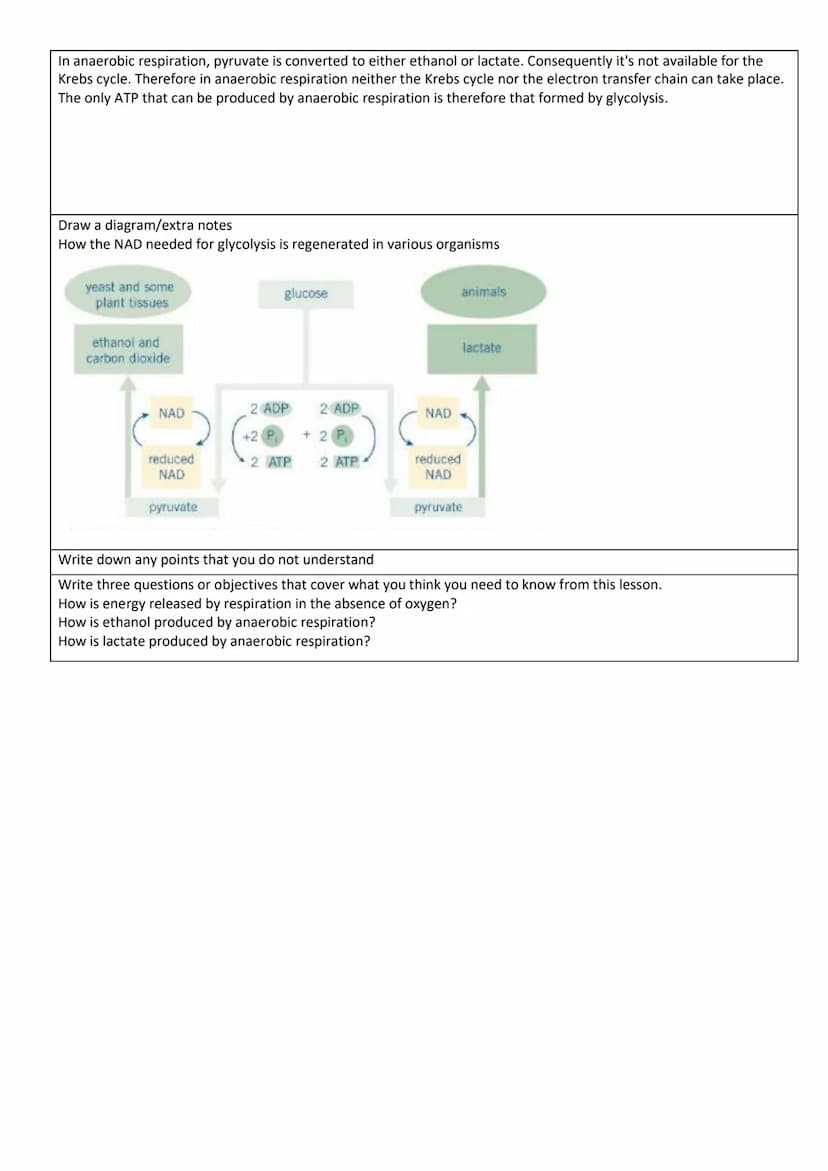
The solution is brilliant: pyruvate from glycolysis accepts hydrogen from reduced NAD, regenerating the NAD needed. In animals, this creates lactate (which causes muscle fatigue and cramps). In plants and fungi like yeast, pyruvate becomes ethanol and carbon dioxide instead.
Important: Anaerobic respiration only produces 2 ATP molecules compared to aerobic respiration's 32-38 ATP - that's why you can't sprint forever!
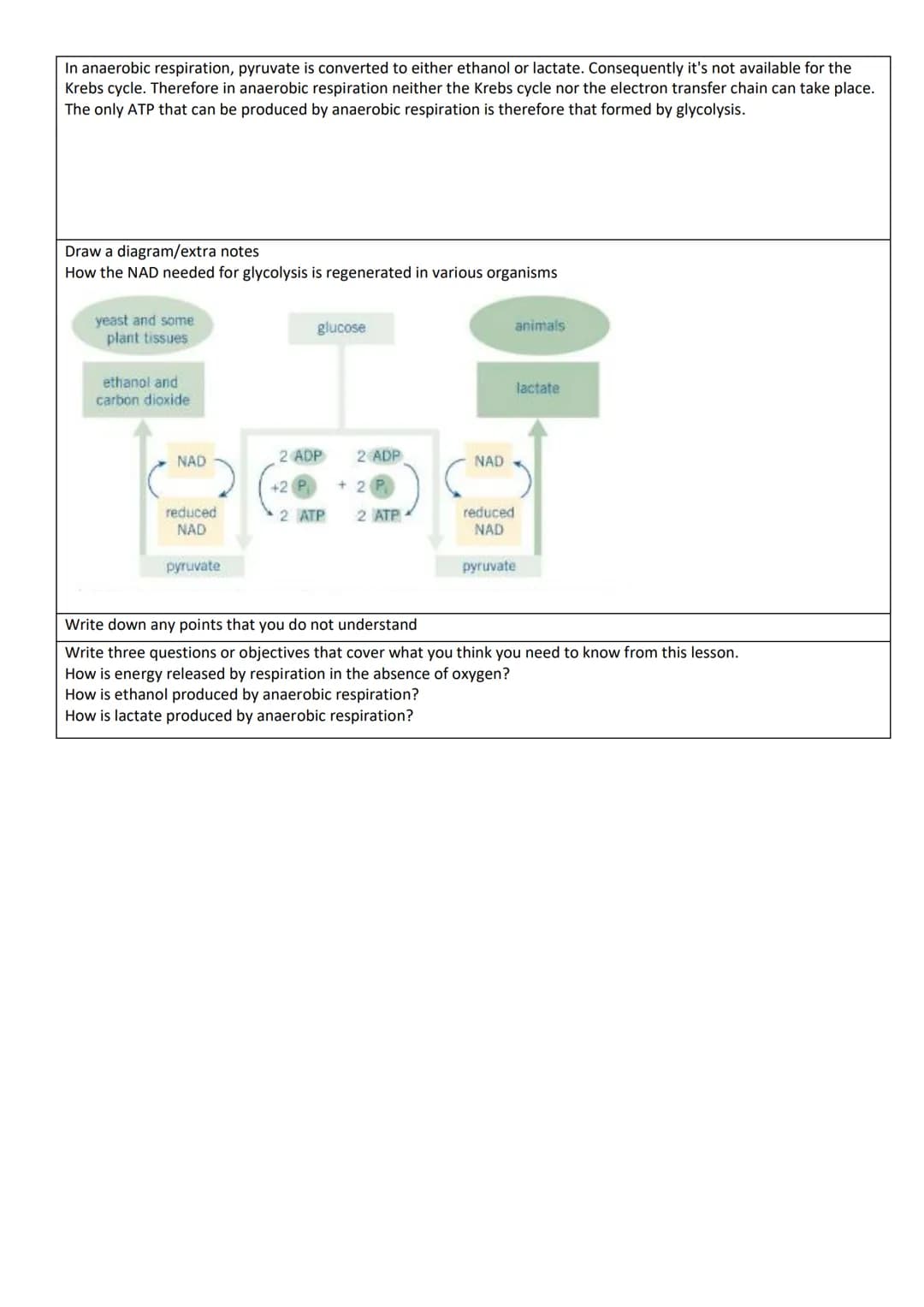
Anaerobic respiration is like running your car on fumes - it keeps you going but isn't sustainable long-term. Since pyruvate gets converted to lactate or ethanol instead of entering the Krebs cycle, you miss out on all that potential ATP from oxidative phosphorylation.
The energy comparison is stark: glycolysis alone gives you just 2 ATP molecules per glucose, whilst the complete aerobic process yields around 32-38 ATP molecules. It's the difference between finding loose change and winning the lottery.
Your body has clever recovery mechanisms. When oxygen becomes available again, lactate gets transported to your liver and converted back to pyruvate or glycogen. This is why you keep breathing heavily after intense exercise - you're paying back that oxygen debt and clearing the lactate buildup.
Recovery tip: The burning sensation in your muscles during intense exercise is partly due to lactate buildup changing the pH and affecting enzyme function!
Our AI Companion is a student-focused AI tool that offers more than just answers. Built on millions of Knowunity resources, it provides relevant information, personalised study plans, quizzes, and content directly in the chat, adapting to your individual learning journey.
You can download the app from Google Play Store and Apple App Store.
That's right! Enjoy free access to study content, connect with fellow students, and get instant help – all at your fingertips.
App Store
Google Play
The app is very easy to use and well designed. I have found everything I was looking for so far and have been able to learn a lot from the presentations! I will definitely use the app for a class assignment! And of course it also helps a lot as an inspiration.
Stefan S
iOS user
This app is really great. There are so many study notes and help [...]. My problem subject is French, for example, and the app has so many options for help. Thanks to this app, I have improved my French. I would recommend it to anyone.
Samantha Klich
Android user
Wow, I am really amazed. I just tried the app because I've seen it advertised many times and was absolutely stunned. This app is THE HELP you want for school and above all, it offers so many things, such as workouts and fact sheets, which have been VERY helpful to me personally.
Anna
iOS user
Best app on earth! no words because it’s too good
Thomas R
iOS user
Just amazing. Let's me revise 10x better, this app is a quick 10/10. I highly recommend it to anyone. I can watch and search for notes. I can save them in the subject folder. I can revise it any time when I come back. If you haven't tried this app, you're really missing out.
Basil
Android user
This app has made me feel so much more confident in my exam prep, not only through boosting my own self confidence through the features that allow you to connect with others and feel less alone, but also through the way the app itself is centred around making you feel better. It is easy to navigate, fun to use, and helpful to anyone struggling in absolutely any way.
David K
iOS user
The app's just great! All I have to do is enter the topic in the search bar and I get the response real fast. I don't have to watch 10 YouTube videos to understand something, so I'm saving my time. Highly recommended!
Sudenaz Ocak
Android user
In school I was really bad at maths but thanks to the app, I am doing better now. I am so grateful that you made the app.
Greenlight Bonnie
Android user
very reliable app to help and grow your ideas of Maths, English and other related topics in your works. please use this app if your struggling in areas, this app is key for that. wish I'd of done a review before. and it's also free so don't worry about that.
Rohan U
Android user
I know a lot of apps use fake accounts to boost their reviews but this app deserves it all. Originally I was getting 4 in my English exams and this time I got a grade 7. I didn’t even know about this app three days until the exam and it has helped A LOT. Please actually trust me and use it as I’m sure you too will see developments.
Xander S
iOS user
THE QUIZES AND FLASHCARDS ARE SO USEFUL AND I LOVE Knowunity AI. IT ALSO IS LITREALLY LIKE CHATGPT BUT SMARTER!! HELPED ME WITH MY MASCARA PROBLEMS TOO!! AS WELL AS MY REAL SUBJECTS ! DUHHH 😍😁😲🤑💗✨🎀😮
Elisha
iOS user
This apps acc the goat. I find revision so boring but this app makes it so easy to organize it all and then you can ask the freeeee ai to test yourself so good and you can easily upload your own stuff. highly recommend as someone taking mocks now
Paul T
iOS user
The app is very easy to use and well designed. I have found everything I was looking for so far and have been able to learn a lot from the presentations! I will definitely use the app for a class assignment! And of course it also helps a lot as an inspiration.
Stefan S
iOS user
This app is really great. There are so many study notes and help [...]. My problem subject is French, for example, and the app has so many options for help. Thanks to this app, I have improved my French. I would recommend it to anyone.
Samantha Klich
Android user
Wow, I am really amazed. I just tried the app because I've seen it advertised many times and was absolutely stunned. This app is THE HELP you want for school and above all, it offers so many things, such as workouts and fact sheets, which have been VERY helpful to me personally.
Anna
iOS user
Best app on earth! no words because it’s too good
Thomas R
iOS user
Just amazing. Let's me revise 10x better, this app is a quick 10/10. I highly recommend it to anyone. I can watch and search for notes. I can save them in the subject folder. I can revise it any time when I come back. If you haven't tried this app, you're really missing out.
Basil
Android user
This app has made me feel so much more confident in my exam prep, not only through boosting my own self confidence through the features that allow you to connect with others and feel less alone, but also through the way the app itself is centred around making you feel better. It is easy to navigate, fun to use, and helpful to anyone struggling in absolutely any way.
David K
iOS user
The app's just great! All I have to do is enter the topic in the search bar and I get the response real fast. I don't have to watch 10 YouTube videos to understand something, so I'm saving my time. Highly recommended!
Sudenaz Ocak
Android user
In school I was really bad at maths but thanks to the app, I am doing better now. I am so grateful that you made the app.
Greenlight Bonnie
Android user
very reliable app to help and grow your ideas of Maths, English and other related topics in your works. please use this app if your struggling in areas, this app is key for that. wish I'd of done a review before. and it's also free so don't worry about that.
Rohan U
Android user
I know a lot of apps use fake accounts to boost their reviews but this app deserves it all. Originally I was getting 4 in my English exams and this time I got a grade 7. I didn’t even know about this app three days until the exam and it has helped A LOT. Please actually trust me and use it as I’m sure you too will see developments.
Xander S
iOS user
THE QUIZES AND FLASHCARDS ARE SO USEFUL AND I LOVE Knowunity AI. IT ALSO IS LITREALLY LIKE CHATGPT BUT SMARTER!! HELPED ME WITH MY MASCARA PROBLEMS TOO!! AS WELL AS MY REAL SUBJECTS ! DUHHH 😍😁😲🤑💗✨🎀😮
Elisha
iOS user
This apps acc the goat. I find revision so boring but this app makes it so easy to organize it all and then you can ask the freeeee ai to test yourself so good and you can easily upload your own stuff. highly recommend as someone taking mocks now
Paul T
iOS user
Morgan
@morganb240605
Ever wondered how your muscles keep working during intense exercise when you're out of breath? Cellular respiration is the amazing process that breaks down glucose to release energy for everything your body does. Whether there's oxygen available or not, your... Show more
Access to all documents
Improve your grades
Join milions of students
By signing up you accept Terms of Service and Privacy Policy
Your cells are constantly hungry for energy, and glycolysis is their first port of call. This process happens in every living cell on Earth, making it one of biology's most universal features.
Glycolysis splits glucose into two smaller 3-carbon molecules called pyruvate. The brilliant thing is that this happens in your cell's cytoplasm and doesn't need oxygen at all. Think of it as the opening act that sets up everything else in respiration.
The process has four main stages: first, glucose gets activated by adding phosphate groups (using up 2 ATP molecules). Then it splits into two 3-carbon pieces called triose phosphate. Next, these molecules get oxidised, releasing hydrogen that gets picked up by NAD. Finally, the magic happens - 4 ATP molecules are produced, giving you a net gain of 2 ATP.
Quick tip: Remember that glycolysis gives you 2 ATP, 2 reduced NAD, and 2 pyruvate molecules from each glucose. These products are crucial for what happens next in respiration!
Access to all documents
Improve your grades
Join milions of students
By signing up you accept Terms of Service and Privacy Policy
Breaking down glycolysis into bite-sized chunks makes it much easier to understand. Each stage has a specific job that leads smoothly into the next.
Stage 1 is all about activation - glucose needs to be "switched on" by adding two phosphate groups from ATP molecules. This might seem wasteful, but it's like investing money to make more money later. The phosphorylation makes glucose reactive enough for the enzymes to work with.
Stage 2 sees the phosphorylated glucose split down the middle into two identical 3-carbon molecules called triose phosphate. Now you've got two molecules working in parallel instead of one.
Stages 3 and 4 work together beautifully. The triose phosphate molecules get oxidised (losing hydrogen to NAD), then transform into pyruvate whilst regenerating 4 ATP molecules. Since you used 2 ATP at the start, your net profit is 2 ATP molecules.
Remember: The hydrogen captured by NAD is incredibly valuable - it'll be used later to make loads more ATP during oxidative phosphorylation!
Access to all documents
Improve your grades
Join milions of students
By signing up you accept Terms of Service and Privacy Policy
Once glycolysis is done, your pyruvate molecules need a passport to enter the mitochondria where the real energy extraction happens. The link reaction and Krebs cycle are like a sophisticated energy-harvesting factory.
The link reaction transforms your 3-carbon pyruvate into 2-carbon acetyl-coenzyme A. During this makeover, pyruvate loses a carbon dioxide molecule and hands over hydrogen to NAD. It's a bit like stripping down a car to get the valuable parts.
The Krebs cycle is where acetyl-coenzyme A joins a 4-carbon molecule to create a 6-carbon compound. This then gets systematically broken down back to the 4-carbon molecule, releasing CO₂, hydrogen (captured by NAD and FAD), and one ATP molecule. The cycle then starts again with fresh acetyl-coenzyme A.
Key insight: The Krebs cycle's main job isn't making ATP directly - it's creating reduced NAD and FAD that will generate lots of ATP in the next stage!
Access to all documents
Improve your grades
Join milions of students
By signing up you accept Terms of Service and Privacy Policy
Coenzymes aren't actually enzymes despite their name - think of them as helpful assistants that enzymes need to do their jobs properly. NAD, FAD, and NADP are the superstars of cellular respiration and photosynthesis.
These coenzymes work like hydrogen taxis, picking up hydrogen atoms from one molecule and dropping them off at another. NAD is the most important one in respiration, working with dehydrogenase enzymes to strip hydrogen from molecules and ferry it to where it's needed.
The Krebs cycle does four essential jobs for your cells: it breaks down large molecules into smaller ones, produces hydrogen carriers for ATP production, regenerates the molecules needed to keep the cycle running, and creates building blocks for other important substances like amino acids.
Think about it: Without coenzymes like NAD, respiration would grind to a halt - they're absolutely essential for transferring energy around your cells!
Access to all documents
Improve your grades
Join milions of students
By signing up you accept Terms of Service and Privacy Policy
Oxidative phosphorylation is where the real magic happens - this is your cell's main ATP production line. All those hydrogen atoms collected by NAD and FAD finally get put to work in the mitochondria's inner membrane.
The electron transfer chain works like a sophisticated power station. Electrons from reduced NAD and FAD get passed along a series of carrier molecules, releasing energy bit by bit rather than all at once. This gradual release is crucial - it's like walking down stairs instead of jumping off a cliff.
As electrons flow down the chain, their energy pumps protons across the inner mitochondrial membrane. These protons then flow back through ATP synthase channels, and this flow powers the production of ATP from ADP. Finally, oxygen acts as the ultimate electron acceptor, combining with protons and electrons to form water.
Critical point: Oxygen is essential as the final electron acceptor - without it, the whole electron transport chain backs up and respiration stops!
Access to all documents
Improve your grades
Join milions of students
By signing up you accept Terms of Service and Privacy Policy
The chemiosmotic theory explains how your mitochondria work like tiny hydroelectric power stations. Protons build up on one side of the inner membrane, creating a gradient that drives ATP production when they flow back through ATP synthase.
Your cells aren't picky about fuel sources. Lipids can be broken down into glycerol (which enters glycolysis) and fatty acids . This is why fats release more than twice the energy of carbohydrates - they produce loads of hydrogen atoms for oxidative phosphorylation.
Proteins can also fuel respiration after being broken down into amino acids. These lose their amino groups and enter the respiratory pathway at different points depending on their size. It's like having multiple entry points into a motorway system.
Fascinating fact: Metabolically active cells like muscle and liver cells have more mitochondria with densely packed cristae to meet their huge energy demands!
Access to all documents
Improve your grades
Join milions of students
By signing up you accept Terms of Service and Privacy Policy
When oxygen runs out, your cells don't just give up - they switch to anaerobic respiration. This happens during intense exercise when your muscles use oxygen faster than your blood can deliver it, creating an "oxygen debt."
Without oxygen, the Krebs cycle and electron transport chain shut down because NAD and FAD can't be regenerated. Your cells fall back on glycolysis alone, but there's a problem - the NAD gets used up and needs regenerating to keep glycolysis running.
The solution is brilliant: pyruvate from glycolysis accepts hydrogen from reduced NAD, regenerating the NAD needed. In animals, this creates lactate (which causes muscle fatigue and cramps). In plants and fungi like yeast, pyruvate becomes ethanol and carbon dioxide instead.
Important: Anaerobic respiration only produces 2 ATP molecules compared to aerobic respiration's 32-38 ATP - that's why you can't sprint forever!
Access to all documents
Improve your grades
Join milions of students
By signing up you accept Terms of Service and Privacy Policy
Anaerobic respiration is like running your car on fumes - it keeps you going but isn't sustainable long-term. Since pyruvate gets converted to lactate or ethanol instead of entering the Krebs cycle, you miss out on all that potential ATP from oxidative phosphorylation.
The energy comparison is stark: glycolysis alone gives you just 2 ATP molecules per glucose, whilst the complete aerobic process yields around 32-38 ATP molecules. It's the difference between finding loose change and winning the lottery.
Your body has clever recovery mechanisms. When oxygen becomes available again, lactate gets transported to your liver and converted back to pyruvate or glycogen. This is why you keep breathing heavily after intense exercise - you're paying back that oxygen debt and clearing the lactate buildup.
Recovery tip: The burning sensation in your muscles during intense exercise is partly due to lactate buildup changing the pH and affecting enzyme function!
Our AI Companion is a student-focused AI tool that offers more than just answers. Built on millions of Knowunity resources, it provides relevant information, personalised study plans, quizzes, and content directly in the chat, adapting to your individual learning journey.
You can download the app from Google Play Store and Apple App Store.
That's right! Enjoy free access to study content, connect with fellow students, and get instant help – all at your fingertips.
7
Smart Tools NEW
Transform this note into: ✓ 50+ Practice Questions ✓ Interactive Flashcards ✓ Full Mock Exam ✓ Essay Outlines
Explore the intricate processes of ATP production through glycolysis, the citric acid cycle, and oxidative phosphorylation. This summary covers key concepts such as energy investment, NADH formation, and the electron transport chain, providing a clear understanding of cellular respiration mechanisms.
 Biology
Explore the key processes of cellular respiration, including glycolysis, the citric acid cycle, and the electron transport chain. Understand the roles of ATP production, fermentation, and oxidative phosphorylation in energy metabolism. This summary provides a clear breakdown of how glucose is converted into energy, highlighting the differences between aerobic and anaerobic pathways. Ideal for SQA Higher Biology students.
BiologyComprehensive study notes covering the key processes of cellular respiration, including glycolysis, the Krebs cycle, and the electron transport chain. Understand ATP production, oxidative phosphorylation, and the role of NADH and FADH2 in energy metabolism. Ideal for EDUQAS A Level Biology students.
BiologyExplore the key differences between aerobic and anaerobic respiration in this concise summary. Understand the processes of cellular respiration, including the role of glucose, oxygen, and the byproducts of each type. Learn about metabolism, energy transfer, and the significance of fermentation in yeast and plants. Ideal for biology students studying bioenergetics and cellular metabolism.
BiologyExplore the essential processes of aerobic and anaerobic respiration, including key equations, energy release, and the role of lactic acid. This summary covers cellular respiration, fermentation, and their significance in energy production for living organisms. Ideal for students studying cellular bioenergetics.
BiologyExplore the processes of aerobic and anaerobic respiration, including energy transfer, metabolic reactions, and the role of enzymes. This summary covers key concepts such as oxygen debt, lactic acid buildup, and fermentation in yeast, providing essential insights for understanding cellular energetics and metabolism. Ideal for biology revision.
BiologyApp Store
Google Play
The app is very easy to use and well designed. I have found everything I was looking for so far and have been able to learn a lot from the presentations! I will definitely use the app for a class assignment! And of course it also helps a lot as an inspiration.
Stefan S
iOS user
This app is really great. There are so many study notes and help [...]. My problem subject is French, for example, and the app has so many options for help. Thanks to this app, I have improved my French. I would recommend it to anyone.
Samantha Klich
Android user
Wow, I am really amazed. I just tried the app because I've seen it advertised many times and was absolutely stunned. This app is THE HELP you want for school and above all, it offers so many things, such as workouts and fact sheets, which have been VERY helpful to me personally.
Anna
iOS user
Best app on earth! no words because it’s too good
Thomas R
iOS user
Just amazing. Let's me revise 10x better, this app is a quick 10/10. I highly recommend it to anyone. I can watch and search for notes. I can save them in the subject folder. I can revise it any time when I come back. If you haven't tried this app, you're really missing out.
Basil
Android user
This app has made me feel so much more confident in my exam prep, not only through boosting my own self confidence through the features that allow you to connect with others and feel less alone, but also through the way the app itself is centred around making you feel better. It is easy to navigate, fun to use, and helpful to anyone struggling in absolutely any way.
David K
iOS user
The app's just great! All I have to do is enter the topic in the search bar and I get the response real fast. I don't have to watch 10 YouTube videos to understand something, so I'm saving my time. Highly recommended!
Sudenaz Ocak
Android user
In school I was really bad at maths but thanks to the app, I am doing better now. I am so grateful that you made the app.
Greenlight Bonnie
Android user
very reliable app to help and grow your ideas of Maths, English and other related topics in your works. please use this app if your struggling in areas, this app is key for that. wish I'd of done a review before. and it's also free so don't worry about that.
Rohan U
Android user
I know a lot of apps use fake accounts to boost their reviews but this app deserves it all. Originally I was getting 4 in my English exams and this time I got a grade 7. I didn’t even know about this app three days until the exam and it has helped A LOT. Please actually trust me and use it as I’m sure you too will see developments.
Xander S
iOS user
THE QUIZES AND FLASHCARDS ARE SO USEFUL AND I LOVE Knowunity AI. IT ALSO IS LITREALLY LIKE CHATGPT BUT SMARTER!! HELPED ME WITH MY MASCARA PROBLEMS TOO!! AS WELL AS MY REAL SUBJECTS ! DUHHH 😍😁😲🤑💗✨🎀😮
Elisha
iOS user
This apps acc the goat. I find revision so boring but this app makes it so easy to organize it all and then you can ask the freeeee ai to test yourself so good and you can easily upload your own stuff. highly recommend as someone taking mocks now
Paul T
iOS user
The app is very easy to use and well designed. I have found everything I was looking for so far and have been able to learn a lot from the presentations! I will definitely use the app for a class assignment! And of course it also helps a lot as an inspiration.
Stefan S
iOS user
This app is really great. There are so many study notes and help [...]. My problem subject is French, for example, and the app has so many options for help. Thanks to this app, I have improved my French. I would recommend it to anyone.
Samantha Klich
Android user
Wow, I am really amazed. I just tried the app because I've seen it advertised many times and was absolutely stunned. This app is THE HELP you want for school and above all, it offers so many things, such as workouts and fact sheets, which have been VERY helpful to me personally.
Anna
iOS user
Best app on earth! no words because it’s too good
Thomas R
iOS user
Just amazing. Let's me revise 10x better, this app is a quick 10/10. I highly recommend it to anyone. I can watch and search for notes. I can save them in the subject folder. I can revise it any time when I come back. If you haven't tried this app, you're really missing out.
Basil
Android user
This app has made me feel so much more confident in my exam prep, not only through boosting my own self confidence through the features that allow you to connect with others and feel less alone, but also through the way the app itself is centred around making you feel better. It is easy to navigate, fun to use, and helpful to anyone struggling in absolutely any way.
David K
iOS user
The app's just great! All I have to do is enter the topic in the search bar and I get the response real fast. I don't have to watch 10 YouTube videos to understand something, so I'm saving my time. Highly recommended!
Sudenaz Ocak
Android user
In school I was really bad at maths but thanks to the app, I am doing better now. I am so grateful that you made the app.
Greenlight Bonnie
Android user
very reliable app to help and grow your ideas of Maths, English and other related topics in your works. please use this app if your struggling in areas, this app is key for that. wish I'd of done a review before. and it's also free so don't worry about that.
Rohan U
Android user
I know a lot of apps use fake accounts to boost their reviews but this app deserves it all. Originally I was getting 4 in my English exams and this time I got a grade 7. I didn’t even know about this app three days until the exam and it has helped A LOT. Please actually trust me and use it as I’m sure you too will see developments.
Xander S
iOS user
THE QUIZES AND FLASHCARDS ARE SO USEFUL AND I LOVE Knowunity AI. IT ALSO IS LITREALLY LIKE CHATGPT BUT SMARTER!! HELPED ME WITH MY MASCARA PROBLEMS TOO!! AS WELL AS MY REAL SUBJECTS ! DUHHH 😍😁😲🤑💗✨🎀😮
Elisha
iOS user
This apps acc the goat. I find revision so boring but this app makes it so easy to organize it all and then you can ask the freeeee ai to test yourself so good and you can easily upload your own stuff. highly recommend as someone taking mocks now
Paul T
iOS user