Cell Structure Fundamentals
Ever wondered what makes you different from bacteria? It all comes down to how your cells are built! Eukaryotic cells (found in animals and plants) are much larger and more complex than prokaryotic cells (found in bacteria).
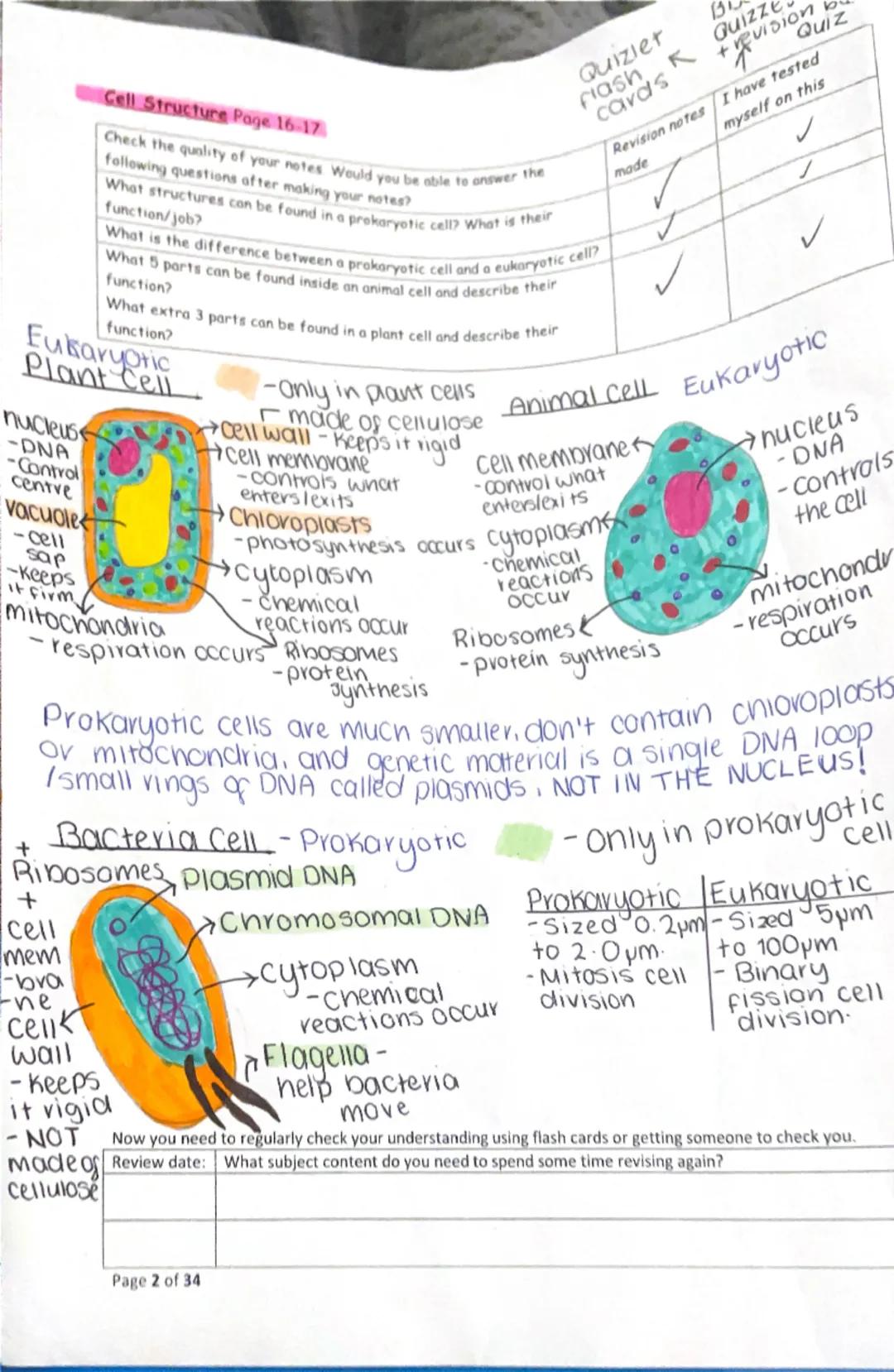
Animal cells contain five essential parts that work like a well-organised factory. The nucleus acts as the control centre, housing your DNA and making all the important decisions. Mitochondria are like tiny power stations where respiration occurs to give you energy. The cell membrane works as a selective security guard, controlling what enters and exits the cell.
Don't forget about ribosomes, which are protein-making machines, and cytoplasm, the jelly-like substance where chemical reactions happen. These five components keep animal cells functioning perfectly.
Quick Tip: Remember that prokaryotic cells are 0.2-2.0 μm in size, whilst eukaryotic cells are much larger at 5-100 μm - that's a massive difference!
Plant cells have everything animal cells do, plus three extra features. The cell wall (made of cellulose) provides rigid structure like a sturdy frame. Chloroplasts are green powerhouses where photosynthesis occurs, converting sunlight into food. The large vacuole filled with cell sap keeps the plant firm and upright.
Prokaryotic cells like bacteria are much simpler but still effective. They lack mitochondria and chloroplasts, and their genetic material floats freely in the cytoplasm rather than being contained in a nucleus. They also have plasmids - small rings of DNA that can be shared between bacteria. Some bacteria have flagella, whip-like structures that help them swim around.


 Biology
 English Literature
 Sociology