
Global biomes are large-scale ecosystems that occupy distinct regions of...
 Biology307 views·Updated 10 Jul 2026·8 pages
CCEA AS Geography: Comprehensive Guide to Global Biomes

1 / 8
1
of 8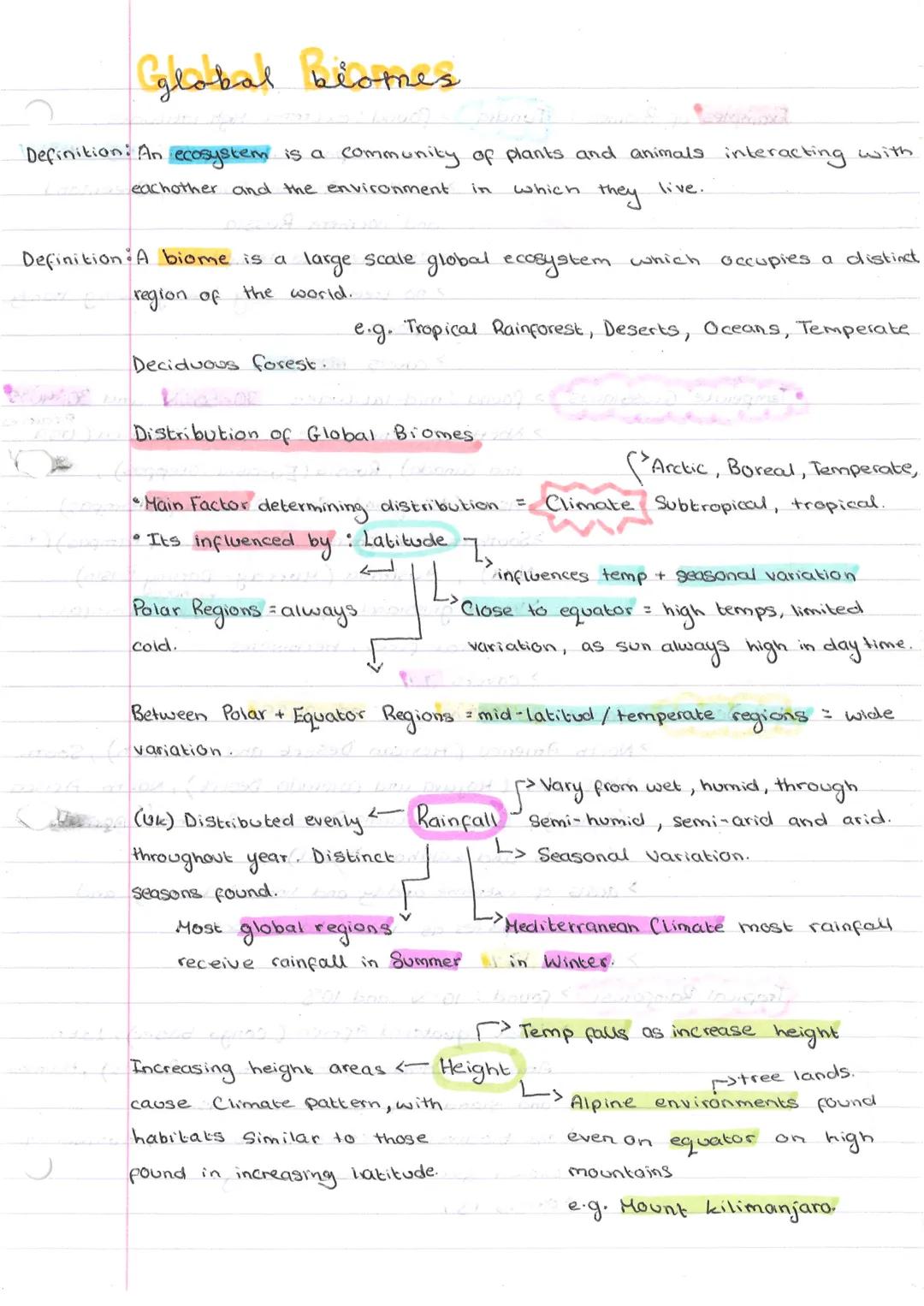
Global Biomes and Their Distribution
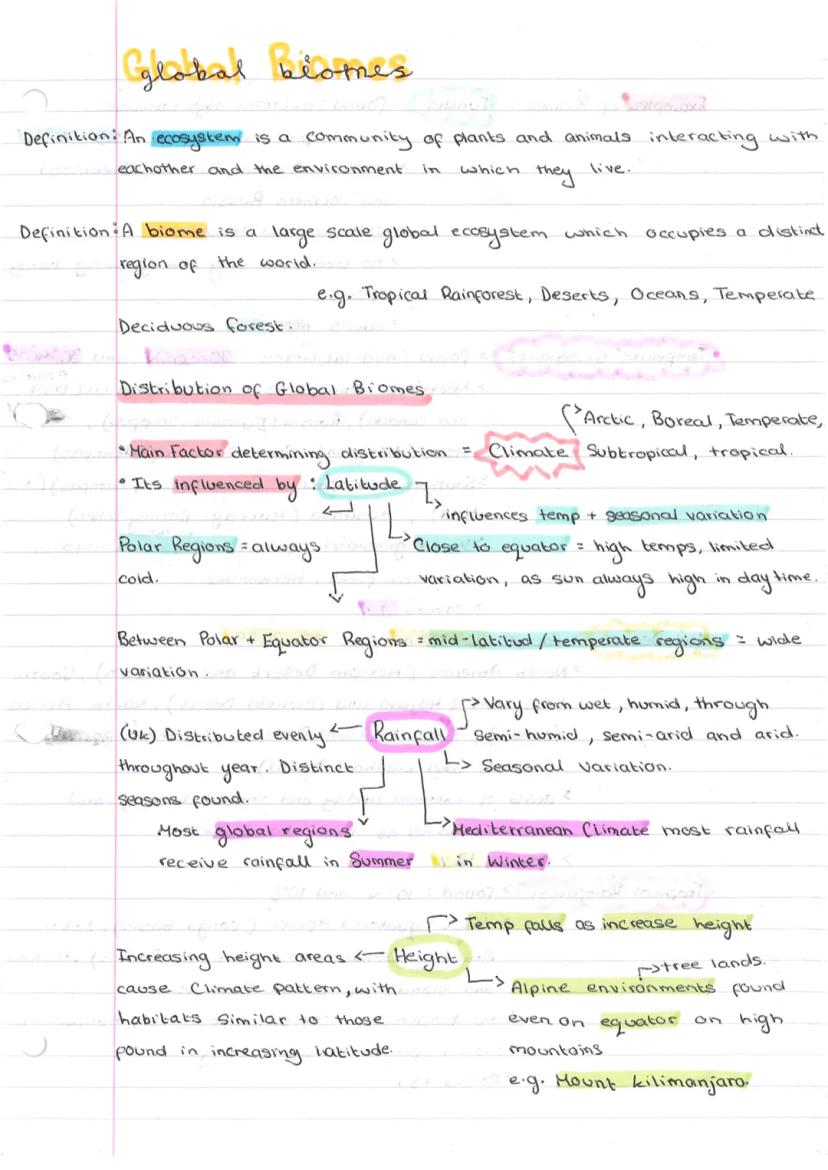
An ecosystem is a community where plants and animals interact with each other and their environment. When these ecosystems occur on a large scale globally, we call them biomes. Examples include tropical rainforests, deserts, and temperate deciduous forests.
Climate is the main factor determining biome distribution. Latitude plays a crucial role—polar regions experience constant cold, while equatorial areas maintain high temperatures with limited variation. The mid-latitude or temperate regions (like the UK) experience distinct seasons with temperature variations.
Did you know? Even at the equator, you can find alpine environments similar to polar regions if you climb high enough mountains, like Mount Kilimanjaro. This is because temperature decreases with increasing height!
Rainfall patterns also significantly impact biome distribution. Some regions receive precipitation evenly throughout the year, while others experience seasonal variations. The Mediterranean climate, for instance, receives most of its rainfall during winter rather than summer.
2
of 8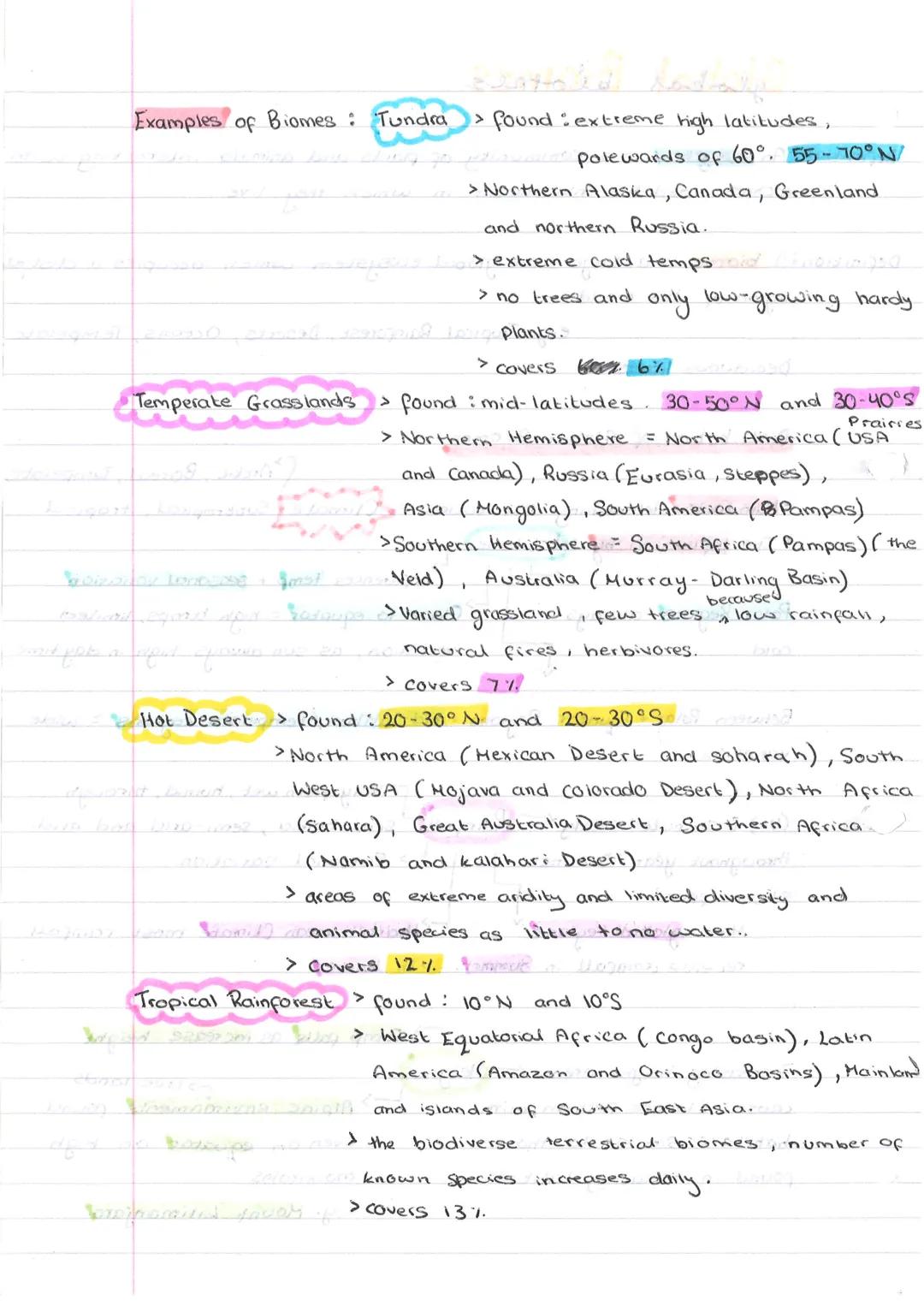
Major Global Biomes
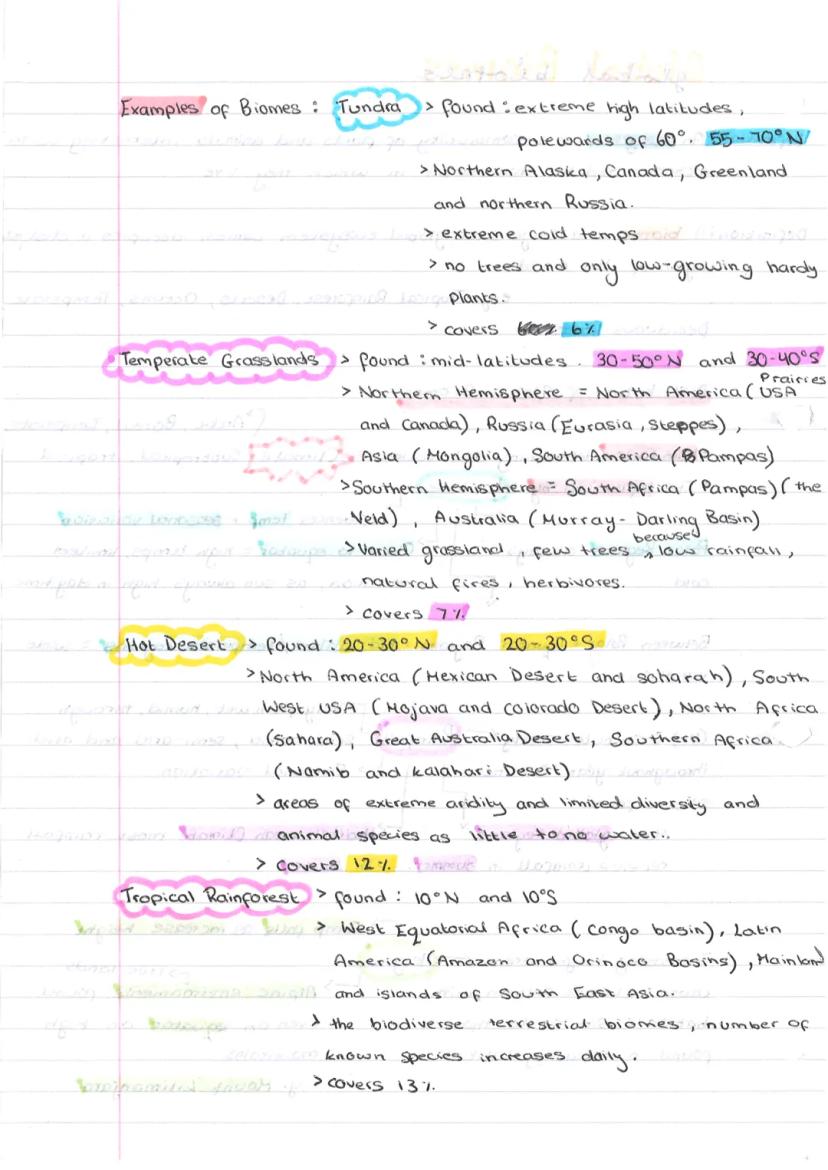
Tundra covers about 6% of Earth's land surface, found in extreme high latitudes including northern Alaska, Canada, Greenland, and Russia. It's characterized by extremely cold temperatures where only low-growing hardy plants survive—no trees can grow here!
The temperate grasslands (7% of Earth's surface) occupy mid-latitudes between 30-50°N and 30-40°S. These include the North American prairies, Russian steppes, and the South African Veld. They feature varied grasslands with few trees due to low rainfall, natural fires, and grazing herbivores.
Challenge yourself: Can you explain why trees are rare in both tundra and grasslands despite their very different temperatures?
Hot deserts (12% of Earth's surface) exist around 20-30° north and south of the equator, including the Sahara, Mojave, and Great Australian Desert. These regions experience extreme aridity, limiting biological diversity.
The tropical rainforests (13% of Earth's surface) thrive between 10°N and 10°S of the equator in regions like the Amazon Basin and Southeast Asia. They're the most biodiverse terrestrial biomes, with scientists discovering new species regularly!
3
of 8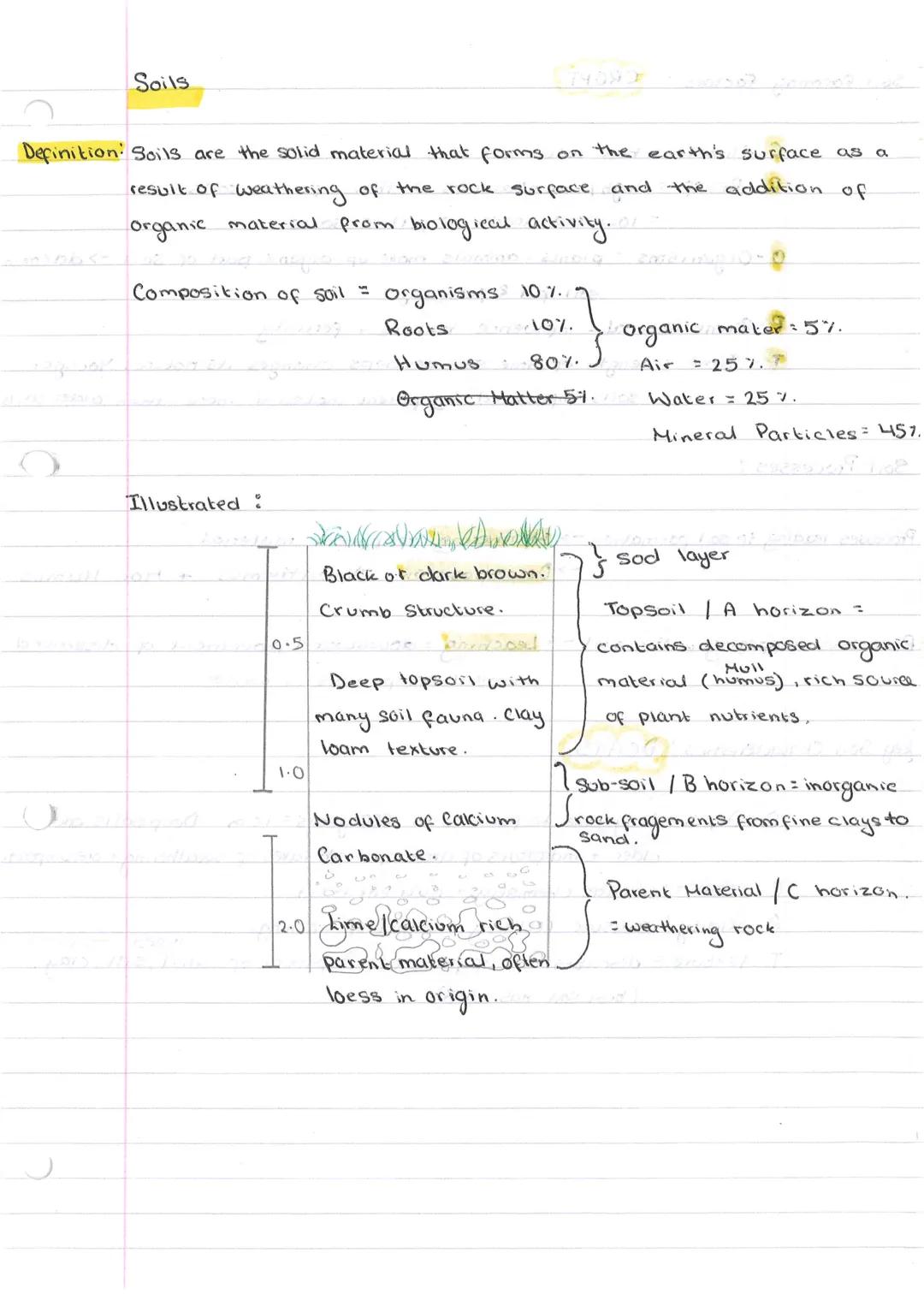
Understanding Soil Composition
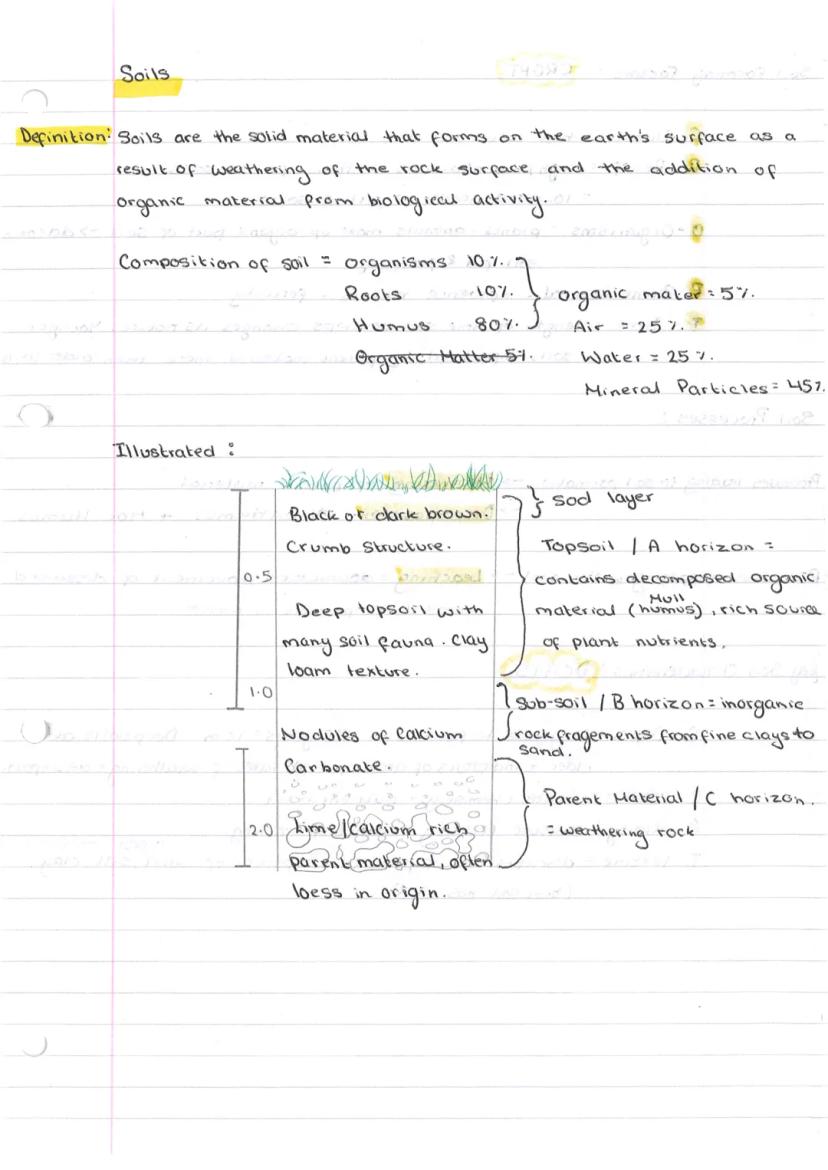
Soil forms on Earth's surface through weathering of rock and the addition of organic material from biological activity. It's the foundation of terrestrial ecosystems and has a complex composition.
A typical soil consists of approximately 45% mineral particles, 25% water, 25% air, and 5% organic matter. The organic component includes decomposed plant and animal matter (humus), living organisms, and plant roots—these elements contribute to soil fertility.
Soil typically has three distinct layers or horizons. The topsoil (A horizon) contains decomposed organic material rich in plant nutrients. The subsoil (B horizon) consists mainly of inorganic rock fragments ranging from fine clays to sand. The C horizon is the parent material of weathering rock.
Remember this: Good soil takes an incredibly long time to form—approximately 1,000 years to create just 1cm of topsoil. This makes soil conservation extremely important!
The structure and composition of soil vary significantly between biomes, affecting what can grow there and how ecosystems function.
4
of 8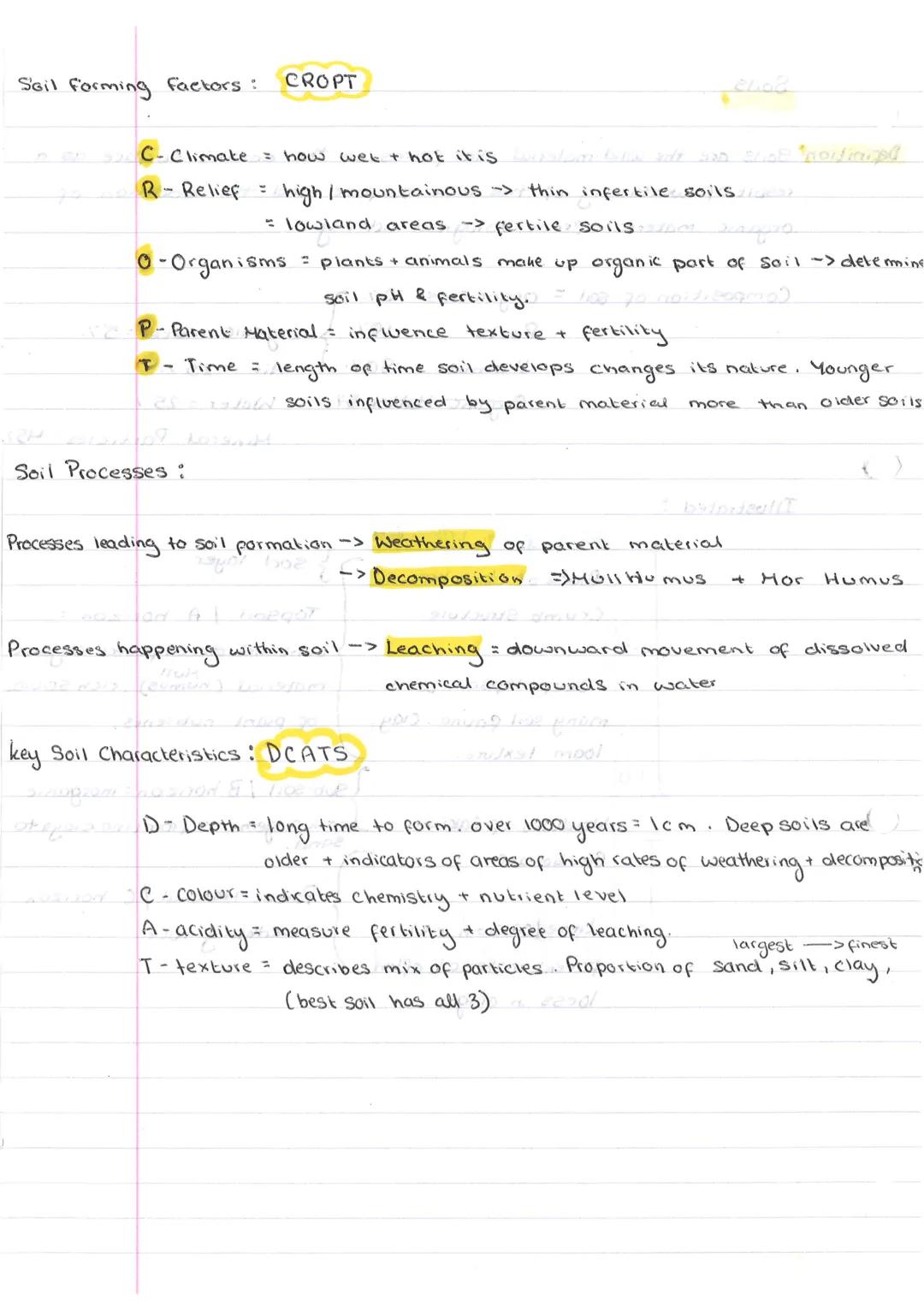
Soil Formation Factors: CROPT
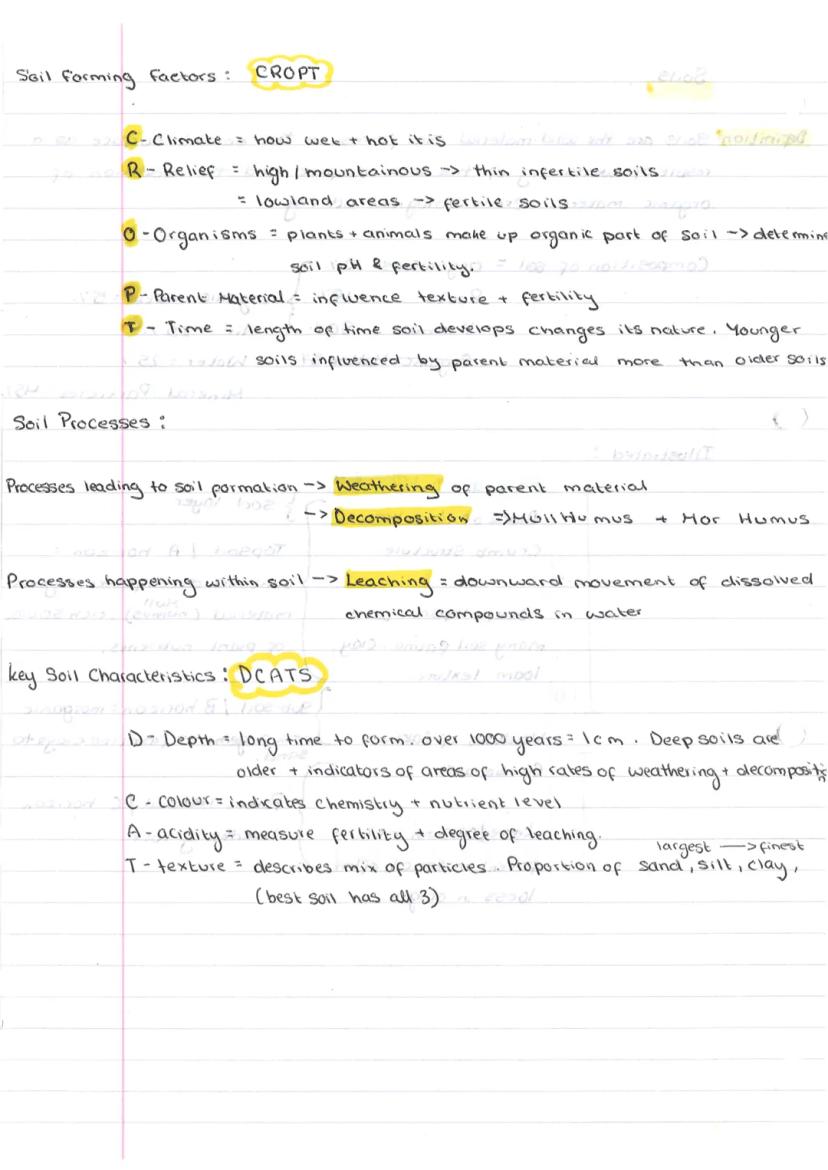
Soils develop through the influence of five key factors, easily remembered as CROPT:
Climate determines moisture and temperature conditions—arguably the most influential factor. Relief (landscape) affects soil development; mountainous areas typically have thin, infertile soils, while lowlands tend to develop deeper, more fertile soils.
Organisms (plants and animals) contribute to the organic component, influencing soil pH and fertility. Parent material (the underlying rock) affects soil texture and mineral content. Time allows soil profiles to develop—younger soils show more influence from parent material than older ones.
Top tip: When studying soils, think about DCATS—Depth, Colour, Acidity, and Texture—as key characteristics that help identify and understand different soil types!
Several processes shape soil development. Weathering of parent material and decomposition of organic matter create the basic soil structure. Within established soil, leaching (the downward movement of dissolved compounds in water) significantly affects soil profile development.
5
of 8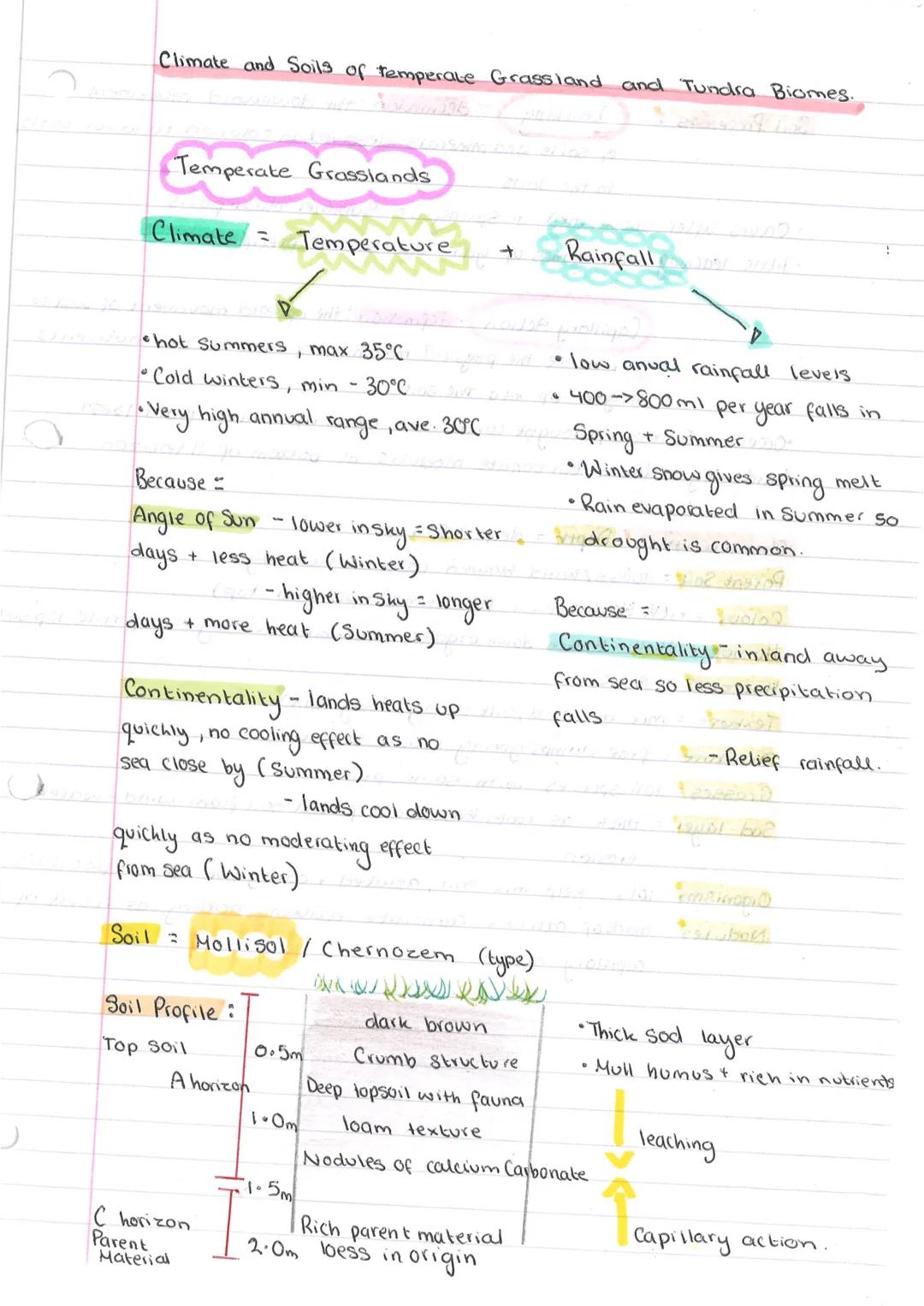
Temperate Grassland Climate and Soils
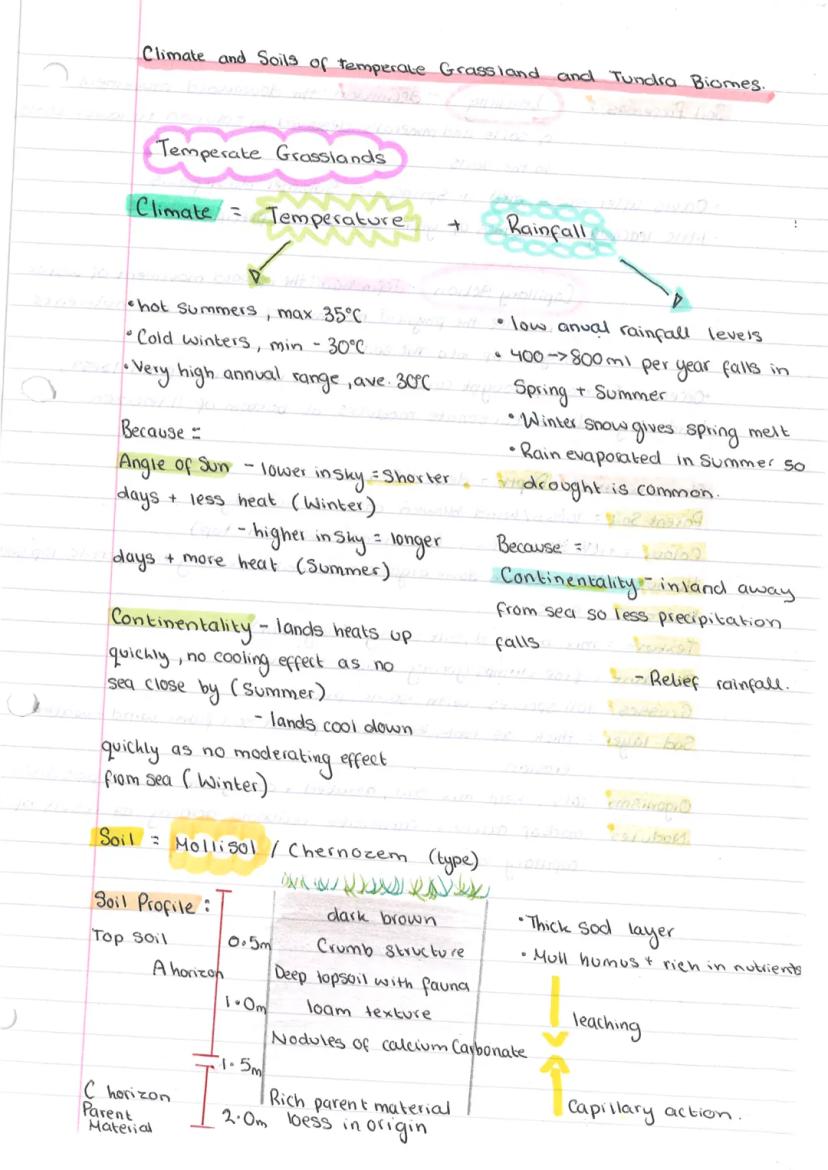
The temperate grassland biome experiences dramatic seasonal variations. Summers can reach scorching 35°C, while winters plunge to -30°C, creating an average annual temperature range of about 30°C. This extreme variation occurs because of the continentality effect—being far from oceans means the land heats and cools rapidly without the moderating influence of large water bodies.
Annual rainfall in temperate grasslands is relatively low , occurring mainly in spring and summer. Winter precipitation falls as snow, providing moisture when it melts in spring. However, summer evaporation often leads to drought conditions.
Fascinating fact: The rich, dark soil of temperate grasslands (called Mollisol or Chernozem) is among the most fertile on Earth, which is why these regions have become the world's breadbaskets!
The soil profile shows a deep (1.5m), dark brown topsoil with a crumb structure that's excellent for plant growth. A thick sod layer of dense grass roots protects against erosion. The parent material is often loess—wind-blown, calcium-rich deposits that contribute to soil fertility.
6
of 8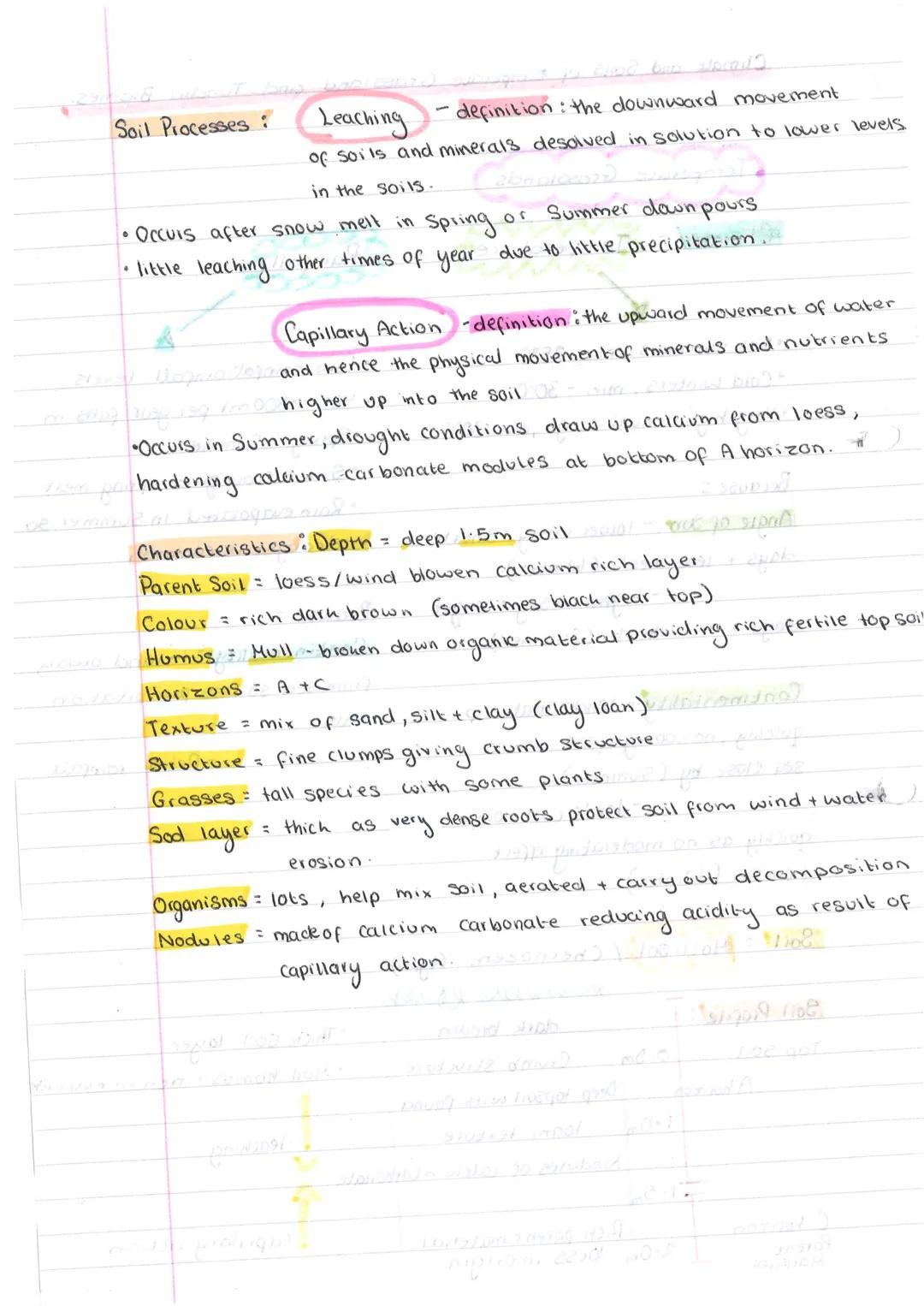
Soil Processes in Temperate Grasslands
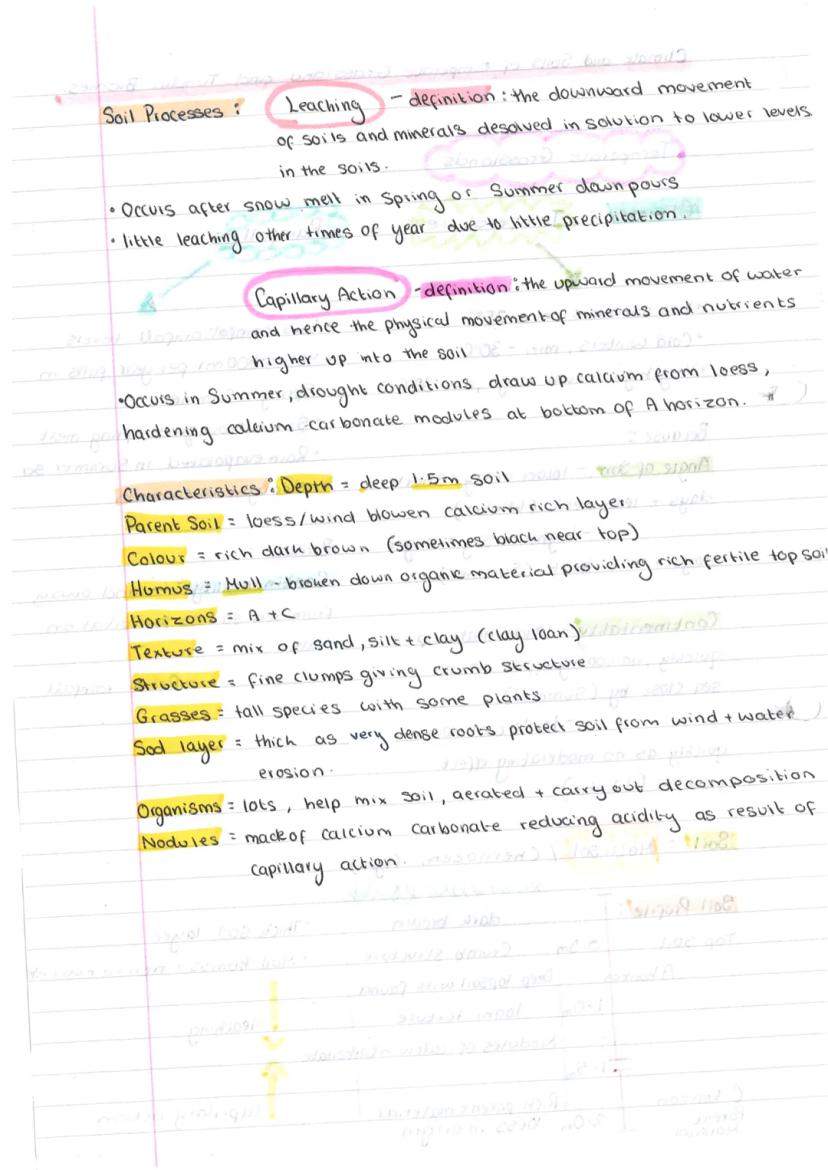
Two key soil processes shape the temperate grassland soils: leaching and capillary action. Leaching occurs when dissolved minerals move downward through the soil after spring snowmelt or summer downpours. This process is limited during other times of year due to low precipitation.
Capillary action works in the opposite direction—it's the upward movement of water and minerals. During summer drought conditions, water is drawn upward, bringing calcium from the loess parent material. This forms hardened calcium carbonate nodules at the bottom of the A horizon.
The resulting soil characteristics make temperate grassland soils incredibly productive. They're deep (1.5m), have a rich dark brown colour indicating fertility, and contain mull humus—well-decomposed organic material providing nutrients. The soil has a good mix of sand, silt, and clay, creating a balanced texture.
Exam tip: Understanding these soil processes explains why temperate grasslands have been converted to some of the world's most productive agricultural regions!
The soil teems with organisms that mix soil layers, aerate it, and facilitate decomposition. This biological activity, combined with the chemical processes, creates ideal conditions for grasses and agricultural crops.
7
of 8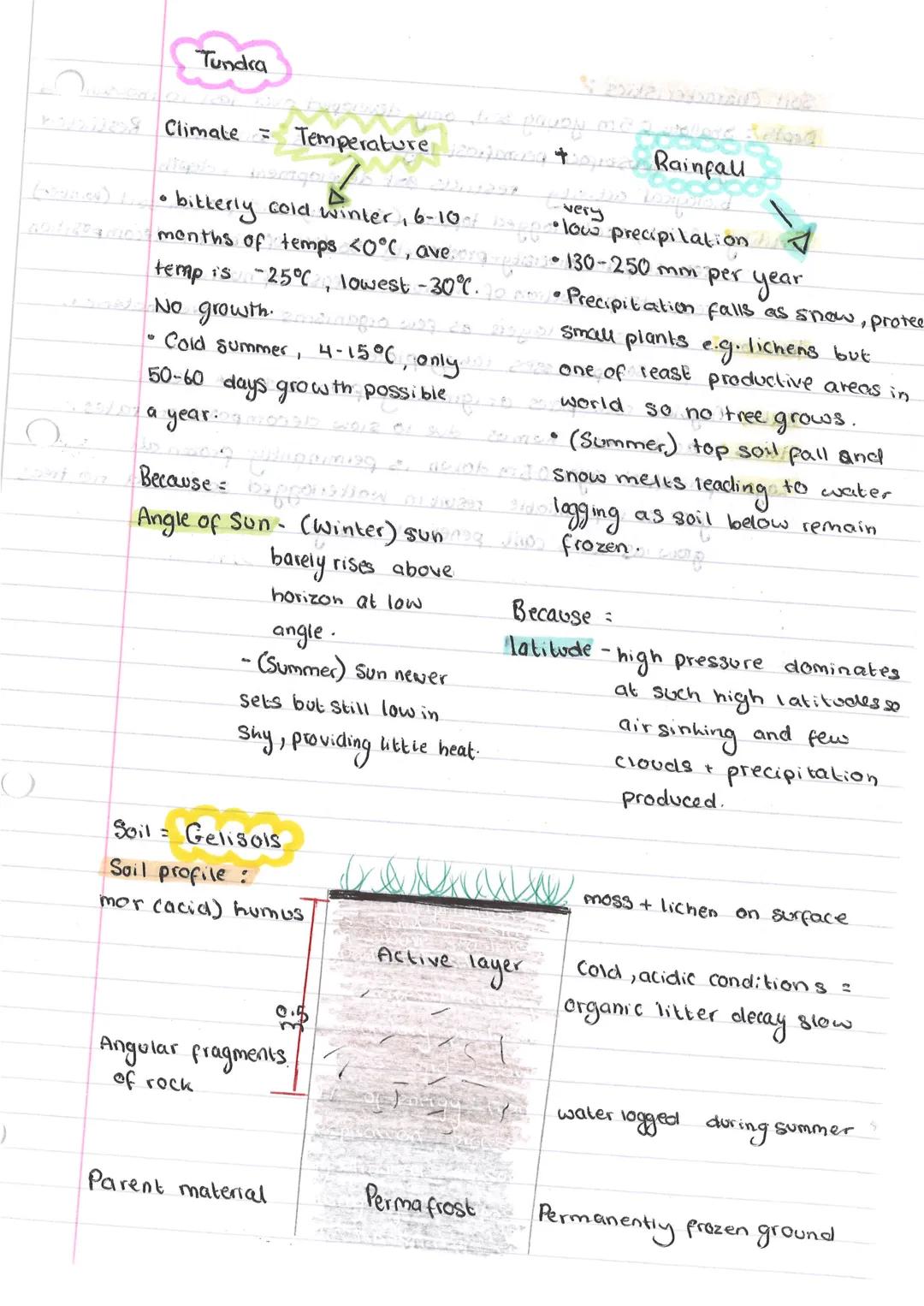
Tundra Climate and Soils
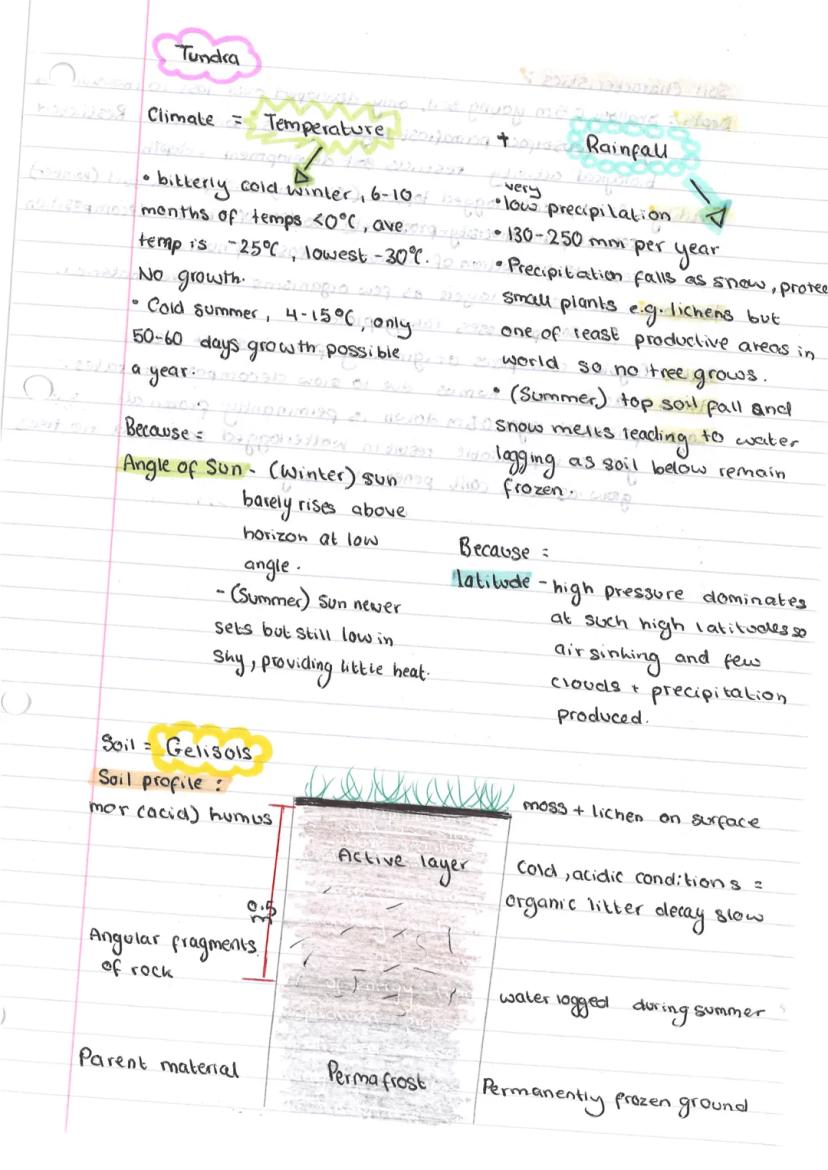
The tundra biome experiences extremely harsh conditions with bitterly cold winters lasting 6-10 months, when temperatures average -25°C and can drop to -30°C. These conditions halt plant growth completely. Summers are brief and cool , allowing only 50-60 days of potential plant growth annually.
This extreme climate results from the tundra's high latitude position. During winter, the sun barely rises above the horizon, providing minimal warmth. Even in summer when the sun never sets, its low angle in the sky delivers limited heat energy.
Precipitation in the tundra is remarkably low—just 130-250mm annually—mostly falling as snow. High atmospheric pressure dominates these latitudes, causing sinking air that produces few clouds and little precipitation.
Visualise this: During the brief summer, the top layer of soil thaws while the ground beneath remains permanently frozen, creating a waterlogged surface where your boots would sink into soggy moss!
The soil type found in tundra regions is called Gelisol. Its most distinctive feature is the permafrost layer—permanently frozen ground that begins about 0.5m below the surface. Above this lies the "active layer" that thaws during summer, becoming waterlogged as water cannot penetrate the impermeable permafrost below.
8
of 8
Tundra Soil Characteristics
Tundra soils are quite young—having developed only over the last 10,000 years since the last ice age—and remain shallow (about 0.5m) due to the limiting permafrost layer. The extremely cold conditions severely restrict biological activity, slowing soil development processes.
The soil's fertility is poor, with acidic, waterlogged conditions in summer and frozen soil in winter limiting plant diversity and productivity. This restricted plant growth means there's little organic material returning to the soil, leading to minimal humus formation and nutrient release.
Unlike other biome soils, tundra soils lack distinct horizons because few organisms are present to mix materials, and soil processes occur very slowly. The humus that does form is mor humus—acidic and poorly decomposed due to the cold conditions.
Critical insight: The permafrost layer explains why trees cannot grow in the tundra, as their roots cannot penetrate this frozen barrier. This is why tundra vegetation consists primarily of shallow-rooted plants like mosses, lichens, and small shrubs.
Angular rock fragments appear throughout the soil, originating directly from the bedrock below, with minimal weathering due to the cold conditions.
We thought you’d never ask...
Our AI Companion is a student-focused AI tool that offers more than just answers. Built on millions of Knowunity resources, it provides relevant information, personalised study plans, quizzes, and content directly in the chat, adapting to your individual learning journey.
You can download the app from Google Play Store and Apple App Store.
That's right! Enjoy free access to study content, connect with fellow students, and get instant help – all at your fingertips.
Similar content
Most popular content in Biology
9T
 Biology
The functions of subcellular structures - B1 Biology
Flashcards on the different functions of subcellular structures: cell membrane, nucleus, mitochondria, ribosomes, cytoplasm, permant vacuole, chloroplasts and cell wall.
102,8215
B
BiologyBiology Paper 1 quiz
this is a simple quiz on key knowledge needed for paper 1
102,7835
BiologyBiology Paper 1 Overview
Comprehensive study notes covering key concepts in cellular biology, human digestion, respiration, photosynthesis, and the circulatory system. This resource includes detailed explanations of cell structures, enzyme functions, nutrient absorption, and the impact of environmental factors on biological processes. Ideal for students preparing for Biology Paper 1 exams.
1115,268384
P
Biologyplants
flash cards
124570
E
Biologyeukaryotic & prokaryotic
quiz for eukaryotic & prokaryotic. fairly easy.
114470
C
Biologycombined science quiz
biology quiz
91,3863
P
Biologyparts of a cell
.
82351
C
Biologycells structure quiz
all about the cells structures
92450
P
Biologyphotosynthesis
this is just recap questions on this. it would help you understand what it is and information like how it transfers etc.
82060
Most popular content
9 Sociology
Sociology of Education Overview
Explore comprehensive A-Level Sociology notes on the education system, covering key theories, policies, and sociological perspectives. This resource includes insights on marketisation, gender roles, cultural deprivation, and educational inequalities, providing a thorough understanding of how education shapes social stratification and individual achievement. Ideal for exam preparation and in-depth study.
12102,9583,041
SociologySociology of Families: Comprehensive Revision
Dive into an extensive overview of family dynamics, perspectives, and patterns in sociology. This resource covers key concepts such as family diversity, gender roles, marriage, and the impact of social policies on family structures. Perfect for A-Level Sociology students preparing for Paper 2.
1273,7532,307
CriminologyCriminology: Crime & Punishment Overview
Comprehensive mindmaps covering key concepts in the Crime and Punishment topic for WJEC Criminology Unit 4. This resource includes detailed insights into the Criminal Justice System, crime prevention strategies, sentencing models, and the roles of various agencies. Ideal for A-Level revision, ensuring you grasp essential theories and legislative processes to excel in your exams.
1254,8941,060
SociologyComprehensive Crime & Deviance Overview
Explore an extensive revision of crime and deviance topics, including theories, types of crime, and the impact of media. This resource covers key concepts such as Marxism, functionalism, gender and crime, and the influence of globalization on criminal behavior. Ideal for students seeking a thorough understanding of criminology and its various theories. Type: Full Topic Revision.
1251,6691,400
C
BiologyCell Biology and Cell structure
cell structures
93,2810
CriminologyWJEC Unit 4 Criminology
Criminology unit 4 detailed revision note
127,176125
SociologySociological Theories Overview
Comprehensive revision of key sociological theories including Functionalism, Marxism, Feminism, and Interpretivism. Explore concepts like value freedom, identity formation, and the critique of social control. Ideal for AQA A-Level Sociology students preparing for exams. This summary covers essential theories and their implications in sociology, providing a clear understanding of each perspective.
1231,480846
T
BiologyThe functions of subcellular structures - B1 Biology
Flashcards on the different functions of subcellular structures: cell membrane, nucleus, mitochondria, ribosomes, cytoplasm, permant vacuole, chloroplasts and cell wall.
102,8215
1
Biology1.cells Gcse biology question cards
combined science higher biology
92,3644
Students love us — and so will you.
4.6/5App Store
4.7/5Google Play
The app is very easy to use and well designed. I have found everything I was looking for so far and have been able to learn a lot from the presentations! I will definitely use the app for a class assignment! And of course it also helps a lot as an inspiration.
Stefan SiOS user
This app is really great. There are so many study notes and help [...]. My problem subject is French, for example, and the app has so many options for help. Thanks to this app, I have improved my French. I would recommend it to anyone.
Samantha KlichAndroid user
Wow, I am really amazed. I just tried the app because I've seen it advertised many times and was absolutely stunned. This app is THE HELP you want for school and above all, it offers so many things, such as workouts and fact sheets, which have been VERY helpful to me personally.
AnnaiOS user
Biology307 views·Updated 10 Jul 2026·8 pagesCCEA AS Geography: Comprehensive Guide to Global Biomes
Global biomes are large-scale ecosystems that occupy distinct regions of our planet. These diverse environments, from tropical rainforests to tundra, are primarily determined by climate factors and showcase remarkable adaptations of plants and animals to their specific conditions.
1
of 8
Sign up to see the content. It's free!
- Access to all documents
- Improve your grades
- Join milions of students
By signing up you accept Terms of Service and Privacy Policy
Global Biomes and Their Distribution
An ecosystem is a community where plants and animals interact with each other and their environment. When these ecosystems occur on a large scale globally, we call them biomes. Examples include tropical rainforests, deserts, and temperate deciduous forests.
Climate is the main factor determining biome distribution. Latitude plays a crucial role—polar regions experience constant cold, while equatorial areas maintain high temperatures with limited variation. The mid-latitude or temperate regions (like the UK) experience distinct seasons with temperature variations.
Did you know? Even at the equator, you can find alpine environments similar to polar regions if you climb high enough mountains, like Mount Kilimanjaro. This is because temperature decreases with increasing height!
Rainfall patterns also significantly impact biome distribution. Some regions receive precipitation evenly throughout the year, while others experience seasonal variations. The Mediterranean climate, for instance, receives most of its rainfall during winter rather than summer.
2
of 8Sign up to see the content. It's free!
- Access to all documents
- Improve your grades
- Join milions of students
By signing up you accept Terms of Service and Privacy Policy
Major Global Biomes
Tundra covers about 6% of Earth's land surface, found in extreme high latitudes including northern Alaska, Canada, Greenland, and Russia. It's characterized by extremely cold temperatures where only low-growing hardy plants survive—no trees can grow here!
The temperate grasslands (7% of Earth's surface) occupy mid-latitudes between 30-50°N and 30-40°S. These include the North American prairies, Russian steppes, and the South African Veld. They feature varied grasslands with few trees due to low rainfall, natural fires, and grazing herbivores.
Challenge yourself: Can you explain why trees are rare in both tundra and grasslands despite their very different temperatures?
Hot deserts (12% of Earth's surface) exist around 20-30° north and south of the equator, including the Sahara, Mojave, and Great Australian Desert. These regions experience extreme aridity, limiting biological diversity.
The tropical rainforests (13% of Earth's surface) thrive between 10°N and 10°S of the equator in regions like the Amazon Basin and Southeast Asia. They're the most biodiverse terrestrial biomes, with scientists discovering new species regularly!
3
of 8Sign up to see the content. It's free!
- Access to all documents
- Improve your grades
- Join milions of students
By signing up you accept Terms of Service and Privacy Policy
Understanding Soil Composition
Soil forms on Earth's surface through weathering of rock and the addition of organic material from biological activity. It's the foundation of terrestrial ecosystems and has a complex composition.
A typical soil consists of approximately 45% mineral particles, 25% water, 25% air, and 5% organic matter. The organic component includes decomposed plant and animal matter (humus), living organisms, and plant roots—these elements contribute to soil fertility.
Soil typically has three distinct layers or horizons. The topsoil (A horizon) contains decomposed organic material rich in plant nutrients. The subsoil (B horizon) consists mainly of inorganic rock fragments ranging from fine clays to sand. The C horizon is the parent material of weathering rock.
Remember this: Good soil takes an incredibly long time to form—approximately 1,000 years to create just 1cm of topsoil. This makes soil conservation extremely important!
The structure and composition of soil vary significantly between biomes, affecting what can grow there and how ecosystems function.
4
of 8Sign up to see the content. It's free!
- Access to all documents
- Improve your grades
- Join milions of students
By signing up you accept Terms of Service and Privacy Policy
Soil Formation Factors: CROPT
Soils develop through the influence of five key factors, easily remembered as CROPT:
Climate determines moisture and temperature conditions—arguably the most influential factor. Relief (landscape) affects soil development; mountainous areas typically have thin, infertile soils, while lowlands tend to develop deeper, more fertile soils.
Organisms (plants and animals) contribute to the organic component, influencing soil pH and fertility. Parent material (the underlying rock) affects soil texture and mineral content. Time allows soil profiles to develop—younger soils show more influence from parent material than older ones.
Top tip: When studying soils, think about DCATS—Depth, Colour, Acidity, and Texture—as key characteristics that help identify and understand different soil types!
Several processes shape soil development. Weathering of parent material and decomposition of organic matter create the basic soil structure. Within established soil, leaching (the downward movement of dissolved compounds in water) significantly affects soil profile development.
5
of 8Sign up to see the content. It's free!
- Access to all documents
- Improve your grades
- Join milions of students
By signing up you accept Terms of Service and Privacy Policy
Temperate Grassland Climate and Soils
The temperate grassland biome experiences dramatic seasonal variations. Summers can reach scorching 35°C, while winters plunge to -30°C, creating an average annual temperature range of about 30°C. This extreme variation occurs because of the continentality effect—being far from oceans means the land heats and cools rapidly without the moderating influence of large water bodies.
Annual rainfall in temperate grasslands is relatively low , occurring mainly in spring and summer. Winter precipitation falls as snow, providing moisture when it melts in spring. However, summer evaporation often leads to drought conditions.
Fascinating fact: The rich, dark soil of temperate grasslands (called Mollisol or Chernozem) is among the most fertile on Earth, which is why these regions have become the world's breadbaskets!
The soil profile shows a deep (1.5m), dark brown topsoil with a crumb structure that's excellent for plant growth. A thick sod layer of dense grass roots protects against erosion. The parent material is often loess—wind-blown, calcium-rich deposits that contribute to soil fertility.
6
of 8Sign up to see the content. It's free!
- Access to all documents
- Improve your grades
- Join milions of students
By signing up you accept Terms of Service and Privacy Policy
Soil Processes in Temperate Grasslands
Two key soil processes shape the temperate grassland soils: leaching and capillary action. Leaching occurs when dissolved minerals move downward through the soil after spring snowmelt or summer downpours. This process is limited during other times of year due to low precipitation.
Capillary action works in the opposite direction—it's the upward movement of water and minerals. During summer drought conditions, water is drawn upward, bringing calcium from the loess parent material. This forms hardened calcium carbonate nodules at the bottom of the A horizon.
The resulting soil characteristics make temperate grassland soils incredibly productive. They're deep (1.5m), have a rich dark brown colour indicating fertility, and contain mull humus—well-decomposed organic material providing nutrients. The soil has a good mix of sand, silt, and clay, creating a balanced texture.
Exam tip: Understanding these soil processes explains why temperate grasslands have been converted to some of the world's most productive agricultural regions!
The soil teems with organisms that mix soil layers, aerate it, and facilitate decomposition. This biological activity, combined with the chemical processes, creates ideal conditions for grasses and agricultural crops.
7
of 8Sign up to see the content. It's free!
- Access to all documents
- Improve your grades
- Join milions of students
By signing up you accept Terms of Service and Privacy Policy
Tundra Climate and Soils
The tundra biome experiences extremely harsh conditions with bitterly cold winters lasting 6-10 months, when temperatures average -25°C and can drop to -30°C. These conditions halt plant growth completely. Summers are brief and cool , allowing only 50-60 days of potential plant growth annually.
This extreme climate results from the tundra's high latitude position. During winter, the sun barely rises above the horizon, providing minimal warmth. Even in summer when the sun never sets, its low angle in the sky delivers limited heat energy.
Precipitation in the tundra is remarkably low—just 130-250mm annually—mostly falling as snow. High atmospheric pressure dominates these latitudes, causing sinking air that produces few clouds and little precipitation.
Visualise this: During the brief summer, the top layer of soil thaws while the ground beneath remains permanently frozen, creating a waterlogged surface where your boots would sink into soggy moss!
The soil type found in tundra regions is called Gelisol. Its most distinctive feature is the permafrost layer—permanently frozen ground that begins about 0.5m below the surface. Above this lies the "active layer" that thaws during summer, becoming waterlogged as water cannot penetrate the impermeable permafrost below.
8
of 8Sign up to see the content. It's free!
- Access to all documents
- Improve your grades
- Join milions of students
By signing up you accept Terms of Service and Privacy Policy
Tundra Soil Characteristics
Tundra soils are quite young—having developed only over the last 10,000 years since the last ice age—and remain shallow (about 0.5m) due to the limiting permafrost layer. The extremely cold conditions severely restrict biological activity, slowing soil development processes.
The soil's fertility is poor, with acidic, waterlogged conditions in summer and frozen soil in winter limiting plant diversity and productivity. This restricted plant growth means there's little organic material returning to the soil, leading to minimal humus formation and nutrient release.
Unlike other biome soils, tundra soils lack distinct horizons because few organisms are present to mix materials, and soil processes occur very slowly. The humus that does form is mor humus—acidic and poorly decomposed due to the cold conditions.
Critical insight: The permafrost layer explains why trees cannot grow in the tundra, as their roots cannot penetrate this frozen barrier. This is why tundra vegetation consists primarily of shallow-rooted plants like mosses, lichens, and small shrubs.
Angular rock fragments appear throughout the soil, originating directly from the bedrock below, with minimal weathering due to the cold conditions.
We thought you’d never ask...
Our AI Companion is a student-focused AI tool that offers more than just answers. Built on millions of Knowunity resources, it provides relevant information, personalised study plans, quizzes, and content directly in the chat, adapting to your individual learning journey.
You can download the app from Google Play Store and Apple App Store.
That's right! Enjoy free access to study content, connect with fellow students, and get instant help – all at your fingertips.
Similar content
Most popular content in Biology
9T
BiologyThe functions of subcellular structures - B1 Biology
Flashcards on the different functions of subcellular structures: cell membrane, nucleus, mitochondria, ribosomes, cytoplasm, permant vacuole, chloroplasts and cell wall.
102,8215
B
BiologyBiology Paper 1 quiz
this is a simple quiz on key knowledge needed for paper 1
102,7835
BiologyBiology Paper 1 Overview
Comprehensive study notes covering key concepts in cellular biology, human digestion, respiration, photosynthesis, and the circulatory system. This resource includes detailed explanations of cell structures, enzyme functions, nutrient absorption, and the impact of environmental factors on biological processes. Ideal for students preparing for Biology Paper 1 exams.
1115,268384
P
Biologyplants
flash cards
124570
E
Biologyeukaryotic & prokaryotic
quiz for eukaryotic & prokaryotic. fairly easy.
114470
C
Biologycombined science quiz
biology quiz
91,3863
P
Biologyparts of a cell
.
82351
C
Biologycells structure quiz
all about the cells structures
92450
P
Biologyphotosynthesis
this is just recap questions on this. it would help you understand what it is and information like how it transfers etc.
82060
Most popular content
9SociologySociology of Education Overview
Explore comprehensive A-Level Sociology notes on the education system, covering key theories, policies, and sociological perspectives. This resource includes insights on marketisation, gender roles, cultural deprivation, and educational inequalities, providing a thorough understanding of how education shapes social stratification and individual achievement. Ideal for exam preparation and in-depth study.
12102,9583,041
SociologySociology of Families: Comprehensive Revision
Dive into an extensive overview of family dynamics, perspectives, and patterns in sociology. This resource covers key concepts such as family diversity, gender roles, marriage, and the impact of social policies on family structures. Perfect for A-Level Sociology students preparing for Paper 2.
1273,7532,307
CriminologyCriminology: Crime & Punishment Overview
Comprehensive mindmaps covering key concepts in the Crime and Punishment topic for WJEC Criminology Unit 4. This resource includes detailed insights into the Criminal Justice System, crime prevention strategies, sentencing models, and the roles of various agencies. Ideal for A-Level revision, ensuring you grasp essential theories and legislative processes to excel in your exams.
1254,8941,060
SociologyComprehensive Crime & Deviance Overview
Explore an extensive revision of crime and deviance topics, including theories, types of crime, and the impact of media. This resource covers key concepts such as Marxism, functionalism, gender and crime, and the influence of globalization on criminal behavior. Ideal for students seeking a thorough understanding of criminology and its various theories. Type: Full Topic Revision.
1251,6691,400
C
BiologyCell Biology and Cell structure
cell structures
93,2810
CriminologyWJEC Unit 4 Criminology
Criminology unit 4 detailed revision note
127,176125
SociologySociological Theories Overview
Comprehensive revision of key sociological theories including Functionalism, Marxism, Feminism, and Interpretivism. Explore concepts like value freedom, identity formation, and the critique of social control. Ideal for AQA A-Level Sociology students preparing for exams. This summary covers essential theories and their implications in sociology, providing a clear understanding of each perspective.
1231,480846
T
BiologyThe functions of subcellular structures - B1 Biology
Flashcards on the different functions of subcellular structures: cell membrane, nucleus, mitochondria, ribosomes, cytoplasm, permant vacuole, chloroplasts and cell wall.
102,8215
1
Biology1.cells Gcse biology question cards
combined science higher biology
92,3644
Students love us — and so will you.
4.6/5App Store
4.7/5Google Play
The app is very easy to use and well designed. I have found everything I was looking for so far and have been able to learn a lot from the presentations! I will definitely use the app for a class assignment! And of course it also helps a lot as an inspiration.
Stefan SiOS user
This app is really great. There are so many study notes and help [...]. My problem subject is French, for example, and the app has so many options for help. Thanks to this app, I have improved my French. I would recommend it to anyone.
Samantha KlichAndroid user
Wow, I am really amazed. I just tried the app because I've seen it advertised many times and was absolutely stunned. This app is THE HELP you want for school and above all, it offers so many things, such as workouts and fact sheets, which have been VERY helpful to me personally.
AnnaiOS user