
Your body is constantly under attack from harmful bacteria and... Show more
 English Literature
 Sociology
Sign up to see the contentIt's free!
Access to all documents
Improve your grades
Join milions of students
By signing up you accept Terms of Service and Privacy Policy
Subjects
Classic Dramatic Literature
Modern Lyric Poetry
Influential English-Language Authors
Classic and Contemporary Novels
Literary Character Analysis
Romantic and Love Poetry
Reading Analysis and Interpretation
Evidence Analysis and Integration
Author's Stylistic Elements
Figurative Language and Rhetoric
Show all topics
Human Organ Systems
Cellular Organization and Development
Biomolecular Structure and Organization
Enzyme Structure and Regulation
Cellular Organization Types
Biological Homeostatic Processes
Cellular Membrane Structure
Autotrophic Energy Processes
Environmental Sustainability and Impact
Neural Communication Systems
Show all topics
Social Sciences Research & Practice
Social Structure and Mobility
Classic Social Influence Experiments
Social Systems Theories
Family and Relationship Dynamics
Memory Systems and Processes
Neural Bases of Behavior
Social Influence and Attraction
Psychotherapeutic Approaches
Human Agency and Responsibility
Show all topics
Chemical Sciences and Applications
Chemical Bond Types and Properties
Organic Functional Groups
Atomic Structure and Composition
Chromatographic Separation Principles
Chemical Compound Classifications
Electrochemical Cell Systems
Periodic Table Organization
Chemical Reaction Kinetics
Chemical Equation Conservation
Show all topics
Nazi Germany and Holocaust 1933-1945
World Wars and Peace Treaties
European Monarchs and Statesmen
Cold War Global Tensions
Medieval Institutions and Systems
European Renaissance and Enlightenment
Modern Global Environmental-Health Challenges
Modern Military Conflicts
Medieval Migration and Invasions
World Wars Era and Impact
Show all topics
406
•
4 Feb 2026
•

Los
@los
Your body is constantly under attack from harmful bacteria and... Show more
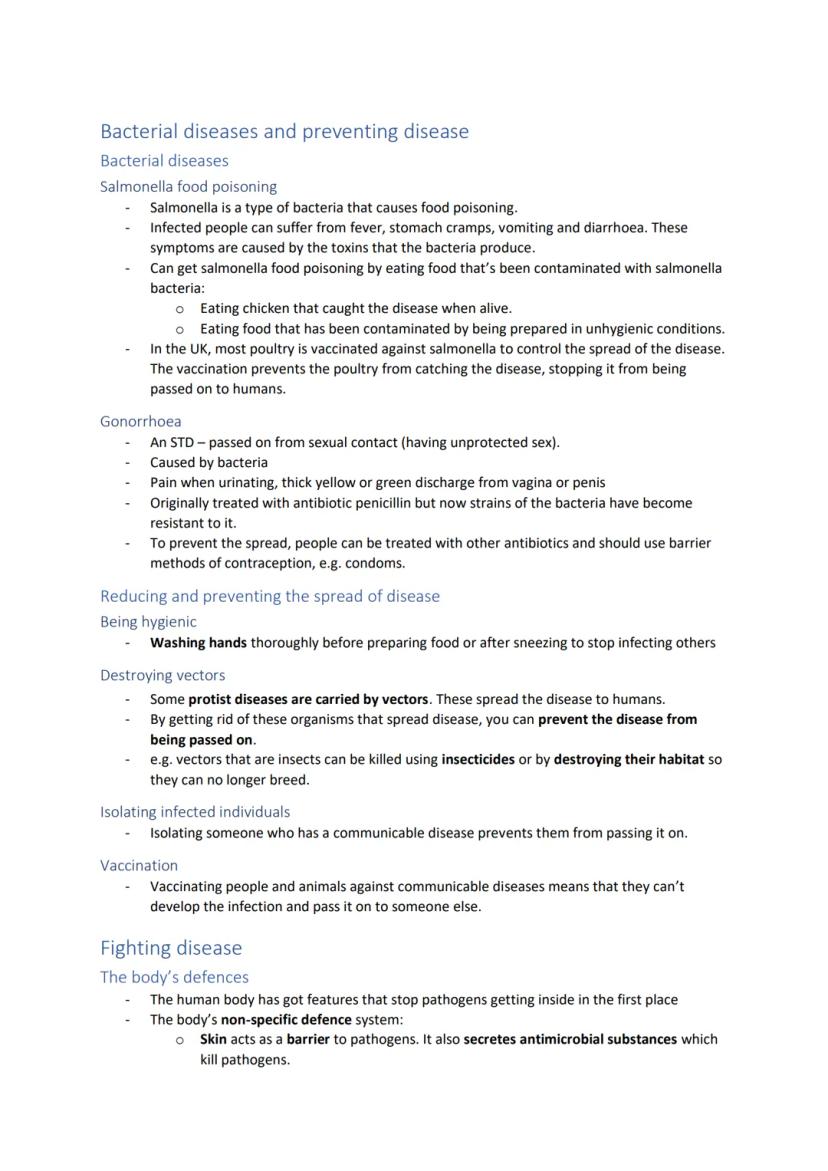

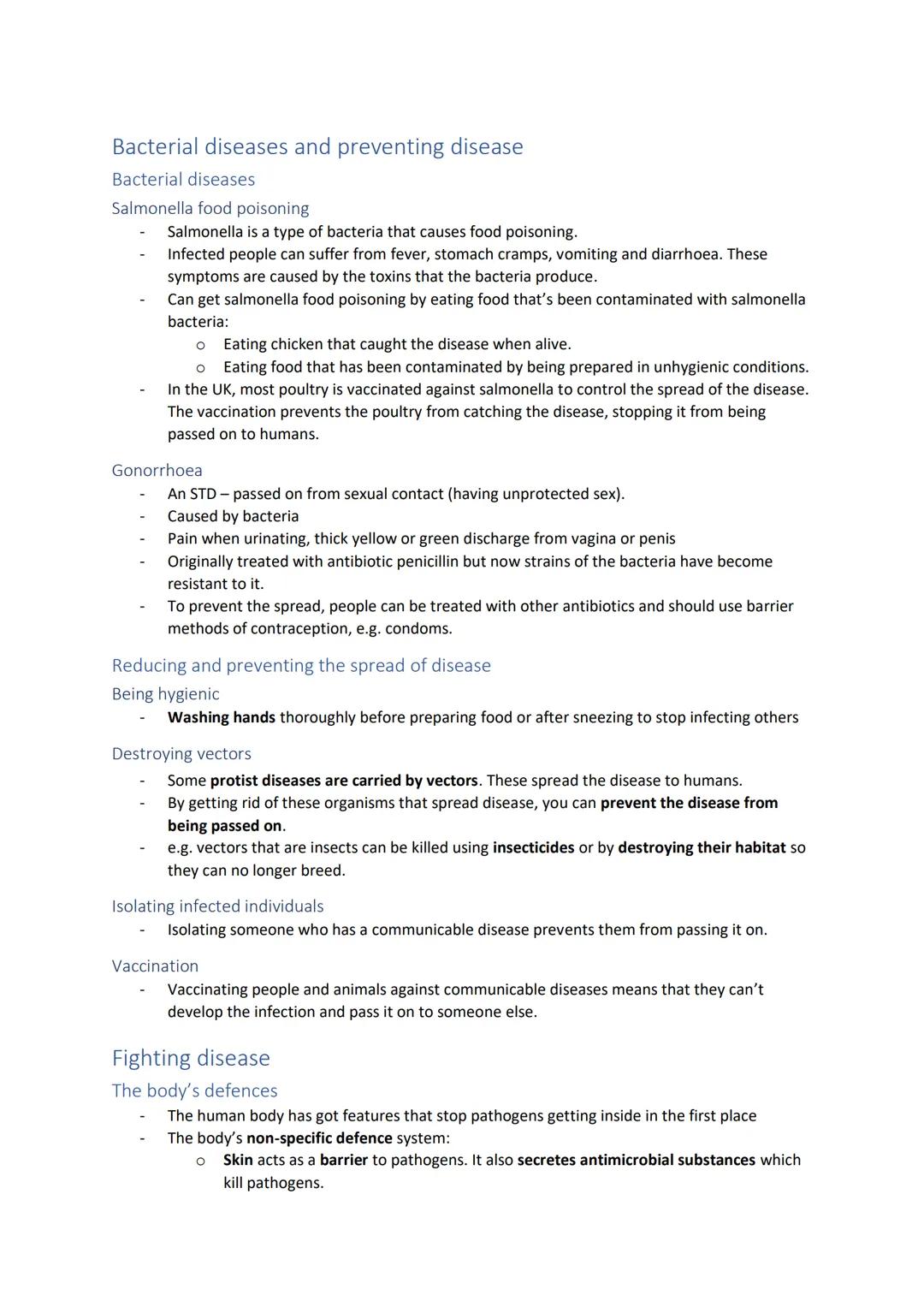
Ever wondered why you got sick after that dodgy takeaway or why safe sex education matters so much? Bacterial diseases like salmonella and gonorrhoea are more common than you'd think, but they're totally preventable with the right knowledge.
Salmonella food poisoning hits you with fever, stomach cramps, vomiting and diarrhoea - all thanks to nasty toxins the bacteria produce. You'll typically catch it from contaminated chicken or food prepared in unhygienic conditions. The good news? Most UK poultry gets vaccinated against salmonella, which massively reduces your risk.
Gonorrhoea is a sexually transmitted disease (STD) caused by bacteria that's passed through unprotected sex. Symptoms include painful urination and thick yellow or green discharge. What's worrying is that many strains are now resistant to penicillin, so doctors have to use different antibiotics.
Quick Tip: Basic hygiene like washing your hands thoroughly, using condoms, and ensuring food is properly prepared are your first line of defence against bacterial infections.
Prevention strategies include destroying vectors (like mosquitoes that spread disease), isolating infected individuals, and vaccination programmes that protect both people and animals.
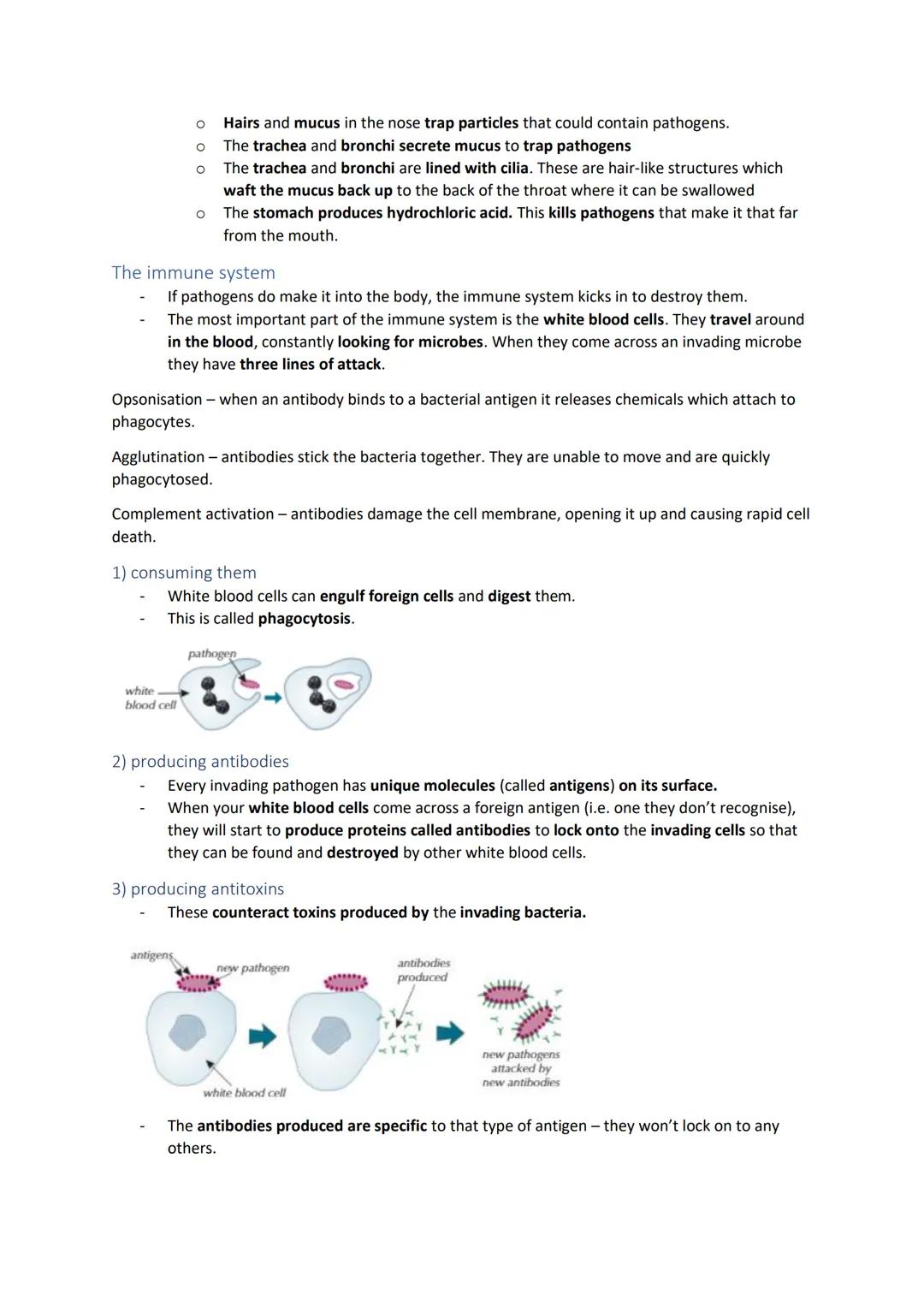
Before any pathogen even thinks about making you ill, your body's got multiple defence systems working like bouncers at a club - and they're surprisingly effective.
Your non-specific defence system includes physical barriers and chemical weapons. Your skin acts as a fortress wall whilst secreting antimicrobial substances that kill pathogens on contact. Meanwhile, hairs and mucus in your nose trap particles, and your trachea and bronchi produce mucus that cilia sweep back up to your throat.
If pathogens make it past these defences, your stomach's hydrochloric acid delivers a final knockout punch. Think of it as a deadly acid bath that destroys most harmful microbes.
Remember: These defences work automatically - you don't need to think about them, but keeping them healthy through good nutrition and hygiene helps them work better.
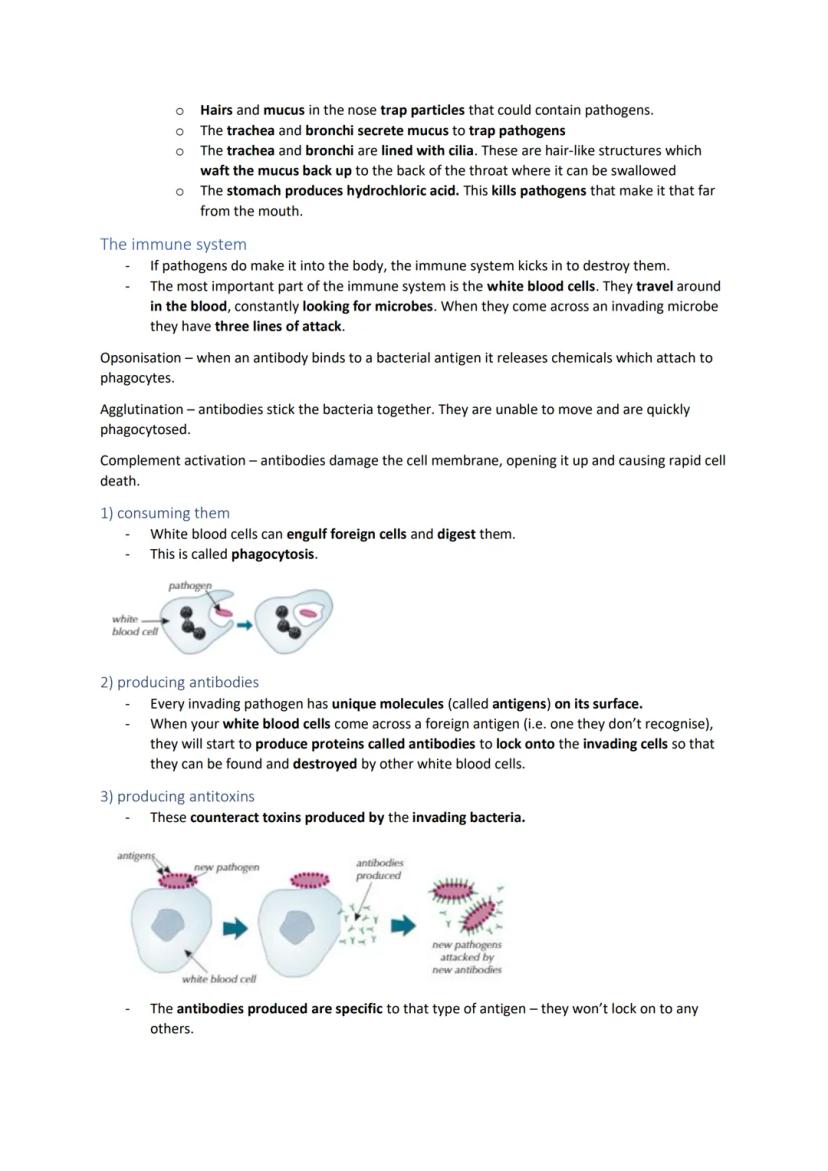
When pathogens break through, your immune system springs into action. White blood cells patrol your bloodstream like security guards, ready to launch three types of attack: phagocytosis (literally eating the invaders), producing antibodies to target specific pathogens, and creating antitoxins to neutralise bacterial toxins.
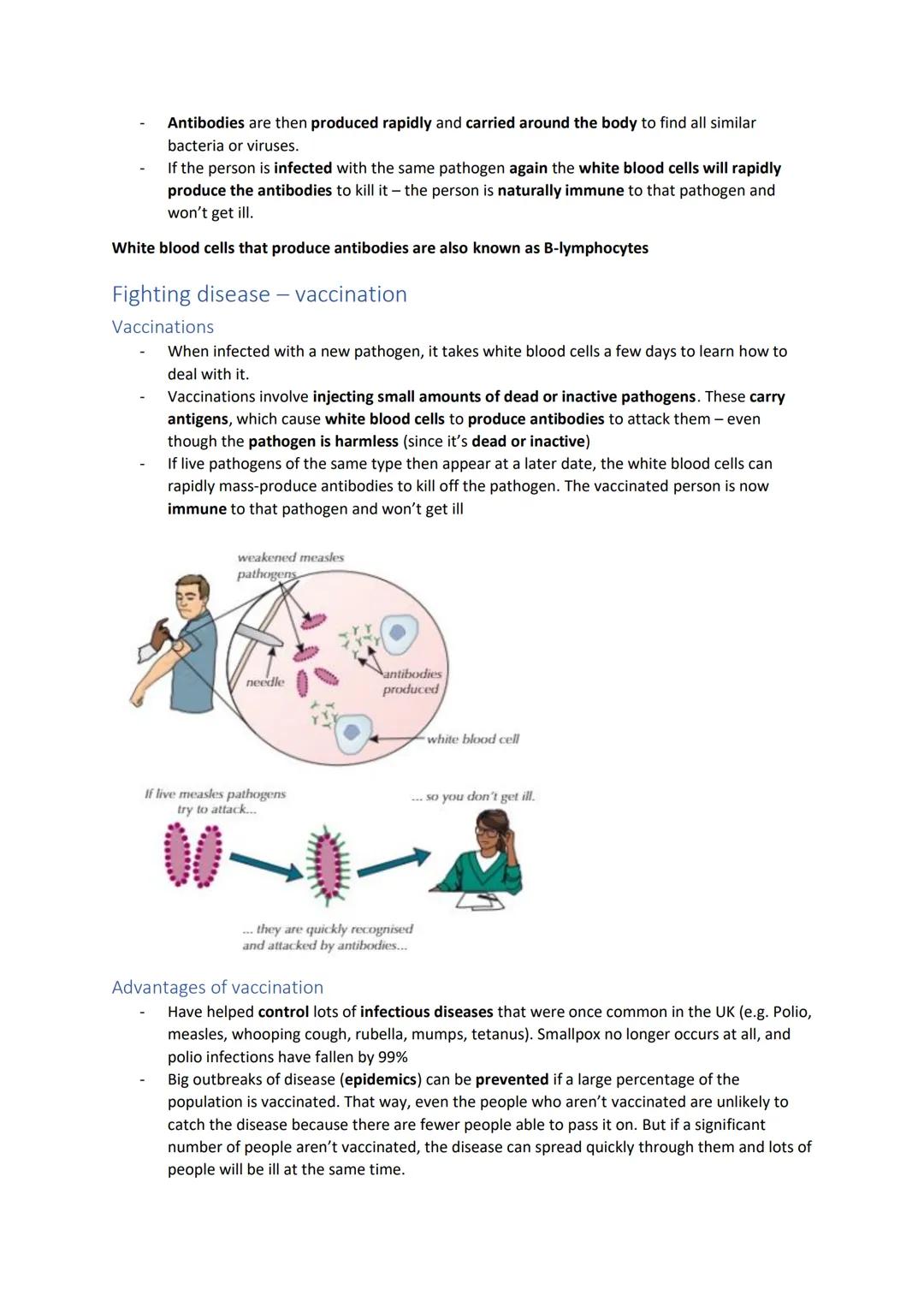
Think of vaccination as giving your immune system a practice run against dangerous diseases - it's like studying past papers before your actual exam.
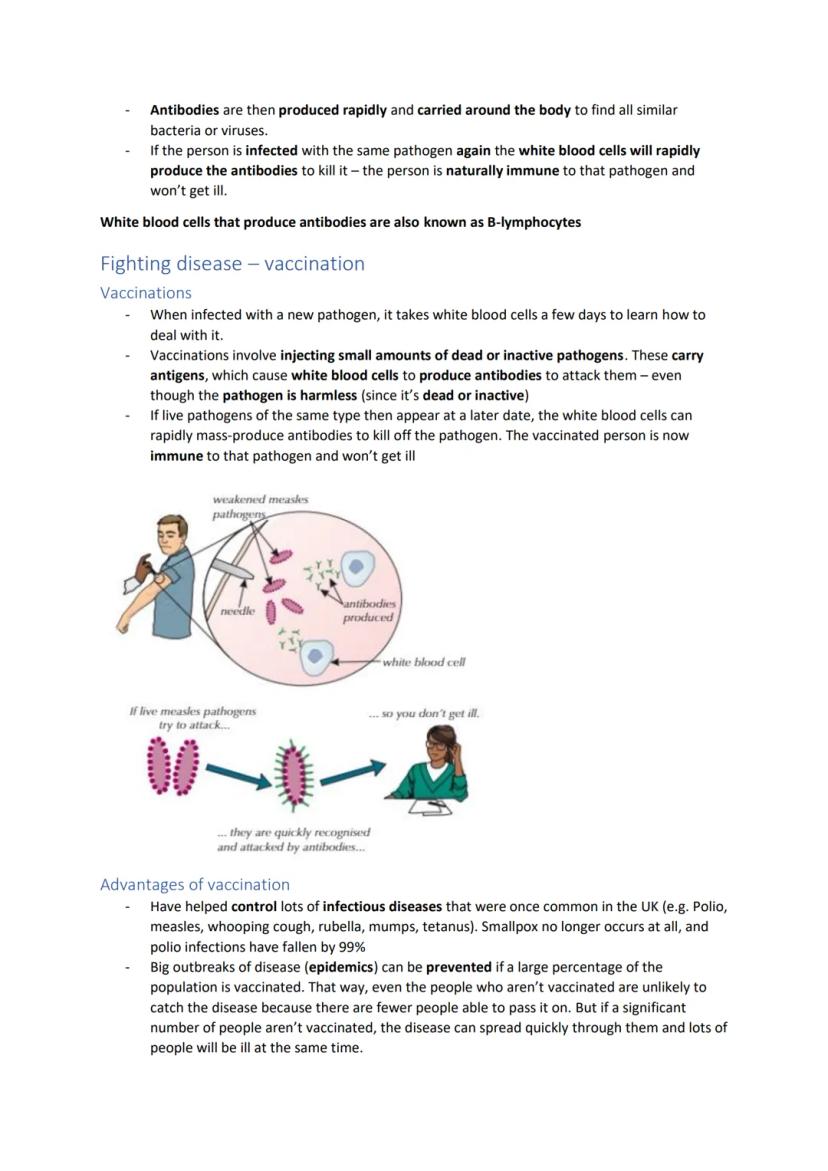
When you're vaccinated, you receive small amounts of dead or inactive pathogens that carry the same antigens as the live version. Your white blood cells learn to recognise these antigens and produce specific antibodies without you getting ill.
Here's the clever bit: if live pathogens of the same type attack later, your white blood cells remember exactly what to do. They rapidly mass-produce antibodies to destroy the threat before you even feel unwell. You're now naturally immune to that pathogen.
Did You Know? Vaccination programmes have virtually eliminated diseases like polio (99% reduction) and completely eradicated smallpox worldwide.
Herd immunity occurs when enough people are vaccinated that diseases can't spread easily through the population. This protects even unvaccinated individuals because there are fewer people to pass on infections.

Vaccination has transformed public health, but like any medical intervention, it's worth understanding both the advantages and potential drawbacks.
The advantages are massive: vaccination has controlled infectious diseases that once killed thousands, including polio, measles, whooping cough, and tetanus. Epidemics (large disease outbreaks) become virtually impossible when vaccination rates stay high in the population.
However, disadvantages do exist, though they're relatively rare. Vaccines don't always provide complete immunity in every person, and some people experience mild reactions like swelling, fever, or very rarely, seizures.
Reality Check: Serious adverse reactions to vaccines are extremely rare - you're far more likely to be seriously harmed by the diseases they prevent than by the vaccines themselves.
The key is understanding that vaccination is about weighing risks. The tiny risk of vaccine side effects versus the much larger risk of catching serious diseases makes vaccination a smart choice for most people.
Our AI Companion is a student-focused AI tool that offers more than just answers. Built on millions of Knowunity resources, it provides relevant information, personalised study plans, quizzes, and content directly in the chat, adapting to your individual learning journey.
You can download the app from Google Play Store and Apple App Store.
That's right! Enjoy free access to study content, connect with fellow students, and get instant help – all at your fingertips.
App Store
Google Play
The app is very easy to use and well designed. I have found everything I was looking for so far and have been able to learn a lot from the presentations! I will definitely use the app for a class assignment! And of course it also helps a lot as an inspiration.
Stefan S
iOS user
This app is really great. There are so many study notes and help [...]. My problem subject is French, for example, and the app has so many options for help. Thanks to this app, I have improved my French. I would recommend it to anyone.
Samantha Klich
Android user
Wow, I am really amazed. I just tried the app because I've seen it advertised many times and was absolutely stunned. This app is THE HELP you want for school and above all, it offers so many things, such as workouts and fact sheets, which have been VERY helpful to me personally.
Anna
iOS user
Best app on earth! no words because it’s too good
Thomas R
iOS user
Just amazing. Let's me revise 10x better, this app is a quick 10/10. I highly recommend it to anyone. I can watch and search for notes. I can save them in the subject folder. I can revise it any time when I come back. If you haven't tried this app, you're really missing out.
Basil
Android user
This app has made me feel so much more confident in my exam prep, not only through boosting my own self confidence through the features that allow you to connect with others and feel less alone, but also through the way the app itself is centred around making you feel better. It is easy to navigate, fun to use, and helpful to anyone struggling in absolutely any way.
David K
iOS user
The app's just great! All I have to do is enter the topic in the search bar and I get the response real fast. I don't have to watch 10 YouTube videos to understand something, so I'm saving my time. Highly recommended!
Sudenaz Ocak
Android user
In school I was really bad at maths but thanks to the app, I am doing better now. I am so grateful that you made the app.
Greenlight Bonnie
Android user
very reliable app to help and grow your ideas of Maths, English and other related topics in your works. please use this app if your struggling in areas, this app is key for that. wish I'd of done a review before. and it's also free so don't worry about that.
Rohan U
Android user
I know a lot of apps use fake accounts to boost their reviews but this app deserves it all. Originally I was getting 4 in my English exams and this time I got a grade 7. I didn’t even know about this app three days until the exam and it has helped A LOT. Please actually trust me and use it as I’m sure you too will see developments.
Xander S
iOS user
THE QUIZES AND FLASHCARDS ARE SO USEFUL AND I LOVE Knowunity AI. IT ALSO IS LITREALLY LIKE CHATGPT BUT SMARTER!! HELPED ME WITH MY MASCARA PROBLEMS TOO!! AS WELL AS MY REAL SUBJECTS ! DUHHH 😍😁😲🤑💗✨🎀😮
Elisha
iOS user
This apps acc the goat. I find revision so boring but this app makes it so easy to organize it all and then you can ask the freeeee ai to test yourself so good and you can easily upload your own stuff. highly recommend as someone taking mocks now
Paul T
iOS user
The app is very easy to use and well designed. I have found everything I was looking for so far and have been able to learn a lot from the presentations! I will definitely use the app for a class assignment! And of course it also helps a lot as an inspiration.
Stefan S
iOS user
This app is really great. There are so many study notes and help [...]. My problem subject is French, for example, and the app has so many options for help. Thanks to this app, I have improved my French. I would recommend it to anyone.
Samantha Klich
Android user
Wow, I am really amazed. I just tried the app because I've seen it advertised many times and was absolutely stunned. This app is THE HELP you want for school and above all, it offers so many things, such as workouts and fact sheets, which have been VERY helpful to me personally.
Anna
iOS user
Best app on earth! no words because it’s too good
Thomas R
iOS user
Just amazing. Let's me revise 10x better, this app is a quick 10/10. I highly recommend it to anyone. I can watch and search for notes. I can save them in the subject folder. I can revise it any time when I come back. If you haven't tried this app, you're really missing out.
Basil
Android user
This app has made me feel so much more confident in my exam prep, not only through boosting my own self confidence through the features that allow you to connect with others and feel less alone, but also through the way the app itself is centred around making you feel better. It is easy to navigate, fun to use, and helpful to anyone struggling in absolutely any way.
David K
iOS user
The app's just great! All I have to do is enter the topic in the search bar and I get the response real fast. I don't have to watch 10 YouTube videos to understand something, so I'm saving my time. Highly recommended!
Sudenaz Ocak
Android user
In school I was really bad at maths but thanks to the app, I am doing better now. I am so grateful that you made the app.
Greenlight Bonnie
Android user
very reliable app to help and grow your ideas of Maths, English and other related topics in your works. please use this app if your struggling in areas, this app is key for that. wish I'd of done a review before. and it's also free so don't worry about that.
Rohan U
Android user
I know a lot of apps use fake accounts to boost their reviews but this app deserves it all. Originally I was getting 4 in my English exams and this time I got a grade 7. I didn’t even know about this app three days until the exam and it has helped A LOT. Please actually trust me and use it as I’m sure you too will see developments.
Xander S
iOS user
THE QUIZES AND FLASHCARDS ARE SO USEFUL AND I LOVE Knowunity AI. IT ALSO IS LITREALLY LIKE CHATGPT BUT SMARTER!! HELPED ME WITH MY MASCARA PROBLEMS TOO!! AS WELL AS MY REAL SUBJECTS ! DUHHH 😍😁😲🤑💗✨🎀😮
Elisha
iOS user
This apps acc the goat. I find revision so boring but this app makes it so easy to organize it all and then you can ask the freeeee ai to test yourself so good and you can easily upload your own stuff. highly recommend as someone taking mocks now
Paul T
iOS user
Los
@los
Your body is constantly under attack from harmful bacteria and other pathogens, but you've got some pretty impressive defences working around the clock. Understanding how bacterial diseases spread and how your immune system fights back is crucial for staying healthy... Show more
Access to all documents
Improve your grades
Join milions of students
By signing up you accept Terms of Service and Privacy Policy
Ever wondered why you got sick after that dodgy takeaway or why safe sex education matters so much? Bacterial diseases like salmonella and gonorrhoea are more common than you'd think, but they're totally preventable with the right knowledge.
Salmonella food poisoning hits you with fever, stomach cramps, vomiting and diarrhoea - all thanks to nasty toxins the bacteria produce. You'll typically catch it from contaminated chicken or food prepared in unhygienic conditions. The good news? Most UK poultry gets vaccinated against salmonella, which massively reduces your risk.
Gonorrhoea is a sexually transmitted disease (STD) caused by bacteria that's passed through unprotected sex. Symptoms include painful urination and thick yellow or green discharge. What's worrying is that many strains are now resistant to penicillin, so doctors have to use different antibiotics.
Quick Tip: Basic hygiene like washing your hands thoroughly, using condoms, and ensuring food is properly prepared are your first line of defence against bacterial infections.
Prevention strategies include destroying vectors (like mosquitoes that spread disease), isolating infected individuals, and vaccination programmes that protect both people and animals.
Access to all documents
Improve your grades
Join milions of students
By signing up you accept Terms of Service and Privacy Policy
Before any pathogen even thinks about making you ill, your body's got multiple defence systems working like bouncers at a club - and they're surprisingly effective.
Your non-specific defence system includes physical barriers and chemical weapons. Your skin acts as a fortress wall whilst secreting antimicrobial substances that kill pathogens on contact. Meanwhile, hairs and mucus in your nose trap particles, and your trachea and bronchi produce mucus that cilia sweep back up to your throat.
If pathogens make it past these defences, your stomach's hydrochloric acid delivers a final knockout punch. Think of it as a deadly acid bath that destroys most harmful microbes.
Remember: These defences work automatically - you don't need to think about them, but keeping them healthy through good nutrition and hygiene helps them work better.
When pathogens break through, your immune system springs into action. White blood cells patrol your bloodstream like security guards, ready to launch three types of attack: phagocytosis (literally eating the invaders), producing antibodies to target specific pathogens, and creating antitoxins to neutralise bacterial toxins.
Access to all documents
Improve your grades
Join milions of students
By signing up you accept Terms of Service and Privacy Policy
Think of vaccination as giving your immune system a practice run against dangerous diseases - it's like studying past papers before your actual exam.
When you're vaccinated, you receive small amounts of dead or inactive pathogens that carry the same antigens as the live version. Your white blood cells learn to recognise these antigens and produce specific antibodies without you getting ill.
Here's the clever bit: if live pathogens of the same type attack later, your white blood cells remember exactly what to do. They rapidly mass-produce antibodies to destroy the threat before you even feel unwell. You're now naturally immune to that pathogen.
Did You Know? Vaccination programmes have virtually eliminated diseases like polio (99% reduction) and completely eradicated smallpox worldwide.
Herd immunity occurs when enough people are vaccinated that diseases can't spread easily through the population. This protects even unvaccinated individuals because there are fewer people to pass on infections.
Access to all documents
Improve your grades
Join milions of students
By signing up you accept Terms of Service and Privacy Policy
Vaccination has transformed public health, but like any medical intervention, it's worth understanding both the advantages and potential drawbacks.
The advantages are massive: vaccination has controlled infectious diseases that once killed thousands, including polio, measles, whooping cough, and tetanus. Epidemics (large disease outbreaks) become virtually impossible when vaccination rates stay high in the population.
However, disadvantages do exist, though they're relatively rare. Vaccines don't always provide complete immunity in every person, and some people experience mild reactions like swelling, fever, or very rarely, seizures.
Reality Check: Serious adverse reactions to vaccines are extremely rare - you're far more likely to be seriously harmed by the diseases they prevent than by the vaccines themselves.
The key is understanding that vaccination is about weighing risks. The tiny risk of vaccine side effects versus the much larger risk of catching serious diseases makes vaccination a smart choice for most people.
Our AI Companion is a student-focused AI tool that offers more than just answers. Built on millions of Knowunity resources, it provides relevant information, personalised study plans, quizzes, and content directly in the chat, adapting to your individual learning journey.
You can download the app from Google Play Store and Apple App Store.
That's right! Enjoy free access to study content, connect with fellow students, and get instant help – all at your fingertips.
3
Smart Tools NEW
Transform this note into: ✓ 50+ Practice Questions ✓ Interactive Flashcards ✓ Full Mock Exam ✓ Essay Outlines
Explore the essential concepts of microorganisms, immunity, and disease prevention in this comprehensive summary. Understand the roles of bacteria, viruses, and fungi, along with the body's immune response, antibiotic resistance, and the impact of lifestyle on non-communicable diseases. Ideal for CCEA GCSE Biology students preparing for exams.
 Biology
Explore the stages of the cell cycle, including Interphase, Mitosis, and Cytokinesis. This summary covers key phases such as G1, S, and the division of genetic material, providing a clear overview for GCSE biology students.
BiologyEssential revision material covering cellular biology, photosynthesis, respiration, human physiology, diseases, and the immune system. This summary includes critical information on stem cells, the heart, blood components, and drug development, making it ideal for exam preparation.
BiologyExplore the mechanisms of infection and the immune response in this comprehensive overview. Learn about pathogens, vaccination strategies, antibiotic treatments, and the differences between communicable and non-communicable diseases. This summary covers key concepts such as malaria, HIV, and the role of the immune system in disease prevention and treatment.
BiologyExplore the key concepts of communicable and non-communicable diseases, pathogens, and the immune response in this comprehensive summary for AQA GCSE Biology. Understand the mechanisms of viral, bacterial, and protist diseases, the role of vaccinations and antibiotics, and the importance of herd immunity. Ideal for exam preparation and quick revision.
BiologyExplore key concepts in infection and immunity, including pathogen types, antibiotic resistance, vaccination, and the human immune response. This summary covers essential biology topics for GCSE students, focusing on how diseases spread and the body's defense mechanisms. Ideal for exam preparation and understanding communicable diseases.
BiologyApp Store
Google Play
The app is very easy to use and well designed. I have found everything I was looking for so far and have been able to learn a lot from the presentations! I will definitely use the app for a class assignment! And of course it also helps a lot as an inspiration.
Stefan S
iOS user
This app is really great. There are so many study notes and help [...]. My problem subject is French, for example, and the app has so many options for help. Thanks to this app, I have improved my French. I would recommend it to anyone.
Samantha Klich
Android user
Wow, I am really amazed. I just tried the app because I've seen it advertised many times and was absolutely stunned. This app is THE HELP you want for school and above all, it offers so many things, such as workouts and fact sheets, which have been VERY helpful to me personally.
Anna
iOS user
Best app on earth! no words because it’s too good
Thomas R
iOS user
Just amazing. Let's me revise 10x better, this app is a quick 10/10. I highly recommend it to anyone. I can watch and search for notes. I can save them in the subject folder. I can revise it any time when I come back. If you haven't tried this app, you're really missing out.
Basil
Android user
This app has made me feel so much more confident in my exam prep, not only through boosting my own self confidence through the features that allow you to connect with others and feel less alone, but also through the way the app itself is centred around making you feel better. It is easy to navigate, fun to use, and helpful to anyone struggling in absolutely any way.
David K
iOS user
The app's just great! All I have to do is enter the topic in the search bar and I get the response real fast. I don't have to watch 10 YouTube videos to understand something, so I'm saving my time. Highly recommended!
Sudenaz Ocak
Android user
In school I was really bad at maths but thanks to the app, I am doing better now. I am so grateful that you made the app.
Greenlight Bonnie
Android user
very reliable app to help and grow your ideas of Maths, English and other related topics in your works. please use this app if your struggling in areas, this app is key for that. wish I'd of done a review before. and it's also free so don't worry about that.
Rohan U
Android user
I know a lot of apps use fake accounts to boost their reviews but this app deserves it all. Originally I was getting 4 in my English exams and this time I got a grade 7. I didn’t even know about this app three days until the exam and it has helped A LOT. Please actually trust me and use it as I’m sure you too will see developments.
Xander S
iOS user
THE QUIZES AND FLASHCARDS ARE SO USEFUL AND I LOVE Knowunity AI. IT ALSO IS LITREALLY LIKE CHATGPT BUT SMARTER!! HELPED ME WITH MY MASCARA PROBLEMS TOO!! AS WELL AS MY REAL SUBJECTS ! DUHHH 😍😁😲🤑💗✨🎀😮
Elisha
iOS user
This apps acc the goat. I find revision so boring but this app makes it so easy to organize it all and then you can ask the freeeee ai to test yourself so good and you can easily upload your own stuff. highly recommend as someone taking mocks now
Paul T
iOS user
The app is very easy to use and well designed. I have found everything I was looking for so far and have been able to learn a lot from the presentations! I will definitely use the app for a class assignment! And of course it also helps a lot as an inspiration.
Stefan S
iOS user
This app is really great. There are so many study notes and help [...]. My problem subject is French, for example, and the app has so many options for help. Thanks to this app, I have improved my French. I would recommend it to anyone.
Samantha Klich
Android user
Wow, I am really amazed. I just tried the app because I've seen it advertised many times and was absolutely stunned. This app is THE HELP you want for school and above all, it offers so many things, such as workouts and fact sheets, which have been VERY helpful to me personally.
Anna
iOS user
Best app on earth! no words because it’s too good
Thomas R
iOS user
Just amazing. Let's me revise 10x better, this app is a quick 10/10. I highly recommend it to anyone. I can watch and search for notes. I can save them in the subject folder. I can revise it any time when I come back. If you haven't tried this app, you're really missing out.
Basil
Android user
This app has made me feel so much more confident in my exam prep, not only through boosting my own self confidence through the features that allow you to connect with others and feel less alone, but also through the way the app itself is centred around making you feel better. It is easy to navigate, fun to use, and helpful to anyone struggling in absolutely any way.
David K
iOS user
The app's just great! All I have to do is enter the topic in the search bar and I get the response real fast. I don't have to watch 10 YouTube videos to understand something, so I'm saving my time. Highly recommended!
Sudenaz Ocak
Android user
In school I was really bad at maths but thanks to the app, I am doing better now. I am so grateful that you made the app.
Greenlight Bonnie
Android user
very reliable app to help and grow your ideas of Maths, English and other related topics in your works. please use this app if your struggling in areas, this app is key for that. wish I'd of done a review before. and it's also free so don't worry about that.
Rohan U
Android user
I know a lot of apps use fake accounts to boost their reviews but this app deserves it all. Originally I was getting 4 in my English exams and this time I got a grade 7. I didn’t even know about this app three days until the exam and it has helped A LOT. Please actually trust me and use it as I’m sure you too will see developments.
Xander S
iOS user
THE QUIZES AND FLASHCARDS ARE SO USEFUL AND I LOVE Knowunity AI. IT ALSO IS LITREALLY LIKE CHATGPT BUT SMARTER!! HELPED ME WITH MY MASCARA PROBLEMS TOO!! AS WELL AS MY REAL SUBJECTS ! DUHHH 😍😁😲🤑💗✨🎀😮
Elisha
iOS user
This apps acc the goat. I find revision so boring but this app makes it so easy to organize it all and then you can ask the freeeee ai to test yourself so good and you can easily upload your own stuff. highly recommend as someone taking mocks now
Paul T
iOS user