Disease and Defence
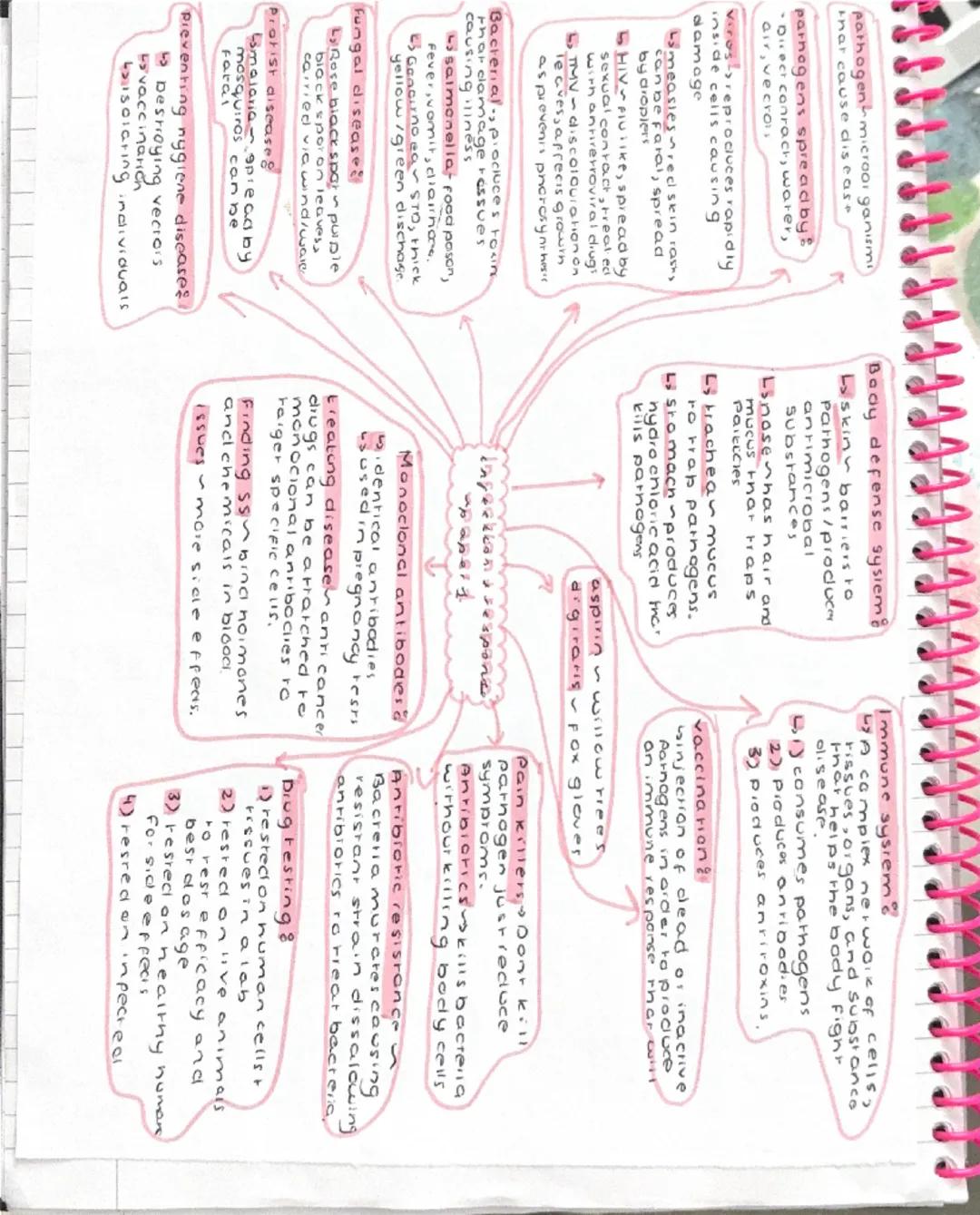
Pathogens are microorganisms that want to make you ill, and they're surprisingly sneaky about it. They spread through direct contact, contaminated water, air droplets, or vectors like mosquitoes carrying malaria.
Different pathogens cause different problems. Viruses like measles and HIV hijack your cells to reproduce rapidly. Bacteria produce toxins that damage your tissues - think salmonella food poisoning. Fungi cause issues like rose black spot in plants, whilst protists give us diseases like malaria.
Fortunately, your body has an amazing defence system. Your skin acts as a barrier, your nose hairs trap particles, and your stomach acid kills unwanted guests. Your immune system then produces antibodies and antitoxins to fight specific threats.
Vaccination is like giving your immune system a practice run with dead or weakened pathogens. Antibiotics kill bacteria (but not viruses!), though antibiotic resistance is becoming a serious problem as bacteria evolve to survive our medicines.
Key Point: Your immune system has memory - once it's fought a pathogen, it remembers how to defeat it quickly if it returns.


 Sociology