
Explore the fascinating world of inheritance, variation, and evolution in... Show more
 Biology
 Sociology
 English Literature
Sign up to see the contentIt's free!
Access to all documents
Improve your grades
Join milions of students
Knowunity AI
Subjects
Triangle Congruence and Similarity Theorems
Triangle Properties and Classification
Linear Equations and Graphs
Geometric Angle Relationships
Trigonometric Functions and Identities
Equation Solving Techniques
Circle Geometry Fundamentals
Division Operations and Methods
Basic Differentiation Rules
Exponent and Logarithm Properties
Show all topics
Human Organ Systems
Reproductive Cell Cycles
Biological Sciences Subdisciplines
Cellular Energy Metabolism
Autotrophic Energy Processes
Inheritance Patterns and Principles
Biomolecular Structure and Organization
Cell Cycle and Division Mechanics
Cellular Organization and Development
Biological Structural Organization
Show all topics
Chemical Sciences and Applications
Atomic Structure and Composition
Molecular Electron Structure Representation
Atomic Electron Behavior
Matter Properties and Water
Mole Concept and Calculations
Gas Laws and Behavior
Periodic Table Organization
Chemical Thermodynamics Fundamentals
Chemical Bond Types and Properties
Show all topics
European Renaissance and Enlightenment
European Cultural Movements 800-1920
American Revolution Era 1763-1797
American Civil War 1861-1865
Global Imperial Systems
Mongol and Chinese Dynasties
U.S. Presidents and World Leaders
Historical Sources and Documentation
World Wars Era and Impact
World Religious Systems
Show all topics
Classic and Contemporary Novels
Literary Character Analysis
Rhetorical Theory and Practice
Classic Literary Narratives
Reading Analysis and Interpretation
Narrative Structure and Techniques
English Language Components
Influential English-Language Authors
Basic Sentence Structure
Narrative Voice and Perspective
Show all topics
377
•
Updated Apr 12, 2026
•

Maddie
@mads_lh
Explore the fascinating world of inheritance, variation, and evolution in... Show more





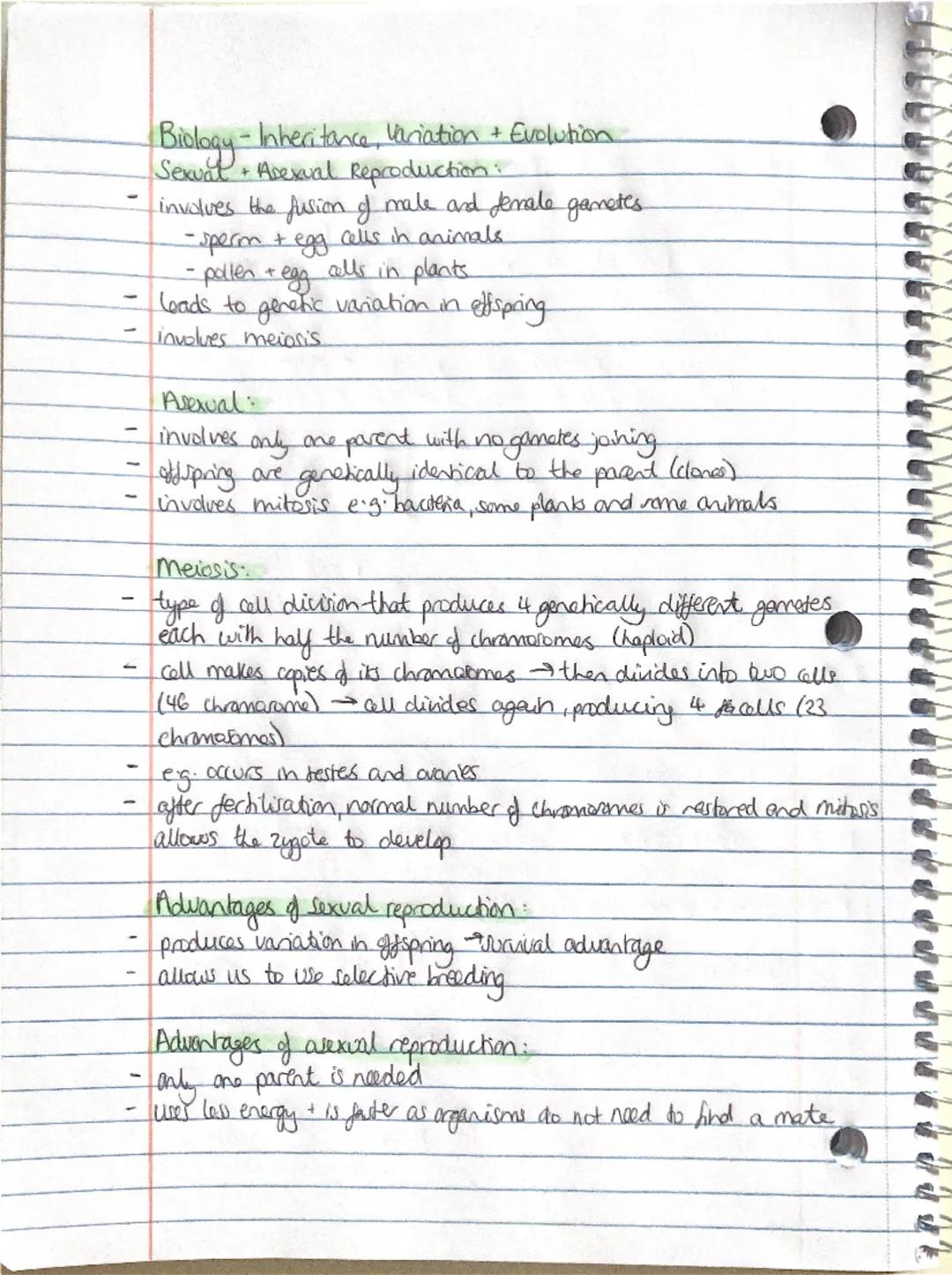
Sexual reproduction involves the fusion of gametes (sperm and egg cells) from two parents. This process creates genetic variation in offspring, which gives them survival advantages. Sexual reproduction requires meiosis, a special type of cell division.
Asexual reproduction needs only one parent and produces genetically identical offspring (clones). It uses mitosis instead of meiosis and occurs in bacteria, some plants, and certain animals. This method uses less energy and happens faster since organisms don't need to find a mate.
During meiosis, cells divide to produce four genetically different gametes, each with half the normal number of chromosomes (23 instead of 46). When fertilisation occurs, the full number of chromosomes is restored, and the resulting zygote develops through mitosis.
Did you know? Sexual reproduction allows for selective breeding, which humans have used for thousands of years to develop crops and animals with desirable traits!

Organisms often use different reproduction strategies depending on their environment. Malarial parasites, for example, reproduce sexually in mosquitoes but switch to asexual reproduction inside human hosts. This gives them the best of both worlds!
Many fungi cleverly adjust their reproduction method based on conditions. They produce spores asexually when conditions are stable (creating identical copies), but switch to sexual reproduction when conditions change to increase variation and avoid extinction.
Plants show amazing reproductive diversity too. Many flowering plants reproduce sexually through pollination, while strawberry plants can reproduce asexually using runners. Daffodils grow from bulbs that produce new identical plants.
Remember this: DNA is a double helix polymer that contains genes (sections that code for proteins). Your entire genetic material is called your genome, which the Human Genome Project has helped us understand better.
In sexual reproduction, gametes contain 23 chromosomes each. You inherit alleles (different forms of genes) from both parents. Dominant alleles need only one copy to be expressed, while recessive alleles need two copies to affect your traits.
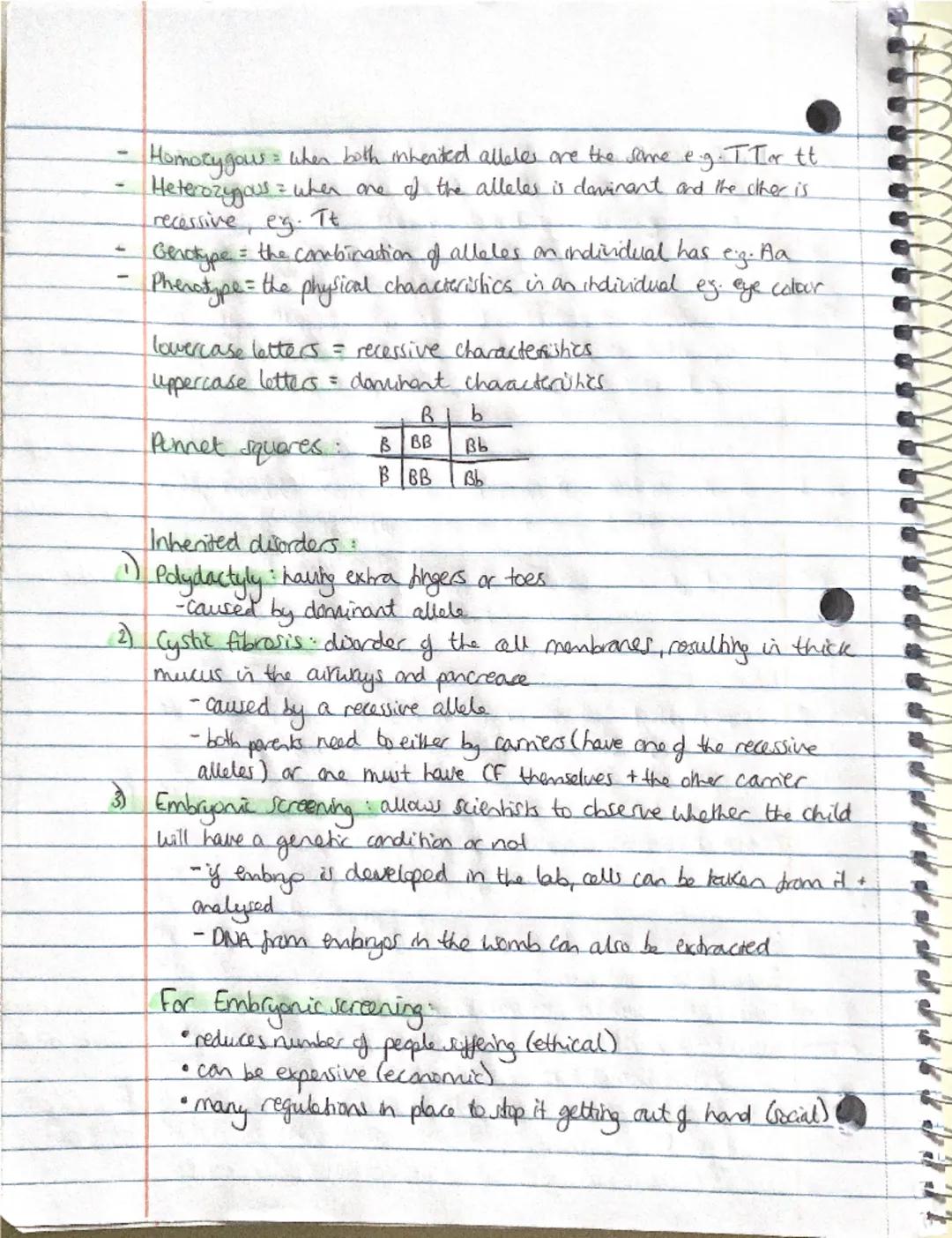
When you inherit genes from your parents, you can be either homozygous (two identical alleles, like TT or tt) or heterozygous (different alleles, like Tt). Your genotype is your genetic makeup, while your phenotype is how those genes are expressed in your physical characteristics.
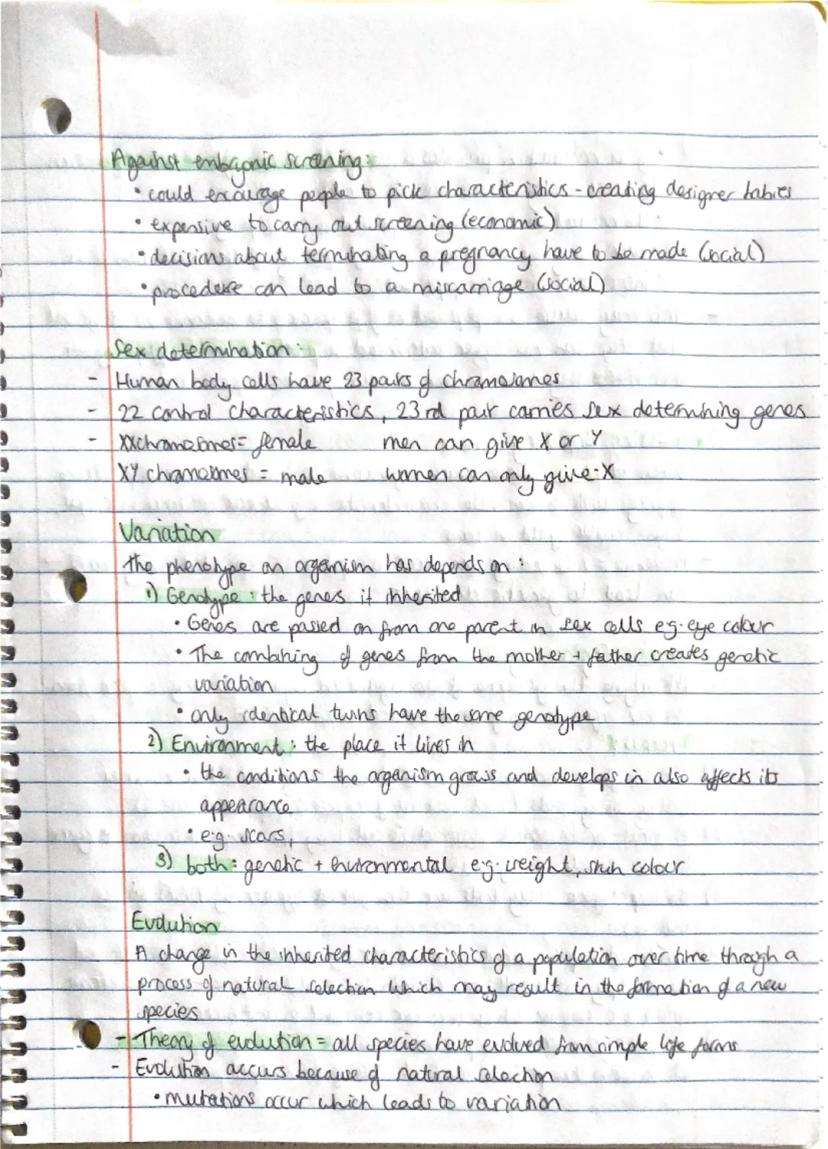
Scientists use Punnett squares to predict the probability of offspring inheriting certain traits. These simple diagrams show all possible combinations of alleles from both parents and help us understand inheritance patterns.
Some disorders are passed through families due to specific alleles. Polydactyly (extra fingers or toes) is caused by a dominant allele, while cystic fibrosis results from a recessive allele. For recessive disorders, both parents must carry at least one copy of the recessive allele.
Think about it: Embryonic screening allows scientists to check if an embryo carries genetic conditions. This raises important ethical questions: is it right to select embryos based on their genes? Is the expense justified? How do we ensure this technology is used responsibly?

Your biological sex is determined by your 23rd pair of chromosomes. Females have two X chromosomes (XX), while males have one X and one Y chromosome (XY). Since men can contribute either an X or Y chromosome while women can only contribute X, fathers determine the biological sex of their children.
The way you look and function (your phenotype) depends on both your genotype and your environment. Some characteristics like eye colour are mostly determined by genes, while others like weight are influenced by both genes and environment. Even identical twins with the same genotype develop differences due to environmental factors!
Evolution happens when inherited characteristics in a population change over time through natural selection. This can eventually lead to the formation of entirely new species. The theory of evolution states that all species evolved from simple life forms through this process.
Important concept: Evolution occurs because random mutations create variation in populations. When these mutations provide survival advantages, those individuals are more likely to reproduce and pass on their genes to the next generation.
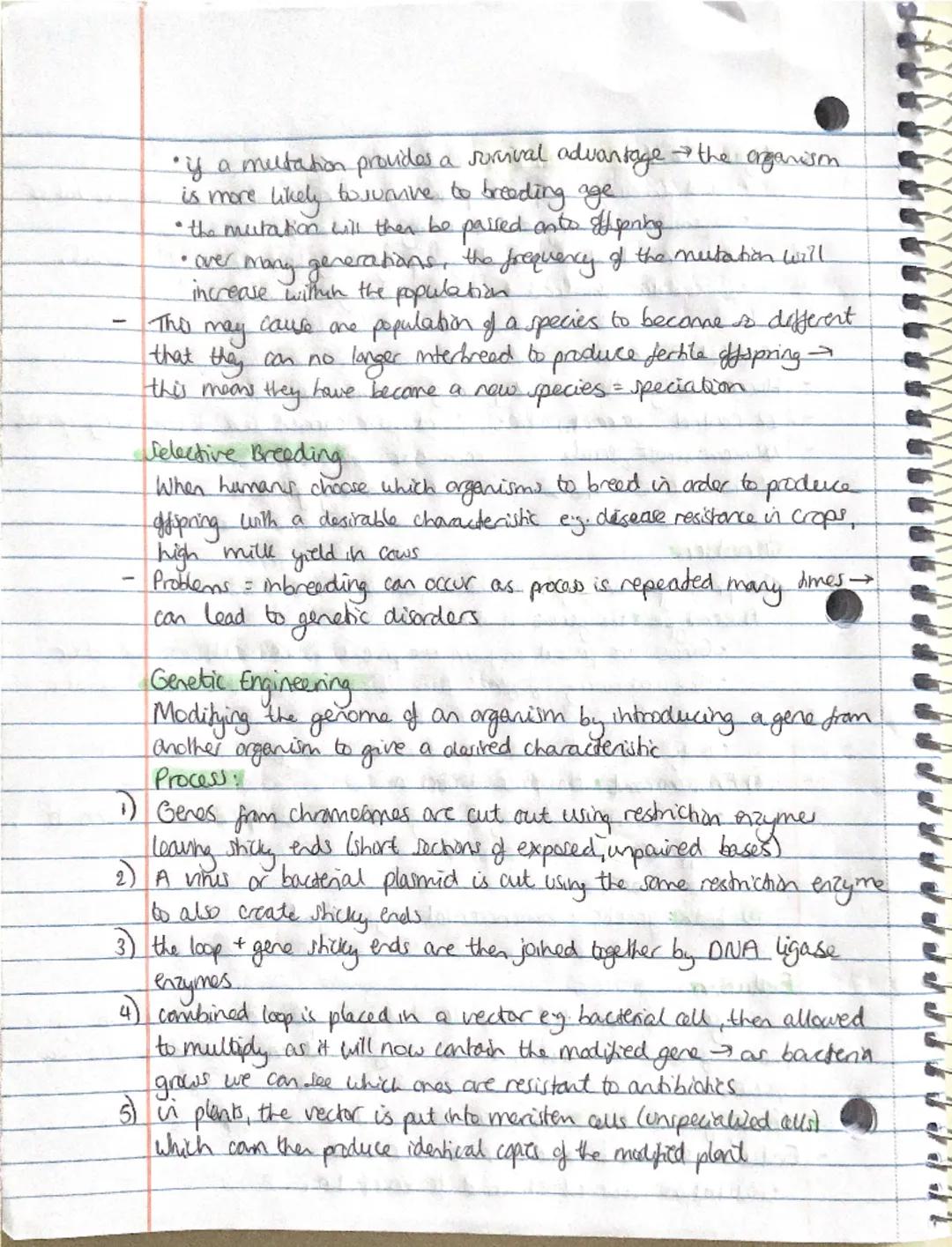
Speciation occurs when populations of the same species become so different they can no longer breed together. This happens gradually: a beneficial mutation appears, those organisms survive better and reproduce more, and over many generations, the mutation becomes common in the population. Eventually, these genetic differences can create a new species.
Humans have used selective breeding for thousands of years to develop plants and animals with desired traits. We select organisms with characteristics we want (like high milk yield in cows) and breed them together. The downside? Too much inbreeding can lead to genetic disorders as harmful recessive genes become more common.
Genetic engineering takes a more direct approach by modifying an organism's genome. Scientists can cut out genes from one organism using restriction enzymes, creating "sticky ends" where the DNA is exposed. They then join this gene to a plasmid or virus using DNA ligase enzymes.
Real-world application: In genetic engineering, modified genes are placed into vectors (like bacterial cells) that reproduce rapidly. Scientists can identify which bacteria contain the modified gene by checking for antibiotic resistance, then use these bacteria to produce large amounts of the desired gene product!

Genetically modified (GM) crops have been engineered to resist insects and herbicides, potentially increasing food production worldwide. This technology could help address food shortages in growing populations, as modified crops can have improved growth rates and thrive in challenging conditions.
In medicine, gene therapy offers hope for treating inherited disorders by transferring normal genes into patients to replace faulty ones. Genetic engineering also enables microorganisms to produce valuable medicines like insulin on an industrial scale.
However, there are legitimate concerns about GM technology. Modified crops might affect wildlife and reduce biodiversity if they kill beneficial insects or outcompete wild plants. Some people worry about unknown long-term effects on human health or fear that the technology could lead to controversial "designer babies."
Think critically: When evaluating genetic technologies, consider multiple perspectives. Are the potential benefits worth the possible risks? Who decides how these technologies should be regulated?
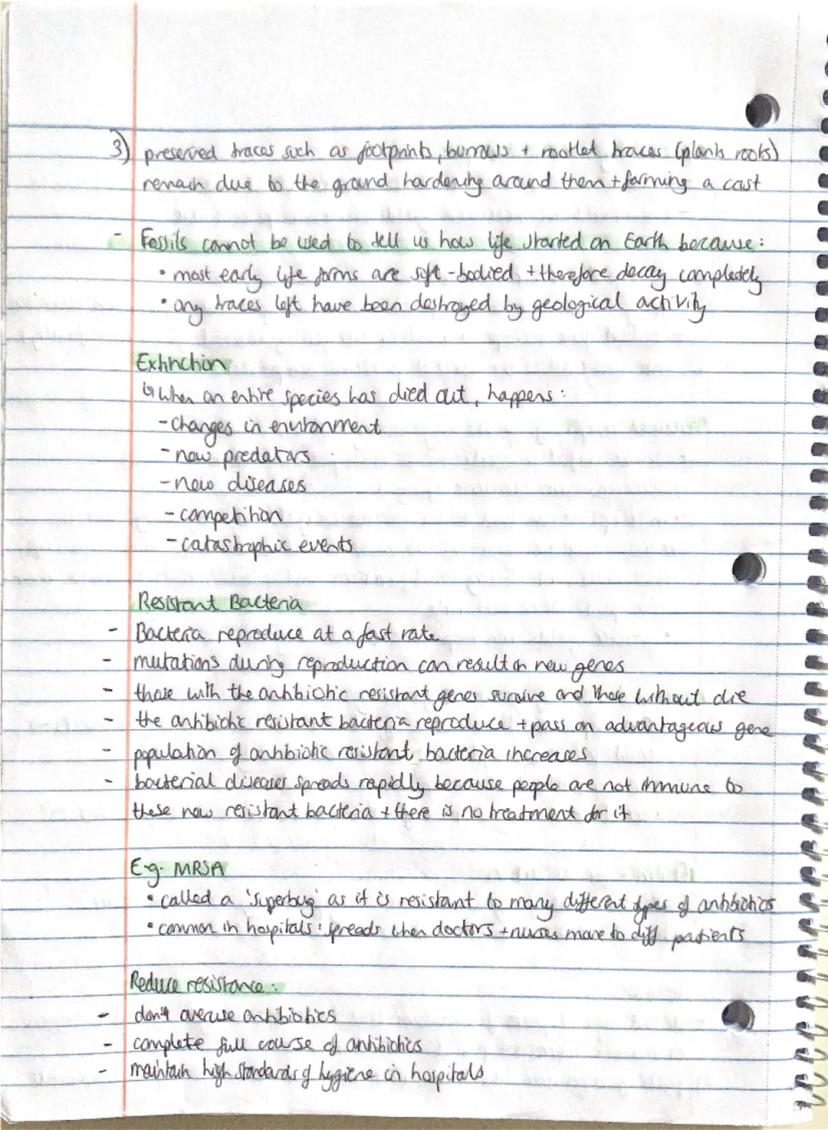
Evidence for evolution comes from many sources. Fossils preserve remains of ancient organisms, showing how species have changed over time. However, fossil evidence has limitations—most early life forms had soft bodies that rarely fossilized, and geological activity has destroyed many ancient traces.

Extinction happens when an entire species dies out completely. This can result from environmental changes, new predators or diseases, increased competition, or catastrophic events like meteor impacts. Throughout Earth's history, countless species have gone extinct as conditions changed.
Antibiotic resistance provides a powerful real-time example of evolution. Bacteria reproduce extremely quickly, which means mutations happen frequently. When exposed to antibiotics, bacteria with resistance-granting mutations survive while others die off. These survivors reproduce and pass on their advantageous genes, creating populations of resistant bacteria.
MRSA is a notorious "superbug" that has evolved resistance to multiple antibiotics. It spreads easily in hospitals as healthcare workers move between patients, creating a serious public health challenge.
Take action: You can help fight antibiotic resistance by using antibiotics only when necessary, completing the full course when prescribed, and practicing good hygiene to prevent infections from spreading. These simple steps make a real difference!

Scientists organize living things into groups based on their characteristics, making it easier to study and understand the relationships between species. The Linnaean system divides organisms into kingdoms, phylum, class, order, family, genus, and species (remember it with "King Phillip Came Over For Good Soup").
The binomial system, developed by Linnaeus, gives each organism a two-part scientific name used worldwide. The first part indicates the genus (a group of closely related species) and the second part identifies the specific species. This system helps scientists communicate clearly about organisms across language barriers.
More recently, the three-domain system proposed by Carl Woese recognizes three major divisions of life: Archaea (primitive bacteria in extreme environments), Bacteria (true bacteria), and Eukaryota . Evolutionary trees visually represent how closely related different organisms are based on their shared characteristics and genetic similarities.
Fascinating fact: Classification systems continue to evolve as we discover new species and learn more about genetic relationships. DNA analysis sometimes reveals surprising connections between organisms that look very different!
Our AI Companion is a student-focused AI tool that offers more than just answers. Built on millions of Knowunity resources, it provides relevant information, personalised study plans, quizzes, and content directly in the chat, adapting to your individual learning journey.
You can download the app from Google Play Store and Apple App Store.
That's right! Enjoy free access to study content, connect with fellow students, and get instant help – all at your fingertips.
App Store
Google Play
The app is very easy to use and well designed. I have found everything I was looking for so far and have been able to learn a lot from the presentations! I will definitely use the app for a class assignment! And of course it also helps a lot as an inspiration.
Stefan S
iOS user
This app is really great. There are so many study notes and help [...]. My problem subject is French, for example, and the app has so many options for help. Thanks to this app, I have improved my French. I would recommend it to anyone.
Samantha Klich
Android user
Wow, I am really amazed. I just tried the app because I've seen it advertised many times and was absolutely stunned. This app is THE HELP you want for school and above all, it offers so many things, such as workouts and fact sheets, which have been VERY helpful to me personally.
Anna
iOS user
Best app on earth! no words because it’s too good
Thomas R
iOS user
Just amazing. Let's me revise 10x better, this app is a quick 10/10. I highly recommend it to anyone. I can watch and search for notes. I can save them in the subject folder. I can revise it any time when I come back. If you haven't tried this app, you're really missing out.
Basil
Android user
This app has made me feel so much more confident in my exam prep, not only through boosting my own self confidence through the features that allow you to connect with others and feel less alone, but also through the way the app itself is centred around making you feel better. It is easy to navigate, fun to use, and helpful to anyone struggling in absolutely any way.
David K
iOS user
The app's just great! All I have to do is enter the topic in the search bar and I get the response real fast. I don't have to watch 10 YouTube videos to understand something, so I'm saving my time. Highly recommended!
Sudenaz Ocak
Android user
In school I was really bad at maths but thanks to the app, I am doing better now. I am so grateful that you made the app.
Greenlight Bonnie
Android user
very reliable app to help and grow your ideas of Maths, English and other related topics in your works. please use this app if your struggling in areas, this app is key for that. wish I'd of done a review before. and it's also free so don't worry about that.
Rohan U
Android user
I know a lot of apps use fake accounts to boost their reviews but this app deserves it all. Originally I was getting 4 in my English exams and this time I got a grade 7. I didn’t even know about this app three days until the exam and it has helped A LOT. Please actually trust me and use it as I’m sure you too will see developments.
Xander S
iOS user
THE QUIZES AND FLASHCARDS ARE SO USEFUL AND I LOVE Knowunity AI. IT ALSO IS LITREALLY LIKE CHATGPT BUT SMARTER!! HELPED ME WITH MY MASCARA PROBLEMS TOO!! AS WELL AS MY REAL SUBJECTS ! DUHHH 😍😁😲🤑💗✨🎀😮
Elisha
iOS user
This apps acc the goat. I find revision so boring but this app makes it so easy to organize it all and then you can ask the freeeee ai to test yourself so good and you can easily upload your own stuff. highly recommend as someone taking mocks now
Paul T
iOS user
The app is very easy to use and well designed. I have found everything I was looking for so far and have been able to learn a lot from the presentations! I will definitely use the app for a class assignment! And of course it also helps a lot as an inspiration.
Stefan S
iOS user
This app is really great. There are so many study notes and help [...]. My problem subject is French, for example, and the app has so many options for help. Thanks to this app, I have improved my French. I would recommend it to anyone.
Samantha Klich
Android user
Wow, I am really amazed. I just tried the app because I've seen it advertised many times and was absolutely stunned. This app is THE HELP you want for school and above all, it offers so many things, such as workouts and fact sheets, which have been VERY helpful to me personally.
Anna
iOS user
Best app on earth! no words because it’s too good
Thomas R
iOS user
Just amazing. Let's me revise 10x better, this app is a quick 10/10. I highly recommend it to anyone. I can watch and search for notes. I can save them in the subject folder. I can revise it any time when I come back. If you haven't tried this app, you're really missing out.
Basil
Android user
This app has made me feel so much more confident in my exam prep, not only through boosting my own self confidence through the features that allow you to connect with others and feel less alone, but also through the way the app itself is centred around making you feel better. It is easy to navigate, fun to use, and helpful to anyone struggling in absolutely any way.
David K
iOS user
The app's just great! All I have to do is enter the topic in the search bar and I get the response real fast. I don't have to watch 10 YouTube videos to understand something, so I'm saving my time. Highly recommended!
Sudenaz Ocak
Android user
In school I was really bad at maths but thanks to the app, I am doing better now. I am so grateful that you made the app.
Greenlight Bonnie
Android user
very reliable app to help and grow your ideas of Maths, English and other related topics in your works. please use this app if your struggling in areas, this app is key for that. wish I'd of done a review before. and it's also free so don't worry about that.
Rohan U
Android user
I know a lot of apps use fake accounts to boost their reviews but this app deserves it all. Originally I was getting 4 in my English exams and this time I got a grade 7. I didn’t even know about this app three days until the exam and it has helped A LOT. Please actually trust me and use it as I’m sure you too will see developments.
Xander S
iOS user
THE QUIZES AND FLASHCARDS ARE SO USEFUL AND I LOVE Knowunity AI. IT ALSO IS LITREALLY LIKE CHATGPT BUT SMARTER!! HELPED ME WITH MY MASCARA PROBLEMS TOO!! AS WELL AS MY REAL SUBJECTS ! DUHHH 😍😁😲🤑💗✨🎀😮
Elisha
iOS user
This apps acc the goat. I find revision so boring but this app makes it so easy to organize it all and then you can ask the freeeee ai to test yourself so good and you can easily upload your own stuff. highly recommend as someone taking mocks now
Paul T
iOS user
Maddie
@mads_lh
Explore the fascinating world of inheritance, variation, and evolution in biology. This guide simplifies key concepts around how traits are passed from one generation to the next, how species change over time, and the science behind genetic technologies that are... Show more
Access to all documents
Improve your grades
Join milions of students
Sexual reproduction involves the fusion of gametes (sperm and egg cells) from two parents. This process creates genetic variation in offspring, which gives them survival advantages. Sexual reproduction requires meiosis, a special type of cell division.
Asexual reproduction needs only one parent and produces genetically identical offspring (clones). It uses mitosis instead of meiosis and occurs in bacteria, some plants, and certain animals. This method uses less energy and happens faster since organisms don't need to find a mate.
During meiosis, cells divide to produce four genetically different gametes, each with half the normal number of chromosomes (23 instead of 46). When fertilisation occurs, the full number of chromosomes is restored, and the resulting zygote develops through mitosis.
Did you know? Sexual reproduction allows for selective breeding, which humans have used for thousands of years to develop crops and animals with desirable traits!
Access to all documents
Improve your grades
Join milions of students
Organisms often use different reproduction strategies depending on their environment. Malarial parasites, for example, reproduce sexually in mosquitoes but switch to asexual reproduction inside human hosts. This gives them the best of both worlds!
Many fungi cleverly adjust their reproduction method based on conditions. They produce spores asexually when conditions are stable (creating identical copies), but switch to sexual reproduction when conditions change to increase variation and avoid extinction.
Plants show amazing reproductive diversity too. Many flowering plants reproduce sexually through pollination, while strawberry plants can reproduce asexually using runners. Daffodils grow from bulbs that produce new identical plants.
Remember this: DNA is a double helix polymer that contains genes (sections that code for proteins). Your entire genetic material is called your genome, which the Human Genome Project has helped us understand better.
In sexual reproduction, gametes contain 23 chromosomes each. You inherit alleles (different forms of genes) from both parents. Dominant alleles need only one copy to be expressed, while recessive alleles need two copies to affect your traits.
Access to all documents
Improve your grades
Join milions of students
When you inherit genes from your parents, you can be either homozygous (two identical alleles, like TT or tt) or heterozygous (different alleles, like Tt). Your genotype is your genetic makeup, while your phenotype is how those genes are expressed in your physical characteristics.
Scientists use Punnett squares to predict the probability of offspring inheriting certain traits. These simple diagrams show all possible combinations of alleles from both parents and help us understand inheritance patterns.
Some disorders are passed through families due to specific alleles. Polydactyly (extra fingers or toes) is caused by a dominant allele, while cystic fibrosis results from a recessive allele. For recessive disorders, both parents must carry at least one copy of the recessive allele.
Think about it: Embryonic screening allows scientists to check if an embryo carries genetic conditions. This raises important ethical questions: is it right to select embryos based on their genes? Is the expense justified? How do we ensure this technology is used responsibly?
Access to all documents
Improve your grades
Join milions of students
Your biological sex is determined by your 23rd pair of chromosomes. Females have two X chromosomes (XX), while males have one X and one Y chromosome (XY). Since men can contribute either an X or Y chromosome while women can only contribute X, fathers determine the biological sex of their children.
The way you look and function (your phenotype) depends on both your genotype and your environment. Some characteristics like eye colour are mostly determined by genes, while others like weight are influenced by both genes and environment. Even identical twins with the same genotype develop differences due to environmental factors!
Evolution happens when inherited characteristics in a population change over time through natural selection. This can eventually lead to the formation of entirely new species. The theory of evolution states that all species evolved from simple life forms through this process.
Important concept: Evolution occurs because random mutations create variation in populations. When these mutations provide survival advantages, those individuals are more likely to reproduce and pass on their genes to the next generation.
Access to all documents
Improve your grades
Join milions of students
Speciation occurs when populations of the same species become so different they can no longer breed together. This happens gradually: a beneficial mutation appears, those organisms survive better and reproduce more, and over many generations, the mutation becomes common in the population. Eventually, these genetic differences can create a new species.
Humans have used selective breeding for thousands of years to develop plants and animals with desired traits. We select organisms with characteristics we want (like high milk yield in cows) and breed them together. The downside? Too much inbreeding can lead to genetic disorders as harmful recessive genes become more common.
Genetic engineering takes a more direct approach by modifying an organism's genome. Scientists can cut out genes from one organism using restriction enzymes, creating "sticky ends" where the DNA is exposed. They then join this gene to a plasmid or virus using DNA ligase enzymes.
Real-world application: In genetic engineering, modified genes are placed into vectors (like bacterial cells) that reproduce rapidly. Scientists can identify which bacteria contain the modified gene by checking for antibiotic resistance, then use these bacteria to produce large amounts of the desired gene product!
Access to all documents
Improve your grades
Join milions of students
Genetically modified (GM) crops have been engineered to resist insects and herbicides, potentially increasing food production worldwide. This technology could help address food shortages in growing populations, as modified crops can have improved growth rates and thrive in challenging conditions.
In medicine, gene therapy offers hope for treating inherited disorders by transferring normal genes into patients to replace faulty ones. Genetic engineering also enables microorganisms to produce valuable medicines like insulin on an industrial scale.
However, there are legitimate concerns about GM technology. Modified crops might affect wildlife and reduce biodiversity if they kill beneficial insects or outcompete wild plants. Some people worry about unknown long-term effects on human health or fear that the technology could lead to controversial "designer babies."
Think critically: When evaluating genetic technologies, consider multiple perspectives. Are the potential benefits worth the possible risks? Who decides how these technologies should be regulated?
Evidence for evolution comes from many sources. Fossils preserve remains of ancient organisms, showing how species have changed over time. However, fossil evidence has limitations—most early life forms had soft bodies that rarely fossilized, and geological activity has destroyed many ancient traces.
Access to all documents
Improve your grades
Join milions of students
Extinction happens when an entire species dies out completely. This can result from environmental changes, new predators or diseases, increased competition, or catastrophic events like meteor impacts. Throughout Earth's history, countless species have gone extinct as conditions changed.
Antibiotic resistance provides a powerful real-time example of evolution. Bacteria reproduce extremely quickly, which means mutations happen frequently. When exposed to antibiotics, bacteria with resistance-granting mutations survive while others die off. These survivors reproduce and pass on their advantageous genes, creating populations of resistant bacteria.
MRSA is a notorious "superbug" that has evolved resistance to multiple antibiotics. It spreads easily in hospitals as healthcare workers move between patients, creating a serious public health challenge.
Take action: You can help fight antibiotic resistance by using antibiotics only when necessary, completing the full course when prescribed, and practicing good hygiene to prevent infections from spreading. These simple steps make a real difference!
Access to all documents
Improve your grades
Join milions of students
Scientists organize living things into groups based on their characteristics, making it easier to study and understand the relationships between species. The Linnaean system divides organisms into kingdoms, phylum, class, order, family, genus, and species (remember it with "King Phillip Came Over For Good Soup").
The binomial system, developed by Linnaeus, gives each organism a two-part scientific name used worldwide. The first part indicates the genus (a group of closely related species) and the second part identifies the specific species. This system helps scientists communicate clearly about organisms across language barriers.
More recently, the three-domain system proposed by Carl Woese recognizes three major divisions of life: Archaea (primitive bacteria in extreme environments), Bacteria (true bacteria), and Eukaryota . Evolutionary trees visually represent how closely related different organisms are based on their shared characteristics and genetic similarities.
Fascinating fact: Classification systems continue to evolve as we discover new species and learn more about genetic relationships. DNA analysis sometimes reveals surprising connections between organisms that look very different!
Our AI Companion is a student-focused AI tool that offers more than just answers. Built on millions of Knowunity resources, it provides relevant information, personalised study plans, quizzes, and content directly in the chat, adapting to your individual learning journey.
You can download the app from Google Play Store and Apple App Store.
That's right! Enjoy free access to study content, connect with fellow students, and get instant help – all at your fingertips.
4
Smart Tools NEW
Transform this note into: ✓ 50+ Practice Questions ✓ Interactive Flashcards ✓ Full Mock Exam ✓ Essay Outlines
App Store
Google Play
The app is very easy to use and well designed. I have found everything I was looking for so far and have been able to learn a lot from the presentations! I will definitely use the app for a class assignment! And of course it also helps a lot as an inspiration.
Stefan S
iOS user
This app is really great. There are so many study notes and help [...]. My problem subject is French, for example, and the app has so many options for help. Thanks to this app, I have improved my French. I would recommend it to anyone.
Samantha Klich
Android user
Wow, I am really amazed. I just tried the app because I've seen it advertised many times and was absolutely stunned. This app is THE HELP you want for school and above all, it offers so many things, such as workouts and fact sheets, which have been VERY helpful to me personally.
Anna
iOS user
Best app on earth! no words because it’s too good
Thomas R
iOS user
Just amazing. Let's me revise 10x better, this app is a quick 10/10. I highly recommend it to anyone. I can watch and search for notes. I can save them in the subject folder. I can revise it any time when I come back. If you haven't tried this app, you're really missing out.
Basil
Android user
This app has made me feel so much more confident in my exam prep, not only through boosting my own self confidence through the features that allow you to connect with others and feel less alone, but also through the way the app itself is centred around making you feel better. It is easy to navigate, fun to use, and helpful to anyone struggling in absolutely any way.
David K
iOS user
The app's just great! All I have to do is enter the topic in the search bar and I get the response real fast. I don't have to watch 10 YouTube videos to understand something, so I'm saving my time. Highly recommended!
Sudenaz Ocak
Android user
In school I was really bad at maths but thanks to the app, I am doing better now. I am so grateful that you made the app.
Greenlight Bonnie
Android user
very reliable app to help and grow your ideas of Maths, English and other related topics in your works. please use this app if your struggling in areas, this app is key for that. wish I'd of done a review before. and it's also free so don't worry about that.
Rohan U
Android user
I know a lot of apps use fake accounts to boost their reviews but this app deserves it all. Originally I was getting 4 in my English exams and this time I got a grade 7. I didn’t even know about this app three days until the exam and it has helped A LOT. Please actually trust me and use it as I’m sure you too will see developments.
Xander S
iOS user
THE QUIZES AND FLASHCARDS ARE SO USEFUL AND I LOVE Knowunity AI. IT ALSO IS LITREALLY LIKE CHATGPT BUT SMARTER!! HELPED ME WITH MY MASCARA PROBLEMS TOO!! AS WELL AS MY REAL SUBJECTS ! DUHHH 😍😁😲🤑💗✨🎀😮
Elisha
iOS user
This apps acc the goat. I find revision so boring but this app makes it so easy to organize it all and then you can ask the freeeee ai to test yourself so good and you can easily upload your own stuff. highly recommend as someone taking mocks now
Paul T
iOS user
The app is very easy to use and well designed. I have found everything I was looking for so far and have been able to learn a lot from the presentations! I will definitely use the app for a class assignment! And of course it also helps a lot as an inspiration.
Stefan S
iOS user
This app is really great. There are so many study notes and help [...]. My problem subject is French, for example, and the app has so many options for help. Thanks to this app, I have improved my French. I would recommend it to anyone.
Samantha Klich
Android user
Wow, I am really amazed. I just tried the app because I've seen it advertised many times and was absolutely stunned. This app is THE HELP you want for school and above all, it offers so many things, such as workouts and fact sheets, which have been VERY helpful to me personally.
Anna
iOS user
Best app on earth! no words because it’s too good
Thomas R
iOS user
Just amazing. Let's me revise 10x better, this app is a quick 10/10. I highly recommend it to anyone. I can watch and search for notes. I can save them in the subject folder. I can revise it any time when I come back. If you haven't tried this app, you're really missing out.
Basil
Android user
This app has made me feel so much more confident in my exam prep, not only through boosting my own self confidence through the features that allow you to connect with others and feel less alone, but also through the way the app itself is centred around making you feel better. It is easy to navigate, fun to use, and helpful to anyone struggling in absolutely any way.
David K
iOS user
The app's just great! All I have to do is enter the topic in the search bar and I get the response real fast. I don't have to watch 10 YouTube videos to understand something, so I'm saving my time. Highly recommended!
Sudenaz Ocak
Android user
In school I was really bad at maths but thanks to the app, I am doing better now. I am so grateful that you made the app.
Greenlight Bonnie
Android user
very reliable app to help and grow your ideas of Maths, English and other related topics in your works. please use this app if your struggling in areas, this app is key for that. wish I'd of done a review before. and it's also free so don't worry about that.
Rohan U
Android user
I know a lot of apps use fake accounts to boost their reviews but this app deserves it all. Originally I was getting 4 in my English exams and this time I got a grade 7. I didn’t even know about this app three days until the exam and it has helped A LOT. Please actually trust me and use it as I’m sure you too will see developments.
Xander S
iOS user
THE QUIZES AND FLASHCARDS ARE SO USEFUL AND I LOVE Knowunity AI. IT ALSO IS LITREALLY LIKE CHATGPT BUT SMARTER!! HELPED ME WITH MY MASCARA PROBLEMS TOO!! AS WELL AS MY REAL SUBJECTS ! DUHHH 😍😁😲🤑💗✨🎀😮
Elisha
iOS user
This apps acc the goat. I find revision so boring but this app makes it so easy to organize it all and then you can ask the freeeee ai to test yourself so good and you can easily upload your own stuff. highly recommend as someone taking mocks now
Paul T
iOS user