
Get ready to dive into the essential building blocks of... Show more
 Sociology
Sign up to see the contentIt's free!
Access to all documents
Improve your grades
Join milions of students
By signing up you accept Terms of Service and Privacy Policy

Maths

Chemistry

Biology

English Language

History
Responding to change (a2 only)
Infection and response
Homeostasis and response
Energy transfers (a2 only)
Cell biology
Organisms respond to changes in their internal and external environments (a-level only)
Biological molecules
Organisation
Substance exchange
Bioenergetics
Genetic information & variation
Inheritance, variation and evolution
Genetics & ecosystems (a2 only)
Ecology
Cells
Show all topics
Britain & the wider world: 1745 -1901
1l the quest for political stability: germany, 1871-1991
The cold war
Inter-war germany
Medieval period: 1066 -1509
2d religious conflict and the church in england, c1529-c1570
2o democracy and nazism: germany, 1918-1945
1f industrialisation and the people: britain, c1783-1885
1c the tudors: england, 1485-1603
2m wars and welfare: britain in transition, 1906-1957
World war two & the holocaust
2n revolution and dictatorship: russia, 1917-1953
2s the making of modern britain, 1951-2007
World war one
Britain: 1509 -1745
Show all topics
1,200
•
7 Dec 2025
•
ameerah
@ameerah_iuyauxibtnph
Get ready to dive into the essential building blocks of... Show more
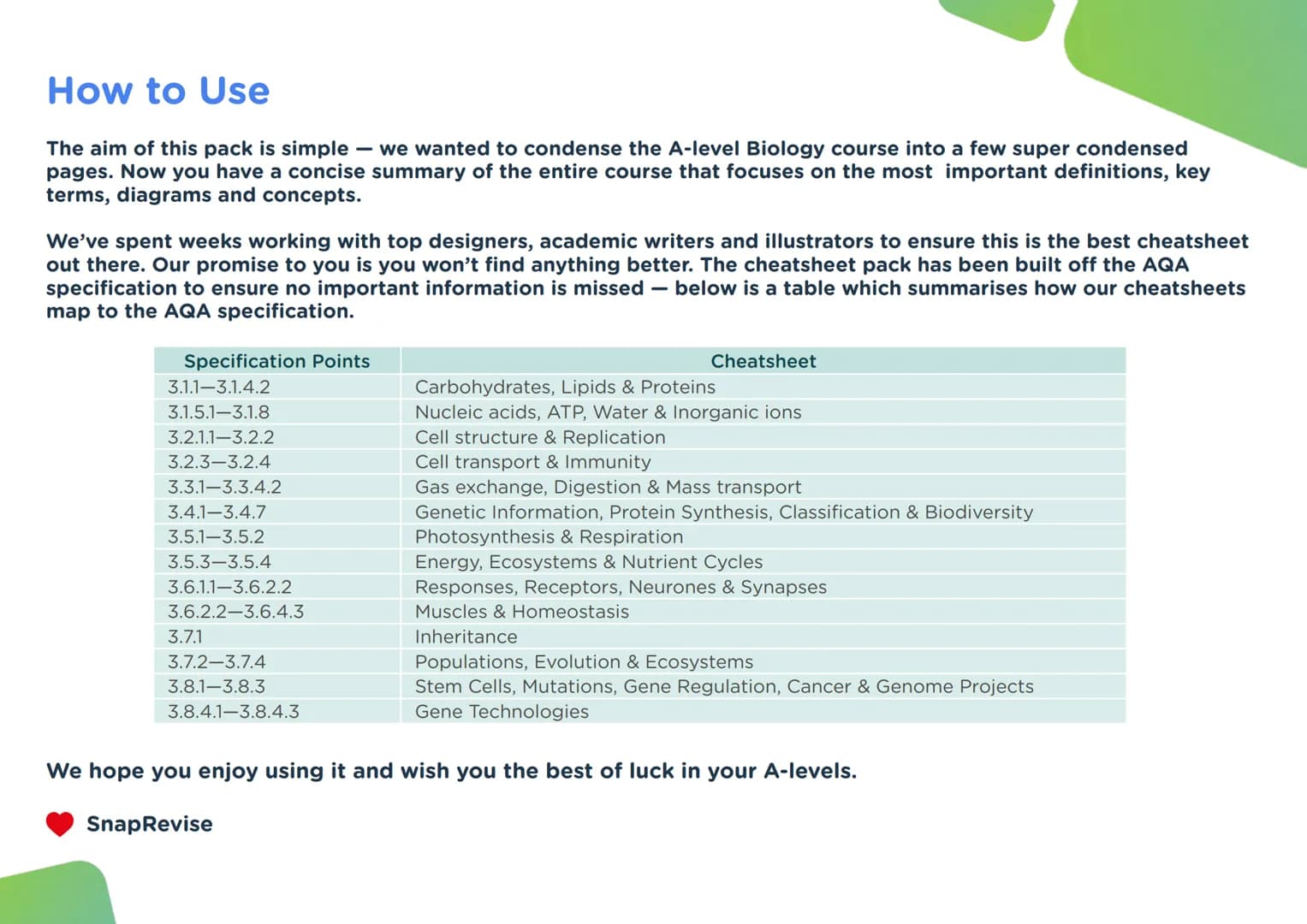
This pack is your ultimate biology cheat sheet - designed to condense the entire A-level course into digestible, visual summaries. Every single AQA specification point is covered, so you won't miss anything crucial for your exams.
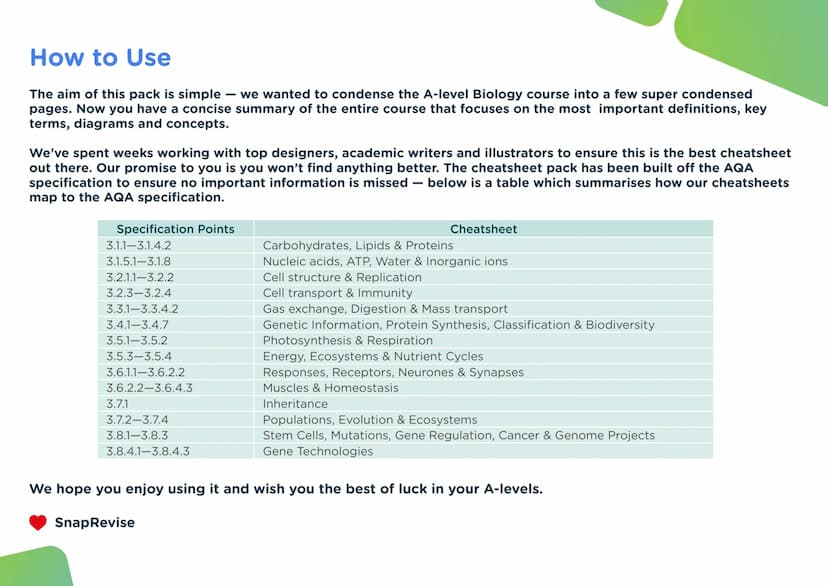
The beauty of this resource lies in its organisation. Each topic maps directly to specific specification points, from basic carbohydrates and proteins (3.1.1-3.1.4.2) all the way through to advanced gene technologies (3.8.4.1-3.8.4.3). This means you can tackle revision systematically without worrying about gaps in your knowledge.
Top tip: Use these sheets for quick reviews before tests, or as a final check before your actual A-level exams. The visual layout makes it perfect for last-minute cramming sessions!
💡 Study Smart: Don't just read through - actively test yourself on the key terms in bold as you go through each section.
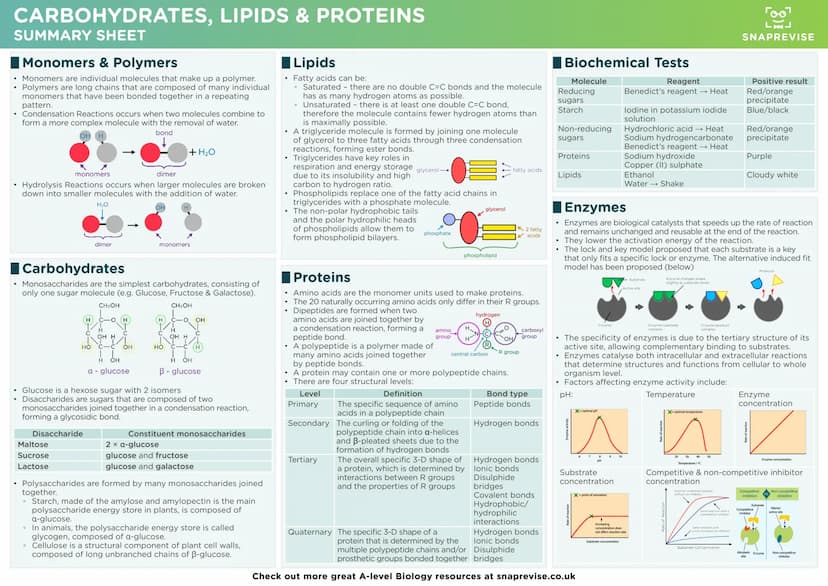
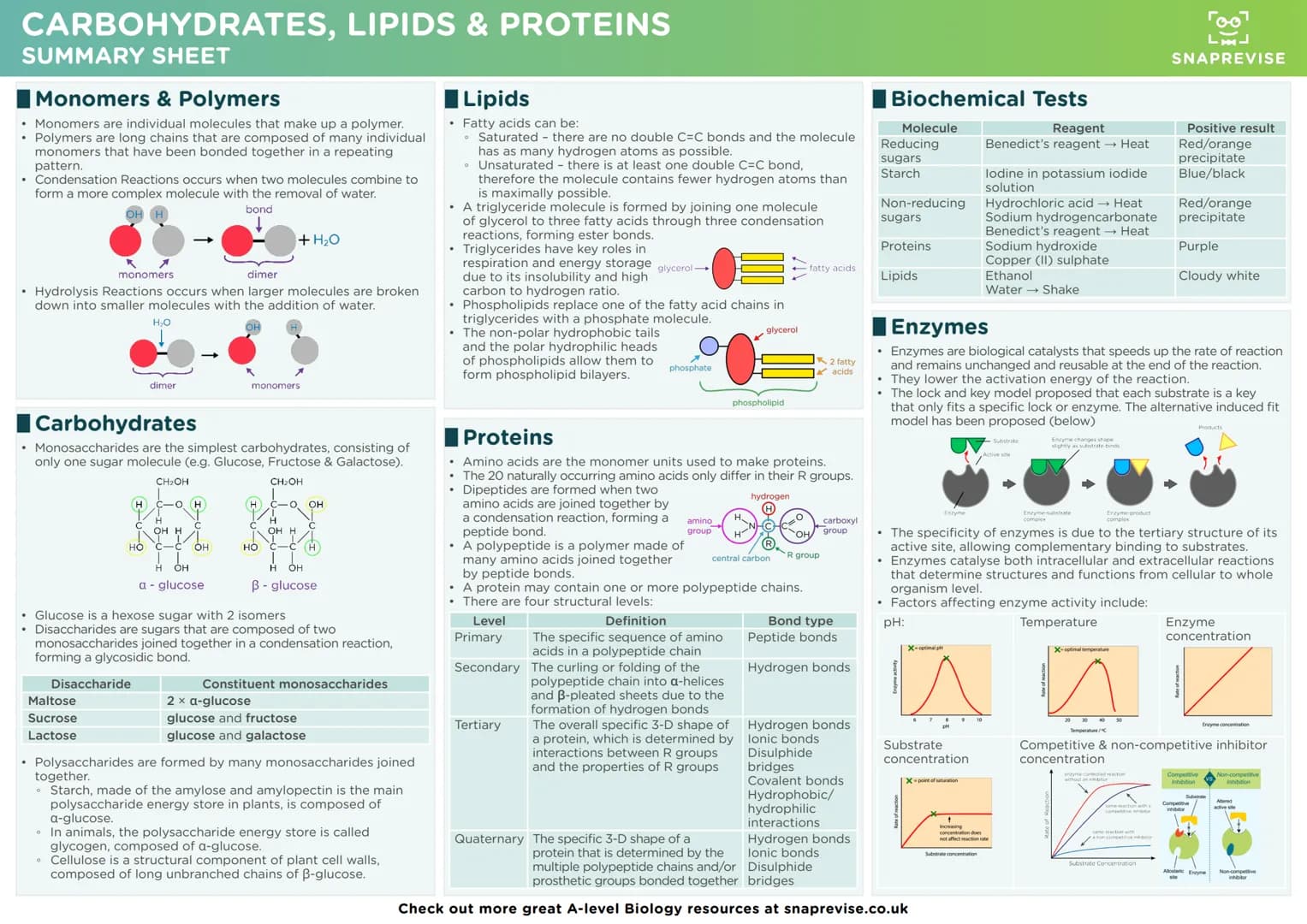
Think of monomers and polymers as biological Lego blocks. Monomers are the individual pieces, whilst polymers are the massive structures you build from them. This happens through condensation reactions (joining pieces together, losing water) and hydrolysis reactions (breaking them apart, adding water).
Carbohydrates come in three main sizes. Monosaccharides like glucose are your simple sugars - the quick energy hits. Disaccharides like maltose are two sugars joined together. Polysaccharides like starch are the massive storage molecules plants use to stockpile energy for later.
Proteins are the workhorses of biology, built from amino acid building blocks. They have four structural levels, from primary (the basic sequence) right up to quaternary (multiple chains working together). Enzymes are special proteins that speed up reactions by lowering activation energy - think of them as biological catalysts that make life's chemistry possible.
Lipids include fats and phospholipids. Triglycerides store energy brilliantly because they're packed with carbon-hydrogen bonds. Phospholipids are the clever molecules that form cell membranes - they have water-loving heads and water-hating tails that create perfect barriers.
💡 Exam Tip: Learn the biochemical tests inside out - Benedict's for sugars, iodine for starch, biuret for proteins. These pop up constantly in practical questions!
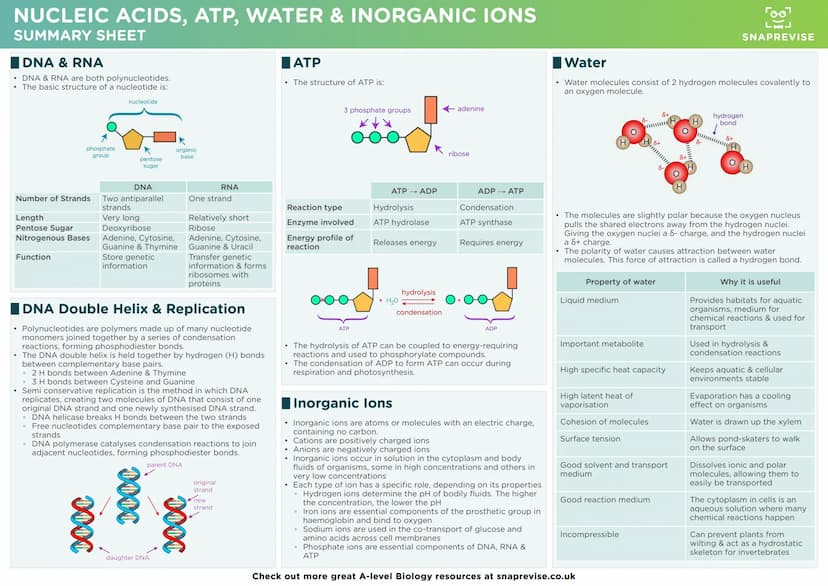
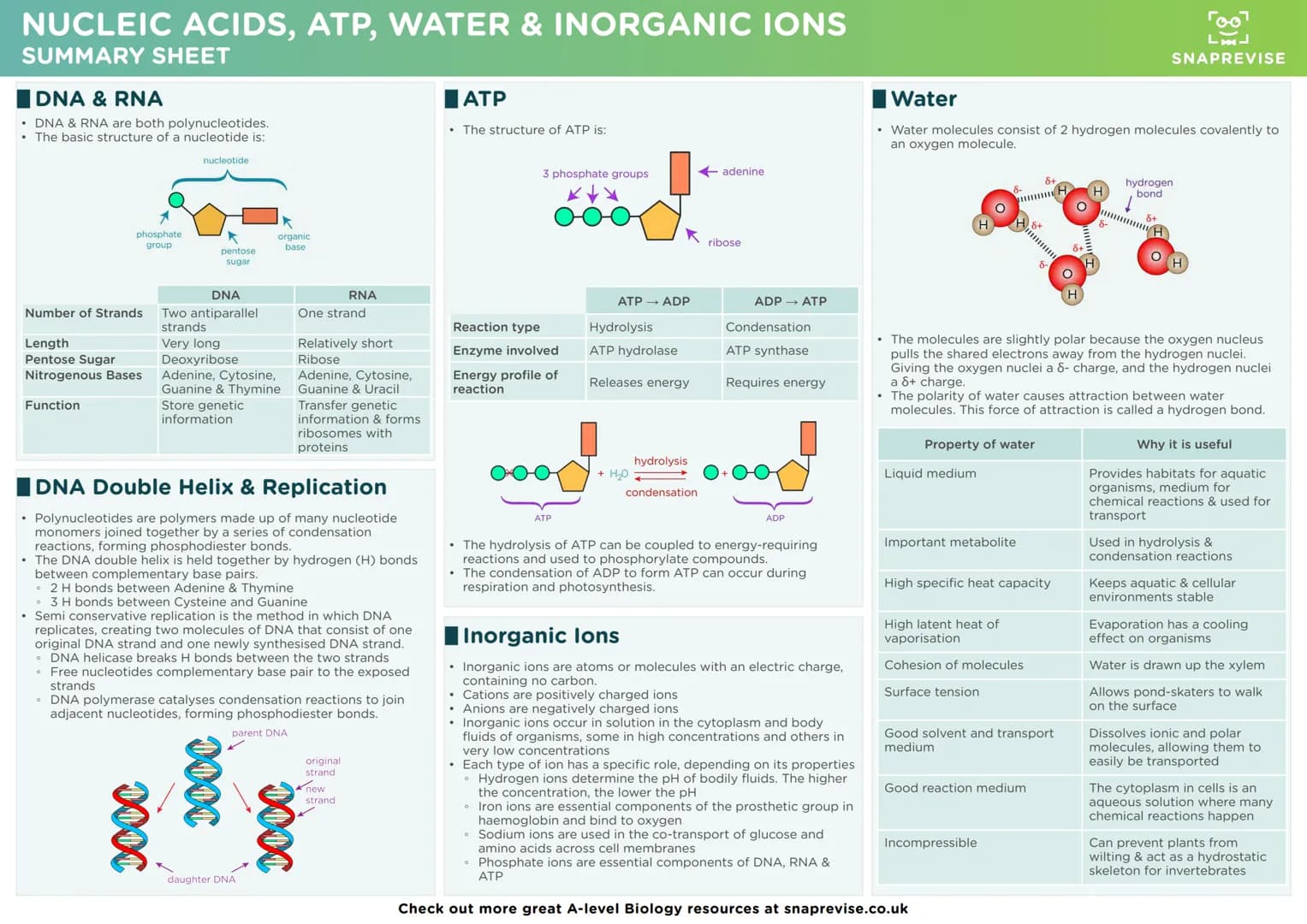
DNA and RNA are your genetic information storage and transfer systems. DNA uses deoxyribose sugar and stores long-term genetic info in its famous double helix. RNA uses ribose sugar and does the day-to-day work of moving genetic information around the cell.
ATP is basically your cellular currency - the molecule that powers almost every energy-requiring process in living things. It works through a simple cycle: ATP breaks down to ADP (releasing energy), then gets rebuilt back to ATP (storing energy again). This happens millions of times per second in your cells.
Water might seem boring, but it's absolutely crucial for life. Its polarity creates hydrogen bonds, giving it amazing properties. High specific heat capacity keeps temperatures stable, whilst its solvent abilities mean it can transport dissolved substances around organisms.
Inorganic ions like sodium, iron, and phosphate might be simple, but they're essential. Iron carries oxygen in haemoglobin, sodium helps transport glucose across membranes, and phosphate forms the backbone of DNA and RNA.
💡 Memory Hook: Remember DNA replication as "semi-conservative" - each new DNA molecule keeps one original strand and adds one new strand, like keeping half your old outfit and updating the rest!
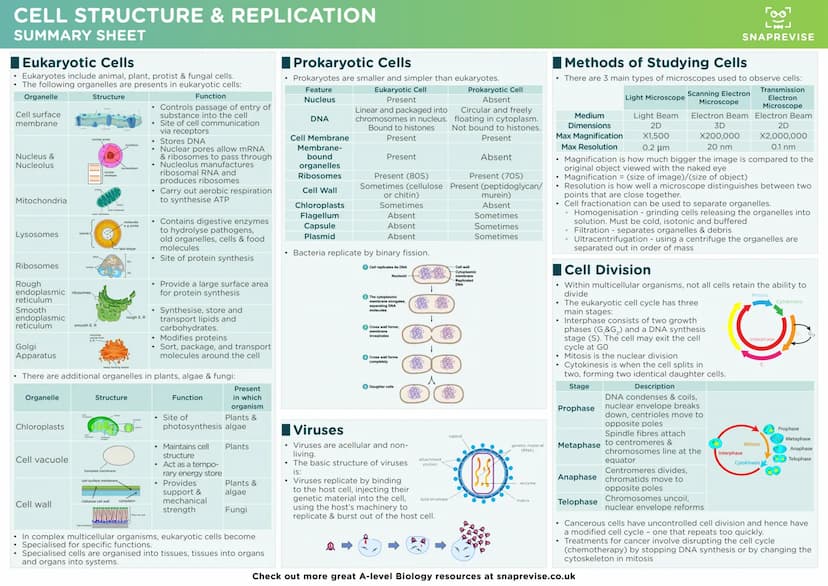
Eukaryotic cells are like mini cities with specialised districts. The nucleus is city hall (controlling everything), mitochondria are power stations (making ATP), and the endoplasmic reticulum is the transport network (moving materials around). Each organelle has a specific job that keeps the cell functioning.
Prokaryotic cells are much simpler - think studio apartment versus mansion. They lack a proper nucleus and membrane-bound organelles, but they're incredibly efficient. Bacteria reproduce through binary fission, essentially photocopying themselves incredibly quickly.
Cell division through mitosis creates identical cells for growth and repair. The process follows a strict sequence: prophase (chromosomes condense), metaphase (line up in the middle), anaphase (pull apart), and telophase (two nuclei form). Cancer happens when this process goes wrong and cells divide uncontrollably.
Microscopes are your window into the cellular world. Light microscopes show living cells but with limited detail. Electron microscopes reveal incredible detail but can't show living specimens. Understanding magnification versus resolution is crucial for interpreting what you're actually seeing.
💡 Practical Pointer: When calculating magnification, remember it's simply image size divided by actual size. Always check your units are the same before calculating!
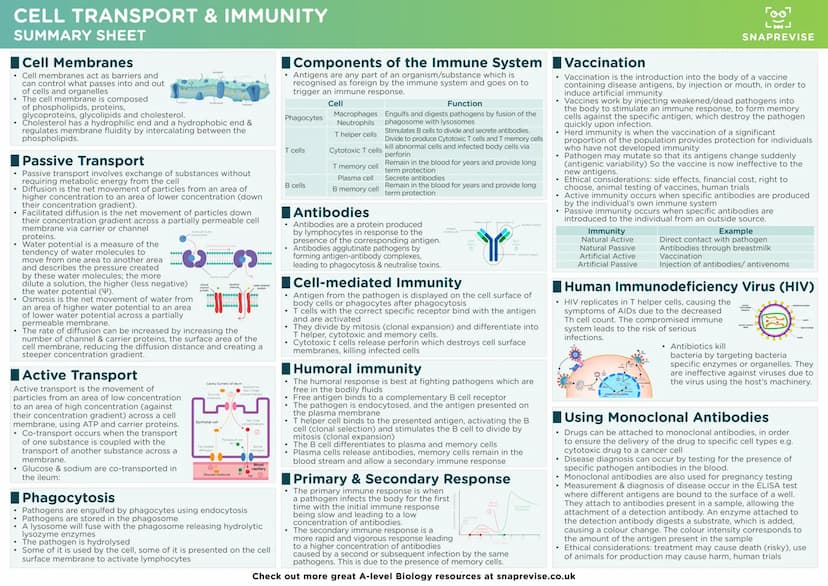
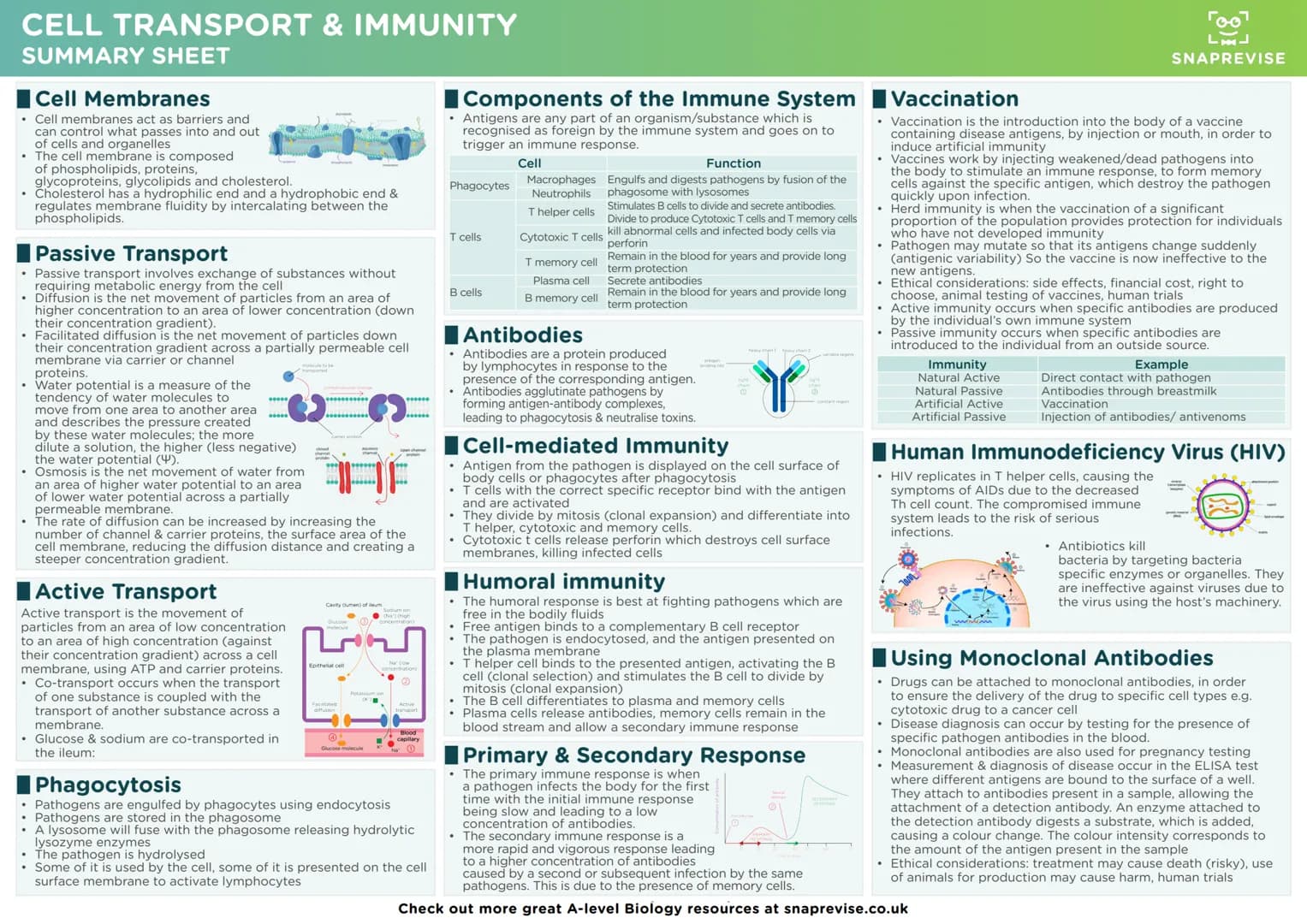
Cell membranes are selective barriers made from phospholipid bilayers. They control what enters and exits cells using various transport methods. Passive transport includes diffusion and osmosis - no energy required, just molecules following concentration gradients.
Active transport is like swimming upstream - it requires energy (ATP) to move substances against concentration gradients. Co-transport is particularly clever, using one substance moving down its gradient to power another substance moving up its gradient.
Your immune system is a sophisticated defence network. Phagocytes engulf pathogens, whilst lymphocytes provide specific responses. B cells make antibodies that stick to antigens, whilst T cells either help coordinate responses or directly kill infected cells.
Vaccination works by training your immune system with harmless versions of pathogens. This creates memory cells that remember the threat, allowing rapid responses if you encounter the real pathogen later. The secondary immune response is much faster and stronger than the primary response.
💡 Key Concept: Water potential always flows from less negative to more negative values. Pure water has a water potential of zero - everything else is negative!
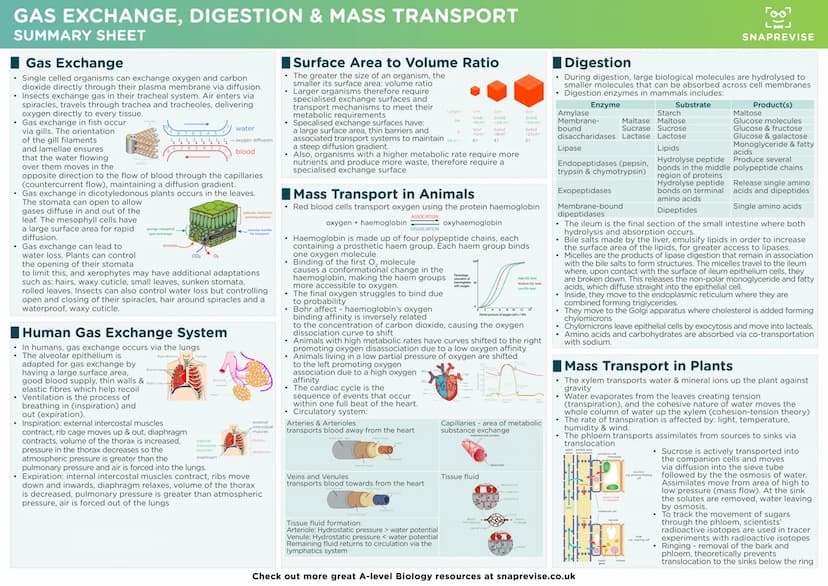
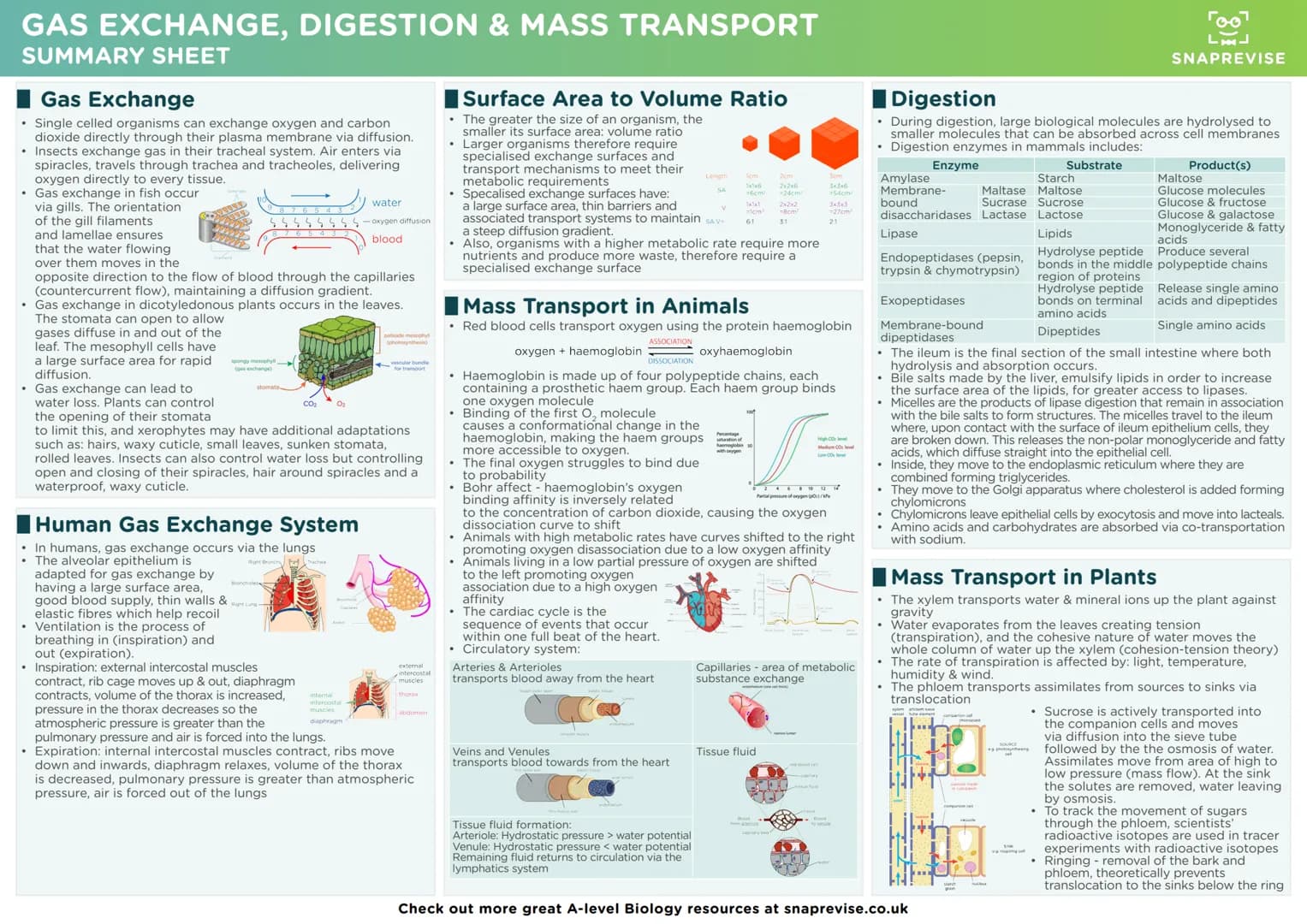
Surface area to volume ratio explains why large organisms need specialised systems. As size increases, the ratio decreases, making simple diffusion inadequate for meeting metabolic needs. That's why we have lungs, gills, and transport systems.
Gas exchange happens differently across organisms. Fish use gills with countercurrent flow to maximise oxygen extraction. Insects use tracheal systems that deliver oxygen directly to tissues. Plants use stomata that can close to prevent water loss whilst allowing gas exchange.
Digestion breaks down large molecules into smaller ones that can be absorbed. Enzymes like amylase (breaks down starch) and lipase (breaks down fats) speed up these processes. The small intestine uses clever co-transport mechanisms to absorb the products.
Mass transport systems move materials around larger organisms. Haemoglobin in blood carries oxygen, with its S-shaped dissociation curve showing cooperative binding. Plants use xylem for water transport and phloem for sugar transport (mass flow hypothesis).
💡 Exam Focus: Learn the oxygen dissociation curve shifts - left shift means higher affinity (better at picking up oxygen), right shift means lower affinity (better at releasing oxygen to tissues).

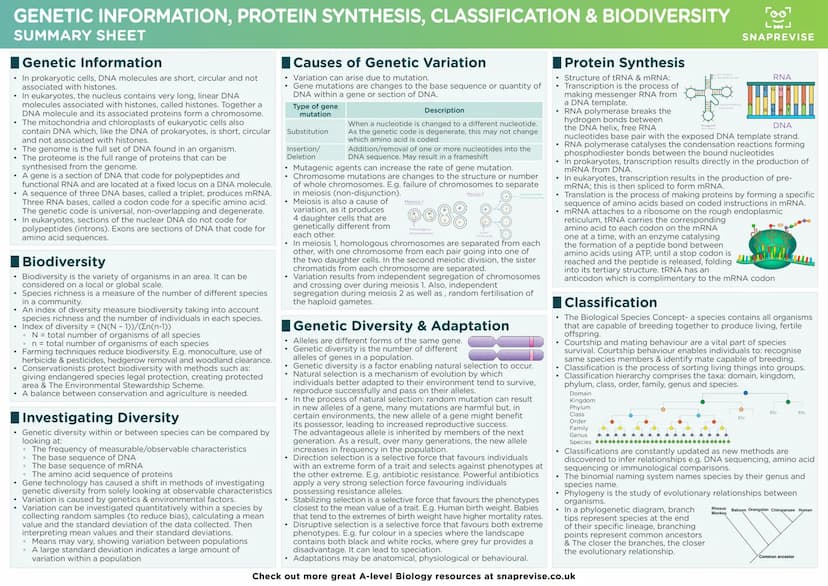
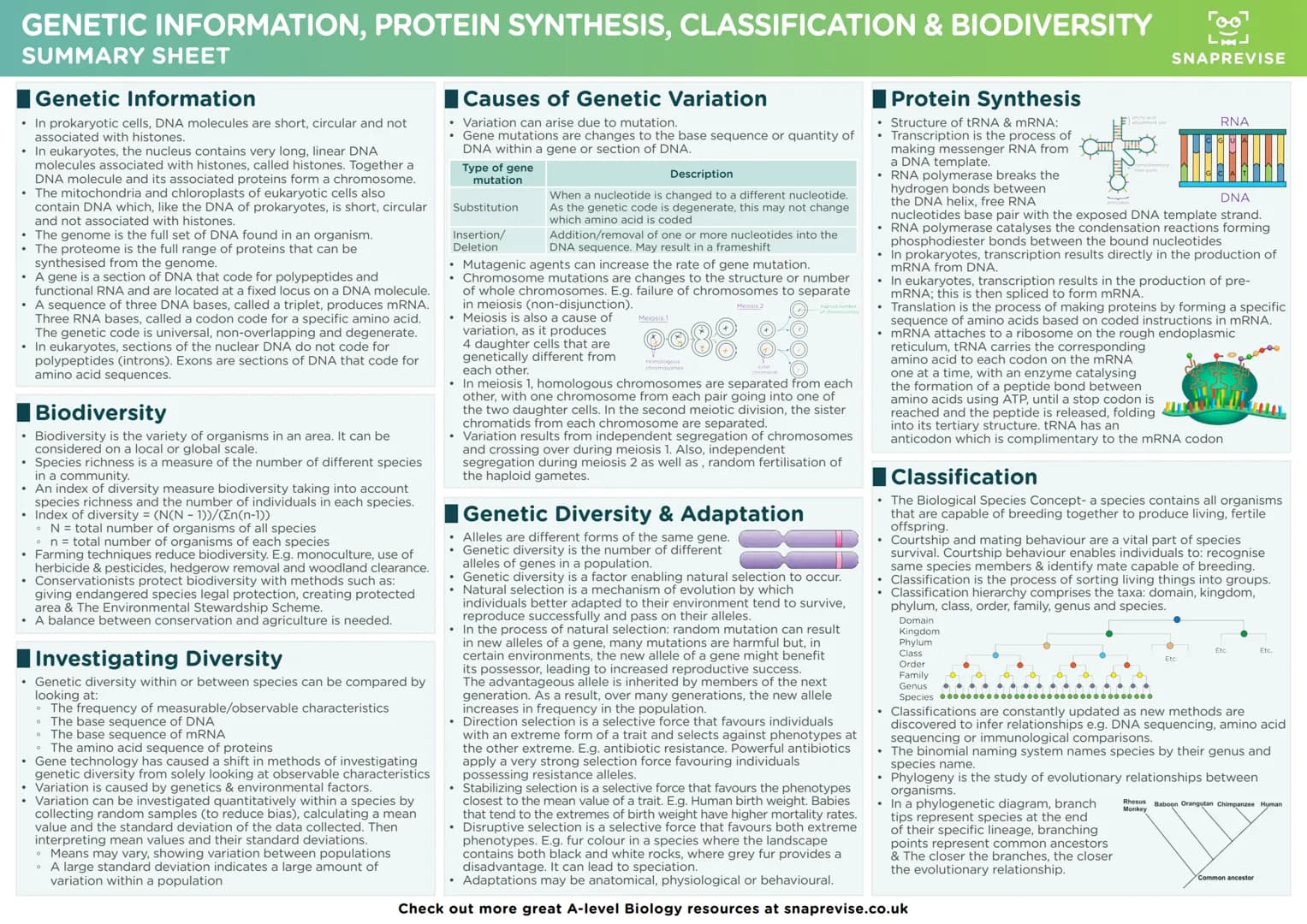
Genetic information flows from DNA to RNA to proteins. Genes are sections of DNA that code for polypeptides, with the genetic code being universal, non-overlapping, and degenerate (multiple codons can code for the same amino acid).
Protein synthesis happens in two stages. Transcription copies the DNA code into mRNA in the nucleus. Translation uses this mRNA code at ribosomes to build proteins, with tRNA molecules bringing the correct amino acids to match each codon.
Genetic variation arises from mutations and meiosis. Mutations can be substitutions (changing one base) or insertions/deletions (potentially causing frameshifts). Meiosis creates variation through independent segregation and crossing over between chromosomes.
Natural selection acts on this variation. Individuals with advantageous alleles survive and reproduce more successfully, gradually increasing the frequency of beneficial alleles in populations. This can be directional, stabilising, or disruptive depending on environmental pressures.
Biodiversity measures the variety of life, considering both species richness and evenness. Human activities often reduce biodiversity, but conservation efforts aim to protect and restore it through legal protection, habitat preservation, and sustainable practices.
💡 Classification Tip: Remember the hierarchy with "Did King Philip Come Over For Good Soup" - Domain, Kingdom, Phylum, Class, Order, Family, Genus, Species.
Our AI Companion is a student-focused AI tool that offers more than just answers. Built on millions of Knowunity resources, it provides relevant information, personalised study plans, quizzes, and content directly in the chat, adapting to your individual learning journey.
You can download the app from Google Play Store and Apple App Store.
That's right! Enjoy free access to study content, connect with fellow students, and get instant help – all at your fingertips.
App Store
Google Play
The app is very easy to use and well designed. I have found everything I was looking for so far and have been able to learn a lot from the presentations! I will definitely use the app for a class assignment! And of course it also helps a lot as an inspiration.
Stefan S
iOS user
This app is really great. There are so many study notes and help [...]. My problem subject is French, for example, and the app has so many options for help. Thanks to this app, I have improved my French. I would recommend it to anyone.
Samantha Klich
Android user
Wow, I am really amazed. I just tried the app because I've seen it advertised many times and was absolutely stunned. This app is THE HELP you want for school and above all, it offers so many things, such as workouts and fact sheets, which have been VERY helpful to me personally.
Anna
iOS user
Best app on earth! no words because it’s too good
Thomas R
iOS user
Just amazing. Let's me revise 10x better, this app is a quick 10/10. I highly recommend it to anyone. I can watch and search for notes. I can save them in the subject folder. I can revise it any time when I come back. If you haven't tried this app, you're really missing out.
Basil
Android user
This app has made me feel so much more confident in my exam prep, not only through boosting my own self confidence through the features that allow you to connect with others and feel less alone, but also through the way the app itself is centred around making you feel better. It is easy to navigate, fun to use, and helpful to anyone struggling in absolutely any way.
David K
iOS user
The app's just great! All I have to do is enter the topic in the search bar and I get the response real fast. I don't have to watch 10 YouTube videos to understand something, so I'm saving my time. Highly recommended!
Sudenaz Ocak
Android user
In school I was really bad at maths but thanks to the app, I am doing better now. I am so grateful that you made the app.
Greenlight Bonnie
Android user
very reliable app to help and grow your ideas of Maths, English and other related topics in your works. please use this app if your struggling in areas, this app is key for that. wish I'd of done a review before. and it's also free so don't worry about that.
Rohan U
Android user
I know a lot of apps use fake accounts to boost their reviews but this app deserves it all. Originally I was getting 4 in my English exams and this time I got a grade 7. I didn’t even know about this app three days until the exam and it has helped A LOT. Please actually trust me and use it as I’m sure you too will see developments.
Xander S
iOS user
THE QUIZES AND FLASHCARDS ARE SO USEFUL AND I LOVE THE SCHOOLGPT. IT ALSO IS LITREALLY LIKE CHATGPT BUT SMARTER!! HELPED ME WITH MY MASCARA PROBLEMS TOO!! AS WELL AS MY REAL SUBJECTS ! DUHHH 😍😁😲🤑💗✨🎀😮
Elisha
iOS user
This apps acc the goat. I find revision so boring but this app makes it so easy to organize it all and then you can ask the freeeee ai to test yourself so good and you can easily upload your own stuff. highly recommend as someone taking mocks now
Paul T
iOS user
The app is very easy to use and well designed. I have found everything I was looking for so far and have been able to learn a lot from the presentations! I will definitely use the app for a class assignment! And of course it also helps a lot as an inspiration.
Stefan S
iOS user
This app is really great. There are so many study notes and help [...]. My problem subject is French, for example, and the app has so many options for help. Thanks to this app, I have improved my French. I would recommend it to anyone.
Samantha Klich
Android user
Wow, I am really amazed. I just tried the app because I've seen it advertised many times and was absolutely stunned. This app is THE HELP you want for school and above all, it offers so many things, such as workouts and fact sheets, which have been VERY helpful to me personally.
Anna
iOS user
Best app on earth! no words because it’s too good
Thomas R
iOS user
Just amazing. Let's me revise 10x better, this app is a quick 10/10. I highly recommend it to anyone. I can watch and search for notes. I can save them in the subject folder. I can revise it any time when I come back. If you haven't tried this app, you're really missing out.
Basil
Android user
This app has made me feel so much more confident in my exam prep, not only through boosting my own self confidence through the features that allow you to connect with others and feel less alone, but also through the way the app itself is centred around making you feel better. It is easy to navigate, fun to use, and helpful to anyone struggling in absolutely any way.
David K
iOS user
The app's just great! All I have to do is enter the topic in the search bar and I get the response real fast. I don't have to watch 10 YouTube videos to understand something, so I'm saving my time. Highly recommended!
Sudenaz Ocak
Android user
In school I was really bad at maths but thanks to the app, I am doing better now. I am so grateful that you made the app.
Greenlight Bonnie
Android user
very reliable app to help and grow your ideas of Maths, English and other related topics in your works. please use this app if your struggling in areas, this app is key for that. wish I'd of done a review before. and it's also free so don't worry about that.
Rohan U
Android user
I know a lot of apps use fake accounts to boost their reviews but this app deserves it all. Originally I was getting 4 in my English exams and this time I got a grade 7. I didn’t even know about this app three days until the exam and it has helped A LOT. Please actually trust me and use it as I’m sure you too will see developments.
Xander S
iOS user
THE QUIZES AND FLASHCARDS ARE SO USEFUL AND I LOVE THE SCHOOLGPT. IT ALSO IS LITREALLY LIKE CHATGPT BUT SMARTER!! HELPED ME WITH MY MASCARA PROBLEMS TOO!! AS WELL AS MY REAL SUBJECTS ! DUHHH 😍😁😲🤑💗✨🎀😮
Elisha
iOS user
This apps acc the goat. I find revision so boring but this app makes it so easy to organize it all and then you can ask the freeeee ai to test yourself so good and you can easily upload your own stuff. highly recommend as someone taking mocks now
Paul T
iOS user
ameerah
@ameerah_iuyauxibtnph
Get ready to dive into the essential building blocks of A-level Biology! This comprehensive guide covers everything from basic molecular structures to complex biological processes that keep life ticking along. You'll master the key concepts that form the foundation of... Show more
Access to all documents
Improve your grades
Join milions of students
By signing up you accept Terms of Service and Privacy Policy
This pack is your ultimate biology cheat sheet - designed to condense the entire A-level course into digestible, visual summaries. Every single AQA specification point is covered, so you won't miss anything crucial for your exams.
The beauty of this resource lies in its organisation. Each topic maps directly to specific specification points, from basic carbohydrates and proteins (3.1.1-3.1.4.2) all the way through to advanced gene technologies (3.8.4.1-3.8.4.3). This means you can tackle revision systematically without worrying about gaps in your knowledge.
Top tip: Use these sheets for quick reviews before tests, or as a final check before your actual A-level exams. The visual layout makes it perfect for last-minute cramming sessions!
💡 Study Smart: Don't just read through - actively test yourself on the key terms in bold as you go through each section.
Access to all documents
Improve your grades
Join milions of students
By signing up you accept Terms of Service and Privacy Policy
Think of monomers and polymers as biological Lego blocks. Monomers are the individual pieces, whilst polymers are the massive structures you build from them. This happens through condensation reactions (joining pieces together, losing water) and hydrolysis reactions (breaking them apart, adding water).
Carbohydrates come in three main sizes. Monosaccharides like glucose are your simple sugars - the quick energy hits. Disaccharides like maltose are two sugars joined together. Polysaccharides like starch are the massive storage molecules plants use to stockpile energy for later.
Proteins are the workhorses of biology, built from amino acid building blocks. They have four structural levels, from primary (the basic sequence) right up to quaternary (multiple chains working together). Enzymes are special proteins that speed up reactions by lowering activation energy - think of them as biological catalysts that make life's chemistry possible.
Lipids include fats and phospholipids. Triglycerides store energy brilliantly because they're packed with carbon-hydrogen bonds. Phospholipids are the clever molecules that form cell membranes - they have water-loving heads and water-hating tails that create perfect barriers.
💡 Exam Tip: Learn the biochemical tests inside out - Benedict's for sugars, iodine for starch, biuret for proteins. These pop up constantly in practical questions!
Access to all documents
Improve your grades
Join milions of students
By signing up you accept Terms of Service and Privacy Policy
DNA and RNA are your genetic information storage and transfer systems. DNA uses deoxyribose sugar and stores long-term genetic info in its famous double helix. RNA uses ribose sugar and does the day-to-day work of moving genetic information around the cell.
ATP is basically your cellular currency - the molecule that powers almost every energy-requiring process in living things. It works through a simple cycle: ATP breaks down to ADP (releasing energy), then gets rebuilt back to ATP (storing energy again). This happens millions of times per second in your cells.
Water might seem boring, but it's absolutely crucial for life. Its polarity creates hydrogen bonds, giving it amazing properties. High specific heat capacity keeps temperatures stable, whilst its solvent abilities mean it can transport dissolved substances around organisms.
Inorganic ions like sodium, iron, and phosphate might be simple, but they're essential. Iron carries oxygen in haemoglobin, sodium helps transport glucose across membranes, and phosphate forms the backbone of DNA and RNA.
💡 Memory Hook: Remember DNA replication as "semi-conservative" - each new DNA molecule keeps one original strand and adds one new strand, like keeping half your old outfit and updating the rest!
Access to all documents
Improve your grades
Join milions of students
By signing up you accept Terms of Service and Privacy Policy
Eukaryotic cells are like mini cities with specialised districts. The nucleus is city hall (controlling everything), mitochondria are power stations (making ATP), and the endoplasmic reticulum is the transport network (moving materials around). Each organelle has a specific job that keeps the cell functioning.
Prokaryotic cells are much simpler - think studio apartment versus mansion. They lack a proper nucleus and membrane-bound organelles, but they're incredibly efficient. Bacteria reproduce through binary fission, essentially photocopying themselves incredibly quickly.
Cell division through mitosis creates identical cells for growth and repair. The process follows a strict sequence: prophase (chromosomes condense), metaphase (line up in the middle), anaphase (pull apart), and telophase (two nuclei form). Cancer happens when this process goes wrong and cells divide uncontrollably.
Microscopes are your window into the cellular world. Light microscopes show living cells but with limited detail. Electron microscopes reveal incredible detail but can't show living specimens. Understanding magnification versus resolution is crucial for interpreting what you're actually seeing.
💡 Practical Pointer: When calculating magnification, remember it's simply image size divided by actual size. Always check your units are the same before calculating!
Access to all documents
Improve your grades
Join milions of students
By signing up you accept Terms of Service and Privacy Policy
Cell membranes are selective barriers made from phospholipid bilayers. They control what enters and exits cells using various transport methods. Passive transport includes diffusion and osmosis - no energy required, just molecules following concentration gradients.
Active transport is like swimming upstream - it requires energy (ATP) to move substances against concentration gradients. Co-transport is particularly clever, using one substance moving down its gradient to power another substance moving up its gradient.
Your immune system is a sophisticated defence network. Phagocytes engulf pathogens, whilst lymphocytes provide specific responses. B cells make antibodies that stick to antigens, whilst T cells either help coordinate responses or directly kill infected cells.
Vaccination works by training your immune system with harmless versions of pathogens. This creates memory cells that remember the threat, allowing rapid responses if you encounter the real pathogen later. The secondary immune response is much faster and stronger than the primary response.
💡 Key Concept: Water potential always flows from less negative to more negative values. Pure water has a water potential of zero - everything else is negative!
Access to all documents
Improve your grades
Join milions of students
By signing up you accept Terms of Service and Privacy Policy
Surface area to volume ratio explains why large organisms need specialised systems. As size increases, the ratio decreases, making simple diffusion inadequate for meeting metabolic needs. That's why we have lungs, gills, and transport systems.
Gas exchange happens differently across organisms. Fish use gills with countercurrent flow to maximise oxygen extraction. Insects use tracheal systems that deliver oxygen directly to tissues. Plants use stomata that can close to prevent water loss whilst allowing gas exchange.
Digestion breaks down large molecules into smaller ones that can be absorbed. Enzymes like amylase (breaks down starch) and lipase (breaks down fats) speed up these processes. The small intestine uses clever co-transport mechanisms to absorb the products.
Mass transport systems move materials around larger organisms. Haemoglobin in blood carries oxygen, with its S-shaped dissociation curve showing cooperative binding. Plants use xylem for water transport and phloem for sugar transport (mass flow hypothesis).
💡 Exam Focus: Learn the oxygen dissociation curve shifts - left shift means higher affinity (better at picking up oxygen), right shift means lower affinity (better at releasing oxygen to tissues).
Access to all documents
Improve your grades
Join milions of students
By signing up you accept Terms of Service and Privacy Policy
Genetic information flows from DNA to RNA to proteins. Genes are sections of DNA that code for polypeptides, with the genetic code being universal, non-overlapping, and degenerate (multiple codons can code for the same amino acid).
Protein synthesis happens in two stages. Transcription copies the DNA code into mRNA in the nucleus. Translation uses this mRNA code at ribosomes to build proteins, with tRNA molecules bringing the correct amino acids to match each codon.
Genetic variation arises from mutations and meiosis. Mutations can be substitutions (changing one base) or insertions/deletions (potentially causing frameshifts). Meiosis creates variation through independent segregation and crossing over between chromosomes.
Natural selection acts on this variation. Individuals with advantageous alleles survive and reproduce more successfully, gradually increasing the frequency of beneficial alleles in populations. This can be directional, stabilising, or disruptive depending on environmental pressures.
Biodiversity measures the variety of life, considering both species richness and evenness. Human activities often reduce biodiversity, but conservation efforts aim to protect and restore it through legal protection, habitat preservation, and sustainable practices.
💡 Classification Tip: Remember the hierarchy with "Did King Philip Come Over For Good Soup" - Domain, Kingdom, Phylum, Class, Order, Family, Genus, Species.
Access to all documents
Improve your grades
Join milions of students
By signing up you accept Terms of Service and Privacy Policy
Access to all documents
Improve your grades
Join milions of students
By signing up you accept Terms of Service and Privacy Policy
Access to all documents
Improve your grades
Join milions of students
By signing up you accept Terms of Service and Privacy Policy
Our AI Companion is a student-focused AI tool that offers more than just answers. Built on millions of Knowunity resources, it provides relevant information, personalised study plans, quizzes, and content directly in the chat, adapting to your individual learning journey.
You can download the app from Google Play Store and Apple App Store.
That's right! Enjoy free access to study content, connect with fellow students, and get instant help – all at your fingertips.
60
Smart Tools NEW
Transform this note into: ✓ 50+ Practice Questions ✓ Interactive Flashcards ✓ Full Mock Exam ✓ Essay Outlines
App Store
Google Play
The app is very easy to use and well designed. I have found everything I was looking for so far and have been able to learn a lot from the presentations! I will definitely use the app for a class assignment! And of course it also helps a lot as an inspiration.
Stefan S
iOS user
This app is really great. There are so many study notes and help [...]. My problem subject is French, for example, and the app has so many options for help. Thanks to this app, I have improved my French. I would recommend it to anyone.
Samantha Klich
Android user
Wow, I am really amazed. I just tried the app because I've seen it advertised many times and was absolutely stunned. This app is THE HELP you want for school and above all, it offers so many things, such as workouts and fact sheets, which have been VERY helpful to me personally.
Anna
iOS user
Best app on earth! no words because it’s too good
Thomas R
iOS user
Just amazing. Let's me revise 10x better, this app is a quick 10/10. I highly recommend it to anyone. I can watch and search for notes. I can save them in the subject folder. I can revise it any time when I come back. If you haven't tried this app, you're really missing out.
Basil
Android user
This app has made me feel so much more confident in my exam prep, not only through boosting my own self confidence through the features that allow you to connect with others and feel less alone, but also through the way the app itself is centred around making you feel better. It is easy to navigate, fun to use, and helpful to anyone struggling in absolutely any way.
David K
iOS user
The app's just great! All I have to do is enter the topic in the search bar and I get the response real fast. I don't have to watch 10 YouTube videos to understand something, so I'm saving my time. Highly recommended!
Sudenaz Ocak
Android user
In school I was really bad at maths but thanks to the app, I am doing better now. I am so grateful that you made the app.
Greenlight Bonnie
Android user
very reliable app to help and grow your ideas of Maths, English and other related topics in your works. please use this app if your struggling in areas, this app is key for that. wish I'd of done a review before. and it's also free so don't worry about that.
Rohan U
Android user
I know a lot of apps use fake accounts to boost their reviews but this app deserves it all. Originally I was getting 4 in my English exams and this time I got a grade 7. I didn’t even know about this app three days until the exam and it has helped A LOT. Please actually trust me and use it as I’m sure you too will see developments.
Xander S
iOS user
THE QUIZES AND FLASHCARDS ARE SO USEFUL AND I LOVE THE SCHOOLGPT. IT ALSO IS LITREALLY LIKE CHATGPT BUT SMARTER!! HELPED ME WITH MY MASCARA PROBLEMS TOO!! AS WELL AS MY REAL SUBJECTS ! DUHHH 😍😁😲🤑💗✨🎀😮
Elisha
iOS user
This apps acc the goat. I find revision so boring but this app makes it so easy to organize it all and then you can ask the freeeee ai to test yourself so good and you can easily upload your own stuff. highly recommend as someone taking mocks now
Paul T
iOS user
The app is very easy to use and well designed. I have found everything I was looking for so far and have been able to learn a lot from the presentations! I will definitely use the app for a class assignment! And of course it also helps a lot as an inspiration.
Stefan S
iOS user
This app is really great. There are so many study notes and help [...]. My problem subject is French, for example, and the app has so many options for help. Thanks to this app, I have improved my French. I would recommend it to anyone.
Samantha Klich
Android user
Wow, I am really amazed. I just tried the app because I've seen it advertised many times and was absolutely stunned. This app is THE HELP you want for school and above all, it offers so many things, such as workouts and fact sheets, which have been VERY helpful to me personally.
Anna
iOS user
Best app on earth! no words because it’s too good
Thomas R
iOS user
Just amazing. Let's me revise 10x better, this app is a quick 10/10. I highly recommend it to anyone. I can watch and search for notes. I can save them in the subject folder. I can revise it any time when I come back. If you haven't tried this app, you're really missing out.
Basil
Android user
This app has made me feel so much more confident in my exam prep, not only through boosting my own self confidence through the features that allow you to connect with others and feel less alone, but also through the way the app itself is centred around making you feel better. It is easy to navigate, fun to use, and helpful to anyone struggling in absolutely any way.
David K
iOS user
The app's just great! All I have to do is enter the topic in the search bar and I get the response real fast. I don't have to watch 10 YouTube videos to understand something, so I'm saving my time. Highly recommended!
Sudenaz Ocak
Android user
In school I was really bad at maths but thanks to the app, I am doing better now. I am so grateful that you made the app.
Greenlight Bonnie
Android user
very reliable app to help and grow your ideas of Maths, English and other related topics in your works. please use this app if your struggling in areas, this app is key for that. wish I'd of done a review before. and it's also free so don't worry about that.
Rohan U
Android user
I know a lot of apps use fake accounts to boost their reviews but this app deserves it all. Originally I was getting 4 in my English exams and this time I got a grade 7. I didn’t even know about this app three days until the exam and it has helped A LOT. Please actually trust me and use it as I’m sure you too will see developments.
Xander S
iOS user
THE QUIZES AND FLASHCARDS ARE SO USEFUL AND I LOVE THE SCHOOLGPT. IT ALSO IS LITREALLY LIKE CHATGPT BUT SMARTER!! HELPED ME WITH MY MASCARA PROBLEMS TOO!! AS WELL AS MY REAL SUBJECTS ! DUHHH 😍😁😲🤑💗✨🎀😮
Elisha
iOS user
This apps acc the goat. I find revision so boring but this app makes it so easy to organize it all and then you can ask the freeeee ai to test yourself so good and you can easily upload your own stuff. highly recommend as someone taking mocks now
Paul T
iOS user