Atmospheric Pollutants and Their Effects
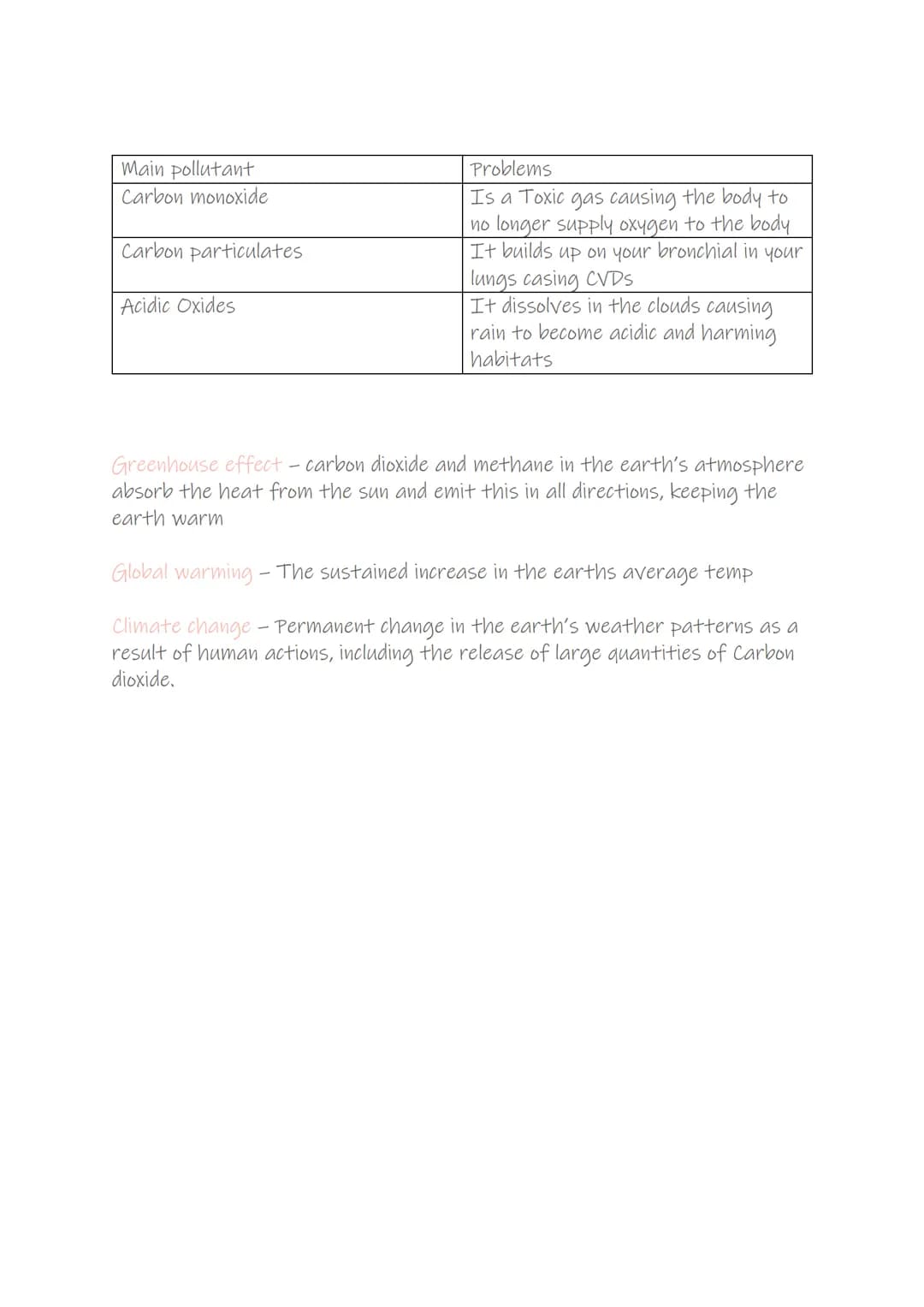
Various pollutants have significant impacts on the environment and human health. The main pollutants discussed are carbon monoxide, carbon particulates, and acidic oxides.
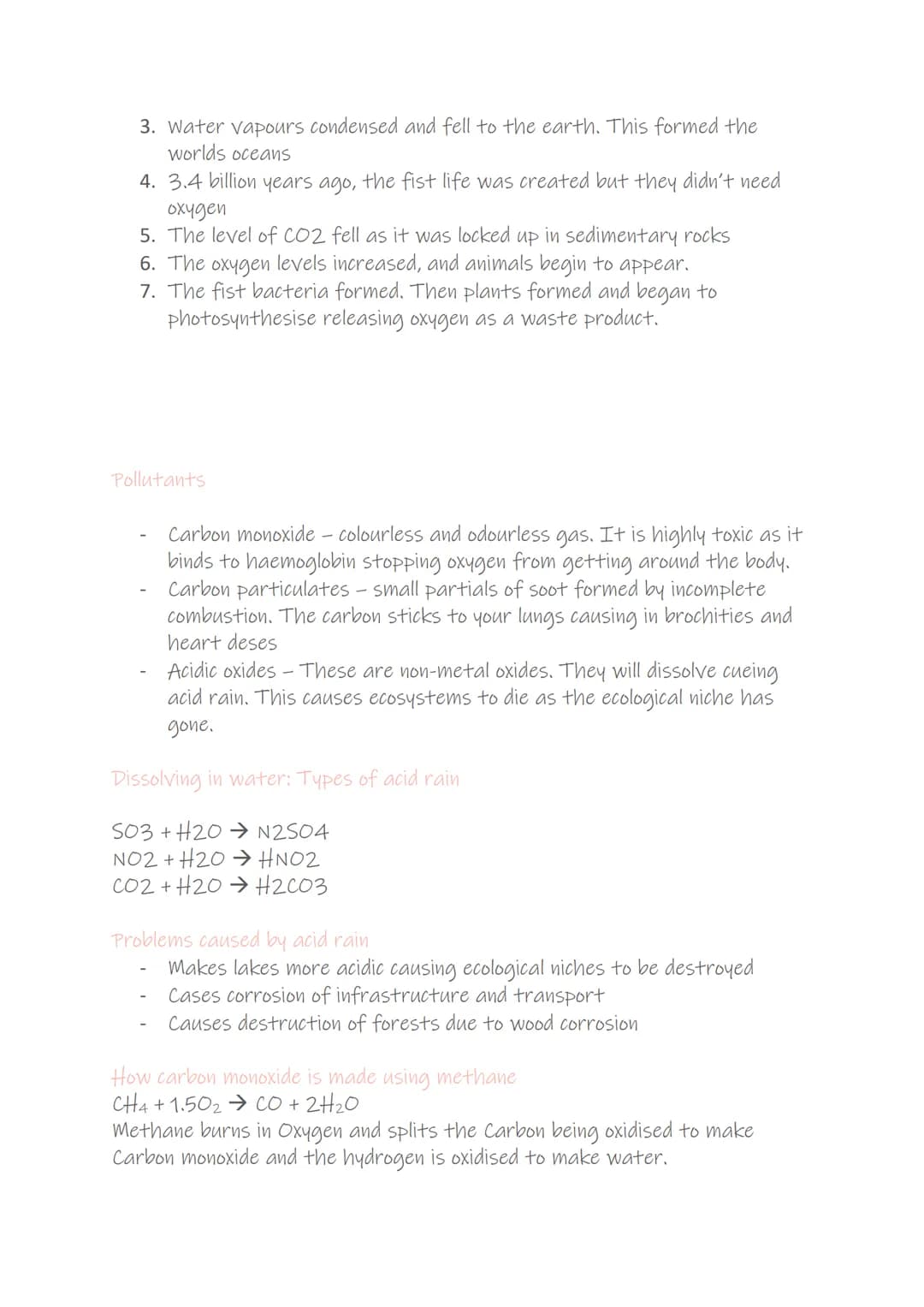
Carbon monoxide is a colorless and odorless gas that poses severe health risks. How carbon monoxide affects health is particularly concerning due to its high toxicity. It binds to hemoglobin, preventing oxygen from circulating throughout the body.
Definition: Hemoglobin is a protein in red blood cells that carries oxygen throughout the body.
Carbon particulates, small particles of soot formed by incomplete combustion, adhere to the lungs, potentially causing bronchitis and heart disease.
Acidic oxides, which are non-metal oxides, dissolve in water to create acid rain. This phenomenon has devastating effects on ecosystems, often leading to their destruction as ecological niches disappear.
The formation of acid rain occurs when certain pollutants dissolve in water:
- SO3 + H2O → H2SO4
- NO2 + H2O → HNO2
- CO2 + H2O → H2CO3
Example: Acid rain can make lakes more acidic, destroying ecological niches and causing widespread damage to aquatic ecosystems.
Problems caused by acid rain include:
- Increased acidity in lakes, destroying ecological niches
- Corrosion of infrastructure and transport systems
- Destruction of forests due to wood corrosion
The production of carbon monoxide often involves the incomplete combustion of hydrocarbons. For instance, methane can produce carbon monoxide through the following reaction:
CH4 + 1.5O2 → CO + 2H2O
In this reaction, methane burns in oxygen, with carbon being oxidized to form carbon monoxide and hydrogen being oxidized to form water.